10 Reasons Doctor Who Will Only Get Worse

He really is just a mad-man in a box.
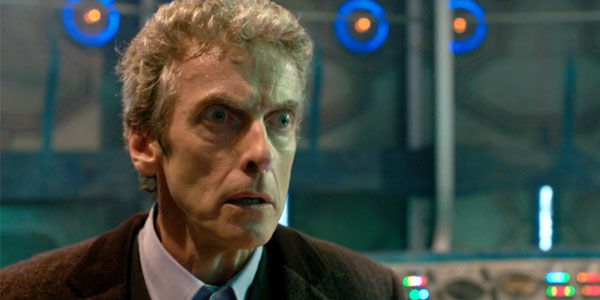
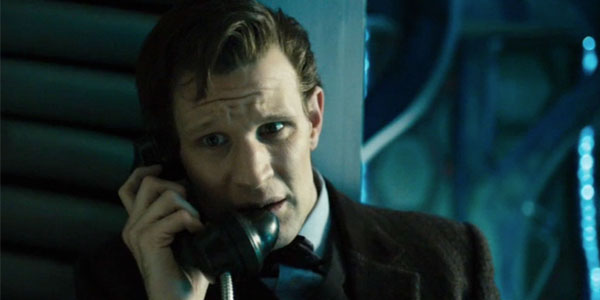
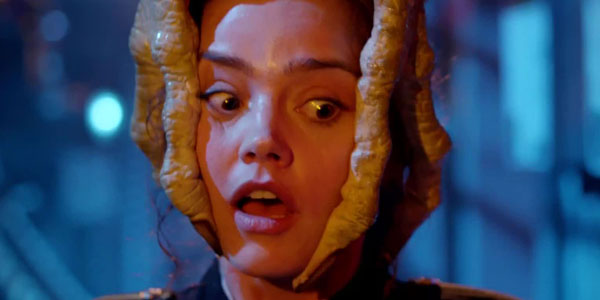
Don't blink, breathe or turn away from the freaky looking alien; the Doctor is well and truly back. After fragmented half-seasons and a massive 50th Anniversary celebration, Doctor Who is back on our screens with a proper, twelve-part series starring new lead Peter Capaldi. With its slight teases of the story arc and the usual intro-future-past start, Series 8 has been very much in the style of the early days of Nu-Who (fan lingo for the series post-2005 resurrection) and has led to some impressive viewing figures both in the UK and further afield. Although much has been made about how different Capaldi is from the previous, young-looking Doctors (he's older than First Doctor William Hartnell was when the show started), the real challenge he's got is becoming the face of a major franchise. Although Who was always favoured in geek circles, under Matt Smith's chin the show has gone from British curio to worldwide phenomenon. But while Doctor Who has never been bigger, it certainly has been better; with great success comes great complacency and beneath the fun cracks are starting to show. Capaldi is no doubt the best person to take the role and if his performance thus far is anything to go by he could make these points moot, but there's no avoiding Doctor Who is teetering at the top of a long spiral down. Here are ten reasons why the show could be doomed to get worse.

10. Too Much Empty Spectacle

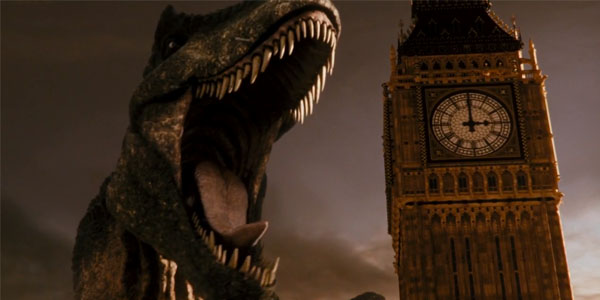
The first episode of Season 8, Deep Breath, opened with the typically bonkers image of a giant T-Rex with a Tardis stuck in its throat roaming Victorian London. What a totally brilliant Doctor Who set-up. A set-up that proved to be completely inconsequential to the episode. Said T-Rex is blown up off-screen, an action hastily explained thirty minutes later to be part of the villain's plot in the vaguest sense. Which leaves us to conclude the dinosaur was only included to provide a bit of spectacle to draw people in and create the illusion of a big kick-off for a new Doctor. Padding out an already long episode, this isn't the first time we've seen Doctor Who do some big visual 'thing' that serves no purpose to the episode. The Day Of The Doctor kicked off with the embarrassing sight of the Doctor clinging to the bottom of the Tardis and dinosaurs have already proven to be a favourite go-to filler animal in a superfluous appearance on Dinosaurs On A Spaceship. People watch Doctor Who for the interesting characters and exciting adventures, not empty images that are discarded in an irritating way.

9. Relying Too Much On The Past

When the show was first brought back in 2005 there was some uncertainty of how Nu-Who fit into the existing continuity. Daleks were there and there was vague talk of the Doctor's past, but it took a while for the show to all-out recognise the older version. This was obviously quite important in engaging a new audience, with the mystery of the Time War providing an ongoing plot thread. As time went by the show started to reference older episodes more and more to the point where there's more call-backs in one episode than the entirety of Star Trek Into Darkness. This season alone, among lots of other little winks, Deep Breath built on the steampunk robots from The Girl In The Fireplace and Into The Dalek heavily invoked Tom Baker's dilemma from Genesis Of The Daleks. It makes the show rather impenetrable to newcomers and even casual long-term viewers can feel a little out of their depth. As nice as the Matt Smith cameo was in the final moments of Deep Breath, it really only serves to hammer home how much the show cares about getting people thinking about how great the show has been, rather than how good it can be now.

8. No Surprises

It's perfectly possible for Doctor Who to throw out a plot twist every now and then, but it'll never actually shock us like the very best of TV can do. Even when Series 6 went more serialised to tell River Song's story, the show has still stuck to a rigid structure where only the series opener and finale have any major plot shifts. The God Complex may have done the unthinkable and had Amy and Rory left back on Earth, but for the most part you can expect the TV status quo to be back to normal if we're in a mid-series episode. And if there is a disturbance, any major shift will be highly signposted. When, at the end of The Stolen Earth, the Tenth Doctor started to regenerate speculation was rife that the BBC had snuck one of the biggest recasts in television past everyone. Which is pretty stupid to think - the press are too good and the BBC too loose-lipped; Christopher Eccleston's shock departure wasn't actually a shock because he'd announced it before the series even aired. Game Of Thrones can cause uproar when it offs our favourite characters, but there the press aren't running around screaming that Sean Bean may be leaving. Rumours Jenna Coleman is planning to leave the show have been brewing over the past few weeks and even if those involved can keep mum throughout the show's entire run, odds are Clara's likely exist at the end of Series 8 will not have the desired shock effect.

7. It Wants To Compete With Game Of Thrones
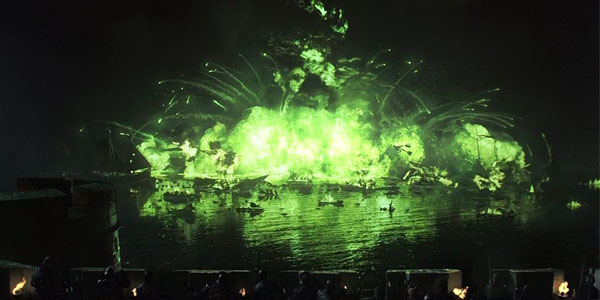
Doctor Who was never the zenith in sci-fi or fantasy, televisual or otherwise. But since it became a worldwide hit the show has switched its sights from British tea-time treat to large scale epic. In some regards that's a good thing. As teachers always tell us aiming high is the only way to get anywhere in life and the show now exudes a confidence it never did before; the scope is wider and it's happier having the action on-screen sit within part of a much bigger universe. But all that good work could be undone as it's, if anything, aiming too high; it's trying to compete with the biggest of all geek shows, Game Of Thrones. HBO's medieval-fantasy is one of those shows that acts as much of the argument for TV's dominance over film; it's just that good. And three things will stop Who ever coming close to. It doesn't have the budget to visually match it, there's not a detailed game plan and, biggest of all, the Doctor has to appeal to a family audience and not just genre fans. And why should it try to beat the adaptation of George R.R. Martin's epic? It's survived for fifty years as a kooky British curio and is at its best when it embraces that. This isn't just wild speculation on our part either; Steven Moffat has directly stated he wants to compete with the HBO juggernaut. And on the UK License Fee dictated budget in an early-evening BBC One slot that ain't going to happen.

6. The Paternoster Gang

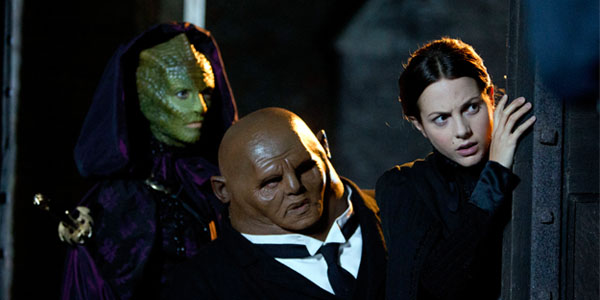
Originally the Paternoster Gang, Madame Vastra, Jenny and Strax, were something fresh within the series. Here were a trio of associates to the Time Lord who didn't have hokey origins or contrived resurrections - they emerged fully formed and unexplained; Vastra was a lizard serial killer, Jenny was her servant/lover and Drax made some funny jokes about not being able to understand human biology. What's not to like? Despite becoming a recurring group since A Good Man Goes To War, they're still as irritatingly unexplained; their latest appearance was still leaning heavily on Drax's incompetence and Vastra and Jenny being a couple, just as they had three years before. It's repetitive and makes even the initially adorable Drax annoying. All they really seem to add to the show is an obsession with Victorian, over modern-day London. It's emblematic of how once the show has found something that works it's happy to just run with it rather than push forward. As evidenced from the Daleks always being the ultimate, universe-wide threat in the Davies-era, this isn't just something from the head writer tenure of Steven Moffat (who created and wrote most of the gang's appearances), but a general draw back of being a genre family show pushed up to mainstream epic.

5. It's Rebooting Too Often

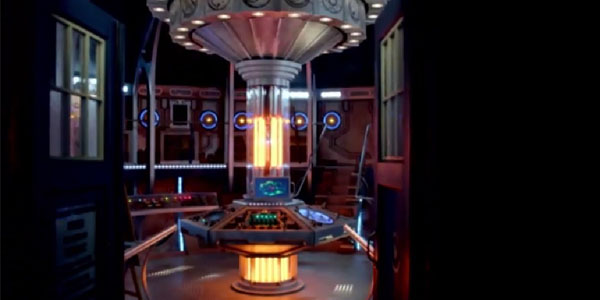
Throughout Tennant's tenure there was a real sense of consistency. Individual series felt distinct thanks to the rotating roster of companions, but that was a different ingredient rather than a rejig of the whole recipe. When Matt Smith took over the five-year old Tardis console room was redesigned to signal a new start for the series. That now feels a bit trivial because a reboot of the show seems to happen every year or so. Following the 'death' of Amy and Rory the Tardis got another redesign to something more old-school sci-fi, then, only ten episodes later, the Capaldi era kicked off with another design; we've had three new interiors in the time one existed uninterrupted. It may seem a rather trivial, but it just serves to make the box (and by extension those it contains) increasingly less familiar. We all remember the Ninth and Tenth's Tardis, with its almost bone-like pillars, and the first redesign for the Eleventh felt like a more extreme version of that. But after that it's all vague; the post-Amy redesign was notable for being silver, while Capaldi's look so similar had Clara not pointed it out we doubt we'd have even noticed. Along with the ever-changing opening sequence (what is up with the current one's clock faces), quite why the show keeps doing it is unclear. It may be an effort to boost ratings ("you have to see this episode, there's a new Tardis"), although it could be a much more cynical merchandising decision.

4. The Characters Are Increasingly Poorly Defined

Although in the early days of Nu-Who there was a tendency to fall back onto London council estates, at least it meant the human companions of the Doctor (who at the time was incredibly cagey about his past) had some back-story. It may have not been the most exciting (see Martha), but at least it gave audiences an in to the sci-fi action. A key element of Clara's initial character was that she was just an ordinary girl. And how did they show us this? They didn't, we just had the Doctor running around telling us "SHE IS AN ORDINARY GIRL". Clearly she wasn't and we had nothing but a leaf to suggest otherwise. When it turned out she was destined to save the Doctor is was far from a surprise. This is made all the more infuriating when subsequently a lot of effort has been put into showing us Clara is a strong-willed teacher; an ordinary person. It wasn't just her backstory that was unexplored; observant fans will have noticed Jenna Coleman's character was described as a control freak in Deep Breath, despite there being absolutely no previous evidence for that. With Amy her disjointed home-life was the central mystery of the show for a whole series, but that shouldn't set a precedent for ambiguous characters.

3. It's Desperate To Make Ideas Work

If you take a look at high-profile unproduced movies from the nineties (think the Tim Burton/Nicholas Cage Superman Lives) you'll notice a disproportionate number of them were set to include a giant mechanical spider at the end. The world wasn't going through an arachnid obsessed period; producer Jon Peters just really wanted a film with a big spider finale (each to his own) and pushed it on whatever movie he could. The relevance to Who is that this is the exact same approach that Steven Moffat has been taking with his arcs (the pushing ideas, not the spider). Before David Tennant decided to leave the show Moffat was set to take over the show as lead writer. So rather than a new creative head and Doctor arriving at the same time, Moffat's first series was actually going to be Tennant's last. Being the time-twisting storyteller he his, naturally Moffat dreamed up a complicated plot; the Doctor would meet the new companion when they were a child appearing injured, then they'd meet once she was all grown-up, with the finale revealing the Doctor the young child saw was him just before regeneration. When some people hear this plot idea they're curious to see if it'll ever make it to screen. More observant viewers will notice that we've already seen it many times. Amy met the Doctor as a kid and joined him once she'd grown up, River Song met the Doctor totally out of sync (and once when he was dying) and the Doctor kept meeting Clara when she was near death. Heck, the idea had already appeared in previous episodes; The Girl In The Fireplace from has the exact same central idea, minus regeneration. They've been brought to life with a sense of fun, but it's clear the main focus is the idea rather than its relevance to the characters.

2. The Cycle Of Unpopular Ideas

In years to come the action of cycling through bad ideas will be known as 'doing a Spider-Man'; Spider-Man 3 had too many villains and a silly tone, so reboot The Amazing Spider-Man cut down the baddies and made it all dark, but once that received a mixed reaction The Amazing Spider-Man 2 upped the bad guy quotient and tried to make it all fun to predictable results. Although it's not as messed up as Sony has got with the web-crawler, in terms of its plots Doctor Who is stuck in a cycle. Davies' story arcs relied on the same basic idea - tease a key part of the finale throughout the series - which by the end of his time in charge had got very tired. Moffat upped the ante, having the Doctor aware of the arc in Series 5 and making the show almost a serial with Series 6's Melody Pond mystery. Some audience members (particularly the more casual viewers) were a bit disgruntled, so Series 7 was made up of totally standalone episodes. Series 8 looks set to stick closer to the Davies mould, meaning we're essentially back to the start of the loop. All of the styles Who has followed have the potential to work, but it requires conviction. Constantly changing it up when there's the first sign of trouble only means we'll never really connect with what's going on.

1. It Buckles Too Much To Fan Pressure
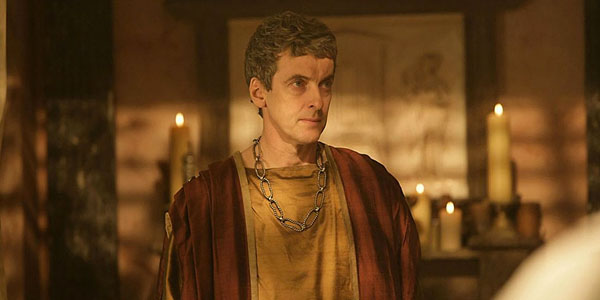
What's the main concern of the average Who fan sitting down to watch a new episode? The correct answer is whether it'll be a fun forty-five minutes or not, but some more die-hard Whovians would say it's how what's happening now ties into the series' fifty-year continuity. Unfortunately the show seems to invest much more in the latter. The notion of a regeneration limit had existed since a Tom Baker story in 1976, but back then the idea of the character reaching the point when he'd worked through all thirteen of his lives seemed ridiculous. It got a couple of references since, with the new series not only establishing it could easily be circumvented (see The Master), but also The Sarah Jane Adventures retconning the limit to actually be 507. That didn't stop fans getting antsy around last Christmas, when Matt Smith's regeneration episode, The Time Of The Doctor, aired, wondering how on Gallifrey this could be explained. And while the standard response would be to point out the fluid rules of Time Lord mythology (as Russell T. Davies had done in that Sarah Jane episode), instead the episode spent much of its time dwelling on the mechanics of the Doctor getting more lives, just so the 1% who knew the rule would be happy. As the show becomes increasingly popular it's listening more and more to what the fans want in favour of the quality of individual episodes. The regeneration limit is one of the most perplexing, but it's just the tip of the berg. Peter Capaldi had appeared before as Caecilius in The Fires Of Pompeii and because Whovians picked up on it we got confusing introduction to the Twelfth Doctor with endless babble attempting to justify similar appearances. Both Freema Agyeman and Karen Gillan had starred in the show before being cast as a companion and while there was some tongue-in-cheek explanation in the former's case, it wasn't a dominating part of the show. There's nothing wrong with balancing the fan bases, but recent decisions seem totally geared to the overly vocal fans. How are you finding Series 8 so far? What do you think about the future of Doctor Who? Discuss all things Time Lord in the comments below.

Contributor
Contributor

Film Editor (2014-2016). Loves The Usual Suspects. Hates Transformers 2. Everything else lies somewhere in the middle. Once met the Chuckle Brothers.