10 Best X-Men: The Animated Series Episodes
The movies could learn a lesson or two here.
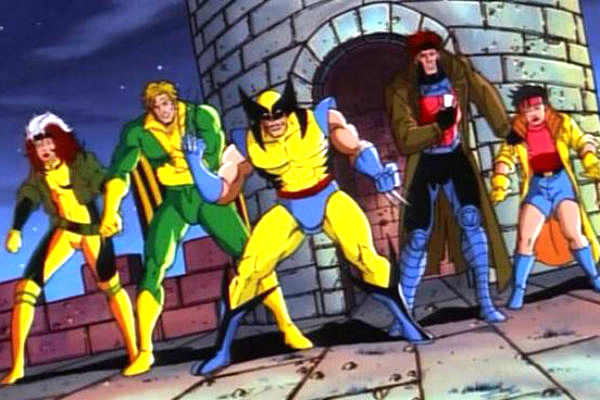
For many of us, Batman: The Animated Series is revered as one of the best cartoons to emerge from this era, proving a huge hit for DC and Warner Bros. when it debuted in 1992. However, another well-loved series arrived that same year, starring one of Marvel's most popular licenses: the X-Men.
While it might not have the depth or bold visual style of Batman, X-Men: The Animated Series was a faithful translation of the comic books, with stories flowing into each other week after week (an unusual move for the time). The X-Men movies may make big bucks today, but the 90s animated series remains the truest, finest adaptation of the characters so far.
While other X-Men series have been produced since, the original has yet to be bettered, and many episodes still impress despite being more than 20 years old.
10. The Final Decision
Following on from the time-hopping mayhem of 'Days of Future Past', 'The Final Decision' sees Magneto kidnap Senator Kelly in the hope of triggering a war between humans and mutants. When the Sentinels rescue Kelly and leave Magneto beaten, a strange set of events is set in motion. Bolivar Trask, the man who believes himself in charge of the Sentinels (mistakenly), wants Kelly to place his robotic army in charge of mutant control, but these are kicked to the curb when the machines start to follow their own orders.
This was written to conclude the Sentinel-based plot that had run throughout the first series of X-Men, as the writing team had little to no idea whether they would have any further episodes beyond the initial 13 ordered. This makes 'The Final Decision' an action-packed episode featuring such awesome moments as Professor X blowing up the X-Jet to take out Master Mold (before parachuting to safety), and plenty of Sentinel-heavy brawls.
We also get to see Magneto and the X-Men fighting side by side, and Senator Kelly become a mutant-supporter. Another notable scene early on shows Magneto attacked by a ferocious group of Sentinels, and as they're all made with plastic rather than metal, the powerless villain gets his butt handed to him in a grand fashion.Luckily, the initial 13 episodes were a hit, and so dozens more were commissioned.
9. Child Of Light

The Phoenix Saga is one of the most well-known and popular X-Men arcs, and the animated adaptation is equally epic. The five-part storyline was brilliantly done, taking the X-Men off-world and into the heart of a cosmic crisis as they try to stop D'Ken from getting his grubby hands on the M'Kraan Crystal. This would give him the power to rule the universe, and 'Child of Light' sees him eventually cause various disasters across Earth when he finally has the crystal in his possession.
This is a particularly gripping episode that captures all the excitement and operatic qualities of the comic, and because this takes place in the series' third season, viewers have had plenty of time to form a bond with the characters. This makes Jean Grey's sacrifice all the more powerful, even if those with any knowledge of the comics know she'll be back.
While the somewhat bizarre space-based shenanigans are unlikely to be to every viewer's taste, this was a massively important part of the characters' ongoing story, showing the high price sometimes demanded to be a hero.
8. Cold Comfort
Iceman finally showed up in this season three episode, which sees Professor X's original team appear in flashbacks. For viewers who became fans solely from watching the animated series, this provides some great insights into the characters that existed before Wolverine, Rogue, and the rest, expanding the series' universe beyond the episodes already seen.
Cyclops takes centre stage here, which means it's not the most exciting episode, but seeing the original team in their classic costumes is a blast. We also get to see X-Factor, featuring Cyclops' brother, Havok. For those familiar with Iceman and the comic's colourful history, 'Cold Comfort' is a welcome throwback to the comics' early days, showing the original members back together again. Introducing X-Factor also fleshes out the universe, and brings in characters who were popular in their own right back in the 90s.
Opening the episode with Iceman breaking into a facility cunningly sets him up as a potential villain, no doubt leaving seasoned fans scratching their heads before the truth is revealed. Having Jubilee and Iceman befriend each other is also a nice way to blend the old-school and the new, with the former pretty much embodying the 90s itself. While this might not be as weighty an episode as 'The Final Decision' or as ambitious as 'Child of Light', it's still definitely an outstanding watch with just the right amount of fan-service.
7. One Man's Worth

Alternate timelines are a common narrative trope in the history of the X-Men, and 'One Man's Worth' made brilliant use of it to explore how different a world without Charles Xavier would be.
After Forge discovers a temporal shift has occurred in the past, he orders Bishop to go back and figure it out (accompanied by his sister, Shard). When they materialise in 1995, however, they find the world is at war, with mutants and humans battling for supremacy. Why? Professor X was killed at some point in the past, and without his dedication to harmony, everything has gone south.
While history is put right by the time the credits roll, 'One Man's Worth' delights in showing us alternate versions of the characters we know so well. Wolverine and Storm are part of a team headed by Magneto, and are actually married. Storm also wears her hair in the well-loved mohawk style from the 1980s X-Men comics.
More time travel takes place when the team travel back further to 1959, to save a young Charles Xavier from being assassinated and, as a result, ensuring a brighter future. This is a well-written episode that has fun showing twisted incarnations of such iconic figures, and lets us meet a younger version of Xavier before he was the cool, level-headed leader we've seen for three full seasons.
6. Slave Island
This follows on from 'Cold Vengeance', in which Gambit, Storm, and Jubilee head off to Genosha, an island promising to give mutants the warm welcome they struggle to find elsewhere. After being captured by Sentinels at the end of that episode, in 'Slave Island' they find themselves held prisoner and forced to work.
This is a fun episode based around the cruelty of slavery and the dangers of one race taking control of another. It also puts Storm, Gambit, and Jubilee at the centre, showing how well the X-Men can operate even when they're separated. As they're forced to wear power-inhibiting collars, the three must find a way to escape without their usual skills.
'Slave Island' introduced Master Mold, and Cable (who would then go on to feature in other episodes). The amount of action and other threads that run through this are all handled well, without the episode feeling overly cluttered, and it's a solid example of the series' bold ongoing narrative: Wolverine returns from Canada, following his battle with Sabretooth in the previous episode, and the final moments set up the next instalment as the X-Men discover their home has been destroyed.
The continuous flow and set-up for later episodes helps to separate X-Men from other 90s cartoons that rely on a more standalone narrative style (such as the mighty Batman: The Animated Series), and allows the storytelling a little more space to breathe.
5. Days Of Future Past

Dropping Kitty Pryde and many of the other aspects from the original story, 'Days of Future Past' instead sees Bishop travel back through time to avert a dark future. Beginning in 2055, this two-part episode sees Wolverine grabbed by Bishop, with plans to have him terminated. Of course, things soon go wrong and Bishop ends up helping Wolvie to escape, before they meet Forge and the time-hopping begins.
There's plenty of plot packed into these two episodes, and even if it does differ from the comic a fair bit, the core elements are still there: Sentinels, a future dystopia, and time travel. The two-parter also brilliantly set up further action, with the X-Men finding that Senator Kelly has promptly been kidnapped after they've saved his life, leaving the story on a neat cliffhanger.
Again, the script keeps all the narrative plates spinning nicely, fleshing the characters out without slowing the action down.
4. Time Fugitives
'Days of Future Past' may have been fun, but 'Time Fugitives' is a rip-roaring time-travel adventure that throws all kinds of madness into the mix.
This two-parter opens in the far, far future of 3999, a time in which Earth is a ravaged battlefield. Cable is battling fiendish robots that look like the result of a romantic liaison between a T-800 and ED-209, when a strange force starts to consume the present. Meanwhile, jumping back to the events of 'Days of Future Past', Bishop discovers his actions actually somehow made things worse, with mutants dying of a mysterious plague and the X-Men wiped from history.
The genius writing of 'Time Fugitives' sees Cable travelling back to intercept Bishop to save his time, while Bishop is actually trying to save his own. It's a head-scratcher of a situation, but writer Michael Edens keeps it streamlined and easy to follow. The cliffhanger at the end of the first part is well done, setting Cable up as a potential assassin. While the next part has a hint of Back to the Future Part II about it, as we see incidents we've already witnessed from another angle. It's hard not to admire the ambition at the core of this two-parter.
3. Enter Magneto

The difference between the X-Men and Magneto is demonstrated brilliantly and economically in 'Enter Magneto', showing the series' strong writing at its best.
With Beast in prison after being captured (following the events of 'Night of the Sentinels'), Magneto attempts to break him out, only for him to refuse in favour of having his day in court. This leads to Professor X giving Jubilee the lowdown on why himself and Magneto are on opposing sides, via some impressive flashbacks.
This episode really serves as a long introduction to a character who would go on to become as important to the series as the X-Men themselves, but manages to pack plenty of awesome stuff in elsewhere. As well as Beast's apt references to The Merchant of Venice (with its heavy racial themes), we also get to see Wolverine's hatred for Sabertooth emerge, and the final battle is brilliantly epic.
The X-Men films may have used Magneto a few times too many, and beaten viewers over the head with his and Xavier's philosophical differences again and again, but 'Enter Magneto' explores their opposing views in an easily-digestible way.
2. Till Death Do Us Part
Mister Sinister certainly lives up to his name in this two-parter. Beginning with the wedding ceremony of Scott 'Cyclops' Summers and Jean Grey, the story sees them kidnapped by Sinister for nefarious reasons. However, perhaps the biggest thread revolves around Morph, the mutant who was supposedly killed in 'Night of the Sentinels'.
Morph is being reluctantly controlled by Mister Sinister as part of his plot to use Scott and Jean's DNA to create his own race of mutants. As the opening episodes of season two, 'Till Death Do Us Part' is an exciting two-parter that introduces one of the comics' biggest villains and also shows the public's growing hatred towards mutants.
In one awesome scene, Wolverine, Gambit, and Beast are relaxing in a bar when they're attacked by the Friends of Humanity, an anti-mutant horde. The ensuing fight spills out into the snowy streets, and sees Gambit get creative with his mutant abilities, using other items as charged weapons rather than the familiar cards. Bringing Morph back as the embodiment of the X-Men's early failure and inability to work as a team was a bold move, and helps to give the story more heart.
1. Night Of The Sentinels

For a number of fans, 'Night of the Sentinels' was their first taste of the X-Men, and this two-parter takes that responsibility on without a single misstep.
Rather than giving viewers a standalone, light-hearted introduction to the concept, 'Night of the Sentinels' is instead a fairly dark tale that sees the team suffer a major loss. Starting with Jubilee's gradual discovery of, and horror at, her own powers, the story soon throws viewers right into the action. Within the first twenty minutes, we see Storm, Gambit, and Rogue battling Sentinels, the X-Men infiltrating a base, and get a feel for the team's diverse personalities.
Things promptly go wrong, however, and the second episode deals with the fallout. A few mistakes here and there lead to the (supposed) death of one team-member, while Beast ends up captured. This allows the writers to show the different mindsets of Cyclops and Wolverine (a major thread in the series and the comics), and makes it all the more gripping when the team eventually kiss and make up to rescue Jubilee in the big finale.
As opening episodes to an animated series go, 'Night of the Sentinels' is one of the strongest ever, establishing the world, the characters, and the central conflict with economy and thrills aplenty.