10 World Class Footballers Who Sucked As Managers

Legends on the pitch, laughing stocks in the dugout.
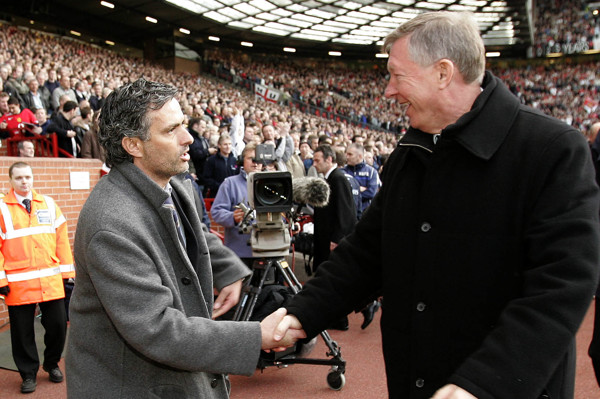
In football these days it's not unusual for someone who had no success on the pitch to be a genius in the dugout. Many of the most successful managers in the modern game barely know how to kick a ball. Sir Alex Ferguson may have had a modestly successful career as a striker but the likes of Jose Mourinho, Arsene Wenger, Louis van Gaal and Roy Hodgson achieved nothing in the game before turning to management. Why is that so many world class managers never played a high level, while so many world class players can't seem to manage their way out of a paper bag? We may never know the reason, but maybe we can study the most egregious examples of managerial laughing stocks to find out why these legendary players failed so badly at management.

10. Bryan Robson

Bryan Robson was one of the greatest midfielders England has ever produced. With his tenacity, boundless energy and eye for goal, he won 90 England caps and turned out for West Bromwich Albion and, most famously, Manchester United. He was captain of The Red Devils during three F.A. Cup victories, and he also lifted a Cup Winners' Cup during his 13-year stay at Old Trafford. He left in 1994 to join Middlesborough as a player-manager and in his first season in the hotseat led them to promotion from what was then Division One. For a while he was spoken of in hushed tones as a potential successor to Fergie, maybe even a future England boss. And then it all started to go wrong. Robson spent money in Teeside and brought in exotic foreign names like Emerson, Branco, Juninho and Fabrizio Ravenelli. Despite this he never led them any higher than 9th in the top division, and oversaw relegation in the 1996/97 season when they also reached both domestic cup finals, losing both. To his credit, he led Boro back to the top table again at the first time of asking the following season. In 2001, with another relegation battle looming, Robson was eased out of the dugout and replaced by then-Manchester United assistant Steve McClaren. Robson was out of work until 2003 when he took over Bradford City, struggling in Division One. He was unable to make any real impact and took the club down.
He returned to the Premier League - and one of his former clubs - when he took West Brom in 2004. He helped keep the struggling Baggies up, even if the club's "great escape" owed more the limitations of their relegation rivals than anything else. In the following season, Robson reverted to type and led them to relegation. It was remarkably the fourth relegation on his managerial CV. He then took over at Sheffield United in May 2007 but left early in 2008 with the club fighting against relegation. These days Robson has a nebulous ambassadorial role at Manchester United, and was last seen in the dugout back in 2011, when he was managing Thailand. It's probably better for everyone concerned if he stays out of the management game.

9. Dean Saunders

Welsh international striker Dean Saunders had a nomadic playing career that saw him bang in goals for the likes of Swansea, Derby County, Sheffield United, Galatasaray, Benfica and most famously Liverpool and Aston Villa. He's an F.A. Cup and League Cup winner and the proud owner of an impressive 22 goals in 75 caps for Wales, which is even more impressive when you consider Wales were awful for much of his playing career. Unfortunately for Saunders and the clubs he has managed, he was unable to take the success he had on the field and transfer it to the dugout. It started reasonably well for the Welshman. His first managerial job was with Wrexham down in the Conference National. His first two seasons ended in mid table finishes, but he led the club to the promotion playoffs in his third season, losing to Luton Town in the semi finals. After a good start to his fourth season, with Wrexham riding high in second place, he was the surprise choice to take over a Championship side Doncaster Rovers. He was unable to keep the struggling side in the division, and they were relegated with him at the helm. He stayed in the job, though, and in January 2013 his team were top of League One, when Wolves came calling.
At the time Wolves were battling against relegation after the disastrous reign of Stale Solbakken, but Saunders proved no better than he man he replaced. It took him ten games to record a win and it was no surprise when they were relegated. Saunders was sacked three days later. Amazingly, Chairmen continued to appoint him. Crawley Town were the next to suffer at the hands of the relegation specialist, appointing him as an interim manager in December 2014 and suffering relegation from League One by May. League One side Chesterfield decided to appoint him next, but he was sacked in November 2015 after a run of awful results saw the team slide down the table towards the relegation spots. Who will appoint Saunders next? No one that has any sense, that's for sure.

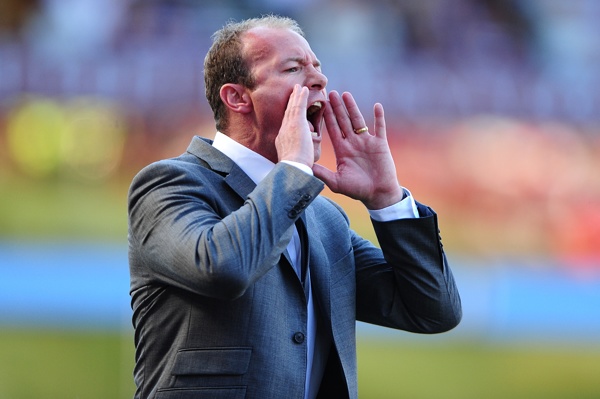
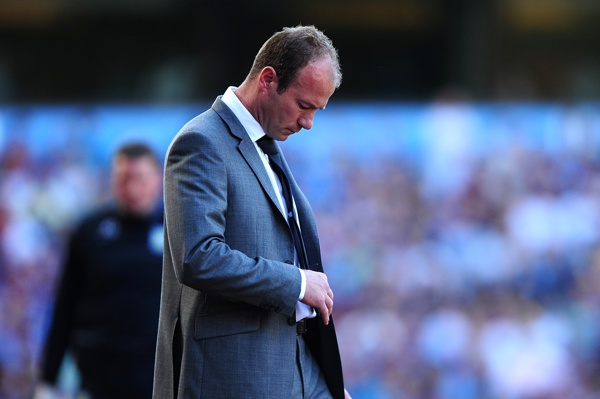
8. Alan Shearer

Alan Shearer surely needs no introduction. He's the Premier League's highest ever scorer with 260 goals, and holds that same record for his hometown club Newcastle United. He won a Premier League title with Blackburn Rovers and bludgeoned 30 goals in 63 England caps. It never really looked as though Shearer would move into the dugout after his retirement in 2006. Though he would often comment about his desire to be a manager one day, he made no moves to complete any of the required qualifications, and seemed happy enough to narrow his eyes and state the obvious on the Match Of The Day sofa. It was quite a shock, then, when he stepped into the breach to manage his beloved Newcastle United in April 2009. The club's permanent manager at the time was Joe Kinnear. He was recovering from heart surgery and had been temporarily replaced by the coach Chris Hughton. When he took over things were looking bleak for the club. They were in the bottom three with only eight games remaining. But if anyone could save them, Shearer could. Right? Wrong.
The Geordie legend lost five and won only won is his eight games in charge, and relegation was confirmed on the final day of the season when a Damien Duff own goal condemned the club to defeat against Aston Villa. To make matters worse, local rivals Sunderland managed to stay up. Shearer was overlooked for the job on a permanent basis when Kinnear retired, and has not taken a management job since. It's hard to imagine clubs scrambling to offer him management jobs any time soon.

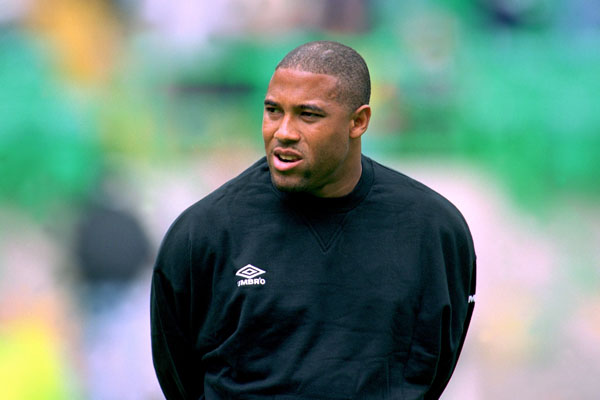
7. John Barnes

The Jamaican born England international winger spent decades mesmerising defences and giving full backs twisted blood for Watford, Liverpool, Newcastle United and (to a lesser extent) Charlton Athletic. He wasted no time in making a move into management after retirement at the end of the 1998/99 season. He was appointed manager of Glasgow giants Celtic, with his former boss at Liverpool Kenny Dalglish taking the role of Director of Football. There were high hopes for this managerial dream team, but to say things didn't go to plan is a bit of an understatement. Barnes' most memorable game as Celtic manager was a Scottish Cup defeat to then First Division outfit Inverness Caledonian Thistle, that prompted that famous headline in The Sun: "Super Callie go ballistic, Celtic are atrocious". Barnes lost his job soon after that embarassing defeat, replaced by Dalgish. He was then out of the management game for eight years, before reappearing as manager of the Jamaican national team. He spent just a year in the role, though at least he had some modest success, leading the Reggae Boyz to first place in the 2008 Caribbean Championships. He returned to club management soon after with League One side Tranmere Rovers, assisted by his former Liverpool teammate Jason McAteer. Barnes steered the club to victory in a measly three games of the 14 he oversaw, and he and McAteer were relieved of their duties after a 5-0 shellacking by Millwall. It's fair to say the Tranmere players weren't sorry to see the back of the duo they dubbed "Dumb and Dumber". It's hard to imagine any other club giving Barnes the reigns after two disastrous managerial spells in ten years.

6. Hristo Stoichkov

"I don't believe in tactics," announced Hristo Stoichkov on his unveiling as Celta Vigo manager in 2007. He wasn't lying - he was a man who had once lined up Bulgaria in an inexplicable 2-4-4 formation for a World Cup qualifying game. His playing career was spent most famously at CSKA Sofia, Parma and Barcelona, and his managerial career started at the very top when he was named Bulgaria manager after their poor showing at Euro 2004. During Stoichkov's reign the idea of actually qualifying for a tournament seemed a distant dream. Under their legendary former striker Bulgaria failed to qualify for World Cup 2006 and had clashes with three players - including captain Stilyan Petrov - that forced them into early international retirement. With the country failing to get anywhere near qualifying for Euro 2008, the volatile Stoichkov resigned from his post and soon turned up at Celta. He didn't last long, dragging the club into a relegation battle in the Spanish second tier. In a short spell in charge of South African side Mamelodi Sundowns he led them to second place in the league, but the nomadic boss soon moved back home to take charge of Litex. Again he spent just a season in charge before jumping ship to join Bulgarian powerhouse - and his former club - CSKA Sofia but he quit after just one month without taking charge of a game. Having burnt bridges and fallen out with players everywhere he's been, it's hard to see clubs lining up to give him a job any time soon!

5. Marco van Basten

Marco van Basten was one of the great strikers of the 80's and 90's, thanks in a large part to that volley in Euro '88. He hammered in 218 goals in 280 professional games for Ajax and A.C. Milan before injury cruelly curtailed his career at just 30 years old in 1995. Like others on this list, van Basten started his managerial career at the very top. He was appointed manager of the Netherlands in 2004, even though his only coaching experience up to that point had been one season as an assistant with the Ajax B team. The former striker guided them to World Cup 2006 but they were knocked out in the round of 16. They impressed early on in Euro 2008 but crashed out at the quarter final stage to Russia, managed by fellow Dutchman Guus Hiddink. Van Basten then returned to former club Ajax but lasted only one season in the job after guiding the title favourites to a disappointing third place finish. He popped up next at Heerenveen for two season, where eighth and fifth place finishes in the Eredivisie suggested he may be back on track. He joined AZ Alkmaar to replace Dick Advocaat, but spent only 5 matches in charge, deciding to step down to become an assistant manager due to the stresses of the role. He's currently the assistant to Danny Blind for the Dutch national side, and it doesn't seem likely that he'll be taking a top job anywhere soon.

4. Ossie Ardiles

Argentine international Osvaldo "Ossie" Ardiles became a cult hero in England due a spell with Tottenham Hotspur in the late 70's and 1980's, at a time when foreign players were still rare and exotic creatures. He won the F.A. Cup in his third season with the club and, perhaps best of all, had an F.A. Cup song named after him, with Chas & Dave's "Ossie's Dream". His first move into management was impressive. He brought a so-called "Samba style" to unfashionable Swinton Town in the 1989/90, and his attacking outfit were only denied promotion to the top flight due to alleged irregular payments to players. In the following season, Ardiles was forced to sell the clubs' best players to stave off financial trouble, and soon found himself out of the door when Newcastle United offered an escape route. He lasted just a year in the job, when he took the Toon Army to the bottom of the second division. His next managerial stint was more successful, taking West Brom to victory in the Division Two playoff final, and it was then that former club Tottenham Hotspur came calling. If The Apprentice didn't prove that Alan Sugar has no eye for a business parter, his managerial appointments at Spurs should confirm it. Ardiles spent a good chuck of Sugar's cash on big name players like Gheorghe Popescu and Jurgen Klinsmann but his entertaining side - whom he sometimes lined up in a 2-4-4 formation - could not stop shipping goals and spent most of his spell in charge in the bottom half of the table. Since then, he has adopted a "have managerial qualifications, will travel" attitude and had short spells managing in his native Argentina, Mexico, Paraguay, Japan, Croatia, Israel, Malaysia and even Syria. Sadly, it doesn't look like we'll see any of Ossie's 2-4-4 formation in the Premier League again.

3. Tony Adams

Tony Adams was a one club man. The rugged centre half wracked up over 500 appearances for Arsenal, briding the gap between the "old" Arsenal and Arsene Wenger's paradigm shifting reign. He won four Premier League titles, three F.A. Cups, two League Cups and a UEFA Cup Winners' Cup, and also amassed 66 England caps. His managerial career, it's fair to say, has been much less successful. He began lower down in the football pyramid, unlike many ex-internationals, with Wycombe Wanderers in League One in 2003. The club were relegated to League Two under his watch, and he could not lead them back up in the following season. After spells doing some youth coaching abroad with Feyenoord and Utrecht he returned to home shores as one of Harry Redknapp's many assistants at Portsmouth. When 'Arry joined Spurs, Adams was promoted into the top job. He didn't last long - after accruing just 10 points in 16 games, he got the boot. His next move was very left field - in 2010 he turned up in Azerbaijan, managing Gabala F.C. His contract was worth an impressive £1m per year, but he could only lead them to a mid-table position and resigned after just one season, and hasn't managed since. Will anyone take another change on a three-time failed manager?

2. Diego Maradona

Ah, Diego. What can you say about the man who almost single-handedly one the World Cup for Argentina in 1986 (with a little help from "the hand of God")? His club career was spent at massive clubs - most famously at Napoli but also at Boca Juniors, Barcelona and Sevilla, among others. After a career dogged by controversy, it was difficult to see the combustible attacker making a smooth transition into management. It certainly proved that way, with his first job at Textil Mandiyu in Argentina in 1994 ending in relegation, and he followed it up the following year with another unsuccessful spell at former team Racing Club. He was away from the dugout until 2008 when he was appointed Argentina boss, proving that his reputation on the pitch meant more than a lack of any kind of managerial track record. To no one's real surprise, the great man regularly flirted with disaster. Bolivia thrashed his team 6-1 (the biggest defeat in their history) and under his watch Argentina came within a whisker of failing to qualify for the 2010 World Cup. When they did eventually scrape through, Maradona showed his usual restraint, memorably telling the assembled media to "suck it and keep on sucking it". He took Argentina as far as the quarter finals, where they were hammered 4-0 by Germany. The Argentine F.A. chose not to renew Maradona's contract.
In May 2011 he returned to club football with the Dubai based side Al Wasl, but he was sacked after just over a year thanks to unremarkable results. It's a shame he probably won't get another top job - he guarantees good fun (for neutrals), just not good results.

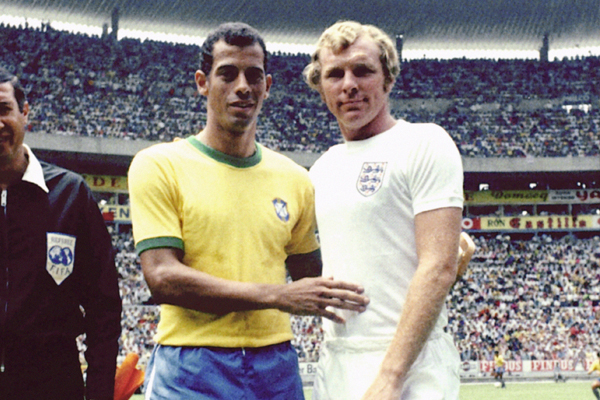
1. Bobby Moore

Bobby Moore. National hero. National treasure. The West Ham legend (who also turned out for Fulham in England, and San Antonio Thunder and Seattle Sounders in the States) lifted the World Cup with England, and that image of him holding the Jules Rimet Trophy aloft will forever be etched into the national consciousness. Let's face it, we may not see an England captain winning the World Cup again! He began his managerial career with non-league Oxford City (not even Oxford United) in 1980. In reference to the former England captain's "generous" contract Tony Posser, the club's Chairman, stated that "if he is half a good a manager as he is negotiator he will do very well". Unfortunately for Posser, it turned out Moore's managerial acumen did not match his skill at contract negotiation. He was sacked less than a year into the job. He then spent a season managing in China with Eastern Athletic Association before returning to English league football. Third Division Southend United were convinced enough by Moore's playing reputation to ignore his woeful one in non-league management. In fairness for the former England man, he got off to a promising start in spite of the club's financial problems. IIn his second seson in charge, he led them to the fringes of the promotion race before they fell away in the second half of the season. Come the end of that season, Moore was out the door. After that experience Moore didn't manage again, instead forging a career for himself as a respected sports journalist. It's a real shame that Moore could not replicate his legendary feats on the field from the bench. Is there any boss with a bigger discrepancy between their playing a management career?

Contributor
Contributor

David is an office drone and freelance writer for WhatCulture and Moviepilot, among others. He's also foolishly writing a serialised novel on Jukepop and has his own irregularly updated website. He's available for freelance work. Reach out on Twitter to @davefox990