10 Ways England Can Get The Ashes Back

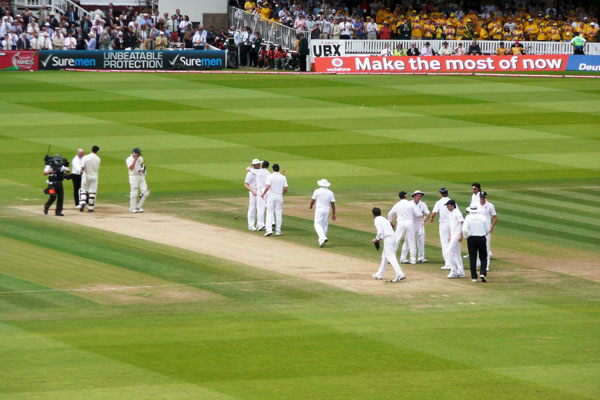
For England cricket fans, this has truly been the Winter of Discontent. Whatever hope and gaiety surrounded England's 3-0 win against Australia in the home Ashes series of 2013 had all but evaporated by the end of the Adelaide Test. Now with the series done and dusted, and the urn returned to Oz in another 5-0 whitewash, it's clear to everyone that serious changes are in order if England are to turn things around in time for the next home series in 2015. Everyone has their own ideas about what went wrong. We picked the wrong bowlers. We picked the right bowlers and didn't play them. Our batsmen were out of nick. There weren't enough warm-up games. Jonathan Trott going home for medial reasons unsettled us. Graeme Swann's sudden retirement left us without a proper spinner (sorry Monty, but it's true). The backroom staff were to blame. The players were jaded and tired from playing back-to-back Ashes series. Maybe - just maybe - Australia were just too good: too fast, too confident, too frightening. In 18 months the Ashes will be contested again, and I will still be supporting England regardless of what happens in between. Like many England fans, I prize the Ashes above any other series, and am reconciled to the fact that most of our problems won't be fixed in a few short months. Nevertheless, I have come up with 10 ways in which the Ashes could be got back. Some of them are practical suggestions, some of them are more fanciful, but at your lowest point one should be willing to give anything a try. Here then, in no particular order, are my recommendations for the ECB...

10. More Warm-Up Matches

This one is tricky to enforce for an obvious reason: where do you find the time? We're constantly told about how busy the international cricket schedule is, with ongoing discussion about a window for the IPL or similar tournaments like the Big Bash. And in the age of central contracts, it's no longer the case that England's cricketers have to fulfil county commitments in between home Test matches, as was the case when Ian Botham was in his pomp. Warm-up matches aren't a guarantee that someone will perform in the Test arena. The crowds are smaller, the opposition are often of a lesser ability and the atmosphere is very different. But what they do provide is a chance for individual players to get into rhythm and start reading pitches which may be very different to their home conditions. It's a good way to break new players in and finalise the starting line-up for the Test side. If England persist with their meticulous style of preparation that characterised their win Down Under in 2010-11, then insisting on more warm-up matches on every tour is a good start. It is far more effective than nets at testing a batsman's technique, and adds more variety to tours which always stop at the same venues. It won't solve all England's problems, but it will help in some small way.

9. A Change Of Management

http://www.youtube.com/watch?v=TvwKDZi0qqA Many older commentators latch onto the abundance of management that surrounds the modern England team, with the likes of Geoffrey Boycott claiming that having so many coaches prevents modern players from thinking for themselves. While the jury is still out on that, and will be for some time, it's clear that the current England management are no longer capable of taking the team forward, either in technical assistance or in terms of motivation. No-one is denying their achievements before this year, but the time has come for new blood. For my money, Graham Gooch should be the first to go. Gooch was a prolific run-scorer for England in his time, and he has done some valuable work with the batting line-up, particularly in getting Kevin Pietersen to play straighter. But Gooch also has a reputation from his playing days as a slave-driver, who insisted on training so ardently as captain than people hated playing under him. If he can't loosen up, he should be replaced with someone who has a better sense of humour (sadly, David Gower won't be in the running). David Saker, the England bowling coach, should also be looked at long and hard. As before, he's done great work for the side, and James Anderson has thrived under his tutelage. But like much of the England set-up, Saker seems more concerned with not conceding runs than with taking wickets, meaning that naturally quick but expensive bowlers like Steven Finn have been held back or overlooked. He may still have something to offer, but he needs to deliver soon. As for Andy Flower, getting rid of him straight away would be difficult. The ECB has already expressed their confidence in him, and it seems fruitless to fire him after all the measures put in place to ease the burden on him (e.g. having Ashley Giles as one-day coach). He also has a good record as a coach against India, so with M. S. Dhoni's side coming to play five tests this summer, it makes sense to hold onto him for now. But like Gooch, Flower needs to demonstrate a new-found flexibility and sense of humour. If he can't find it, he must step aside and let another try his luck.

8. More Room For Rotation

Many Australian journalists will be billing this whitewash as a return to the glory days post-1989, where Australia were the best team in the world and England failed to win the Ashes for 16 years. But arrogance and hubris aside (and England have plenty of those things too), there is one crucial difference between England then and England now: now it is much harder to get dropped. Before the days of central contracts, England would select and drop players seemingly on a whim. Players were not given the stability they needed to develop at Test level, nor the time to adjust or readjust to Test conditions after time away in county cricket. It was a foolhardy system, but the new system has become just as foolhardy. While I have nothing personal against, say, Jonny Bairstow, his performances do not indicate he has a Test temperament or technique. Notwithstanding his stand-in wicket-keeping in this most recent series, he should have been dropped after the home Ashes. Bringing in new players like Joe Root and Ben Stokes lifts the team, adding a frisson of internal competition as older players gently compete to save their place. No-one can play for ever, and having a bright young lad pounding on one's door can lead to a late-period surge in one's career. It also allows England to rest their most experienced bowlers: the likes of Anderson and Broad can play when it matters most and provide support behind the scenes when the stakes are not so high.

7. Let Players Pick Their Formats

I'm not a fan of Twenty20. I'm not really fussed about one-day cricket at all, in fact. But if both formats are here to say in some form, IPL window or not, then sooner or later action will have to be taken about players choosing their formats. Comparing the IPL to World Series Cricket is a little tricky, but players are beginning to pick their sides and their cricket boards are still having to play catch-up. The big argument against allowing players to pick and choose is that it will cause a 'brain drain' of players to the shorter formats, with their huge pay cheques and quick rise to fame. The solution is for national boards to pay their players incrementally according to the format, with Test players earning the highest amount, followed by ODI squad members and finally T20 players. Those involved in T20 will still benefit from sponsorship deals, and their careers will be lengthened by not having to balance other commitments. This recommendation is among the more fanciful on this list, but it would help to reiterate the importance of Test cricket on a financial level. It would also remove selfish mercenaries from the Test arena, preserving the spirit of the game against the materialistic spirit of our age. England could pioneer this kind of system which, if successful, would prevent a lot of future disputes between players and boards, and both England and the wider game would be better for it.

6. Encourage Genuine Fast-Bowling

In the documentary Fire in Babylon, the great West Indian fast bowler Michael Holding said there was one huge difference between the out-and-out fast bowling of his era and the skilful fast-medium that spearhead England today: the fear of getting hurt. It's a fear Australia exploited brilliantly, with the relentless pace of Mitchell Johnson and Ryan Harris getting under the skin of England's batsman, exposing the slightest flaws in their techniques and denting their confidence as much as their helmets. Australia have a history of producing great out-and-out fast bowlers, epitomised by the deadly 1970s duo of Dennis Lillee and Jeff Thomson. England, by contrast, haven't produced any great genuinely fast bowlers since Bob Willis retired. Some of this is down to the pitches, with greener services offering more by way of lateral movement than genuine pace and bounce. But a lot of it lies in the suffocating conservatism that plagues much of the modern game, in which containing an opposition is often valued more highly than trying to blast them out. It takes great skill to bowl with genuine pace, and bowlers who aren't quick the finished article (like Steven Finn) will be expensive at times as they learn their craft. It's important to have tight, precise, line-and-length bowlers who can contain opposition, but genuine fast bowlers win Test matches, extracting what slower bowlers can't even on placid pitches. If England want to return the favour and get under the Aussies' skin, they need to find bowlers who can pass 90mph and coach them to keep that pace.

5. Encourage Genuine, Attacking Spin Bowling (Including Mystery Spin)

I was a big fan of Graeme Swann. I loved the fact that in an age of mystery spin and suspect bowling actions, an old-fashioned orthodox off-spinner could rise to the top of the world rankings and create havoc for opposition the world over. But with Swann retired and Panesar not firing on all cylinders, the time has come for England to embrace modern spin bowling in all its many forms. Like the previous comment, some of this rests on the historical nature of English pitches. It's very rare in a country known for drizzle, overcast days and green grass to get the sort of dry, dusty pitch on which spinners thrive. But as with fast bowling, a lot of the problem also stems from an emphasis of control over taking wickets, and a truly great spinner always does both. That's one of the reasons why England have traditionally preferred finger-spinners like Swann and Panesar over wrist-spinners like Ian Salisbury and Scott Borthwick. England have a very good spin coach in Mushtaq Ahmed and should focus on developing the next generation of spinners, specifically those who can turn the ball significantly with variations. Mystery spinners should be brought into the fold early on so that their can refine their craft and continue surprising the opposition. Coaches can help to hone techniques and teach bowlers to use said variations sparingly, but they should not discourage spinners from being attacking just because they go for a few runs. The time for being defensive and bowling tight is over: England's spinners need to be less like John Emburey and more like Shane Warne.

4. Vary The Pitches

Let's not kid ourselves here: nobody really loves flat pitches. Batsman hate them because they don't allow themselves to be genuinely stretched; bowlers hate them because they have nothing to work with; and the crowd hate them because they make for boring, high-scoring matches which often end in draws. The only people who really love flat pitches are administrators, because then matches have more chance of going for four or five days and thereby they can make the most possible money from ticket sales and broadcasting rights. When England come to play the next Ashes series, they will of course have a say over the state of the pitches; they will play to the strengths of the England team as it then stands. But if England are to recover confidence in the meantime, and turn promising youngsters into genuine batsman, they need to learn how to play on a wide variety of pitches at home. Curators must go to all lengths to create fast, bouncy pitches, dry turners, green seamers and slow, skiddy surfaces in addition to the flat decks in which they and the ECB take pride. By having a variety of pitches all around England, the ECB will create the conditions where any batsman playing at county level will be tested all-round on his technique. It will make the county game more interesting, and if a player has a specific weakness (say against spin) he can spend time working on a specific pitch rather than doing the same indoor nets as everyone else. This won't solve England's long-standing issues with pace and spin overnight, but it will give us a chance to prepare and solve the problem in the longer term.

3. Financial Rewards For 100s And 5 Wicket Hauls

One of the reasons why England lost the Ashes is a lack of hunger in the players for another Ashes series so soon after the last. That's not to say the batsmen didn't try to score runs, or the bowlers didn't try to take wickets, but they lacked the desire or edge of their Australian counterparts. There is more than one way to motivate a player when he's out of nick - and direct financial incentives may be the answer. This will be one of the more controversial suggestions, since England players earn pretty good money at the moment, not to mention sponsorship deals from kit manufacturers and drinks companies. But with players being tempted by the high, fast wages of the IPL, it's something that could be trialled. Pay each batsman or bowler their standard wage, but boost it by a certain amount or a fixed percentage if they score a hundred or take five wickets in a match. This fosters and consolidates both a desire for success in the team and a bit of friendly competition between the players, which will boost their performance on the field. Fast bowlers bowl at their best when worked up, batsman play best when they have a clear goal in mind, and fielders are most on their toes when they know the importance of a given catch or run-out. It may be cynical to expect that paying someone more money will improve performance, and the sums would have to add up so that ticket prices don't soar. But with the right system in place, this could yield many dividends - and not just for the players.

2. Replace Cook With A More Adventurous Captain

As with the coaching staff, there is no denying the contribution that Alastair Cook has made to England as a player. It's not so long ago that he averaged over 100 in a series against Australia, including three centuries made by sticking to the shots he trusted and being calm under pressure. He was the natural successor to Andrew Strauss and led England to their first series win in India since 1985. Like Strauss, Cook deserves credit for his man management skills. He brought Kevin Pietersen back into the fold after the fallout of the South Africa series, without which England would probably not have won that series in India. But like Strauss, Cook is also an inherently conservative and defensive tactician, preferring to wait until things happen rather than make them happen of his own accord. His orthodox field placings and safe tactics were no match for the creativity of Michael Clarke, and the longer the series went on the more inept he looked. The question is, of course, who should replace him? It would be a risky move to give Pietersen another go, given what happened last time, though Michael Vaughan's suggestion of making him vice-captain is a sensible one. Ian Bell's captaincy at Warwickshire has been praised by former opener Mark Butcher, but he is probably a more long-term choice and isn't quite charismatic enough. For my money, this is the time for England to experiment and try out Broad as a test captain. His consistency and commitment in this Ashes series with the ball deserves to be rewarded, and his natural aggression could make all the difference.

1. Let Players Have Fun And Play Their Natural Game
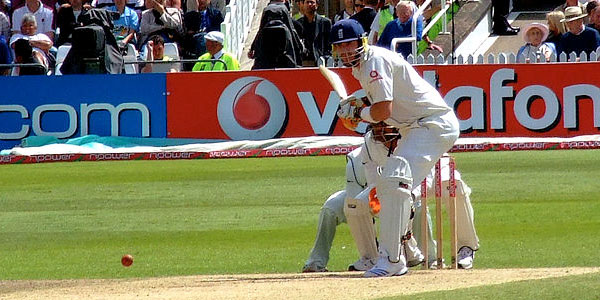
The single biggest difference between England and Australia in this last Ashes series is that Australia were having fun. Of course, it's easy to look happy when you're winning, but there was a feeling that the Aussie players were being allowed to express themselves under Darren Lehmann's coaching; they could be themselves so long as they performed on the pitch. England, by contrast, seem to have had all the fun sucked out of them, whether by Flower's rigidity or an all-round lack of confidence. They look like they are not allowed to have fun, and many players are jaded as a result. There is a difference between asking someone like Pietersen to be a team player and forcing him to play like people who are less talented or confident than him. Pietersen is capable of playing carefully to get himself in, but that's not his real talent or the reason he's in the team. He's in the team to change the course of the game, get on top of the opposition and win matches. And it's not just Pietersen or the other more attacking players: Jonathan Trott did a similar thing, dictating terms to the bowlers by only scoring in certain areas and wearing them down to create a platform for Pietersen and Bell. If England are to become a cricketing side which is both successful and entertaining to watch, they have to fill their side with players who can do a job and have fun doing it. Alastair Cook has been a prolific run-scorer thus far, but getting all the top six to play like him would be ludicrous and boring. If players give their wicket away cheaply or undermine the side, they should be disciplined, but you need players with personality to bring in crowds and win Test matches. When a player is having fun, he's more confident, confidence leads to runs and wickets, and runs and wickets win matches. --- Disagree with my recommendations? Got any better ideas? Drop me a comment below.

Contributor
Contributor

Freelance copywriter, film buff, community radio presenter. Former host of The Movie Hour podcast (http://www.lionheartradio.com/ and click 'Interviews'), currently presenting on Phonic FM in Exeter (http://www.phonic.fm/). Other loves include theatre, music and test cricket.