10 Players Who Probably Regret Joining Chelsea
Players who wish that they hadn’t been lured by the Abramovich regime, for the sake of their own careers.
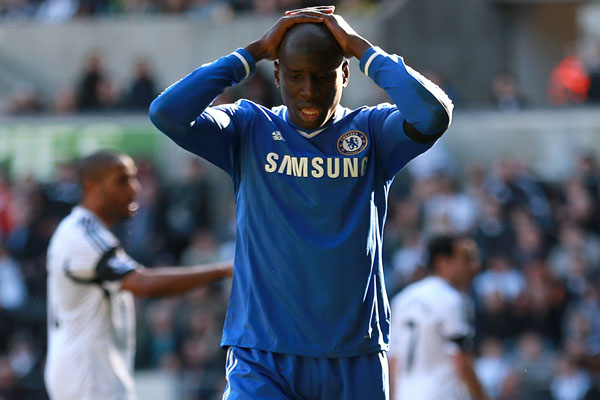
There is no room for sentiment at Stamford Bridge. With the ruthless Roman Abramovich splurging endless amounts of cash into fine-tuning his star-studded squad, there always exists a pressure for instant success. With managers hired and fired at the drop of a hat, an players deemed disposable following a couple of shoddy displays, the blue half of London has become something of a pressure cooker in recent years.
Chelsea has often been touted as the graveyard for talent. While a number of players have flourished under the stewardship of Ancelotti, Mourinho et al, there is no denying that there is a stream of players who wish they had never set foot inside the walls of Stamford Bridge. With the strikers curse hoping to be lifted by Diego Costa, there have been a number of players over the last number of years who have wilted in Didier Drogbas looming shadow.
Since the Russian oligarch assumed the reigns of control in 2003, transforming the debt-ridden club, he has purchased some of the finest talents the continent has been privy to in recent years. For every superstar that flourishes under the increased stress and pressure, two are tossed to the wayside, with multi-million pound signings deemed not good enough.
Careers have stalled at Chelsea, and potential has remained unfulfilled, as the constant wave of uncertainty has threatened to strangle the life out of the club with each passing year. Some have even devised escape routes from their nightmarish ordeals after only a few short months, willing to waive the increased salaries in order to salvage their quickly evaporating careers. Vilified in the press and lynched by certain sections of the support, Chelsea is most certainly an instant-success type of club these days.
Take a look at our picks who will wish that they hadnt been lured by the Abramovich regime, for the sake of their own careers.
10. Kevin de Bruyne
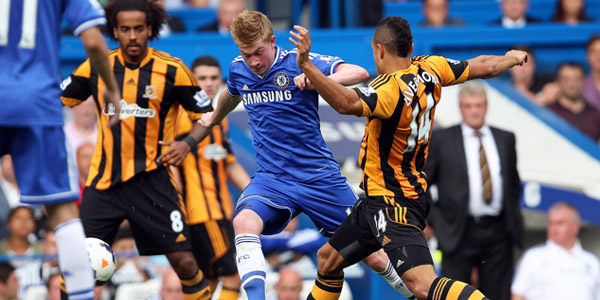
For myself, I know what I can do on the field. Physically, Im always one of the top players in the game and run a lot of kilometres. The second half of the season (at Wolfsburg) I showed everybody Im a good player. But its difficult to prove yourself if nobody can watch you thats all I can say about it. Im not at the club anymore and Im doing fine at the moment.
Boisterous and mouthy the diminutive midfielder may be, but Belgians top-scorer in World Cup qualifying has a point. Sold to Wolfsburg for £17 million in January, and forced to defend pointy attacks from Mourinho regarding his training methods, Kevin De Bruyne can point to the distinct lack of an opportunity he was afforded at Stamford Bridge.
Having followed former club team-mate Thibaut Courtois from Genk to London in 2012, the then-20 year old playmaker put pen to paper on a five and a half year contract with the London giants, for a fee believed to be in the region of £7 million. He neednt have unpacked his suitcase, with a contract clause inserted dictating that he finish the season at his former club.
German giants Werder Bremen were the next side to take him off Chelseas hands, taking him on a season-long loan in August. Scoring 10 goals in 33 appearances, and continuing to sparkle for the national side, he must have thought that he would catch the eye of at least one member of the hierarchy at Chelsea.
Returning in 2013, De Bruyne was determined to fulfil his undoubted promise at the London giants, with the return of Mourinho promising a spine-tingling renaissance of sorts. Following assurances from the Portuguese boss, the Belgian midfielder made his debut for the club in Chelseas opening game of the season, providing an assist.
However, with his frustrations growing clearer each day, the Belgian superstar was at a loss to work out how he couldnt break into the side. He would go on to make only two more appearances for the side, before Wolfsburg shelled out the princely sum of £17 million to entice him back to Germany.
9. Mateja Kezman
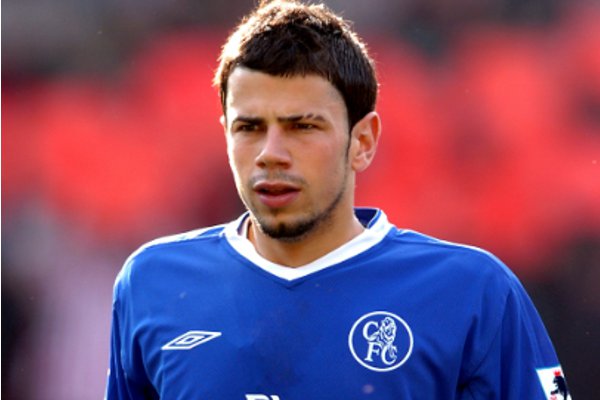
Jose Mourinho has swooped to capture some truly fantastic players in the past, but like all great managers, he has also erred on a multitude of occasions. He must occasionally wince when recalling the profligacy of Andriy Shevchenko, the ineptitude of Jiri Jarosik, and an Israeli centre-half in Tal Ben Haim, who looked like he had lead weights in his socks. Mateja Kezman, however, is the original flop.
Having hit over 30 league goals in each of his last two season for PSV Eindhoven, he was fast emerging as one of the most coveted strikers in European football. The Eredivisie has served as a conveyor belt for some splendid talents for Premier League audiences over the years, but ultimately, Kezman proved to be more Alfonso Alves than he did Luis Suarez.
Poached for a supposedly bargain £5.3 million in July 2004, Kezman was seen as the perfect foil for Didier Drogba. Ready to rotate between the two, it was mooted that Kezman would get plenty of chances to stake his claim as Chelseas top marksman for the next decade.
If there is one player who concocted the strikers curse at Stamford Bridge, its Kezman. When Fernando Torres spent the first three months of his Chelsea career looking in earnest for the back of the net, it was reminiscent of Kezmans first few months at the club. Unable to score in the shirt of the Blues, the Chelsea players eventually sympathised with the Serbian, allowing him to break his duct from the penalty spot, with the side already 3-0 up against Newcastle United.
He scored three more league goals for Chelsea against Norwich, and a brace against Crystal Palace before being shipped out of the club as quickly as possible. Drogba may not have exactly caught fire in his debut season, but compared to the floundering Serb, he probably looked like the best thing since sliced bread.
However, despite his difficulties, Kezman has stated that he loved the time spent in the English capital.
Chelsea was the best thing in my career. That was the climax of my career, for sure. Living and playing in London was something that I will never forget. I don't know if I made a mistake because I moved away so quickly. Maybe I do and maybe I don't regret it, but I always believe in my decisions. But the transfer to Chelsea made my dreams come true. That was the best thing that ever happened to me. Maybe I could achieve more and I could have been more successful at Stamford Bridge, but I don't regret anything." Kezman, 2011.
When Mateja Kezman is old and grey, he will look back on his career, and examine the turning points. He will note the 105 goals he notched in four years for PSV, and the subsequent big-money moves he was linked with. He will note the devastating partnership he had formed with a certain Arjen Robben, who has since left him behind to become a global superstar. He will also note that since leaving PSV, his career has resembled more of a tourist than a football player, taking in spells in Spain, Turkey, France, Russia and China. There has only been a solo season since the glory days of the Eredivisie, where he has managed to hit double digits in the league.
His international career ended in ignominious fashion with a red card in the 2006 World Cup at the age of 27, while his fledgling journeyman career was finally put out of its misery when he hung up his boots at the age of 32.
Touted for Real Madrid at one point in his career, Kezman will at point look back on his time at Chelsea, and think just how much damage did that move have on his reputation throughout the continent?
8. Demba Ba
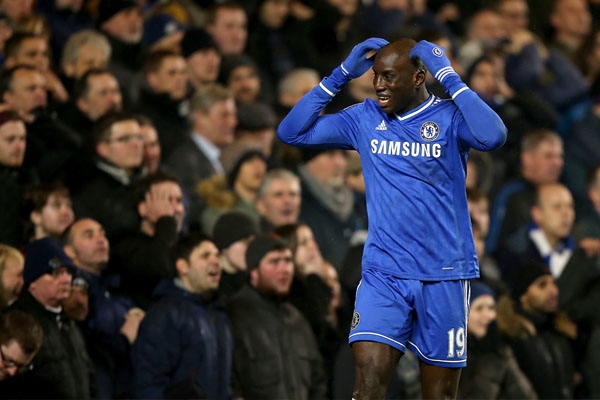
Demba Ba has nearly signed for so many different Premier League clubs, from Stoke City to Arsenal, but when he did finally make the step up to the level of title-chasing Chelsea, he was ultimately found wanting. Despite his apparent strops at starting some games on the bench or being played out of position, both in order to accommodate the newly-acquired Papiss Cisse, Ba still plundered 29 league goals in 18 months at Newcastle United.
A born finisher, Chelsea thought they were getting an efficient Premier League marksman when they activated the £7 million release clause in the Senegalese internationals contract. Alas, the fabled curse of the Chelsea striker took hold of Ba, as he registered a pitiful two league goals in his first half-season, before following that up with five in his only full season at the club.
Finding himself behind the equally profligate Samuel Etoo and Fernando Torres in the pecking order, Ba was reduced to sporadic first-team appearances, although he did weigh in with crucial goals against PSG in the Champions League quarter-final and that famous Anfield goal which will be remembered with great fondness at Eastlands for seasons to come.
''Im looking to leave Chelsea. I want to play the full 90 minutes, get the maximum number of games and enjoy myself. Ive not done that very much this season, and I doubt things will change for me here. Jose Mourinho has never explained his decisions to me. I am honestly surprised that I have been this patient. Earlier in my career, I would have cracked up or blown a fuse. If I leave them, I mustnt make a mistake. Ba, 2014.
Having recently ended his Chelsea frustrations with a transfer to Besiktas, where he will undoubtedly be worshipped by the fanatical Turkish support, Ba is free. Hopefully he will be able to reproduce the sort of form that earned him a transfer to the champions of Europe in the January window of 2013. For his own sake, lets hope that he has heeded his own advice, and not made a second successive mistake.
7. Scott Parker
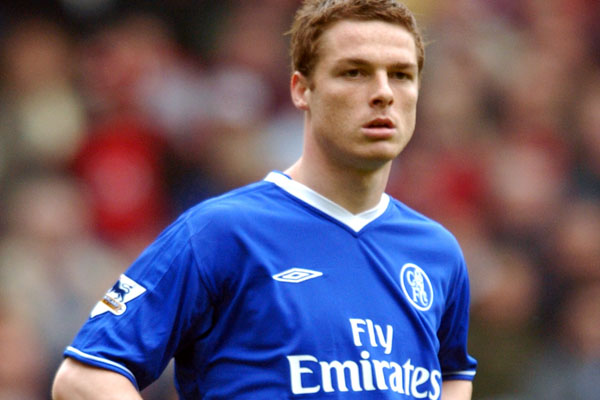
It seems strange to include a player who won the PFA Young Player of the Award while on the books of Chelsea, but when one analyses the limited opportunities that he was actually afforded in the 03/04 season, they can intimate that it was possibly a season of hampered progress.
Parker has spent most of his career in London, beginning his career at Charlton Athletic, before taking in spells at West Ham, Tottenham and Fulham, while donning the captains armband on Tyneside for a period. Brimming with potential, it is no wonder that the swashbuckling fat cats of Abramovichs entourage arrived at Charltons headquarters with cheques in hand, following a series of tenacious and dynamic displays in the middle of the park for the Premier League side.
With the world seemingly at his feet, he had been predicted to be an English captain, and a mainstay of an inevitably glorious Ranieri era. The punters were half right, as Parker pulled the armband up the sleeve of his Three Lions jersey in 2012 for a friendly meeting with the Dutch, but as far as his Chelsea career goes, nothing could be further from the truth. Having left Charlton in acrimonious circumstances, incurring the wrath of former boss Alan Curbishley for his role in the transfer, he found it difficult to dislodge the strangehold that Claude Makalele and Frank Lampard had on the midfield.
Once Mourinho was appointed, Parker might as well have packed his bags and sang his farewell song, having only been entrusted with meaningless cup games. To signify just how little Parker mattered to the Chelsea cause, he wasnt even eligible for a Premier League medal once the curtain was pulled on a triumphant club season, with the former Charlton hero having made just four league appearances.
In order to get his career back on track, an escape route was devised, with Newcastle owner Freddie Shepherd stumping up £6.5 million to acquire the services of the former PFA Young Player of the Year in July 2005. His path to the England captaincy had been cleared.
6. Asier del Horno
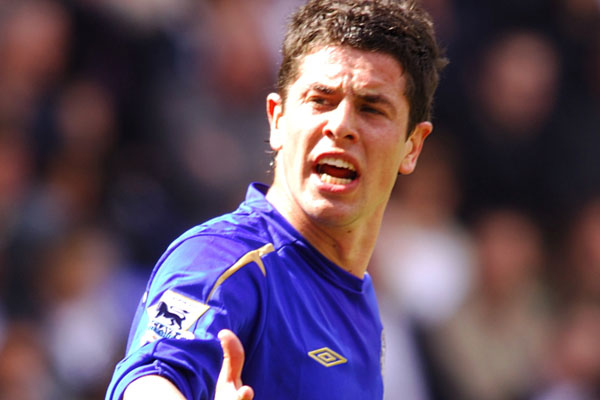
It seems a long time ago now, but an exciting new talent that many predicted would solve Chelseas perennial left-back woes, once took the form of Asier del Horno. The 2005 version of Filipe Luis, Del Horno was quick, strong, but unlike Chelseas recent £15 million signing, he was no stranger to scoring a few goals himself. Indeed, English supporters will already have received a taste of his tendency for goals following his match-winner in a 2004 friendly for Spain.
Prior to his move to London, he had appeared 126 times in five seasons for Athletic Bilbao, finding the back of the net on 17 occasions, saving five for the occasions they duelled with Spanish giants Real Madrid. Worming his way into the Spanish starting XI, the future looked bright for the 24 year old left back, when Mourinho decided to part with £8 million for his services in June 2005.
However, Del Hornos stock fell as quickly as it had risen, as he struggled to cope with the rigours of Premier League life. Playing 34 times for the Blues, his goal-scoring touch deserted him, finding the net on only one occasion. While the season ended in title-lifting glory, he had clearly lost the faith shown in him by his boss £8 million splurge. Having been sent off for a reckless challenge on a teenage kid at Barcelona in the Champions League, by the name of Lionel something, his confidence never recovered. Subsequently, he was packaged and sent back to Spain, sold at a £2 million loss to Valencia.
Del Hornos career has nosedived, taking in three loan spells, before winding up at Levante. With his patented goalscoring touch having completely disappeared without a trace he scored just twice since that Chelsea header against Spurs he retired in 2011 at the age of 30, having failed to oust Juanfran, a man five years his senior, from the side.
Needless to say, Chelseas next foray into the market for a left-back fared a little better.
5. Shaun Wright-Phillips
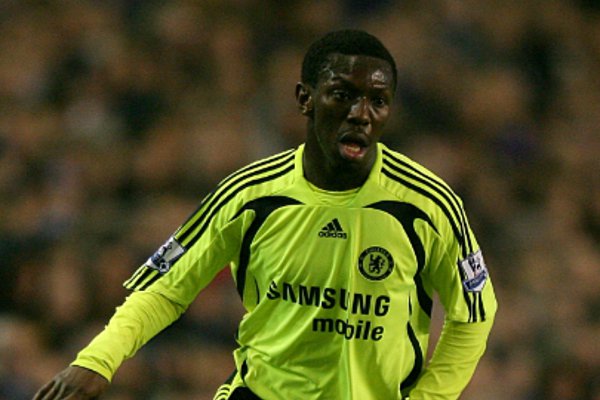
The setting is Manchester, and the blue half is an uninviting, drab proposition. It is three years before the oil money transformation, and they have been living in their Mancunian counterparts shadow for the last number of decades. With Robbie Fowler having missed a last-minute penalty against Middlesbrough on the final day of the season, in what was essentially a UEFA Cup play-off, any semblance of European football for the following season had been surrendered. It wasnt exactly an exciting time to be a Man City supporter, and a far cry from the success that they would become accustomed to in later years. However, the nagging fear that had plagued their thoughts for the previous 9 months had been realised their star player wanted out.
23 year old Manchester City winger Shaun Wright-Phillips, armed with an arsenal of blistering pace and an eye for goal, had spent the previous few seasons pulverizing defences. Breathtakingly quick and elusive, Arsenal legend Ian Wrights son had forced his way into the England set-up, as many touted him to succeed the soon to be departed David Beckham.
Having forced an exit from Man City, Wright-Phillips will have wished that he had chosen his destination more carefully. If Champions League football were his ambitions, then Liverpool would surely have offered him a starting berth at the expense of Jermaine Pennant. But no, he joined Premier League champions Chelsea in a £21 million move. One must give the player credit for backing himself to break into a side with such healthy competition already existing on the wings in the form of Joe Cole, Arjen Robben and Damien Duff, but inevitably, his ambitions hit the ceiling.
He started only 15 times in his debut season, failing to find the net until December 2006. By then, Eriksson had made the decision to omit him from the 2006 World Cup squad. Unsurprisingly, he failed to command a regular starting role at Chelsea, and suffered the heartbreak of omission from the matchday squad for the 2008 Champions League final. Throughout his Chelsea career, he started only five more games than he had appeared as a substitute. Wright-Phillips eventually grew tired of the ratio, and meekly returned to Man City with his tail very much between his legs.
His halo had certainly slipped, no longer revered as the golden boy of English football. Theo Walcott was establishing himself as the main man on the right hand side of the English midfield, while Wright-Phillips was left to ponder just what he had been doing for the last three years.
4. Daniel Sturridge
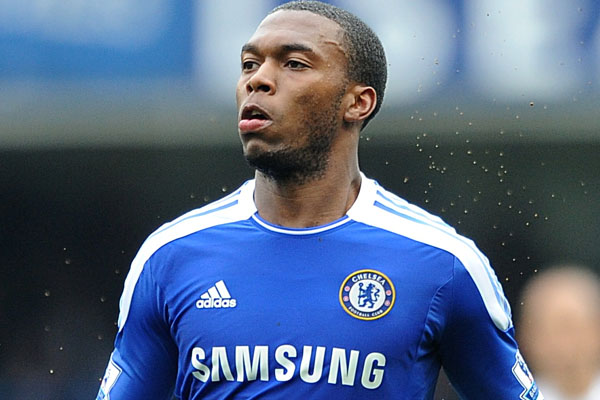
One of the main reasons Liverpool supporters arent panicking about Suarezs departure as much as they perhaps should be, is because they know they have one of the most lethal finishers in the country on their books. Since his £12 million transfer from Chelsea 18 months ago, he has made the formerly-perceived costly fee a look like a snip, scoring 31 league goals in his first 43 appearances for the club.
The Kop have been privy to his trademark bendy celebration, that wouldnt have looked out of place in a 1980s discotheque, on a multitude on occasions, as he has put Premier League defences to the sword. However, as we know from Sturridges career trajectory, it hasnt been a smooth path for the England number nine.
He may have played for 75% of last seasons top four contingent in his career, but at City and Chelsea, he was left to stagnate, unable to impose himself on the starting XI. In Manchester, they only had eyes for Robinho, bending over backwards to accommodate the Brazilians every wishes, leaving the potential of the 19 year old Englishman to wane. Having signed for Chelsea, it was the same scenario, with Villas-Boas feeling pressure from the owner to start £50 million man Fernando Torres in the lone striker role, at the expense of the increasingly frustrated Sturridge. Reduced to sporadic appearances in cup competitions, Sturridge spent his Chelsea tenure notching up goal tallies against the likes of Watford and Ipswich Town.
Asked to play on the wing, Sturridge duly obliged, in order to gain any semblance of game-time, but unable to produce his best work from out wide, he never added to his solitary league goal in 2010, before being shipped out on loan to Bolton in 2011.
On his return, Sturridges play improved, notching 11 league goals, with his confidence clearly have improved following the spell at the Reebok Stadium. However, despite a decent comeback, he was once again overlooked this time for the biggest game in the history of the club, the 2012 Champions League final. Left as an unused substitute on the bench, while the likes of Salomon Kalou floundered, one couldnt blame the striker for feeling disheartened, and within 6 months, he was gone.
3. Andriy Shevchenko
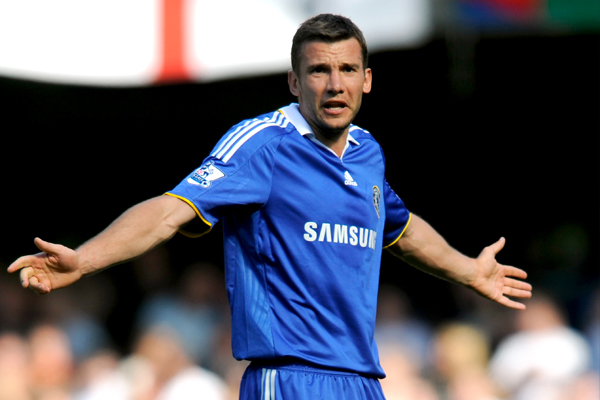
If there is one player who epitomises the bad choice, it is Andriy Shevchenko. Having forged a reputation in Milan as one of the most exciting and fearsome strikers on the planet, he soon felt that he had outgrown the relationship. Having grown stale and weary in the love nest with the Milanese, the 2004 Ballon dOr winner wanted to spread his wings, and sample experiences anew.
After 127 goals for the club, and a Champions League medal in 2003, Abramovich offered a record £59 million plus Hernan Crespo in the summer of 2005. At 29 years old, eyebrows were raised, but there was no denying Shevchenkos class. Nonetheless, it was turned down by Milan owner Silvio Berlusconi, with the club refusing to be seen as losing their prized assets in the wake of their disastrous Champions League final debacle.
Abramovich would have to wait a year to get his man, signing him for a hefty fee of £30.8 million. Punters have often wondered whether Mourinho ever really wanted the AC Milan hitman. With the Portuguese boss having struck up a close rapport with Didier Drogba, there seemed to be an air of Shevchenko being thrust into the mix, with Mourinho essentially told to play the club record signing.
The problem, of course, was that Shevchenko suddenly looked devoid of the skill and finishing capabilities that had illuminated his time in Milan. Looking slow and sluggish on the ball, he struggled to keep up with the high-intensity pace of the Premier League, always late to every ball. He amassed nine league goals in his two seasons in the English capital a far cry from the 127 scored in seven seasons for the Italian giants.
However, a loan stint at Milan in a bid to regain some form in 2008 failed to relight the spark, failing to find the net in 18 Serie A appearances. Andriy Shevchenko is one of the greatest strikers of the modern era.
He just arrived at Chelsea one year too late.
2. Fernando Torres

Four years ago, Fernando Torres was arguably the greatest centre-forward in world football. With one click of his heels, the Torres of old was away, bearing down on goal, twisting and turning petrified defenders, before calmly stroking the ball past the hapless goalkeeper. El Nino in is his pomp was one of the most frightening prospects for any defender in the football, as Nemanja Vidic can certainly testify.
At Liverpool, Torres had it all. He was a revered icon, worshipped by some of the most passionate fans on the planet. He had just become a world champion, to add to his international achievements. All that was missing was the domestic success. Burdened by his inner turmoil at the lack of Champions League football at the club, when the interest from Chelsea was made public, Torres clearly saw an opportunity. Backing his own prolific scoring record, he felt that he could score the goals that would fire Chelsea to the Champions League glory they had craved for so long. Well, he was half right.
Its hard to believe that Fernando Torres is only 30 years old, as seeing him toil on the Stamford Bridge pitch is like watching a player a couple of years short of retirement. The Spanish assassin who scored 81 goals in four seasons for Liverpool, and the one who has mustered 20 league goals in 110 appearances for the Londoners, are seemingly too different people.
Gone is the blistering pace that terrorized defenders the length and breadth of the country. Gone is the immaculate and composed finishing that accompanied Torres to every ground that he visited. It seems incredulous that over the last four seasons, he has failed to hit double figures in the league for the Russian-fuelled Londoners.
His reputation is in tatters. Torres is a shadow of the player he once was, paling in comparison to the player who scored the winning goal in the Euro 2008 final. While he fights it out with Romelu Lukaku for the role as super-sub this season, he might look back on his career and think where did it all go wrong?
1. Adrian Mutu
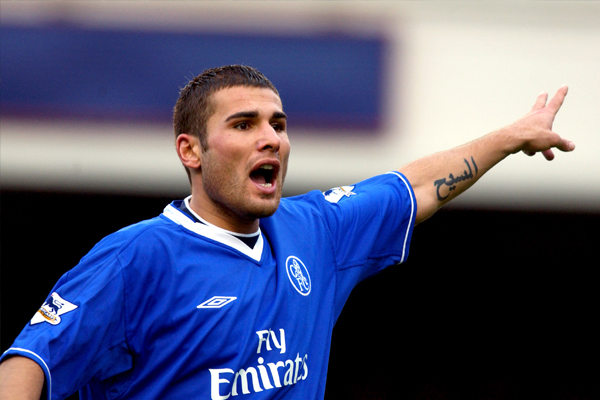
Some players are the victims of their own devastation. Its nearly ten years since Adrian Mutu received a seven-month ban for failing a drugs test, and we are still left wondering what he could have achieved. One of the Chelski Galacticos of 2003, arriving in the same spending spree as Damien Duff and Wayne Bridge, Roman Abramovich invested £15.8 million in the prolific Romanian. Joining from Parma, the Romanian maverick started with a bang, notching four goals in his first three matches.
However, not uncommon to the pattern of drug-fuelled individuals, his high-intensity start at the club slowed dramatically, as the goals dried up. The following season, Mutu and the incoming Mourinho were at loggerheads over a potential injury, but that argument was nothing compared to the drugs scandal which would dominate the Romanian's career.
Failing the drugs test in September 2004 for cocaine, he was swiftly sacked from the club the following month. He had incurred the wrath of the FA, and was subject to a seven month ban and a £20,000 fine. Not only that, but Chelsea began to actively seek compensation from the player, having felt wronged and cheated by a player they had invested so much money in.
In a long-running case, spanning two years, Mutu was dragged through the courts by his former club, and in May 2008, was ordered by the FIFA Dispute Resolution Chamber to pay his former club £13 million in compensation for breach of contract. The Romanian striker would go on to appeal the decision, but in July 2009, and again in June 2010, it was dismissed out of hand.
This case has been plaguing Mutu for the last decade. It is no wonder that he has been unable to display any semblance of the form that earned him a multi-million pound move to the London giants in 2003, with the constant stress of the court cases stabbing at his thoughts. However, if one were to assume that Mutu had learned his lessons, grown up and become a more professional athlete, one would have to assume again, with the former Romanian talisman having been suspended from his national team in recent years.
While he has taken in relatively successful spells at Fiorentina and Juventus since his escapades in the English capital, he is currently 35 years old and struggling to make the matchday squad for Petrolul Ploiesti in his homeland.