Do This During A Nuclear Bomb Attack
Protect and survive: keep this booklet handy.
During the 1970s and '80s, Britain was caught between two superstates: the Soviet Union and the USA. Being allied with the Americans put the UK in good stead as a major player in global politics, but being against the USSR, they were at risk. As London is only 800 miles away from the former Soviet city of Prague, it was in reachable distance for a prospective nuclear weapon.
Fortunately, the Cold War didn’t reach the levels of a fully-fledged nuclear catastrophe, but for almost half a century, the threat was real. To prepare its citizens for an unlikely attack, the Home Office was responsible for informing the British public on what to do in such an event. Through various pamphlets and television shows, Brits were given much guidance, and the most infamous of these coming from the 1976 booklet, Protect and Survive.
Protect and Survive broke down the information into four categories: Challenge to Survival, Planning for Survival, Protect and Survive, and Your Action Checklist. Let’s look at what we all need to do in order to survive the nuclear apocalypse.
11. Avoid The 5-mile Radius Of The Bomb Blast
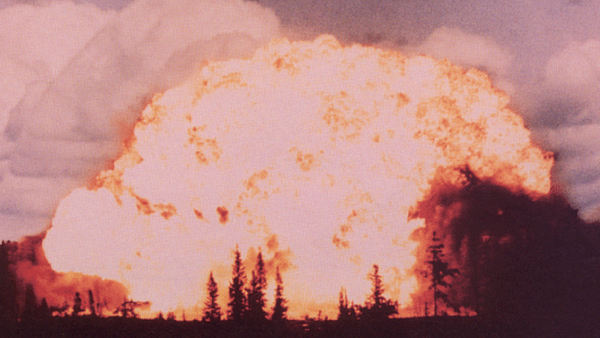
The pamphlet begins not by discussing current global political events - there isn’t much time, we’re going to be bombed! Instead, it describes the two biggest killers in a nuclear attack: the blast and the fallout.
Firstly, if you find yourself outside of the 5-mile blast zone, you’ve survived the first challenge. If you’re in ground zero, well, you needn’t worry about following the next steps.
After the blast, the fallout (described in the pamphlet as ‘deadly dangerous’ dust that) rises in the air and can be carried by winds for hundreds of miles. It is invisible and can penetrate several materials, but loses its potency when passing through, so thicker walls are necessary.
When planning for nuclear war, it is best to find one room in the centre of your house - away from exterior walls and the ceiling - and create a thicker line of defence by stacking shelves, doors, suitcases and bags around the outside of the room.
10. Stay At Home
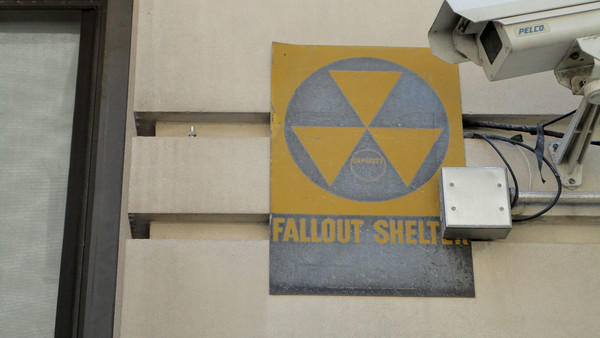
Local authorities are best at helping you during the nuclear attack, so unless you intend to go to another property, or stay with parents, you will receive no help from the emergency services in a new area.
In your home, there needs to be a designated fallout room and ‘inner refuge.’ As mentioned before, be sure to line your walls with as much material as possible to reduce the chances of radiation poisoning. Not only that but in your fallout room, it is required that you find a section of the room for where you and your loved ones will stay. Divide the room with more material, and make sure the inner refuge isn’t too large to help minimise your risk of becoming sick.
Basements and cellars are advised, as they are covered by the entire house at the top, and earth around its outer edges. For those without a subterranean feature, make sure you choose an area that is further away from the outside.
If you are living in a block of flats, avoid the top three floors at all costs, and make arrangements with your landlord to stay somewhere else in the building. Could you imagine that conversation?
In preparation, be sure to cover windows and fireplaces, as it is easier for the fallout to seep in through these crevices.
When it comes to those living in bungalows and caravans, there is no protection from the harms of nuclear bombs. It is advised that you make other arrangements to stay elsewhere.
9. Hydrate, Hydrate, Hydrate!

The number one necessity in any emergency is drinking water. The pamphlet advises you that you and your family will need clear access to drinking water for fourteen days. Be sure to avoid all tap water after doomsday, as the purity will be incredibly compromised.
Instead, it is essential that you use buckets, bottles, and any other lidded utensil for storing water for two weeks. Each family member will require around two pints a day of good old fashioned H2O to survive. Filling up bathtubs and sinks before the explosion is also recommended, but be sure to cover these with plastic sheets and wood to protect the water source. As a final note on bath water, be sure to only drink this when other supplies have dried up. Bath and sink water may be used earlier for the treatment of injuries.
8. Food, Glorious Food
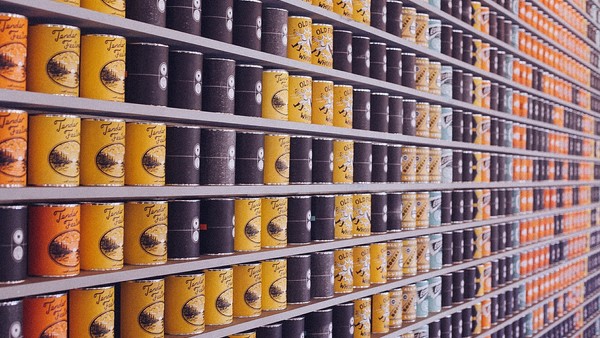
Much like water, it is paramount to ensure you and your family have enough food to last fourteen days of nuclear winter. After the bomb hits, it is too risky to walk around the house, so make sure the food you store can be eaten cold.
Using supplies as sparingly as possible is a must, and be sure to go through perishable items first. The majority of your nourishment should be coming out of tins and packets. The pamphlet advises you that variety is the spice of life, and suggests sugar, jams, and cereals are good for survival. For those in need of dairy, don’t shy away from tinned or powdered milk, and babies should eat their regular food as much as possible.
Finally, it is necessary to protect your food for obvious reasons, so make a note to stock the food in a closed cupboard inside your inner refuge. If you forget to do this and lock everything in the kitchen cupboard, you are at high risk of getting radiation poisoning.
7. Information Every Hour On The Hour
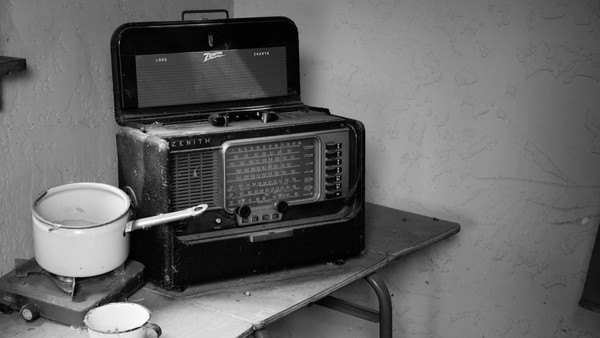
As Sherlock Holmes once said, ‘it is a capital mistake to theorise before one has data'. Access to information will keep you alive.
The pamphlet reminds you that radio is the only link with the outside world you will have after a nuclear attack. All TV stations will cease broadcasting, so survival information will be scarce.
Not only is a portable radio necessary, but spare batteries are a requirement so you can keep up to date on instructions. A transistor radio will fare even better.
At the time of this pamphlet’s release, mobile phones were not as widely used as they are today. A phone might be a good idea, but the Wireless would last much longer (ultimately disproving The Buggles incorrect).
Radio broadcasts will emanate from every local and national fixed frequency, and hourly updates will be provided by the Wartime Service. It is advised that you regularly tune into these broadcasts in case updates affect your chances of survival.
6. Home Essentials

It’s the first day after the nuclear attack. By this point, you have your fallout room, your inner refuge, your water, your food, and access to information. You go to open a can of tomato soup only to realise it doesn’t have a ring-pull. PACK YOUR TIN OPENER. Don’t be left hungry because you left this vital instrument out of your sanctuary.
Bottle openers are also important, so are cups and plates for makeshift meals. These aren’t as vital, but if you’re planning to share your rations, proper crockery is necessary for even portions.
Warm clothing will be needed for heat insulation and bedding. Pack bulky clothes that cover more than one person if necessary, and ensure you have plenty of socks. It’s not much, but more layers will also reduce your chances of getting radiation poisoning.
Finally, other home items such as books, music, and toys will make for a better time in your fallout shelter. Taking the pamphlet with you is also a good idea.
5. Sanitation Is More Important Than Independence
While it is far from a luxury, toileting is a daily essential for every human being on the planet. Being squeezed into a small survival space with your nearest and dearest will make for some uncomfortable moments, but it is the only way you can survive.
The pamphlet recommends making a commode out of a chair with the cushion removed, and a small bucket placed underneath. Be sure to line the bucket with plastic bags to make for easy disposal and optimum hygiene.
If you’re conscientious of saving space, a chair isn’t necessary. A simple waste bin or a bucket will do. Make it a priority to get one with a lid to protect you and your family.
Also, a plentiful supply of disinfectant and toilet roll is needed for ensuring you avoid infection from other infectious diseases such as cholera.
It is recommended that your makeshift toilet is stored just outside of your inner refuge to prevent the spread of germs and embarrassment. Be sure to keep a bin closeby specifically for the disposal of your toilet bags.
4. Stop The House Burning Down
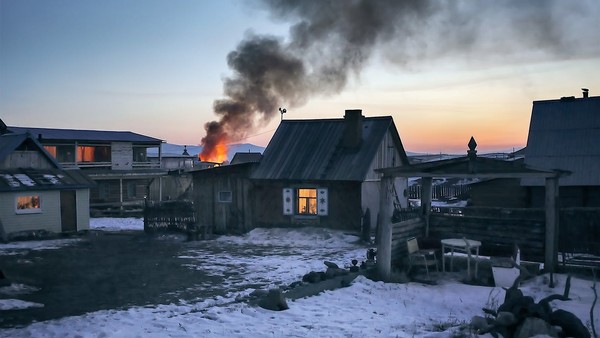
Not only can a nuclear bomb cause utter devastation upon impact and spread fallout hundreds of miles, but it can also create many fires. With everyone else seeking refuge, it is your responsibility to protect your home from a potential inferno.
All fuel sources from your home need to be removed at the sounding of the four-minute warning. Remove all paper, cardboard, and cloth from the household, and ensure you disconnect any gas supply.
Before the event happens, whitewash your interior windows with a thinned emulsion to reflect heat and light from the bomb blast. This should help keep the house cool inside, and also adds another thin line of defence against radiation.
As is good practise in any fire situation, close all the doors inside the house to slow the spread of fire.
3. Know The Signal
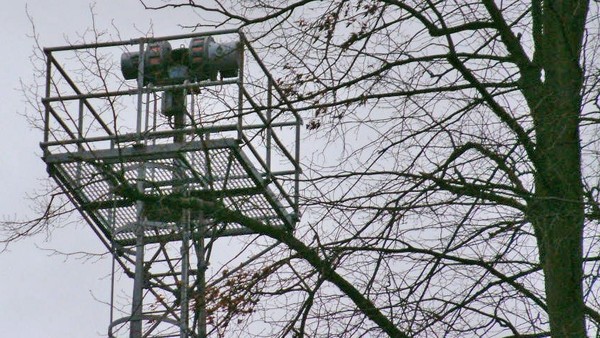
During the attack, three distinct signals will be given to alert everybody of any immediate danger.
As soon as the word has been given that a nuclear-armed device is inbound, an air raid siren will sound in a fast up-and-down tone. The warning will also be broadcast on the radio.
After the blast, sirens will cease, and it is critical you listen out for three quick bangs or three short whistle blows. These messages indicate oncoming fallout from the bomb. This is the critical moment you and your loved ones need to run to your inner refuge if you haven’t done so already.
Finally, after the fallout has stopped travelling, another air raid siren will blare a single continuous note indicating that immediate danger is over. Given the fact that fallout has the potential to spread for hundreds of miles, this final signal could take days to sound.
2. Always An Inconvenient Time

Given the nature of war, it is unlikely that an attack will occur when we are all inside our houses, together and prepared for utter devastation. The pamphlet gives us advice on what to do if we are caught out in an inopportune time.
If you are at home, be sure to send dependants to the fallout room immediately. Before you join the others, remove all flammable material, close all the curtains, and close all doors.
If you are at work and are able to make it home in a couple of minutes, do so. If you aren’t able, take cover where you are or in a local building that seems to be able to provide ample protection.
If you are out in the open, find cover in the nearest shop or house. If you cannot access nearby buildings, or there aren’t any around you, use any kind of cover. If it is just you and the great outdoors, lie flat or in a ditch. Be sure to protect any exposed skin. While the light from a blast can last up to twenty seconds, shockwaves can take minutes to arrive. Do not move until you are certain the blast is over.
Even though you cannot see it or feel it, the fallout may be over if you were caught in the blast outside. Be sure to wipe down your clothes as best as possible, and shed the top layers if possible.
1. Life After Death

During the bombing and the following fallout period, you need to stay safe in your inner refuge. The aftermath of an attack like this is hard to determine, so it may take a while before you are given the all-clear.
Unless the radio tells you to do so, do not leave the house. When instructed, only over-thirties will be allowed outside and for a few minutes for essential activities. They must wipe themselves down for fallout before going back inside.
After the all-clear is given, the immediate danger is over. You may resume normal activities, and see what has become of the world you once took for granted.
These guidelines are for increasing the chances of surviving the nuclear holocaust. However, with utter devastation, infertile ground, and a high death toll, the real survival will have only just begun.