9 Disgusting Medical Treatments That Might Just Save Your Life
If we've learnt one thing, it's that doctors sure love poop.

The human body is a beautiful machine ... until something goes wrong, then it's all squishy organs, oozy sores and appalling odours.
As well as some of the more unsavoury aspect of the diseased human body, some of the treatments to combat these diseases as just as, if not more, gross.
Medicine is all about the shiny white coats, neat little pills and powerfully disinfected operating theatres and, at times, it can feel as though things are getting distinctly medieval up in here.
Whether you're being pumped full of parasites, prodded with needles or even having one of your teeth implanted into your eye (no, really, more on that a little bit later), you have to come to the conclusion that a lot of doctors have some strange, vivid and twisted imaginations.
As well as having a great gross out factor, many of these bizarre and disgusting treatments also give us a unique insight into some of the weirder ways our bodies work.
So, here are some of the strangest, grossest medical treatments that would make even the most desensitised, internet dwelling, Grey's Anatomy watching horror movie lover squirm in their seat.
9. The Dark Age Treatment For MRSA

We generally like to think that we're much smarter than all those idiots back in The Olden Days, particularly when it comes to medicine. However, nestled in between the the frog-paste throat lozenges and the blood-letting instruction manual might just be an incredibly effective treatment for one of the most dreaded superbugs of the modern era: MRSA.
Methicillin-resistant Staphylococcus aureus (MRSA) is, as the name suggests, resistant to Methicillin and a number of other penicillins, but the bug is actually the same one that causes eye infections such as stys. Scientists were therefore dumbfounded when the found that an Anglo-Saxon remedy for eye infections outperformed modern antibiotics in combating the deadly disease.
The remedy includes wine, garlic, and bile from a cow’s stomach and is over a thousand years old. The individual ingredients don't appear to have any effect on the bacteria, but when combined according to the instructions of an ancient medical text, they killed up to 90% of MRSA bacteria in infected mice.
This is the original recipe if you fancy whipping one up at home (for the love of god, don't do that):
“Work and eye salve for a wen, take cropleek and garlic, of both equal quantities, pound them well together, take wine and bullocks gall, of both equal quantities, mix with a leek, put this then into a brazen vessel, let it stand nine days in the brass vessel, wring out through a cloth and clear it well, put it into a horn, and about night time apply with a feather to the eye; the best leechdom.”
8. Fecal Transplant
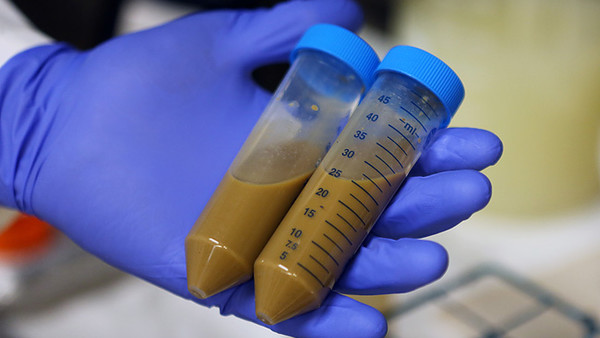
Thanks to all those yoghurt adverts, we all know that our gut is home to "good bacteria". This friendly crew is known as your microbiome and is an essential part of your day to day functioning.
Unfortunately, antibiotics don't discriminate between good and bad bacteria and will kill the lot. This is the reason why you're more likely to get a yeast infection on antibiotics and also why patients on high doses of antibiotics will often come down with a Clostridium difficile (C. diff) infection, which is allowed to flourish as the good bacteria are killed off.
This infection can be fatal, but we have a treatment that works up to 95% of the time. The only downside is that it involves having someone else poop shoved up your nose and into your stomach in a procedure called a fecal transplant.
7. Poo Pills
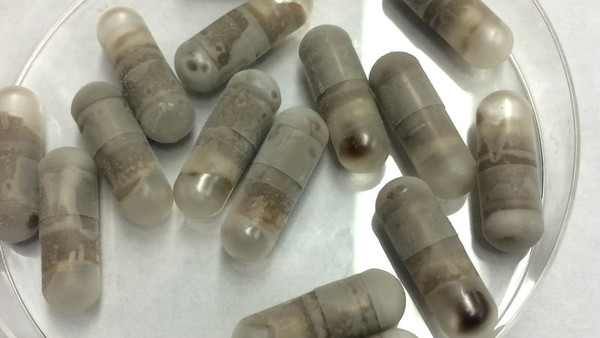
As well as sorting your antibiotic needs, a bit more medical scat play could also trim your waistline.
Obesity is a rising problem in our society, for sure, but would you literally eat s**t to combat it? Someone else's s**t at that?
Whilst you're not likely to get them over the counter at Boots just yet, there is some clinical evidence to suggest that consuming the freeze dried poop of another healthy adult could help combat obesity. Frankly, cutting back on the donuts and going for the odd run sounds more pleasant.
On the other hand, if you're a lean and health specimen yourself, you can make a bit of cash on the side by selling your own poop to be consumed by overweight people. Talk about a lifestyle flex.
6. Tooth-In-Eye Surgery
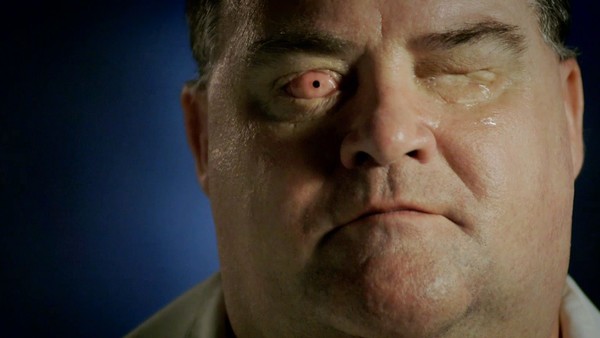
The tooth-in-eye therapy, or also known as Osteo-odonto-keratoprosthesis if you want to get fancy, get's its name because it involves, well, putting a tooth in your eye.
This is a last resort surgery for patients with corneal diseases and, despite sounding like something that has been dreamt up by the makers of the Human Centipede, it can be a life-changing surgery for those in need.
The way it works is the damaged tissue in the eye is removed and replaced by cheek mucosa (that's the lining of your mouth). A tooth is then removed, drilled and a small lens is implanted inside it. Both tooth and lens are then implanted into the patient's cheek for a short period in order to develop a blood supply, after which it is removed and placed in the newly formed eye, allowing the patient to see again.
The real question is what kind of insane fever dream do you have to be having to come up with that?
5. Hookworm Therapy
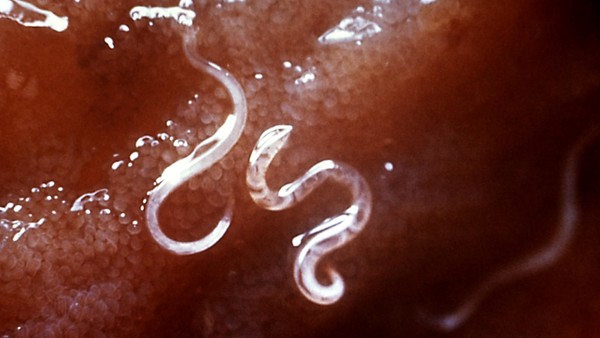
There's something funny going on in our modern society. As our water gets safer, our houses get cleaner and our food gets fresher, we're seeing an upswing in certain autoimmune diseases and allergies such as Crohn's Disease, ulcerative colitis, and inflammatory bowel disease.
Now there are those who think we could have taken our obsession with cleanliness too far, and that we actually need some of the dirt, grime and parasites to function properly. It makes sense if you think about it, we've evolved alongside these organisms for hundreds of thousands of years, so our bodies could well have adapted to their presence in such a way that, just like your microbiome, it doesn't work properly when they are taken away.
There is mounting evidence to suggest that introducing certain parasitic worms such as hookworm or whipworm into a person's system can reduce and even completely eliminate symptoms of colitis, asthma, rheumatoid arthritis, food allergies and even type 1 diabetes.
4. Natural Orifice Surgery
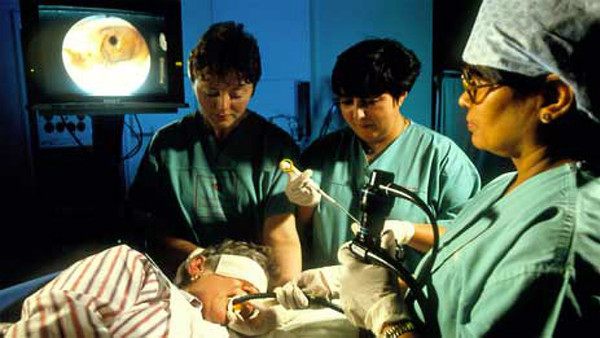
Something that some people worry about when getting surgery, is how bad the scarring will be. They can be disfiguring, painful or even an unwelcome reminder of trauma, but what's the alternative?
Well, some bright spark figured that, hey, the human body already has a lot of holes in it, we could just remove major organs through those instead.
Natural orifice transluminal endoscopic surgery (NOTES) involves sticking an endoscope, tools and all, into the body via a natural orifice such as the mouth, anus or vagina, and accessing the surgery site through an internal incision. The affected tissue or organs are then removed through the chosen orifice, leaving no external scarring.
The technique is still firmly in the research stage and, obviously, wouldn't work for everything (it's difficult, for example, to pin a broken ankle via the colon), but it could be used in future abdominal surgery. Which would you rather?
3. Malaria Therapy

Okay, you probably wouldn't have this prescribed to you today, but this was considered groundbreaking shockingly recently.
Julius Wagner-Jauregg, was the first of the only three people to have ever received a Nobel Prize in the field of psychiatry. This was for developing a novel way of treating his patients for neurosyphilis (that's the type of syphilis that affects the central nervous system, so use protection, kids), which was by infecting them with another deadly disease.
The idea was that the extreme high temperature fever brought on by the malaria would kill off the Treponema pallidum bacteria that cause syphilis in the first place. This is, after all, the reason why we get fevers in the first place.
Amazingly, the treatment was considered a breakthrough, as neurosyphilis was then a terminal disease so there was nothing to lose, and the malaria could later be treated using quinine. Despite this, the 15% mortality rate from malaria was eventually too much and it is no longer in use.
2. Leech Therapy
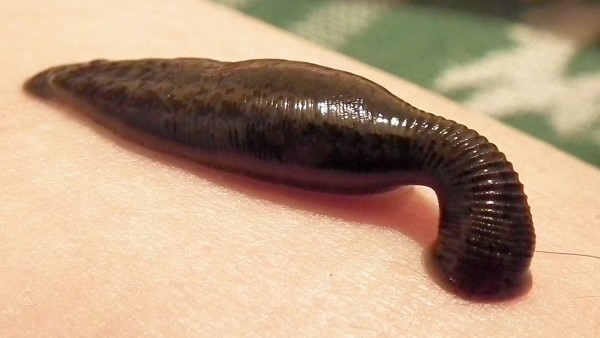
You could say that leeches had their vogue a few hundred years ago, when the height of medical understanding involved draining the lifeblood from your patients, but in more modern times, the leech has found its use again in the surprising field of microsurgery.
Whilst we no longer think that bloodletting is good for anything but slow, horrible death, they can be used to keep tissues alive.
In microsurgery, a piece of tissue can be taken from one part of the body to another, and the individual blood vessels can be sewn together in its new home. However, in order for these to "take" then need an adequate supply of fresh, healthy blood, which doesn't always happen on its own but, stick a leach on it, and it'll suck the blood through the tissue just fine.
You get a successful surgery, the leech gets a delicious dinner, everybody wins.
NOTE: the next page contains a picture of an eye being injected with a needle. If you have a problem with eyes, needles or any combination thereof, you might just want to tap out. It's pretty gnarly.
1. Intravitreal Injection
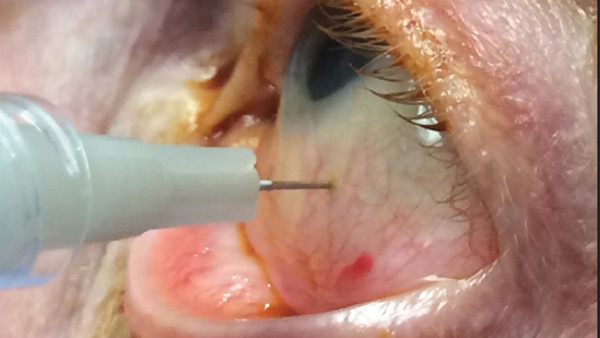
You were warned.
Most people don't even like the idea of putting contact lenses in, but if you have a disease of the eye such as macular degeneration, endophthalmitis or any kind of occlusions, a trip to the doctors could all get a bit Saw II.
Intravitreal injections are injections that are administered directly into the eye (intravitreal literally means"inside the eye"). The eyeball is numbed before the procedure, so you won't feel a thing but, for obvious reasons, you aren't able to look the other way and pretend it isn't happening.
Your eyeball is actually full of a jelly-like substance called vitreous, which whatever is injected into it will float around in after the procedure. It's not uncommon to see strange shapes, known as "floaters" afterwards.
Does science make you tingle in your special place? Like us on Facebook or follow us on Twitter for plenty more.
Want to write for WhatCulture Science? Click here to find out how you could get paid to write about what you love.