8 Scientific Theories About Death
What is it, what does it feel like, and could we ever stop it?

Death, as they say, comes for us all.
The thing is about death is that it is so often pretty final, meaning that it's difficult to get a proper handle on exactly what goes on during and after the fact. The massive symbolic, emotional and taboo role it plays in all our lives also makes it a difficult subject to study - it's generally frowned upon to take people to the brink of death, just to see what would happen, as is hovering around a person's deathbed, clipboard in hand and elbowing grieving family members out of the way.
As a result, the subject remains cloaked in relative mystery to us.
Scientists are a tenacious bunch, though, and have done their best to piece together what we know about one of life's biggest mysteries, and the theories they have come up with are as fascinating as they are varied. Some focus on the nature of death itself, some on our attitudes towards it and some look at the possibility of warding it off, perhaps indefinitely. Some even call into question its very existence - could it be that death is actually just an illusion after all?
So, scientists are slowly lifting the veil, but what are they finding?
Click "next" below to read the article or watch it in video form...
8. Quantum Suicide
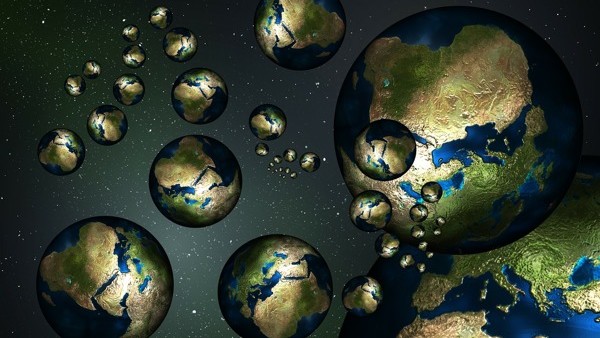
Right, first things first, on no account is anyone to try this at home.
Quantum Suicide is a thought experiment based on the Many Worlds Interpretation of quantum theory. According to the interpretation, every event in spacetime causes the universe to split into different versions of itself, containing every possible outcome - essentially, parallel universes - in a process called decoherence.
Quantum Suicide is essentially the Schrödinger's Cat experiment from the cat's point of views and the theory suggests that it is possible to survive one's own suicide. The reasoning is that, in a situation in which the two possible outcomes are survive and perish, the subject would only ever be aware of the "parallel universes" in which they survived.
It is, however, probably not worth the risk.
7. We Don't Really Know What It Is
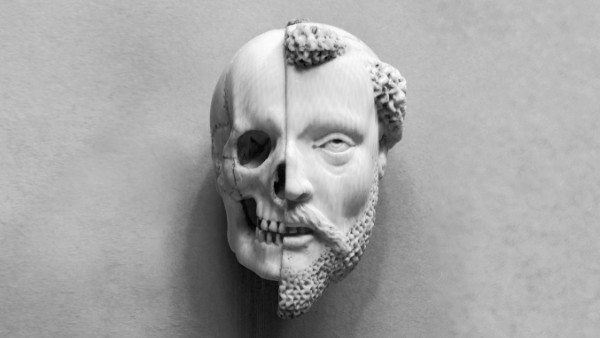
We can't really be 100% sure what death is, because we don't really know what life is.
Scientists have been working to define life, and what calls it into being, since time immemorial. In the pursuit of alien life, NASA have defined it as a “self-sustaining chemical system capable of Darwinian evolution”, but even this isn't perfect, as there are non-living chemical systems that can mimic life without actually being alive. Crystals, for example.
Another, more anthropocentric, problem that we have, is that we don't really know what consciousness is, what causes it, and even whether it survives death, or whether it's snuffed out along with our brain activity (the answer is "probably", but quantum mechanics is a slippery customer so who knows).
Until we can come up with an all-encompassing, solid definition (or definitions) of life, then we can never truly understand death.
6. There Are Three Kinds Of Death

Death seems pretty final but, technically speaking, there are three different stages of death and, what's more, one of them is reversible.
It all begins with clinical death, which is the cessation of vital functions, typically heartbeat and respiration. This is the one that people "come back" from and brain activity can actually persist through this stage of death. This is generally what people mean when they say they were "technically dead" for however long, and is sometimes reversible.
Then we have biological death, sometimes called "brain death". This is almost the opposite of clinical death, as brain activity ceases, even if the vital functions are being maintained by machines. This is medically considered "good and dead" and is not reversible.
Finally, molecular death refers to the stage at which the body finally loses its lifelong battle against decay. This is when the cells in the body begin to break down and, frankly, you wouldn't want this one to be reversible.
5. The Fear Of Death Appears To Decline With Age
You would think that, the closer one gets to death, the more one would fear it. However, some studies have found that older people tend to express much less death anxiety than younger people.
Fear of death seems to peak during a person's 20s, and then goes into a steady decline - apart from a slight bump around the time of the mid-life crisis - until they reach around 60 at which it plateaus into and almost zen like acceptance.
This said, the studies were studying different people at different stages in their lives, as opposed to studying the same people at different stages, so we can't be 100% sure that the effect isn't caused by generational differences as opposed to age. Only time will really tell, when we see if this current generation of anxious twentysomethings grows up into a generation of anxious pensioners.
4. Thinking About Death Can Make You A Bigot

The data collected from literally hundreds of studies, suggests that, whilst we're actually less scared of death that you might imagine, thinking about it has some strange effects on our behaviour and beliefs.
In various studies, when participants are primed to think about death, it can have an effect on their religious views, it can make them more politically conservative, more nationalistic, less likely to support watchdog press, make them more racially biased, more homophobic and even more likely to judge a prostitute harshly.
This all more or less loosely falls into a category of psychology known as Terror Management Theory, which suggests that our awareness of death, and knowledge of its inevitability, tends to result in us expressing our fear for it through unexpected channels. These are often related to ideas of symbolic immortality such as national identity, family heritage, community values, and a rejection of the outsider.
3. The Death Spiral

As well as being an excellent name for a black metal band, the Death Spiral is the term for the newly recognised "fourth stage of life" that precedes death. Scientists believe that it is "part of the process of genetically programmed death".
It is basically the stage before death in which both physical abilities and normal daily activities go into a steep decline. In a study of fruit flies, it was found that the flies entering the death spiral showed a decrease in fertility and stopped laying eggs. Interestingly, this decrease in fertility was the same regardless of the age of the fly, and was only seemingly related to the proximity of death. It's not a consequence of death, but a predictor.
In humans, measures of grip strength, ability to complete daily activities such as using the toilet, eating meals, and levels of cognitive impairment showed a distinct decline once participants entered the death spiral.
Whilst the researchers don't think that they would yet be able to use the knowledge of the death spiral to extend human lifespans, they believe that they could reduce its duration, vastly improving quality of life for people in their final days.
2. Near Death Experiences
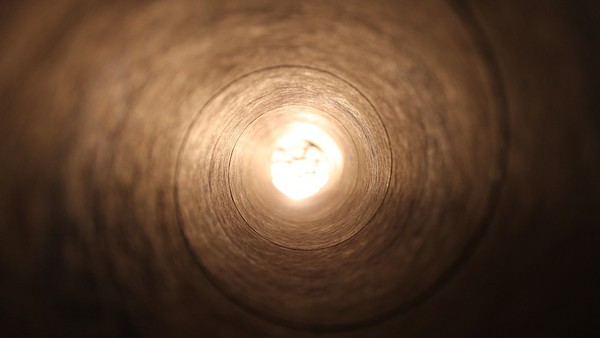
With 5% of Americans claiming to have had a near death experience according to a Gallup poll, there must be something in it, right? Whilst, scientifically speaking, it is unlikely to be caused by the soul literally leaving the body and making a beeline for the heavenly plane, 13 million Americans can't all be lying, so there must be something that causes it.
One of the most famous experiences, of moving through a tunnel towards a bright light, could actually be a result of a lack of blood and oxygen flow to the eye, causing tunnel vision. The "out of body experience", however, could be a little more complicated.
Neuroscientist Andrew Newberg, thinks that it could be a product of a warring nervous system. By this he means that both the sympathetic nervous system, which is in charge of kicking you into action in emergencies, and parasympathetic nervous system, which is responsible for calming you down, fire up during a NDE, whereas they usually take it in turns. The clash of these two titans can cause your brain to fire on all cylinders, generating vivid visions, memories and "rushing" feelings, but will simultaneously make you feel floaty, light and calm, just like the moments before you fall asleep.
It's unsure as to whether the experience is an accident of a dying brain, or whether it is actually a defense mechanism to protect us against trauma.
1. Is There An Age Limit?

Over the past century or so, the average life expectancy has risen by about ten years, but this is more to do with the fact that more people are living to an older age, as opposed to an increase in actual lifespan. Despite all of our strides, only one person has lived past the age of 120 in all that time - so does this indicate that there is an upper limit on the human lifespan?
Many scientists believe that this invisible age barrier is the result of something known as the Hayflick limit. This is the limit on the amount of times a cell can divide before it is no longer able to. This limit varies between organisms, resulting in the short lifespan of a hamster, compared to a Galapagos turtle, and is thought to be a result of the shortening of telomeres - a section of DNA on the end of a chromosome that protects them from degrading.
It does seem that, for the moment, 120 years could be the limit of a "natural" human lifespan. That is, even if we do away with other causes of death such as disease, this would still be the point at which people would simply die of "old age". However, if we could somehow find a way of allowing our cells to divide and replicate without damage, we might, might be able to extend the human lifespan - perhaps indefinitely.
You could write for WhatCulture Science! Click here to find out how you could get paid to write about what you love.
If science gives you the warm fuzzies, like us on Facebook or follow us on Twitter to stay up to date.