8 Haruki Murakami Tropes And What They Really Mean
A reader's guide to the magical world of Murakami.
Having published more than ten novels and three short story collections (and that's just the stuff that's been translated into English!) Haruki Murakami has developed a whole host of regular tropes that are arguably as charming as his characters themselves. You'd be forgiven for thinking these recurrences are nothing more than coincidence or habit, but the creation of a story is no slight thing, and writers often have to defend every inclusion they make from a rigorous editing process. You can almost hear Murakami's editors grumbling with each new draft: really, Haruki? Another cat?! Of course, one of the joys of literature is that it's open to interpretation especially when it comes to someone like Murakami, who is no stranger to surrealism or abstraction. While it's impossible to state with absolute certainty that anything in fiction has an objective "meaning", Murakami undoubtedly uses certain repeated descriptions and images to evoke precise effect. With all that being said, sometimes it's fun just to speculate about things, too. After all, that's what most of Murakami's characters spend their whole lives doing and who doesn't want to be one of those? All you've got to do is find your nearest well...it's time to get deep about Haruki Murakami.
8. Cats, Cats, Cats!

7. Preparing Food (Spaghetti And Beyond)
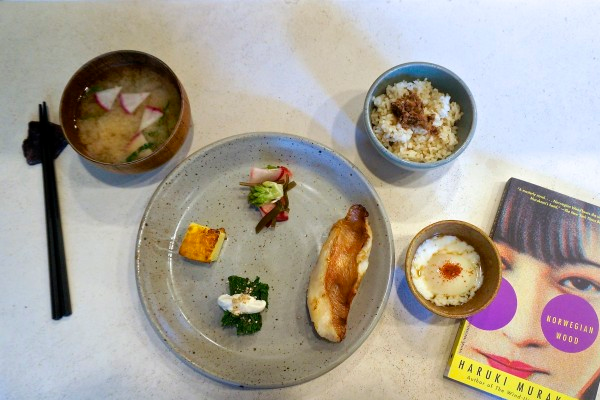
Whether in music or in fiction, the most basic thing is rhythm. Your style needs to have good, natural, steady rhythm, or people wont keep reading your work. I learned the importance of rhythm from music and mainly from jazz.Cooking food might seem like a strange thing to describe, but it's all part of a healthy, balanced rhythm.
6. Jazz On The Brain
https://www.youtube.com/watch?v=vhFs8DOZsPs What It Is: Jazz! Everybody knows what jazz music is. Can you name one Murakami novel that doesn't feature a single reference to jazz music? The truth is that it would be extremely difficult perhaps even impossible. So what's up with all the jazz? What It Really Means: Aside from the fact Murakami loves jazz music (it's well-known that he used to own and run his own jazz bar) it serves a particular literary function: establishing the tone. Though the vast majority of people won't know what specific pieces of music Murakami is referring to, you almost definitely know what jazz sounds like, and the images that are associated with it. Smoky bars. Melancholy drinkers. Totally standard fare for Murakami, and the kind of scene you'd find in stories written by one of his biggest literary inspirations, British/American detective fiction writer Raymond Chandler. By mentioning jazz music, Murakami establishes a tone without even having to describe it.5. A Whole Lot Of Sex
4. Disappearing Women
3. Plain Jane Names
2. Stories Within Stories
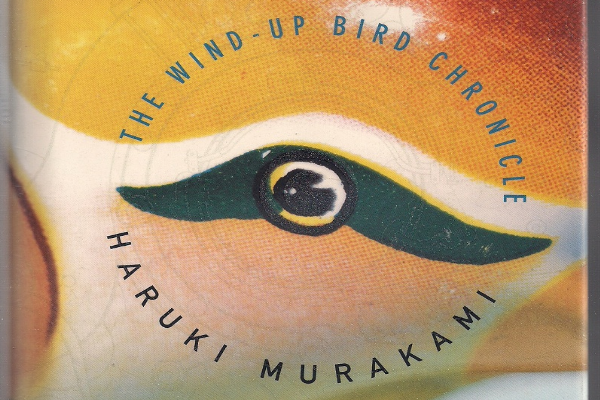
What It Is: A story within a story is just that: a story told within another story. Remember in The Wind-Up Bird Chronicle when Lieutenant Mamiya tells Toru the lengthy tale of the Japanese occupation of Manchukuo? Or when Tengo reads a short piece called Town Of Cats in 1Q84? Perfect examples of stories within stories. What It Really Means: Stories within stories create a stronger sense of the world by removing the action from within the world of the novel, it defines more clearly the sense of that world. What this really means is that for stories to be told they have to have happened, or been thought up, and if the reader hasn't witnessed this process first-hand then it creates the impression of a living, breathing world.
On top of that, stories within stories commonly reflect aspects of the central narrative. Sometimes they're meant to generate a certain feeling or tone. Often times they will evoke a reaction from the protagonist, like when Lieutenant Mamiya's tale prompts Toru to descend into a deep well.1. Ambiguous Endings
What It Is: An ambiguous ending is any ending that doesn't clearly define the outcome of the story. If you've read a couple Murakami novels, chances are you've encountered this. A couple examples of Murakami novels that contain ambiguous endings are Norwegian Wood and Colorless Tsukuru Tazaki And His Years Of Pilgrimage.
What It Really Means: As mentioned before, Murakami is primarily interested in exploring the perpetual variety of life, so it's not surprising that his endings tend to side more with reality than fiction. In real life, happy endings rarely last more than a few days. Murakami stories simply don't end with his protagnists marching hand in hand into a clichéd sunset they're uncertain. From a literary standpoint, the ambiguous ending reaps the benefits of multiple endings (and technically none at all) by letting the reader imagine what might come next. A great example of this is found in Murakami's 2014 novel Colorless Tsukuru Tazaki And His Years Of Pilgrimage, in which the reader is never sure whether or not Tsukuru ever hears back from Sara. Not only does this allow for multiple interpretations, it stays true to the melancholy tone present in the vast majority of Murakami's work.