7 Ways Space Can Kill You

Exploring space is a dangerous game, but someone's gotta do it.

Space. The unending ocean of nothingness, it engulfs the tiny blue dot that we call home and separates us by unimaginable distances from all the tantalising wonders the universe has to offer. Carl Sagan (Astronomy buff and teacher of Bill Nye the Science Guy) once pointed out that to the explorers of the human race, the depths of space are no more impassable than the high seas were to our ancestors hundreds of years ago. Maybe he was right €“ we€™ve already landed men on the moon, sent a satellite over the very cusp of our solar system into the interstellar void, and now we€™ve set our sights on establishing a permanent residence on the red planet. But let€™s not get ahead of ourselves. It turns out that the void is quite bad for your health €“ especially if you forget your multimillion dollar space suit. So let€™s talk about a few of the many ways in which space can kill you€

7. The Journey

To actually get into space will require sitting inside of an aluminium box (just barely big enough for you, a couple of friends and some freeze dried ready meals) that rests upon 2 million kilograms of explosive material which is then ignited by some intelligent fellow sitting in a bunker several miles away. The intended outcome €“ setting off a controlled reaction that will accelerate you and your companions to 18,000 miles per hour in roughly ten minutes. The sound alone is enough to kill everything in the immediate area and even knock over skyscrapers if there were any close by €“ this writer suggests you invest in some decent earplugs. If that wasn€™t enough you€™ll also be subject to a force of about 3G's on the way up, this will be uncomfortable, but not exactly life threatening if you€™ve managed to pass the rigorous fitness tests imposed on you by the relevant space agency. The sad truth though, is that things can go very wrong at this stage, the Challenger disaster being one of the more poignant tragedies that come to mind emphasise the dangers the brave explorers of our time are faced with.

6. Space Junk

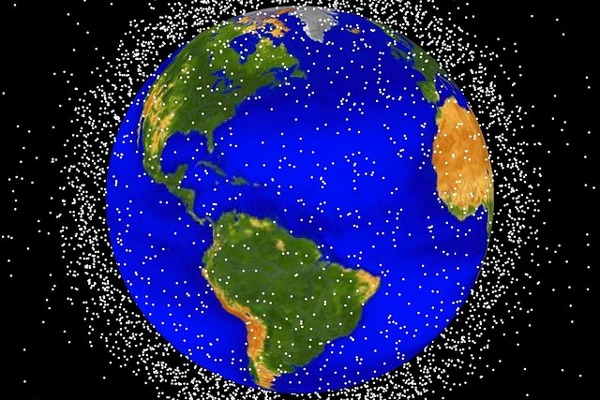
In early 2007, a multistage missile was launched from the Xinchang Satellite Launch Center in China. Its payload €“ a 750kg kinetic kill vehicle. The target €“ a perfectly harmless weather monitoring satellite. The massive projectile smashed into the satellite at a tremendous 8km/s totally obliterating it in the process. Disappointingly there were no cameras around to witness the undoubtedly spectacular event. But despite how cool it may seem, destroying satellites in this manner (even if they do belong to you) is an immensely stupid idea. Here€™s why €“ the test produced an estimated 150,000 pieces of space debris, 2300 of which are bigger than a golf ball and all are travelling at round 20 times the speed of a rifle bullet during flight. If you€™ve ever seen Gravity, you don€™t need to imagine what happens if one of these things hits you in the face. In case you were wondering, nobody actually knows just how many pieces of space debris there are €“ it€™s estimated to be in the millions. Even tiny flecks of paint travelling at such a high speed have been known to damage spacecraft, and the real problem is that there doesn€™t seem to be any feasible way to track these tiny projectiles, meaning that collisions are quite often unavoidable.

5. A Lack Of Exercise

Ever have those days where even the thought of exercise seems daunting? If that€™s the case then living in space may not be for you. The whole business of weightlessness confuses your body, your bladder doesn€™t realise when it€™s full (which can block the urethral orifice), your eyeballs change shape, and since you no longer need to support your own weight your muscles will lose 20% of their mass within the first week! This last point might be hard to imagine, after all €“ I bet there has been many an occasion when the gym has eluded you for a lot longer than a week, if you€™re anything like me anyway. But the fact remains that even if the only exercise you manage is walking to and from the fridge, your body is always unconsciously and relentlessly regulating itself in the form of pumping blood through your arteries and veins, maintaining posture, and more or less perfectly balancing the act of your bones shedding and regeneration cycle. Gravity plays an essential role in this regulation. Without it your heart no longer needs to push blood up to your head, because there is no up in space. You no longer maintain any posture because without a ground to sit or stand on there really isn€™t any need. And when everything is weightless your bones no longer experience much mechanical stress, and when there€™s no need for your bones to be strong your body stops replenishing them and a kind of space osteoporosis ensues. This isn€™t so bad so long as you remain in space, but upon return to Earth, you might just find that the burden of gravity is too much for your fragile heart, as it is no longer capable of pumping blood to your extremities, and your bones are no longer capable of supporting your muscles. It€™s quite likely that these effects could be fatal if nothing was done to counteract them. This is where the exercise comes in, the astronauts living on the ISS need to exercise for at least two hours every single day, only the CrossFit cultists at your local university can compare to that.

4. The Sun

Another thing we take for granted here on Earth is the protective magnetosphere that shields us from galactic cosmic rays and solar radiation; without it, high energy particles would gradually strip away Earth's atmosphere and oceans, and our home wouldn't look too dissimilar to Mars. This radiation comes primarily from nuclear reactions that take place in the Sun, leading to the production of high energy photons and other particles. This radiation will not turn you into the Hulk, and unless you happen to be superman, it will not recharge your energy cells. It will however ionise your DNA and give you cancer if exposure is not limited. Even if you manage to limit your exposure, as most astronauts do, being in space for an extended period will damage your lymphocytes and lead to lowered immunity. Interesting fact: Astronauts have often reported that when they close their eyes in space they observe white flashes that take on the shape of spots and stars €“ this is thought to be the result of cosmic ray particles passing through the optic nerve.

3. The Vacuum

This is the one that you€™ll quite often see at the movies, and there appears to be some controversy as to what actually happens when the human body is exposed to the vacuum of space. Let€™s get a couple of things straight: Firstly you won€™t freeze to death€ yes I know, space is pretty chilly, in fact it€™s almost as cold as cold can be; but in order for heat from your body to be transferred, there needs to be something for your body to transfer it to, and since there€™s effectively nothing in space you won€™t get cold very fast. Secondly you will not explode, yeah your body exerts internal pressure to counteract the effects of pressure we feel here on Earth, but it€™s simply not enough to overcome the chemical bonds that hold the skin together. Thirdly for the same reason as stated previously, your blood won€™t boil, because the skin is strong enough to hold everything together in a vacuum your body and everything inside of it is protected from the vacuum in a so called closed system, where the pressure is similar to that found on Earth. What would happen though, is that all of the air in your lungs and the gas in your digestive tract (which are not a part of this closed system) would forcibly push its way out of the nearest orifice. This forceful expulsion of gases would mean that first of all, you€™ll literally crap yourself, and then pretty shortly afterwards suffocate to death. If however, you managed to remain conscious for more than 10 seconds or so you€™d be witness to a very strange phenomenon€ as a result of there being no pressure in space, the boiling point of water is reduced to 0 Kelvin (more or less). This means that the saliva in your mouth, the tears in your eyes and even the moisture inside of your now empty lungs would begin to boil and evaporate into the void. Further gruesome transitions do occur to the body after this point, but perhaps some things are best left undiscussed€

2. Moving Further Afield

I mentioned at the start that space is unimaginably big, and it€™s true. Whilst we can accurately say how far away Alpha Centauri or the Andromeda galaxy is, there really is no way for you to imagine that distance. I can tell you that the nearest solar system to us is 4.37 light years, or forty-three billion kilometres, or twenty-six billion miles away. If it was headed in the right direction, the only man-made object to have ever left our solar system (Voyager 1) would not arrive at the closest solar system to our own until the stars at its centre had exhausted all of their fuel and went dark. If you were to try reaching Alpha Centauri using today€™s methods of propulsion your spaceship would have barely even made it into the interstellar void before you died an excruciatingly dull and futile death. Assuming of course that the effects of living in a 0G environment with very limited space and resources for decades doesn't send you over the edge first.

1. Collaborating With Americans

Back in 1999 the first satellite to ever monitor the atmosphere of another planet was launched and sent on its merry way to Mars. All was going according to plan until the Mars Climate Orbiter arrived at its destination a little too fast. Turns out that someone forgot to convert the units of force needed to decelerate into a stable orbit from pounds to newtons, or was it the other way around? In any case, the craft smashed into the atmosphere and broke up before falling to the surface. It€™s safe to say that if there were people on board they would have burned up too. Obviously if this was a manned mission someone would have probably double checked the calculations - NASA takes these things kind of seriously when lives are involved. Just another good reason to adopt the Metric System. I'm looking at you America (also Burma, Liberia, and partially the UK).

Honourable mention: Seeking Out New Life

https://www.youtube.com/watch?v=H4kmBX0J3K8 Whilst it's technically not space, the possibility of finding aliens receives a mention because of all of the cool stuff that's been happening with Mars recently. Namely: the discovery of water. One of the reasons this is exciting is because it increases the likelihood of us finding alien life on our closest neighbour. Let me be clear - if it turns out that there is life on Mars it's likely to be in the form of something that resembles a single celled organism, like a bacteria, or even a pre-cell biochemical sludge. We've already mentioned the Drake equation here on What Culture, one of the factors is the amount of planets in a solar system that are actually capable of supporting life. If Mars fits that criteria, it means there are two planets in the Solar System alone which have such an ability, which could indicate that the conditions needed for life to exist aren't so uncommon throughout the universe. Unfortunately though, we're not likely to find out any time soon. We could of course send one of the Mars rovers to take a closer look at what's going on, but consider the possibility that there may still be some Earthly bacteria clinging to it. What's to stop this bacteria from contaminating the water and out-competing the life that may reside there? As history on our own planet will tell us, humans aren't very good at introducing species to new environments. I for one don't want to add mass extinction of a foreign planet to our list of failures. This could of course happen the other way around - such is the plot line of countless sci-fi productions, Independence Day, Enders Game, and Stargate being but a few. Stephen Hawking seems to think this would be the case, he famously said ''If aliens visit us, the outcome could be much like when Columbus landed in America, which didn't turn out well for the Native Americans.' Perhaps our species is destined to be nothing more than a footnote in the history of an interstellar alien empire. The other, and probably less exciting prospect is that we really are alone. The Great Filter concept argues that this might be the case; nobody really knows what the great filter is, or whether we've already passed through it, or if there are more than one. Robin Hanson thought it up to explain the apparent lack of intelligent life in the universe; he proposes that some kind of universal event leads to the downfall of many forms of life, leading to their extinction. We know that in the next hundred years or so, humanity will have to overcome some monumental hurdles in order to continue thriving - any one of which could be the filter. Is it feasible to continue living the way we do if our dependence on fossil fuel continues? Can we expect that the Earth will remain an ideal environment for human life if we continue to belch gigatonnes of CO2 into the atmosphere? Will we continue to arm ourselves to the teeth with nuclear weapons as a response to our adversaries doing the same in a self perpetuating cycle which could ultimately lead to our destruction?

In this post: 
Science space
 
Posted On: 
Contributor