7 Ancient Technologies That Used Amazingly Advanced Science
And, no, it wasn't aliens...
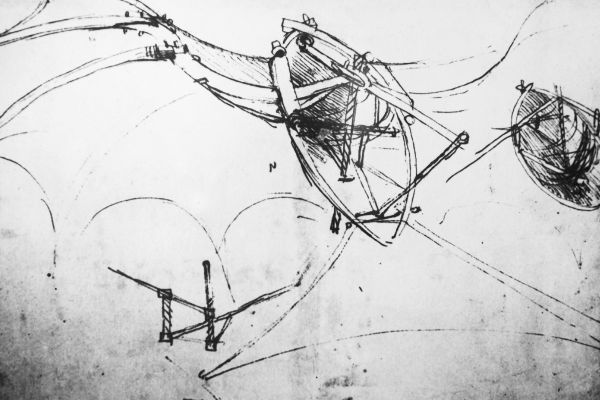
In our shiny new technological age, it's easy to take a dim view of the past. We tend to imagine that people back then lived in a simpler age, full of candles, books and superstition but, actually, a lot of technology from those supposed dark ages used some pretty advanced scientific principles, many of which we're still trying to figure out to this day!
Sure, we might have iPhones, microwaves and the polio vaccine these day, but people from "back then" were living in a world with seismographs, nanotechnology and even robots (no, really). There are even cases of ancient technology being found to be as good or even superior to our modern equivalents.
Perhaps if they were alive today, they'd be the ones laughing at us.
Sure, they maybe didn't fully understand all the principles behind some of their most impressive tech, but the olde worlde folk deserve a lot more credit than we give them. And, no, it wasn't aliens.
7. Boomerangs - Gyroscopic Precession
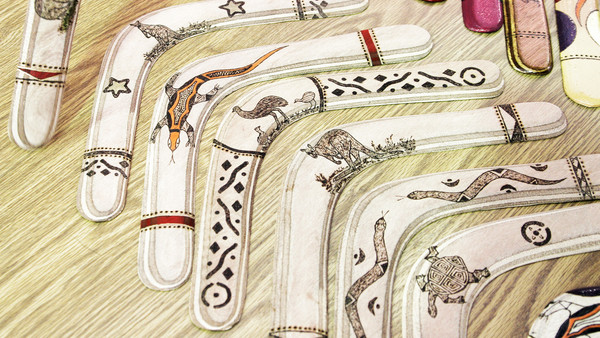
The boomerang is one of humanity's oldest flying inventions, used by aboriginal Australians at least 10,000 years ago, and the oldest known boomerang is estimated to be as much as 23,000 years old.
With its rounded leading edge, thinner trailing edge and curved top creating lift as it moves through the air, it is - despite its age - basically a wing - something the rest of humanity didn't get to for quite some time. Although these are relatively simple aerodynamic principles now, 23,000 years ago, man was barely out of the cave painting stage, so the development of an airfoil is pretty good going.
Contrary to popular belief, not all boomerangs "come back", but the ones that do are utilising some additional principles of physics, namely, gyroscopic precession. When the boomerang is thrown in a vertical position, the lift and drag acting on the different ends creates a torque, in turn causing the angular momentum to precess and describe a curved path.
We can't be sure whether the boomerang's ancient inventors were scribbling complex mathematical formulas in the sand, but it's more likely that they perfected their design through trial and error, using techniques that wouldn't be properly understood for thousand of years.
6. Brass - Ancient Disinfectant

You know in the olden days when everything was dirty and smelly? How on Earth did anyone stay alive long enough to reproduce before dropping dead of some horrible infection? Well, despite our prejudices about grimy people from The Olden Days, as we sit smugly atop our tower of bleach and antibacterial hand gel, they knew a thing or two about killing germs using something called the oligodynamic effect.
Brass doorknobs made an unlikely cover story a few years ago, as it was found that copper and some of its alloys were actually capable of killing bacteria, including the scary superbug, MRSA. Rather embarrassingly, an ancient Egyptian medical text known as the Edwin Smith Papyrus recommends the use of copper, as well as silver, magnesium and arsenic, as medical disinfectants. It was also a well known practice for settlers in North America to drop copper and silver coins in their containers of water, milk and wine to keep it fresh.
How this actually works is still unclear, but it's thought that metal ions damage proteins or interfere with the metabolic processes of the bacteria. As a result, a brass doorknob will disinfect itself in around eight hours, whereas a flashing stainless steel one never will.
5. Concrete - The Romans Got There First
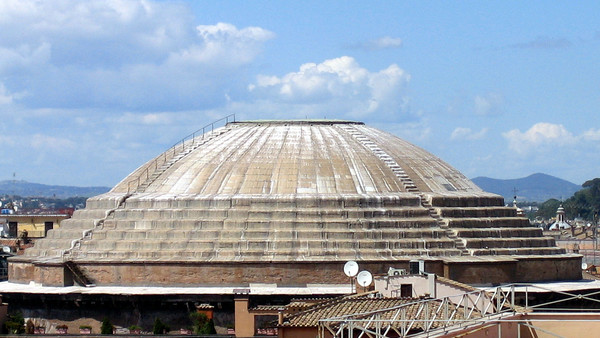
Although most of us associate concrete with ugly '70s tower blocks, it's actually a technology that was used throughout history, most famously by the Romans. The thing is about concrete, is that it's not a case of allowing it to "set", like clay or plaster. Hardening concrete is actually a chemical reaction known as curing, something that Romans couldn't have really known about before the development of chemistry. The common misconception that concrete "dries out" as it hardens is not quite true, evident in the fact that concrete can harden underwater.
Without turning things into a snoozefest, the process, known as hydration, is a chemical reaction that causes the ingredients to form different molecular bonds, massively strengthening its structure.
The thing is, the Romans were doing this in an age when water springs were gods and owls were bad omens. They even managed to use the technology to build the largest unreinforced concrete dome ever, that is still unsurpassed my modern technology.
4. Chinese Earthquake Detector - Seismographs
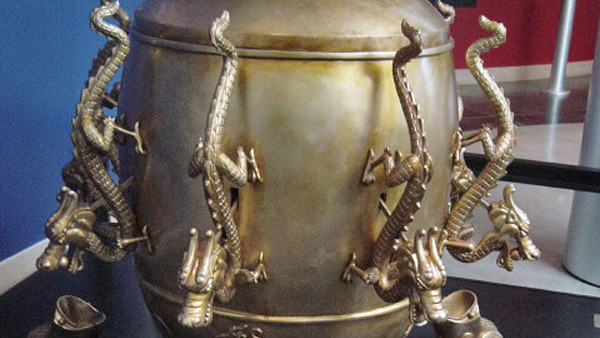
In terms of awesome new technology, the ancient Chinese were definitely ahead of the pack. As well as inventing everything from fireworks to toilet paper, they also casually found a way of detecting earthquakes up to 500km away, and even figuring out where they occurred.
This first ever seismoscope was demonstrated in 132 AD by a Chinese inventor named Zhang Heng. It consisted of a large vessel with eight dragon heads around the outside at the main points of the compass. When an earthquake was detected a ball would drop out of one of the dragons' mouths and drop into a bowl below. Where the ball came out would indicate where the Earthquake was. We're not exactly sure of the mechanism, but it's thought that the large vessel contained a delicately balanced stick. When a tiny shock wave passed through, it would cause the stick to fall over in a certain direction, pushing the ball out of a certain dragon.
Although people of the time had no idea about tectonic activity or what caused earthquakes, modern day scientists have managed to reproduce the device and successfully detect four different real-life earthquakes. The thing was so accurate that it matched the readings taken from our modern instruments.
3. Da Vinci's City Of The Future - Germ Theory
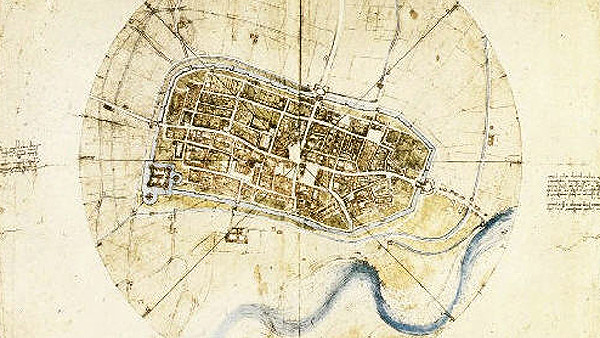
I think we can all agree that Leonardo Da Vinci was a pretty smart bloke, but he was still living in an age that predated a lot of modern science. He didn't let this stop him though, and developed a whole range of technologies that were way ahead of their time.
These included a city based around principles that wouldn't be formulated for another 400 years or so. Around the year 1400, Da Vinci was living in Milan whilst the bubonic plague tore its way through Europe. This was made worse by the fact that the cities were essentially overcrowded cesspits in which you spent most of your time with your face inches from somebody else's armpit.
At the time, people had no real idea how disease spread and the prevailing theory was that illness was caused by "bad air" and demons or whatever.
Leonardo's ideal city, however, had sanitation and cleanliness at the forefront of the design and utilised principles that we would later go on to develop into Germ Theory in the 1800s. The city was divided into separate levels, with the lowest levels reserved for canals that would whisk away any waste products, whilst the upper levels featured wide streets, allowing people to move around without literally breathing into each other's mouths.
2. Damascus Steel - Carbon Nanotubes
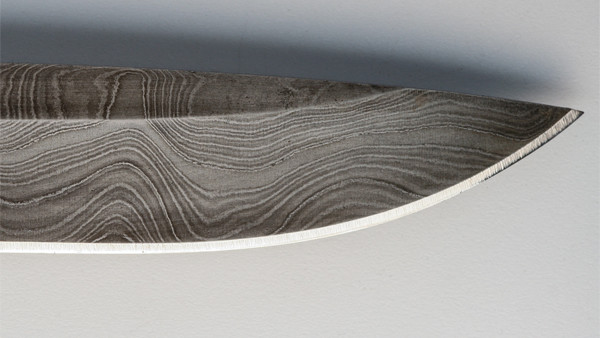
If somebody said the words "carbon nanotubes", "superplastic" and "microalloy" to you, you'd likely picture a high tech lab somewhere, probably Germany. However, these are all words associated with the ancient supersteel that was being used to slice the heads off Persians by the likes of Alexander the Great as far back as 300 BC.
Damascus steel was prized for its incredible strength and sharpness, supposedly capable of slicing a feather in half in the air, or scything through the barrel of a gun, the legendary steel was the perfect weapon. The thing is that we still can't figure out how they did it. Analysis of Damascus steel has revealed nanowires and carbon nanotubes, something that we use today in the fields of electronics and nanotechnology. Amazingly, some think that these are the result of adding woody material into the steel and deriving the nanotubes from the plant fibres.
The technology was unfortunately lost by the 18th century and, so far, we have not been able to reproduce it.
1. The Robotic Knight - Humanoid Robots
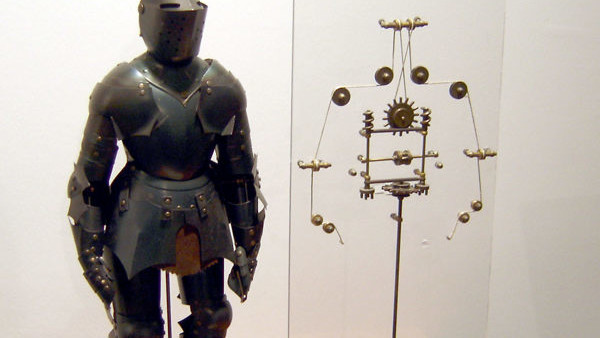
Going back to old Leo for a bit, turns out the dude managed to build a robot in the 15th century. The design was based on his extensive studies of human anatomy. Leonardo spent a lot of his time cutting up and sketching human corpses in a bid to figure out how it all worked, and he then applied this knowledge to his very own automaton.
It was made up of a suit of armour operated by a series of ropes and pulleys meant to imitate human muscles and tendons. The thing could sit stand, move its arms, raise its visor and even operate its jaw (whilst presumably freaking people out at parties).
Although the original robot has not survived, robotics engineers managed to recreate it in 2002 using his original sketches. Incredibly, the system worked so well, that many of the principles have been applied to modern robots used by NASA. Talk about being ahead of your time.