5 Insane Sci-Fi Ideas Of The Space Age
Wacky, weird, and out of this world.

For hundreds of years, humans have looked to the future, wondering what wonders and amazement it will bring us. Following World War II, a new age of optimism and dreams began afresh.
Jetpacks, robots, and so much more have all inspired countless pieces of entertainment. Though these ideas were mere fantasy to the science-fiction authors of the time, actual scientists were busily squirreling away on making them a reality.
What if instead of cleaning your home and baking your dinner, your friendly robot could handle it and all other household amenities? What if your car ran on nuclear energy and gas refills were a thing of the past? What if you left the Earth itself for your extravagant new home in outer space?
These were the questions that authors and scientists pondered in the golden age of futurism - the 1950s and '60s.
As the Cold War raged on, new world fairs showed the technology of the future - the so called "World of Tomorrow." Of course, these ideas ranged from prosaic and practical, to downright insane. Some came to fruition - many others remained a glint in the eye of a dreamer.
5. Everyday Jetpacks

Today's methods of traveling are quicker, cheaper, and more comfortable than perhaps ever before, but they are largely similar to transportation of the past. Planes, trains, automobiles, and boats still dominate travel. In the 1950s, scientists and writers pictured numerous futuristic sources of movement. Monorails, rockets, and transcontinental trains were the image of the futuristic utopia that awaited humanity. However, none of these ideas are as crazy - or fun - as jetpacks.
Personal and fast, jetpacks enticed and excited tons of science fans who were eager to latch one on their backs and fly like Superman. Thoughts of personal human flight amazed millions and this new technology seemed closer than ever before.
The first jetpacks were developed in the 1950s, capable of heights of 33 feet and distances of 21 seconds. The US Military funded future projects and in 1961, the technology was shown before President Kennedy. While tests were successful, the US decided against continuing the program and the jetpack never developed further.
Today, jetpacks are mostly past ideals and plans that never came to be, much like other futurism ideas of the space age. However, there are a few attempts at this technology in the modern era, with the first modern jetpacks arriving on the market at the cost of $200,000 to $250,000.
4. Robotic Handymen

Robots have been imagined in many forms and fashions for decades. They have been humanity's worst creation in movies such as The Terminator, and also its possible savior in WALL-E. In the 1950s and '60s, humanity envisioned the advancement of blocky robotic figures, acting as our own personal butler, helping us in our daily chores and activities.
Shows such as The Jetsons and The Twilight Zone as well as countless comics portrayed this future of luxury. Why work around the house when your own personal robot can clean the dishes, do the laundry, and tidy up?
These robots were seen as a future addition to the average family, fitting right in alongside Mom, Dad, and the kids. Forget the babysitter or the home caretaker, you have your handy dandy robot!
This folksy view of the future obviously never came to be, but strides in technology have been made towards the creation of robots and artificial intelligence that may become smarter than their human makers. Whether that thought excites or terrifies you, it is clear the '50s view of blocky microwave looking robots has been replaced by handheld devices and desktop personal computers that are even smarter than we ever imagined.
3. Space Homes

Picture this: Your home has sold, you say goodbye and leave the premises, walking out to your nuclear powered car which drives you to the nearest rocket station. Once there, one of the newest rockets on the market shoots you and your family up to your new home somewhere off in the galaxy. Sounds downright insane and a bit comical right? In the 1950s, this was the future.
The Jetsons and their home in space was just a cartoon, but many genuinely believed this was the future of housing. Families would leave their sleepy suburbs for the newest cities on Venus, Mars, and the Moon. Their UFO shaped homes would house them on new space colonies where wondrous technologies awaited them.
Of course, this dream never took off. As the space race came to a close, the United States and Soviet Union dropped their focus on space, and a human hasn't stepped foot on an extraterrestrial surface since. Homes have remained mostly the same since the days of Eisenhower and Kennedy.
With plans to return to the Moon and go to Mars, NASA and private companies like Space X are pioneering the future of space travel, but we are still decades away from the dreams of the past.
2. Video Communications

In 1964, at the New York World Fair, Bell Telephone Company (Now AT&T), debuted their "picturephone." For $121 in today's money, attendees could call their friend located somewhere in the nation, with a video screen attached. This amazed visitors to the fair, and many believed this early version of Skype would be able to change their communications very soon.
However, testing of the picturephone in telephone booths proved to the company that it did not have enough interest for its cost, and the plan was soon after scrapped. These ideas of video telephone communication amazed and wondered many and they found their way into comics and films like 2001: A Space Odyssey.
Over the next decades, technology slowly developed and a version of this early idea came onto the market in the version of famous communication apps like Skype, Whatsapp, Google Hangouts, and more. Video conversations were one of the few ideas of the era that arguably proved to end up working out. In fact, modern versions of these concepts were even better than imagined, as people all across the world can now call their friends, loved ones, and family found anywhere in the world, at the touch of a button.
1. Nuclear Powered Cars
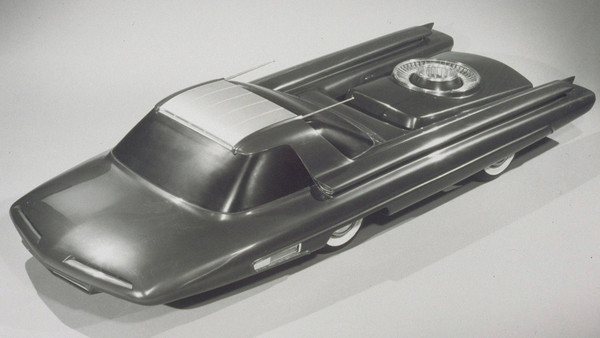
Cars have been the primary method of transportation in the first world for nearly 100 years. They have been upgraded and improved with every iteration that automobile manufacturers develop. Today, electric cars seem to be the future, but in the past, much like many things of the era, cars were heading towards the nuclear path.
With the invention of the atomic bomb and development of nuclear technologies, the atomic era of the 1950s came into full swing. Scientists, businesses, and governments alike viewed atomic energy as the future. Nowhere was this vision more clear than in car manufacturing.
Companies like Ford began work on their nuclear projects, with Ford's development of the "Nucleon" being featured prominently in 1958 as concept of these future nuclear cars. The vehicle swapped combustion engines for nuclear reactors, envisioning they would become smaller and safer in time for the car to be created. However, Ford soon after scrapped plans for the car and because of the risks of radiation and impracticality of nuclear reactors, nuclear powered automobiles became yet another vision from the past.
Today, we continue to advance in nuclear energy and technology but we are still years, or decades from the visions of the atomic era.