20 Weird Science Facts That You Might Just Need One Day
Useless facts are only useless until you need them.

Life is full of little surprises, and sometimes you just never know when it will come in handy to know what key a housefly hums in, or how long it would take you to drive to space.
As firm believers in the principle of forewarned is forearmed, we've put together a list of vital trivia that could some day prove to be a lifesaver or, at the very least, clinch you the winning point at your next pub quiz.
20. You Could Drive To Space In An Hour
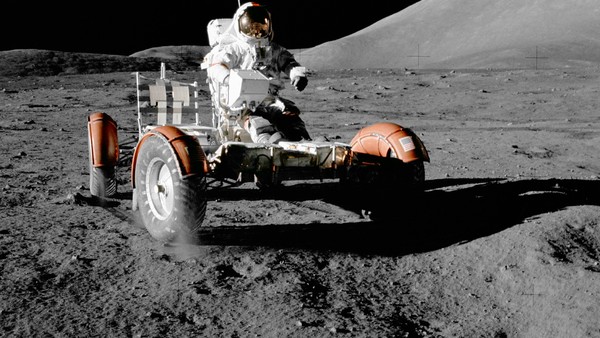
This question was first asked by astronomer Fred Hoyle who figured that, since space is only around 62 miles away from the surface of the Earth (give or take, accounting for mountains) then it would take just about an hour to get there, driving at 60mph.
If you wanted to get to the moon, it would take a bit longer as it is around 238,900 miles away. The journey time for a lunar holiday is about 6 months.
When you might need to know this:
If you are ever planning a family holiday to space, but don't want to pay for the flights
19. Alcohol May Have Played An Important Role In The Development Of Our Species

Most major cultures discover alcohol pretty early on, in fact, the earliest known alcohol could be 9000 years old. It's not just humans either, as many animals have, whilst they don't cultivate their own, have learnt to drink naturally fermenting rotten fruits in order to get drunk.
It seems as though getting drunk is just part of life on Earth, but some experts think that it could have even played a crucial role in helping us build civilisation. By acting as a social lubricant and breaking down insular tribal hostilities, Jeffrey P. Kahn, a clinical associate professor of psychiatry thinks it could have played a major role in bringing us together as a species.
When you might need to know this:
When you are explaining to your boss exactly why cracking a beer open at your desk is a good thing.
18. The Coldest Place In The Universe Is On Earth

Outer space is pretty cold, somewhere in the region of -227°C, but thanks to the slight afterglow from the Big Bang, it's a little warmer than it should be.
The coldest place in the universe isn't deep space, it isn't an icy moon, it's not your ex's heart, it's actually in a lab on Earth, where scientists are attempting to push the boundaries of physics by getting as close to absolute zero as they possibly can - that's about -273.15°C. This is the point at which all matter, right down to the atomic level, stops moving.
When you might need to know this:
You're at a dinner party but have forgotten to stick the wine in the fridge.
http://www.smithsonianmag.com/science-nature/the-coldest-place-in-the-universe-8121922/?no-ist
17. You Can Remember The Value Of Pi (3.1415926) By Counting The Letters In "May I Have A Large Container Of Coffee?"
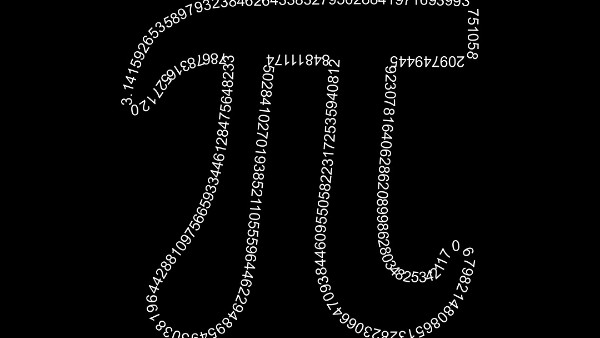
One more time: "May I have a large container of coffee?"
Alternatively, you could simply commit this version of pi to a million places to memory. It all depends on why kind of learner you are I guess.
When you might need to know this:
Impressing people at pub quizzes.
16. A Rubber Band Shrinks When Heated And Expands When Cooled... Because Of Entropy
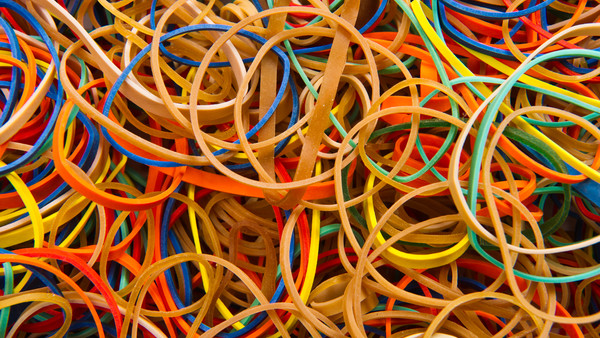
Right, this fact is only weird if you already know that, usually, matter expands when it is heated and contracts when it is cooled - with the notable exceptions of water and rubber bands. Funny old world, innit?
Oddly enough, in the case of rubber bands, this is due to the effects of entropy, which is a measure of disorder in physics. When you heat up a rubber band, you increase the entropy in the tangle of loosely-packed chains of atoms that they're made from, causing them to jumble up, contract and shrink the rubber band.
When you might need to know this:
When attempting to tightly fix something with rubber bands.
15. The Amount Of Fresh Water In The Earth Is 50 Times As Much As On It
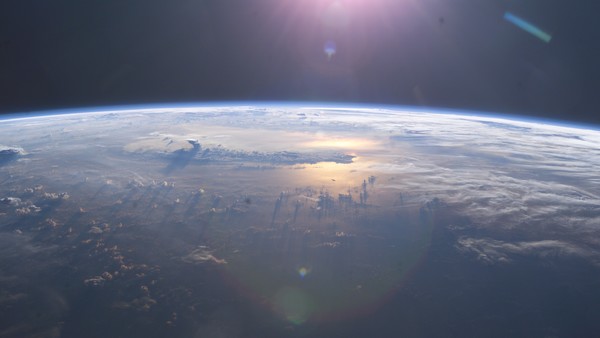
The Earth is really wet, and not just on the blue bits.
Anyone who has ever tried to dig through to the other side of the Earth (or, indeed, dig a well) will know that as you dig deeper, you will eventually hit water. There is a hell of a lot of water just under the Earth's surface and it all adds up to more that all of the freshwater sources on its surface.
When you might need to know this:
When digging a well, to the other side of the world, or a gave in the woods (burying a body too deep could contaminate the water table and give the game away. Just in case you need to know. For reasons.)
14. To Protect Yourself From Malaria Sleep With A Chicken Next To Your Bed
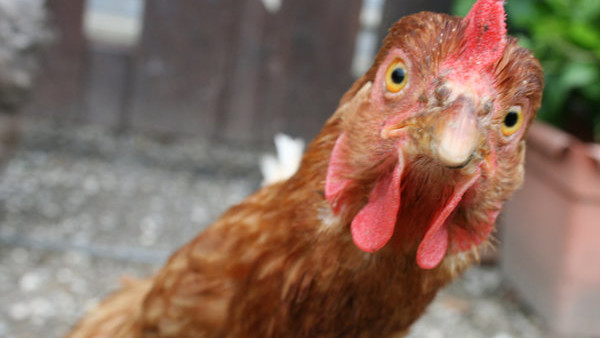
Scientists have found that malaria carrying mosquitos will avoid feeding on certain animals, such as chickens, by using specific odour cues. Basically, mosquitos think that chickens taste and smell nasty.
This means that if you sleep with a chicken next to your bed (or indeed, keep a chicken near your side at all times), the mosquitos will be put off biting you. Alternatively, if you don't fancy putting up with the noise and the mess, an easier option might be to isolate the compounds that mosquitoes find repellant, and create a spray.
When you might need to know this:
When you are trying to protect yourself from malaria. Duh.
13. The Saliva Of A Slow Loris Is So Poisonous, It Licks Its Offspring To Protect Them From Predators

As well as being officially one of the cutest animals in the universe, the slow loris also has a bizarre defense mechanism.
It's saliva, possibly thanks to its diet of poisonous insects, is extremely toxic, capable of killing an animal the size of a cat. This clearly doesn't bother the Loris, as it will drool all over its defenseless young to protect them from predators whilst they search for food.
When you might need to know this:
When you are trying to protect your offspring from predators. Duh.
12. To Produce Enough Sound Energy To Heat A Cup Of Coffee, You Would Have To Shout For 8 Years, 7 Months And 6 Days

As far as physics is concerned, energy is energy, whether it's in the form of electrical, heat, sound, chemical or kinetic energy. What's more, you can convert one to the other.
We usually tend to convert other types of energy into sound energy - in an amplifier, for example - but it is possible to convert it back. Unfortunately, this is an incredibly inefficient system, hence the need to shout for nearly nine years just to get a hot cup of coffee (service is terrible these days, isn't it?)
When you might need to know this:
Well, if you're that in need of a cup of coffee, you're probably yelling anyway.
11. The Atlantic Ocean Grows At About The Same Rate As Your Fingernails

Thanks to the Earth's tectonic activity, the North American and Eurasian Plates are moving away from each other, pulling apart the sea bed and causing the Atlantic ocean to grow by at a rate of about two centimetres per year which is, coincidentally, the same rate at which your fingernails grow.
Proof of intelligent design? Probably not.
When you might need to know this:
If you were planning a swim across the Atlantic and needed to know your distance down to the nearest centimetre. You wouldn't want to run out of energy and drown just centimetres from the shore thanks to a dodgy calculation.
10. DNA Is Flame Retardant

Italian researchers sure know how to throw a wild party, because it is the only possible explanation for how they discovered that DNA is flame retardant.
By coating cotton in DNA extracted from herring sperm then trying to set it on fire, they discovered that it wouldn't light. This is because, when heated, DNA produces phosphoric acid, which replaces water in cotton fibers with a flame-retarding residue, then the bases, containing nitrogen, produce ammonia, preventing combustion.
When you might need to know this:
If you are ever on fire, this might be a comfort to you.
9. A Rubber Tyre Is Actually One Giant Molecule
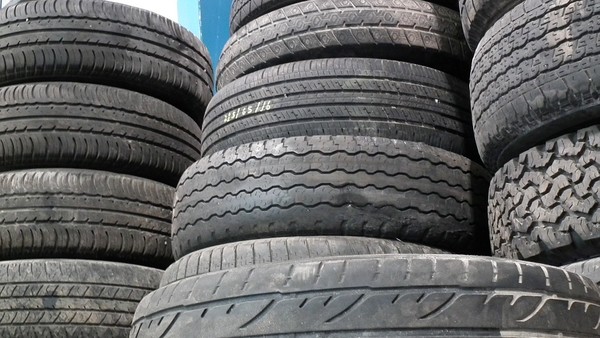
When we think of molecules, we tend to think of the microscopic arrangements that make up H2O or whatever, but molecules, which are just atoms bound together, can be made big enough to hold in your hand.
The process that goes into making the rubber for tyres, vulcanization, binds together long polymer chains and short strands of sulfur atoms which, technically, turns them into one giant molecule. For this reason, there is nothing in nature that can break them down, and they can't be melted down and turned into something else, making them a headache for landfills.
When you might need to know this:
When arguing with the local garbage dump as to why they won't take your old tyres.
8. The Tuatara Has A Third Eye For Ultraviolet Light
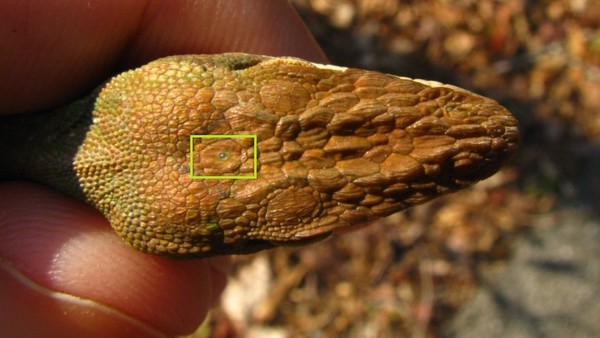
The tuatara is a species of lizard that lives in New Zealand, and is unusual in the sense that, not only does it have three eyes, but one of them is on top of it head and can only see ultraviolet light.
It's actual function is unknown, but some think that it could be an efficient way of absorbing UV rays to produce vitamin D.
When you might need to know this:
In case you ever wanted to take a tuatara to a rave.
7. The Synthetic Cell "Synthia" Is The First Living Organism Whose Parent Is A Computer
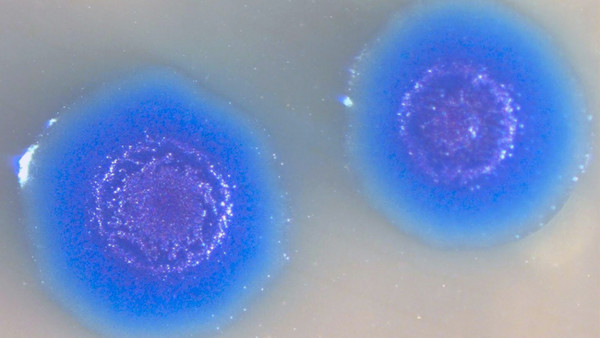
Sythia or Mycoplasma laboratorium is a species of synthetic bacteria, created in a lab and derived from the genome of the Mycoplasma mycoides.
It is estimated that creating the synthetic genome cost $40 million and took 20 people more than a decade of work, but the potential for the technology to produce biofuels in the future already means that it is attracting the wallets of investors. Synthia is the only organism on Earth that can say its parents are computers (or at least it could, if it had a mouth).
When you might need to know this:
When you are desperately trying to piece together how the AI revolution began.
6. Scientists Can Grow Mini Human Brains In The Lab
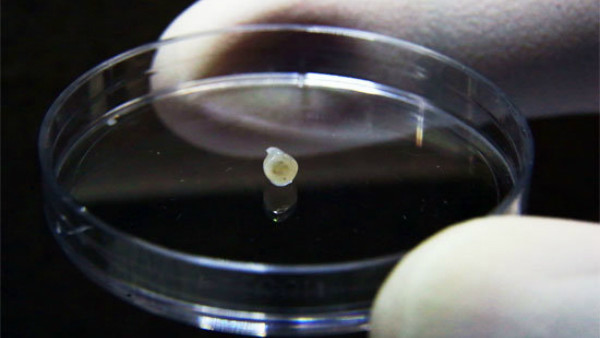
So you know how everyone keeps reassuring us that science is nothing like in the movies, and we are in no way going to create a dystopian future of class warfare between synths and humans?
Well, scientists can now grow tiny advanced mid-brains in a lab, so it looks like that's not true after all.
The human midbrain, which is the information superhighway, controls auditory, eye movements, vision and body movements. It also produces dopamine, and tests on these synthetic brains has confirmed that they do indeed have functionally active dopaminergic neurons. The tiny brains will be used to conduct research into age-related brain diseases.
When you might need to know this:
Surely we all know someone in need of a brain?
5. Everybody Has A Unique Tongue Print

The tongue is a weird old thing. It's one of the strongest muscles in the body and the only muscle that is attached at just one end (unless something has gone very wrong for you). It also possesses its own "fingerprint" that is unique to you, and researchers are developing a 3D imaging technique that could be used to identify you.
It turns out that your mouth in general is a pretty strong ID, as your teeth are also unique to you (not even twins have the same teeth), plus, research has shown that the bacteria nestled in your gums can be a strong indicator of your ethnicity.
When you might need to know this:
If you are ever committing a crime, remember not to lick anything, as that could give the game away.
4. The Housefly Hums In The Key Of F

The sound of a fly buzzing around your home is annoying as hell, so you could be forgiven for not noticing that the sound is actually relatively tuneful.
The common housefly, although it lacks vocal cords, hums by flapping its wings about 190 times per second. We don't hear the individual flaps, but a low level humming noise in the key of F major. Different sizes of fly will hum at different pitches, but they will always be either F, G, A, B♭, C, D, or E.
Weirdly, the F major scale is thought to be the most prevalent in nature and even Beethoven’s “Pastoral Symphony”, which was written to communicate the beauty of nature, is in the key of F.
When you might need to know this:
When you are trying to tune your guitar, but one of the sound technicians has wandered off with your tuner.
3. The Urge To Squeeze Cute Things Is Called "Cute Aggression"
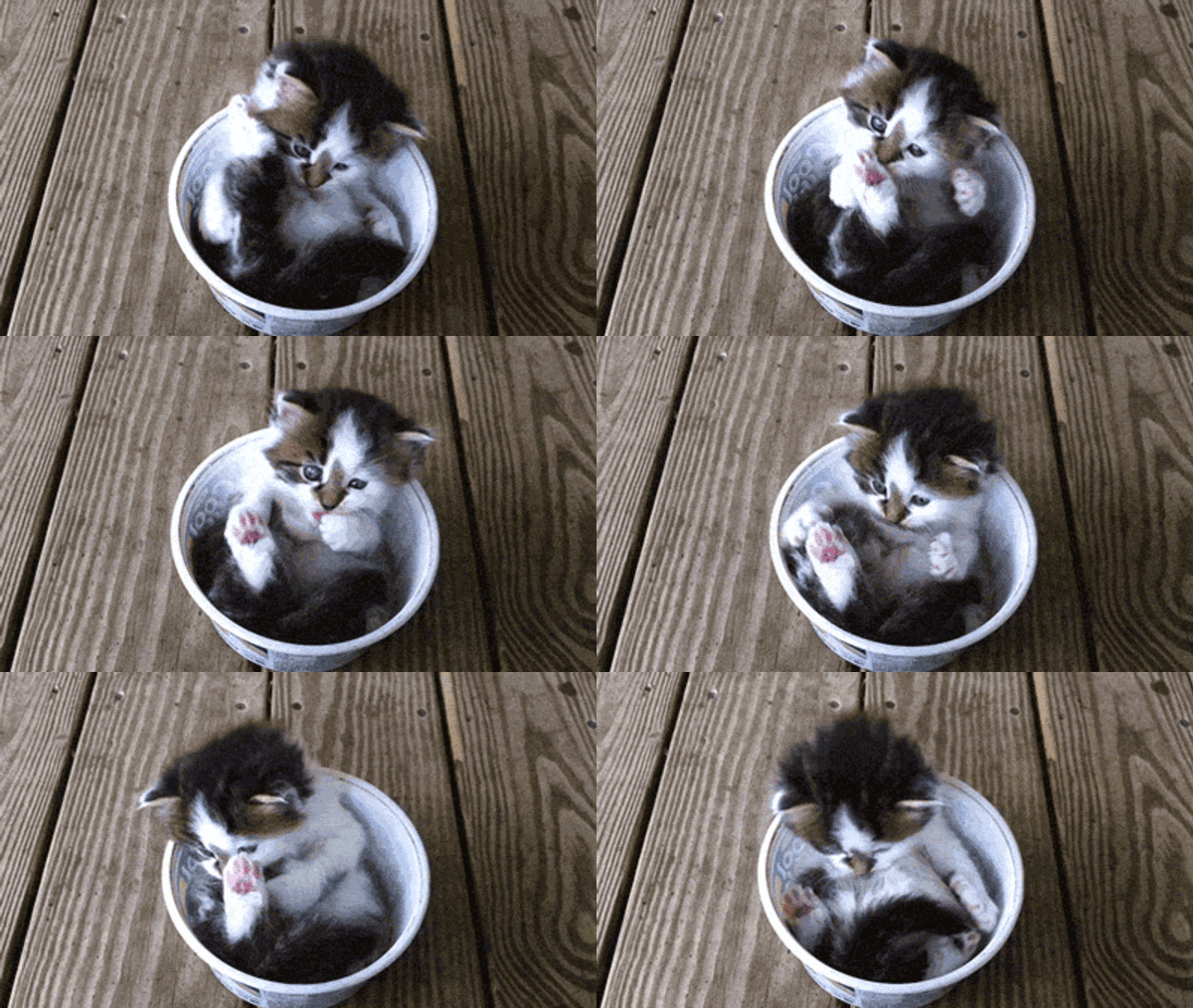
Maybe it's an indicator of just how screwed up we are as a species, but that urge you get to squish and smoosh cute things has finally got a name: Cute Aggression.
We're still not entirely sure why it happens. Some researchers think that it might be due to frustration that, when watching kitten videos on the internet, that we can't actually snuggle them. This, however, doesn't take into account the urge to smoosh kittens in person.
It could be that our brains get so over-stimulated by a positive emotion, that it actually interprets it as a negative one - in much the same way people cry when they're extremely happy.
When you might need to know this:
To remind yourself that you're not a psychopath for wanting to cuddle that puppy to death oh my god.
2. Uranus Is Tipped On Its Side
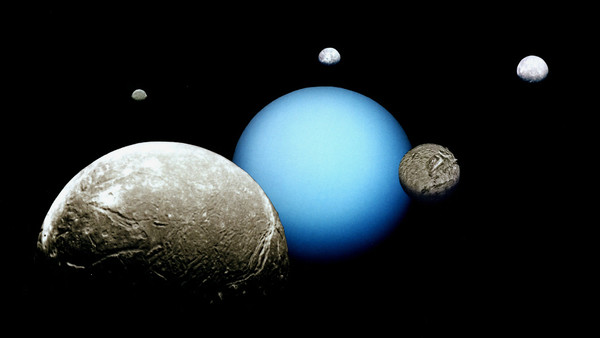
Uranus, as well as being literally always hilarious, is tipped on its side so that one pole is pointed at the Sun, so its poles are warmer than its equator. No one is quite sure how it happened, but it is thought that a series of colossal collisions could have knocked it over during the formation of the solar system
Despite being almost completely on its side, Uranus is actually less tilted than Venus, which is actually upside down.
When you might need to know this:
For trips to Uranus (oi oi).
1. A Million, Billion Neutrinos Will Pass Through Your Body While You Read This

In a single second 65 billion neutrinos pass through just one square centimetre of the Earth like it ain't no thang. That means over the course of your lifetime, roughly 10^23, close to a trillion trillions, neutrinos will stream through your body. This doesn't hurt a bit, despite the fact that it has been found that neutrinos do actually have a small amount of mass.
As well as being numerous, neutrinos are fast, and by the time you have finished reading this article, they will have passed straight through the Earth, out the other side, past the moon and off into space.
When you might need to know this:
You don't, but it's just cool.
You could write for WhatCulture Science! Click here to find out how you could get paid to write about what you love.
If science makes your brain box tingle, like us on Facebook or follow us on Twitter to stay up to date.