20 Mind-Blowing Facts About William Shakespeare

11. His Kids Were Probably Illiterate

Shakespeare Kids It€™s almost certain that Shakespeare€™s children were illiterate. His son, Hamnet, might possibly have been able to read and write, though there€™s no evidence that he ever attended school. We don€™t know much about him because he tragically died aged 11. Shakespeare€™s other children were both girls, which meant that they wouldn€™t have gone to school. And Will didn€™t have much time to teach them much, spending most of his time writing and travelling between Stratford and London. This meant that the girls grew up functionally illiterate. The most either of them could manage was Susanna scrawling her name. Shakespeare was certainly a worse parent than his folks. Despite having little money, they sent him to a local grammar school so he could learn to read and write. Which was especially nice, as they were also illiterate themselves.

10. Many Of His Plays Were Reworkings
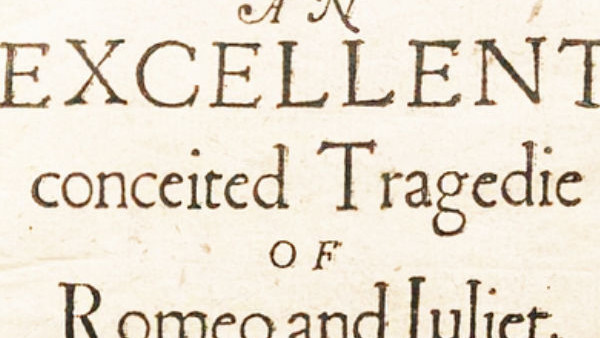
He was undoubtedly a genius, but Shakespeare had more of a helping hand with his plays than is commonly thought. Some, such as Macbeth, were reworkings of ancient tales, but others borrowed more liberally from recent sources. Romeo and Juliet, for example, was probably a retelling of Arthur Brooke€™s poem The Tragical History Of Romeus And Juliet, which came out in 1562, just 30 years before the play. That in itself was a retelling of Boccaccio, a source Shakespeare often mined himself. It€™s likely Shakespeare borrowed some plot elements for the vast majority of his plays. Many of the ones with original stories were likely collaborations with other playwrights. The Two Noble Kinsmen was certainly partly written by John Fletcher, who probably helped with Henry VIII. Thomas Middleton likely helped with Timon Of Athens and All€™s Well That Ends Well. It€™s likely that many plays were at least looked over by other writers. It€™s likely we€™ll never know for sure.

9. One Of His Relatives Was Executed For Treason
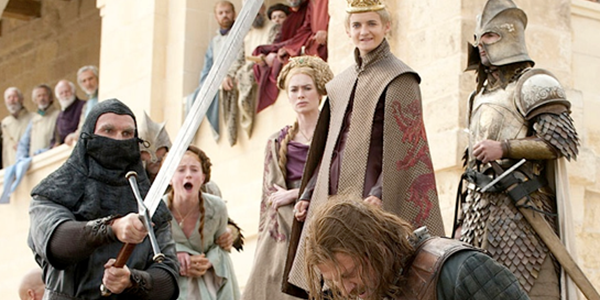
Shakespeare€™s mother, Mary Arden, had a group of cousins who were known at the time as bad eggs. Around the 1580s, Shakespeare€™s first removed cousin William Arden, William€™s son Edward, and Edward€™s son-in-law John Somerville, got caught up in a plot to assassinate Queen Elizabeth I. Historical records aren€™t entirely clear on who did what, but we know that Somerville was arrested for plotting an assassination, which led to a raid on the Arden household. William Arden might have escaped with his life, but Ed and Somerville were certainly beheaded for the plan. By many accounts John Somerville was arrested for shouting in public about killing the Queen, and wasn€™t of sound mind. Nevertheless, he was executed along with half his family. With judges that paranoid, no wonder Shakespeare kept that piece of family history to himself.

8. He Brought Starlings To The USA

Well, not directly. But Shakespeare referenced over 600 birds in his works, and in the late 19th century the American Acclimatization Society took it upon themselves to introduce every one of them into the USA. Because Netflix didn€™t exist back then and people got bored easily. One of those birds is the starling, referenced just once, in Henry IV Part I, in a metaphor. This brief occurrence was enough for Eugene Schieffelin to release one hundred of the birds in Central Park in the 1890s. Today there are over 200 million of them in America, more than one for every two people, and they€™ve ousted many native species from their homes. All because of one forced metaphor.

7. We Know Next To Nothing About The Sonnets
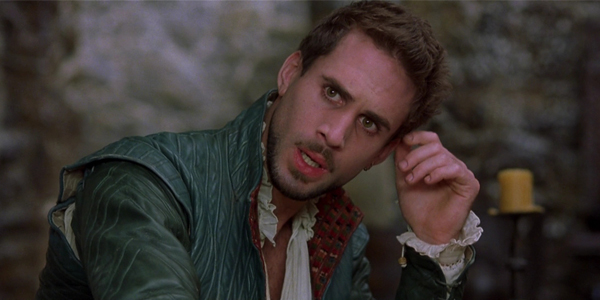
Despite being some of the most famous poetry ever written, very little is actually known about Shakespeare€™s sonnets. We don€™t know for certain who any of them were addressed to, what exactly they were talking about, or why Shakespeare wrote them in the first place. We know that Shakespeare started writing poems when the London playhouses were closed due to the effects of Plague, so he might just have been messing about because he was bored. But some of them seem so personal and intense that they must have been written for a reason. The exact meaning behind them has been inspiring scholarly debates and mortarboard-slap fights for years. Most of the current debate centres around the male €œfair youth€ to whom over 100 are addressed. But there are hundreds of references, to women, men, and other writers, who are similarly unidentified. Scholars are reduced to finding thematic connections between the sonnets. But there€™s little evidence that any are deliberately connected, and their order in print appears to have been decided at random. Basically, the sonnets are just some words which sound nice. If anyone says they know anything beyond that, they€™re probably lying.

6. He Invented The Phrase "In A Pickle"

Shakespeare Pickle Everyone knows that Shakespeare coined an impressive amount of new words and phrases, but most of them are sounding archaic now. No-one really says €œMum€™s the word€ or €œdead as a doornail€ these days. But some phrases he invented are still in every day use. He coined, or at the least popularized, phrases as innocuous as €œthe naked truth€, €œin stitches€, and €œvanish into thin air€. Perhaps the most surprising is €œin a pickle€. It€™s such a silly, offhand turn of phrase that few will ever think about what it actually means. But in Shakespeare€™s time a €œpickle€ was a spicy sauce, and Shakespeare was the first to use €œin a pickle€ to mean €œin an unfavourable situation€. His contribution to the language was immense, but we might not thank Shakespeare for every word he coined. He€™s also thought to have invented €œswagger€, from which we get the modern meaning of €œswag€.

5. A Lot Of His Works Weren€™t Elizabethan

Shakespeare is thought of as the most famous of the Elizabethan playwrights. But he actually did a large amount of his work in the Jacobean era, and he gained serious recognition only after Elizabeth left office. In fact, the succession of James 1 from Elizabeth 1 in 1603 is seen as a watershed moment in Shakespeare€™s career. Popular tastes changed, with a taste for satire and tragicomedy coinciding with the accession of the new king. Though he wrote a lot of works under Elizabeth, plays such as Othello, King Lear, and Macbeth were written under James I, and influenced by the new king. Macbeth was even written to gain the James€™ respect by confirming his legitimacy. It€™s not easy to classify a playwright like Shakespeare who straddled two clearly opposed periods. But his later plays were definitely not Elizabethan.

4. His Audience Could Reach Onto The Stage

While some of Shakespeare€™s audience would have paid good money for seats in the galleries, a great many of them would have paid a penny to stand on the floor surrounding the stage. These €œgroundlings€ would sit on the ground and watch on quiet days, but when it was busy they€™d be crammed in and would get restless. Heckling was expected, and many regulars would sneak in rotten food to throw at the actors on stage. Many weren€™t even bothered with the play, they were just there to meet, and fight, their fellow audience members. Full-on brawls weren€™t uncommon, and some men would reportedly fight to stand next to attractive women. More often than not, the actors were expected to soldier on, even when they were drowned out by shouts and being pelted with vegetables. And, as Shakespeare often acted in his own plays, there are probably some people out there who can say their ancestors nailed Shakespeare with a cabbage.

3. He Wrote 1.5 Plays A Year

At a pretty conservative estimate, Shakespeare wrote or co-wrote 37 plays. The first, Henry VI Part I, was written around 1590, and the last was first performed before 1614. That means that he wrote, on average, about one and a half plays every year. That would be an impressive ratio for an amateur, but Shakespeare was churning out one of the most beautiful works in the English Language every 8 months. To put that in perspective, Woody Allen, probably the hardest-working writer in modern film, churns out one screenplay a year. And a lot of those haven€™t exactly been of the greatest quality. Paul WS Anderson has written 8 films since 2000. Shakespeare also wrote all of his poems in that time. He may have had a relatively short career but his work ethic puts modern writers to shame.

2. He Used 7,000 Words Only Once

Shakespeare€™s vocabulary was pretty incredible, even if he did sometimes have to resort to making up words. But it€™s hard to comprehend just how vast it was without looking at the figures. In an era without dictionaries, Shakespeare used more than 17,000 different words, four times as many as an educated man would be expected to know in the period. He invented nearly 3,000. Most remarkably though, he used 7,000 words just once. That€™s once in his entire body of work, not just one play. That€™s more words than his contemporaries were expected to know in total. Or, to put it another way, that€™s more words than there are in the entirety of the King James Bible.

Contributor

Recent university graduate, part-time writer. Huge movie fan, my favourites are the talkies.