12 Things Everyone "Knows" That Aren't True

I came here to drink milk and bust myths, and I'm all outta milk.

There are some things that everybody just "knows": The sky is blue, water is wet, Bono is a tw*t, etc etc etc. However, there are some truths, universally acknowledged, that actually aren't all that true nor universal. You can probably blame your school days for most of these misconceptions, as most teachers have better things to do than accurately answer children's questions, but TV, the media and that bloke at the pub who reckons that dogs can't look up, all have to take their fair share of responsibility too. It's sometimes unclear where the misunderstandings come from, but it just goes to show that a little bit of knowledge can be a dangerous thing. On the plus side, once you know the truth about a few common misconceptions, you'll probably be able to drop them smugly into conversation with almost alarming regularity and, as we all know, everybody loves a smart*rse. Anyway, let's bust some myths.

12. Deoxygenated Blood Is Blue

Nope, sorry. All blood is red (unless you happen to be a spider, in which case, congratulations on your ability to read). The myth that deoxygenated blood is blue probably comes from a combination of factors. Firstly, that diagrams of the circulatory system often have blue blood vessels on them; secondly, oxygenated blood is "more red" than deoxygenated; thirdly, your veins do appear to be blue through your skin. Deoxygenated blood is more of a brownish red colour than the bright red of oxygenated blood, but certainly not blue. Your veins just appear to be blue through your skin because of the way different wavelengths of light penetrate the skin differently. The subcutaneous fat and skin that surrounds your veins absorbs more of the low-frequency red light and allows the blue light through to be "bounced" into your eyes, making them appear blue. If you were to cut though the skin and tissue to the vein (please don't) then it would appear red.

11. Camels Store Water In Their Hump

Hey, makes sense right? Camel have a big humps, camels can go for ages without water, it must be some kind of water tank. Nope, contrary to popular belief, camels' humps are actually made of fat, not water. In the same way that you body will begin to burn your fat stores when energy levels are low, the camel's hump is like a great big battery that it can use for sustenance when food is scarce. Seeing as most plants need water to survive, food is just as scarce as water in the desert, so camels need an emergency supply. Because of the extreme heat of the camel's natural habitat, it can't store fat all over its body like we do, or it would overheat. The hump is a way of concentrating it in one place and allowing the rest of the animal to stay cool. It is true that camels can go for long periods of time without water and that they can drink large amounts of water in one go, up to 90 litres. However, the excess water is stored in the bloodstream, not the hump. Camels don't actually need to drink as much water as you might think, because their bodies are so good at conserving it. They don't do any of that wasteful sweating malarky like humans, their pee is basically as thick as treacle and their droppings are so dry that they can (and are) used as firelighters.

10. There€™s No Gravity In Space

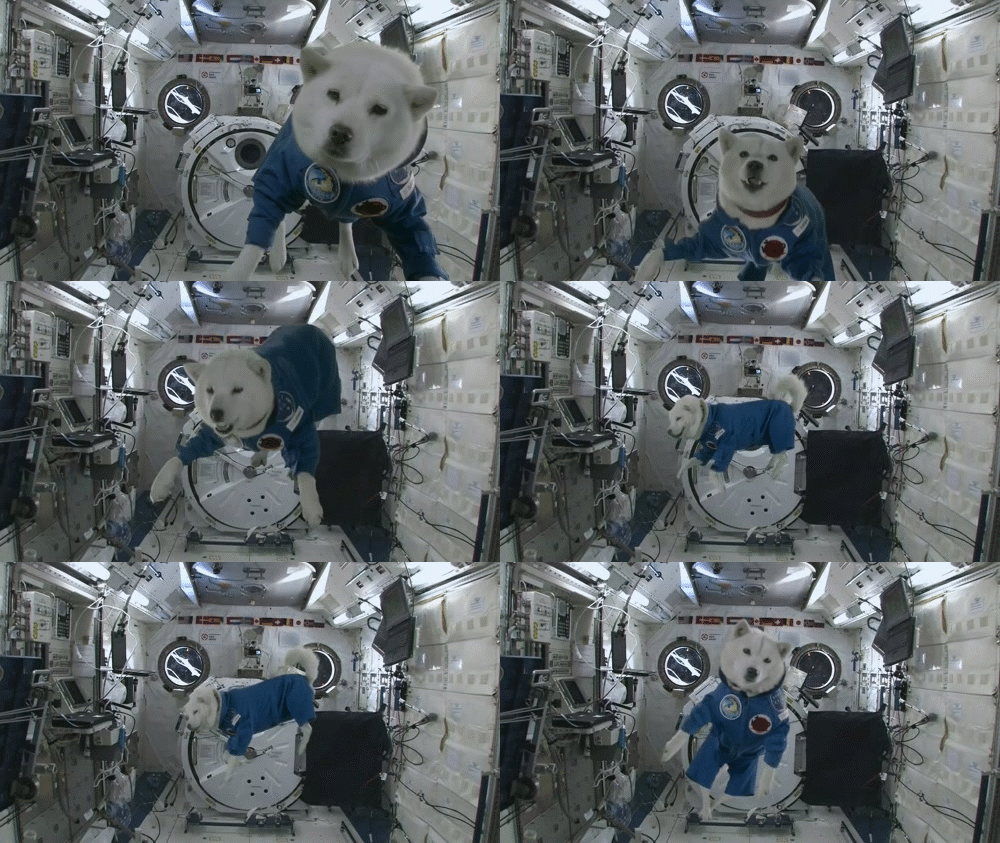
This seems like a fair assumption to make, what with the fact that all the astronauts float around the place, almost as though there's no gravity. This, however, is something of an illusion. There is lots of gravity in space. Considering the sun's gravity can extend well beyond the orbit of Pluto, it seems unlikely that you would be able to escape its clutches by flying around in a spaceship just above the Earth's surface. Gravity, or the bending of spacetime, basically permeates all of space in one way or another, it's virtually impossible to escape it completely. Even an object as distant as the Andromeda Galaxy (a cosy 2.5 million lightyears away) is exerting some kind of gravitational pull on us. The reason why astronauts aboard the ISS appear to "float" in space is because they are actually in free fall. That is, they are constantly falling towards the Earth, because of its gravitational pull. However, because the ISS is in orbit, it is travelling past the Earth as quickly as it is falling towards it, meaning that it simply "misses" it as it falls and ends up going round in a circle. So, when Douglas Adams said "The knack of flying is learning how to throw yourself at the ground and miss", he was exactly right.

9. Sugar Makes You Hyper

Most parents would read this bit and snort derisively, but sugar really doesn't cause hyperactivity in kids or adults or anyone else. Turns out that it's all in the mind. Double blind trials (those are the ones in which neither the researchers or the test subjects know who is getting the sugar and who is getting a placebo) showed that when all knowledge of who has eaten sugar is taken away, so are the effects of hyperactivity. To take it one step further, a group of researchers ran a study in which they told the parents that they were giving the kids sugar, but actually gave them aspartame, a sugar substitute. They found that the parents still perceived hyperactive behaviour in their kids even though no one had eaten any sugar. It was found that it was actually the parents' behaviour that changed, as they became more controlling, critical and irritable with their children when they thought they were being hyperactive. There is also the possibility that kids are often given large amounts of sugar in an already exciting context, such as a birthday party, where they would be running around, shrieking and generally being a shrill menace anyway. It's still not a great idea to load your kids up on sugar, it can still cause obesity, diabetes and tooth decay - just not hyperactivity.

8. Sweetners Cause Cancer

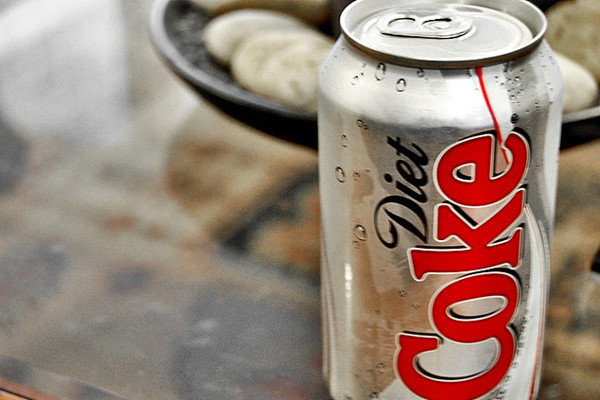
Speaking of sugar, lets talk about aspartame. There seems to be a lot of confusion as to whether or not sugar substitutes are actually better for you than regular sugar. There are lots of claims out there that claim aspartame will cause everything from cancer to obesity to seizures, that it gets broken down in the body as formaldehyde and that it's one of the most dangerous substances that you could ever add to your food. So if all of this is true, why is it still being added to food and, more to the point, how come we're all still miraculously alive? Luckily enough, the aspartame conspiracy theories (which basically all stemmed from a hoax chain email in the late 90s) have caused enough of a stir that aspartame is now one of the single most scrutinised ingestible substances out there. Countless studies have been undertaken in order to investigate the many supposed health risks and there have so far been no links found between artificial sweeteners and any of the supposed health risks. There have been some links drawn between aspartame and migraines in people that are already susceptible to them, but migraines are often triggered by certain foods and so this isn't an indicator of toxicity. It also can be linked to obesity in the sense that people who consume low-calorie sugar substitutes are more likely to over compensate in the rest of their diet (we'll call this the diet coke and large fries phenomenon).

7. You Lose Most Of Your Body Heat Through Your Head
A popular belief of fussing mums, the idea that you lose the most body heat from your head is, in fact, false. True, putting a hat on will keep you lovely and warm when the weather turns, but that's only really because you're covering a part of yourself that you usually don't. Your head doesn't lose any more heat than any other part of your body, it's just that you tend to cover the other parts of your body up - either through embarrassment, common sense or your local public decency laws. If you wandered around with one leg out on a snowy February morning, not only would you look fabulous, but you'd lose just as much heat through that as your head. Perhaps even more so, as you head has a lovely insulating layer of hair. Of course, this does depend on how hairy your legs are, but you get the picture.

6. A Rare Steak Is "Bloody"

If you order you steak "bloody" then (a) you shouldn't be allowed in restaurants, just say rare like a normal person and (b) you're wrong, scientifically speaking. The red juices that make vegetarians equal parts queasy and jealous are not composed of blood, but myoglobin. This is a close relative of blood, sure, but definitely not the same thing. Myoglobin is an oxygen-binding protein found in the muscles of most vertebrates. Pretty much all of the blood will be removed from an animal long before it hits the market as it has a nasty tendency for going all brown and crusty. Ideally, the perfect steak will not contain any blood. Whilst we're on the subject of the perfect steak, let's bust the "searing" myth too. The idea that searing meat "seals in the moisture" is not true, in fact, searing meat even dries it out a little. That's no reason to stop doing it though, as searing does tend to give better flavour thanks to the Maillard reaction.

5. Sharks Don€™t Get Cancer

Sharks are perfectly honed killing machines, and the myth that they arm seemingly immune to cancer too only serves to make them more scary. It is, however, just a myth. The idea that sharks don't get cancer comes from the book by William I. Lane called Sharks Don't Get Cancer (you can see how some people would have gotten the idea from that title), which he used to back up his claims that shark cartilage could prevent/cure cancer ... and that you should definitely buy some from him. Sharks definitely do get cancer, as evidenced by this picture of a shark with a particularly nasty looking tumour on its mouth. Unfortunately, because sharks are not the kinds to perform regular self exams and pop into the doctors if they feel something unusual, we don't have a huge amount of data on how common cancer is in sharks. It's the kind of thing that's quite difficult to study, without killing the shark in question first.

4. Glass Is A Liquid

Your dad probably told you this one during a visit to some old house; that the wibbly wobbly glass is caused by it slowly, imperceptibly flowing over time. Although experts are still squabbling over exactly what is up with glass, it is generally agreed that it isn't slowing melting out of its window frames. The uneven texture of old glass is generally due to the manufacturing process at the time, which was less that perfect. Additionally, the thicker end of the glass was usually placed at the bottom of the frame for structural reasons which makes it look for all the world as though it's all slipped to the bottom over time. The general lack of this "flowing" in other glass objects such as sculptures and lenses would also seem to point to this being a myth. Glass is currently classed as an "amorphous solid" which can "flow" in a manner of speaking, but it has been estimated that your average widow at room temperature would take many times the age of the Earth to flow at all.

3. It€™s Hot In The Summer Because The Earth Is Closer To The Sun
Yep, it is true that the Earth has an elliptical orbit, and the Earth is sometimes closer to the sun than at other times. However, if this were the cause, it would be summer in the northern and southern hemisphere at the same time and, in fact, the Earth is at its furthest from the sun during summer in the northern hemisphere. The seasons are actually caused by the axial tilt of the Earth. Our planet has got something of a lean on it, 23.4 degrees to be precise, and this means that the different hemispheres receive different intensities of sunlight throughout the year. During the northern summer because the northern hemisphere is "pointed" towards the sun and therefore the sun's rays strike the surface much more directly than in the winter months, when they are more spread out.

2. People Used To Think The World Was Flat

Contrary to popular belief, Christopher Columbus did not bravely set off on his voyages in the face of people claiming that he might fall off the end of the Earth. Columbus had enough troubles with navigation without adding that one to the list (you know, the whole unexpectedly hitting America thing). The idea that people in the Medieval period thought that the Earth was flat comes from some good old Renaissance snobbery. Once everyone started thinking that they were terribly smart, they began to invent ways in which everyone from the Medieval period were thick as two short planks. This is largely where we get our erroneous views of "The Dark Ages" from. The myth has further been perpetuated by American culture, depicting Columbus as a revolutionary, flying in the face of medieval ignorance. Since Ancient Greece, people have known that the Earth is spherical. They probably picked up on the fact that people who disappear over the horizon tend to come back again. In fact, the shape of the Earth was so well understood that people were even estimating its circumference in the third century BC. People from the Olden Days would probably laugh at us now, seeing as we're the ones with the Flat Earth Society.

1. Evolution Always Makes Things Better

There's quite a bit of misunderstanding flying around about evolution and this is largely due to the language used to explain it. Say, for example, we're talking about how the giraffe got its neck. It wouldn't be outrageous to say something like "the giraffe evolved a long neck to reach the tops of the trees", but this is not quite right. The giraffes didn't do it on purpose. Evolution by natural selection isn't as "goal oriented" as it can sometimes be represented. A better way of looking at our long-neck friends is to say that "giraffes with the random genetic mutation for long necks were more likely to survive, reproduce and pass it on". The genetic mutations for evolution don't respond to the needs of the organism, but rather, the tiny amount of random mutations that happen to be beneficial are the ones that stick around and eventually saturate the population; the ones that are harmful aren't usually passed on and die out with the individual. It's a tiny detail, but it's so important for understanding how evolution works. Oh, and do feel free to let everyone know in the comments how many of these you already knew. Want to write for What Culture Science? Click here to find out how you could get paid to write about what you love.Who doesn't love some science tingles in their brain box? Like us on Facebook or follow us on Twitter for your next fix.

In this post: 
Idris Elba
 
First Posted On: 
Contributor
Contributor

Writer. Raconteur. Gardeners' World Enthusiast.