10 Ways You Think About The Titanic All Wrong
Big, cocky ship hits ice? Yeah, it's not quite that simple.

It's a story that has grown so big in the cultural psyche that it's now hard to imagine something so horrifically striking actually happened (to the point where some millennials were shocked to discover it wasn't just a movie they'd "never seen"). tTe sinking of the Titanic, hitting an iceberg late on 14th April 1912 and going down in just over two hours, taking 1500 people with her, has been retold again and again in all forms of media, to the point its even got its own conspiracy theory.
It's not hard to see why. There's countless individual stories of the survivors, while the haunting sight of the vertical ship crashing down is impossible to shake. The whole event has evolved to signify a turning point for class-culture, a microcosm of injustice. Titanic is, in the most regrettable terms, an icon.
However, so much of the Titanic mythology isn't exactly true. Up until the wreck was found in 1985, which allowed engineering details to be retroactively extrapolated, the entire night was told based on unreliable accounts from people who's primary focus was survival, not taking in every detail. That's where you get the grand-yet-conflicting accounts of the band playing Nearer To My God Than Thee as a finale (they didn't, although them playing until the last is true) or Captain Smith's alternately heroic or cowardly last moments, widely known as fictitious application to other figures.
But there's more to it than that. In fact, some of the biggest Titanic "facts" are wrong, or at the very least major misunderstandings.
Honourable Mention - James Cameron's Movie Was Actually Pretty Accurate

Because it's ostensibly a fictitious romance, James Cameron's Titanic often gets widely dismissed as a heavily inaccurate account of the ship's final days. And while you'd be right to be sceptical about the lookouts being distracted by an amorous cross-class romance, much of how Cameron presents the sinking is pretty accurate. Elements surrounding Jack and Rose are obviously all fictitious, but the actual mechanics of how the ship went down were (for our understanding at the time) accurate.
In fact, there's an obscene attention to detail; various background events seen off to the side of Jack and Rose are actually extensive recreations of real accounts, mostly from Walter Lord's expertly researched A Night To Remember.
10. It Wasn’t Really About Speed
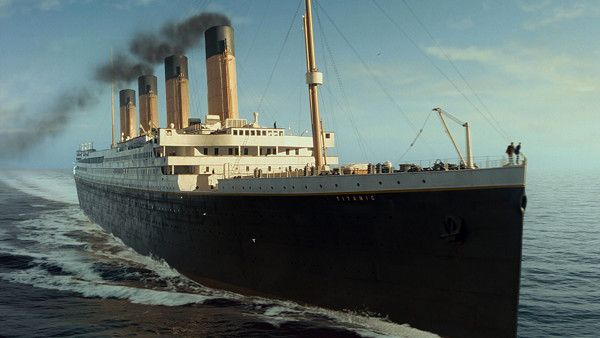
The story of Titanic's collision with the iceberg is pretty simple - ship speeds along, lookouts don't see iceberg, ship turns too late, iceberg cuts hole in ship. Except not a single one of those statements is actually true. So let's go through them all and look at what really happened on that cold night in April 1912.
For starters, while speed was a very big deal on board - she moved faster than most other ships out on the ocean and there were rumblings of an attempt to break the record for fastest crossing of the Atlantic - how fast Titanic was going wasn't as deciding a factor in her fate as modern day versions present it.
In fact, speed wasn't really a big deal for White Star at all - they were much more concerned with the luxury of the ship, hence the decadent first class sections, complete with that grand central staircase - and while Titanic was moving fast upon collision it was nothing extreme; the ship never went at full speed. It's simple physics to suggest that had the ship been moving slower then there would have been more time to turn, which is technically true, but to say that it was excessive and someone was at fault for this implies there was an element of negligence or of putting the passengers in danger, which wasn't the case.
9. They Didn’t See The Iceberg Because Of A Crew Shift
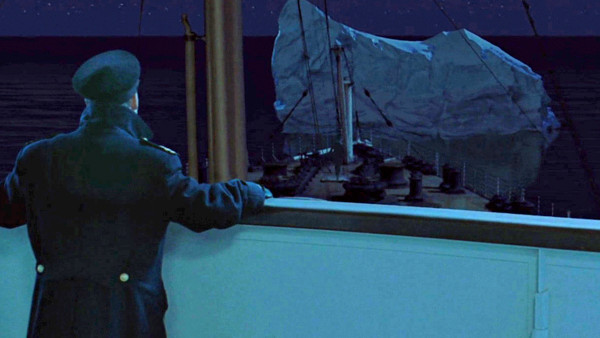
The night of April 14th was an unusually calm one on the Atlantic. In theory this would mean the seas were clear and the lookouts would have been able to see any threat a long way off, but because the sea was so flat there were no waves to crest on any nearby icebergs, instead meaning they would only see them when they were much closer than normal.
Of course, even without the weather, the lookouts that evening were really up against it; they didn't have any binoculars, and hadn't for the whole of the maiden voyage thus far. Oh, White Star Line had provided some and they were actually on the ship, but they were locked in a security box that nobody on board had a key for; there'd been a change in crew at Southampton, and in the switch the key had been misplaced. This is at least somewhat well known, with some vindictive prankster leaving a pair of binoculars on Frederick Fleet's grave on the 100th anniversary of the sinking as some form of a sick joke.
However, even that key hadn't been misplaced, the issue may not have been solved. According to various sources, binoculars weren't commonly used on other White Star Line ships, an institutionalised obliviousness that may have unwittingly influenced the tragedy.
8. The Sinking Was Enabled By Short-Sighted Engineering
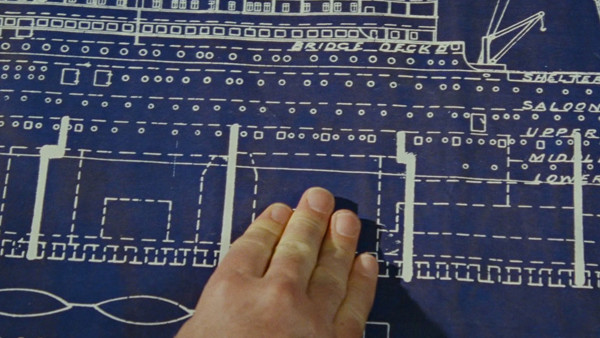
Titanic being described as "unsinkable" may have been unfortunate, but it must be appreciated that it was designed to be able to stay afloat in traditionally hazardous states of disrepair. Had the Titanic hit the iceberg in pretty much any other way it wouldn't have sunk.
Along the length of the ship, Titanic was broken up by fifteen watertight bulkheads, connected by doors that could be sealed remotely from the deckhouse. This meant that Titanic could have a hull breach and take on water within one section, yet still stay afloat. Indeed, it could have the first four compartments breached and still be fine. Unfortunately, the iceberg broke through the first six, and as these bulkheads only went as high as D deck (midway up the ship) the water simply spilled over each bulkhead, slowly pulling it down from its bow.
The reason the gash tore so long along the ship was because of its poor turning capabilities; only two of the three propellors could reverse, so when the ship tried to swerve around the berg it was unable to change course to a big enough degree. Had it continued straight, however, it would have most likely stayed afloat; the bow would have been pummelled, but fewer compartments would have been breached.
7. The Iceberg Didn’t Rip A Hole In The Ship

Oh yeah, about that damage - while there was definitely a big gaping hole in the Titanic, it wasn't caused by the iceberg snapping, piercing, ripping or otherwise destroying the ship's hull. And, really, that should be obvious - could ice really rip apart plate steel?
What actually happened was that the strength of the iceberg, coupled with the forward momentum of the ship, put pressure and the plates and caused the rivets holding the hull together to pop out, creating the hole and causing water to rush in, and you know the rest.
But to find out why that happened (while it's more likely than ripping apart plate steel, ice shouldn't be strong enough to break the connections either) we have to go back to the ship's production at Harland & Wolff in Belfast and get a bit sciency. The rivets traditionally used in building ships were iron, which were very rigid and durable, but for the front end, where the hull curved and thus placing of rivets was harder, a lower quality, more malleable slag iron compound was used.
While they did the job of holding the plates together well enough, the low-strength metal (which was further weakened by being hammered into place) took considerably less pressure than the usual, high quality rivets for them to buckle.
6. Bruce Ismay (Probably) Wasn't The Villain
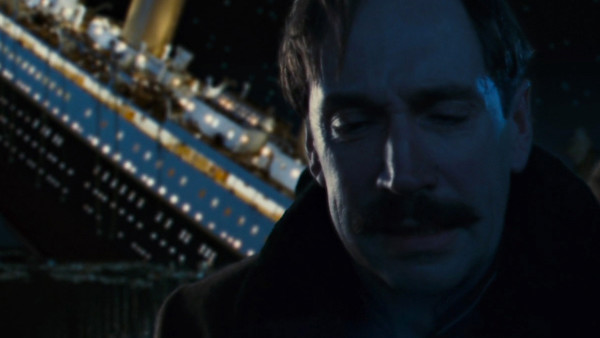
One single fact that all Titanic movies can agree on is that Bruce Ismay, White Star Line chairman, was the closest thing the debacle has to a villain (unless you count the manipulative sharks in the worse of the two cartoon versions). Despite his position in the company behind the ship, he was for all intents and purposes a regular passenger on the maiden voyage, yet according to passenger testimony was the one constantly pushing for more speed and later jumped into a lifeboat, consistently presented an act of pure cowardice.
That's what the press at the time wrote, because information was scare and with the woman and children confusion it seemed he'd put self-preservation above all other concerns, and all accounts since have moved with this; the Nazi propoganda film on the disaster twisted so much, including making him the baddie, and James Cameron kept it in his movie because "that's what audiences expect".
But by all accounts all Ismay was was a victim of a smear campaign, a result of he and newspaper mogul William Randolph Hearst had fallen out years previously. Multiple alternative tellings of the night have him helping get people off the ship as it sank ever deeper, only stepping into one of the last lifeboats lowered because there was copious space. Like most elements of human interaction during the sinking, this is subject to misremembering, but it certainly doesn't sound like he's as malicious as the legend suggests.
5. People Wouldn’t Believe It Split In Two

As water flooded the bow of Titanic, it began to go under from the head down, which eventually created enough pressure for the whole thing to snap in two. That's as common knowledge as it being labelled unsinkable, right? Well, it may be now, but for a whole seven decades after the sinking this version of events was treated as a madcap theory.
Based on the post-sinking investigations and reaffirmed by passenger testimony, the ship went down in one piece, and did so with very little in the way of mechanical drama; in keeping with the calm of the ocean, it was an almost harmonious event.
It was only when the wreck was actually found (something that was viewed as an impossible feat) in 1985 by Robert Ballard that the evidence became irrefutable - the stern, found first, was over a third of a mile away from the bow. While a pretty accurate version of events on the ship had been worked out in the years since (thanks in no small part to Walter Lord), this changed how the mechanics of the sinking were viewed. Although even then, historians weren't in complete agreement on how it had gone under. Even in 2012, the centenary of the sinking, it was still very much open to scientific debate.
4. The Third Class Passengers Weren’t Locked Below
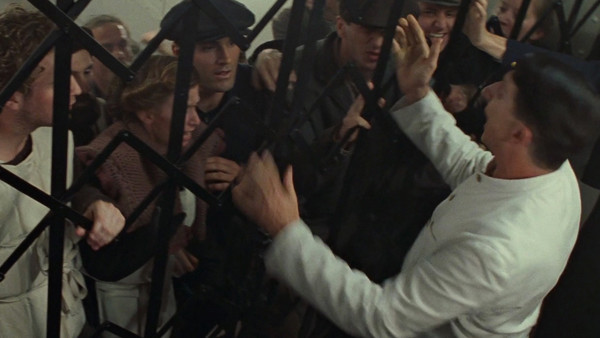
Much of it may be accurate, but one moment of complete and utter fabrication in James Cameron's movie is the steerage passengers getting locked down in third class. Why he included it should, from a cinematic perspective, be obvious - it adds tension, installs a couple of action beats and hammers home the class divide the ship is known to personify - but there isn't a single piece of factual evidence to back it up.
Yes, there were gates that divided the different class of passenger, but that was only adhere with American immigration laws regarding health and safety and had nothing to do with company policy or emergency procedure. Crucially, at no point were they used during the sinking.
The myth no doubt caught on because the proportion of third class passengers who survived compared to first class is so low; there must be some reason for it, right? Well there was, just not in a conscious, and definitely not vindictive, sense: the boats were all kept on the aptly named Boat Deck, which were a winding collection of hallways and stairwells away from the steerage accommodation below decks on the ship, meaning many people struggled to get out (remember there was a high proportion of non-English speakers in third class) and those who did got there too late.
So White Star didn't exactly make it easy for third class passengers to make it to the lifeboats through the design of the ship, but they definitely didn't try and stop them escaping.
3. The Lifeboats Were Up To Industry Limits
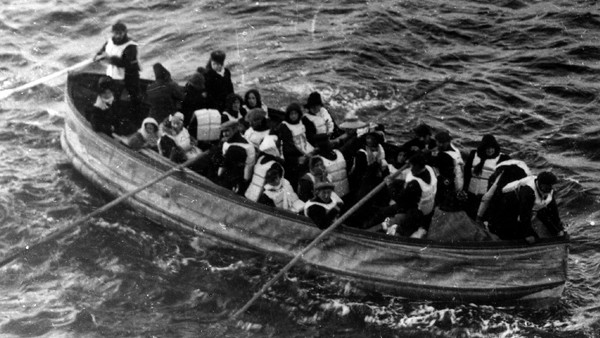
Only 700 people out of 2,224 passengers and crew survived the Titanic disaster, although even without all the confusion on board of the state of the ship and the releasing of lifeboats nearly empty, the best case scenario would have been of just 1000 people surviving; in possibly the most shocking statistic about the disaster, the ship only carried twenty lifeboats, with a sum capacity of 1,178.
If that sounds almost as bad as none at all, then consider that the chances of a ship going down so fast with no help nearby was treated as all but impossible - if it wasn't such a disastrous sinking, there'd have been time for a ship to make it in time and people could be ferried across. Which sounds like incredibly flawed logic from a modern standpoint, but was how lifeboats were conceived (and thus why people at first refused to get into them - they could just wait).
Thomas Andrews, the ship's architect, had allowed space for more lifeboats, just in case, but given how a full set wasn't expected to be used, the company overruled his choice and kept the boats to a minimum. And I say minimum because despite having such a low percentage of spaces Titanic was well within the guidelines of the time, which had been originally drafted when ships were much smaller. Had the rules been adjusted so they scaled with the size and capacity of an individual ship then we'd have had a very different situation.
2. It Was A Misunderstanding That Led To Women And Children Only In The Lifeboats

"Women and children first" is one of the biggest emblems of the Titanic disaster, showing the gentlemanly attitudes of the time and the near obliviousness of the real impending danger. Now I'm not going to tell you that was a mistruth spread over time - the survivors list resolutely shows that - but how it came about, and the attitude behind it, isn't something quite as institutionalised as legend suggests.
The rule had been a maritime law for decades, and when it became clear Titanic's time was numbered Captain Smith stated "women and children in and lower away", which was taken by Second Officer Lightoller to be women and children only. This led to some major confusion as the night went on, with boats launching half full despite men clamouring to get on board.
Lightoller is widely regarded as a key hero of the Titanic disaster (mainly because he was the highest ranking officer to survive), and indeed he was, commanding an upturned lifeboat after the ship went under, but he did regrettably propagate a costly confusion.
1. It Wasn’t A Big Deal Until It Sank
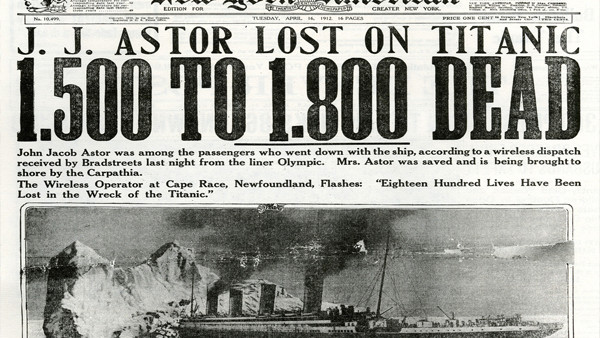
Titanic is a legend, one of the most famous ships that has ever existed and a symbol of the massive societal shifts of the early 20th Century. Heck, it managed to completely change the meaning of the word "titanic". But that's all thanks to the iconography of the sinking; if it hadn't it that iceberg, there's no chance it would be remembered outside of ship enthusiasts.
You see, while technically Titanic was the biggest ship ever built up to that point, a stat that made its sinking all the more newsworthy, its launch and maiden voyage wasn't much an event. People were aware of it in the same way a new skyscraper in a major city is a big deal, but it wasn't an Earth-shattering unveiling.
It was Olympic, its sister ship which had been unveiled a year earlier, that had received all the press coverage as the White Star Line's flagship. Titanic was only 0.1m longer than the Olympic and only slightly heavier, meaning for all intents and purposes it was just more of the same. To see how it could have been regarded, just look at the Britannic. Oh, you don't know the Britannic? It was the third ship of the Olympic-class line (originally called Gigantic but changed after its sister's sinking), and was greeted with next-to-no ceremony before sinking itself while serving as a medical ship in the First World War.
The Olympic, meanwhile, survived the war and went on to complete hundreds of transatlantic voyages before being hauled for scrap in the 1930s. An ignominious end that the Titanic could have so easily shared.
What other major misconceptions are there about the Titanic? Share any more we missed down in the comments.