10 Things You Didn't Know About Terry Pratchett

So much universe, and so little time.
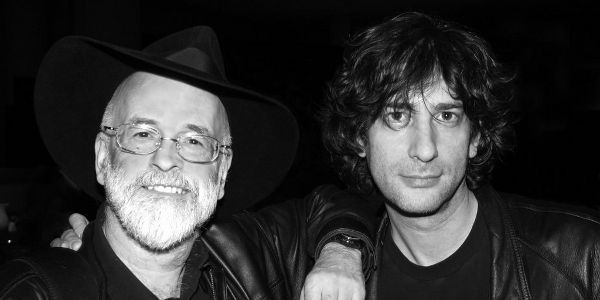
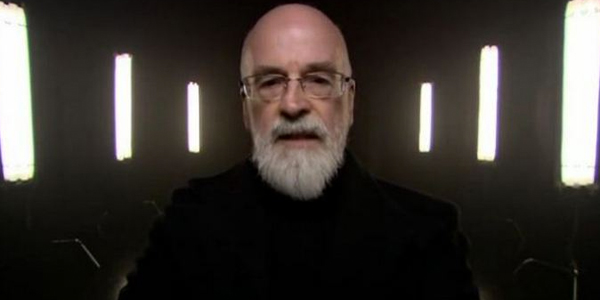
€œAT LAST, SIR TERRY, WE MUST WALK TOGETHER. Terry took Death€™s arm and followed him through the doors and on to the black desert under the endless night. The End.€ That was how @terryandrob, the joint Twitter account of the fantasy author and his assistant Rob Wilkins confirmed the reports of Terry Pratchett's death, age 66, of early-onset Alzheimer€™s disease. Pratchett was a prolific author who wrote frequently of death €“ in fact, a trilogy of books in his grand overarching Discworld series were all about the Grim Reaper himself, the personification of Death struggling with his workload and taking a vacation (with disastrous consequences). When faced with the end of life, Pratchett often responded with the absurd. Having been diagnosed with Alzheimer€™s a few years ago the writer slowed down a little, but by no means was reduced to a snail's pace: he still managed to put out a couple of books a year, continuing his Discworld series and collaborating on a sci-fi series with Stephen Baxter. And they continued to be best-sellers. Pterry, as his numerous fans affectionately dubbed him, took his failing health well. He continued to work, produced a documentary about assisted death practices in Switzerland, and was a fighter to the end. A good time to look back on the man before, not as he is now: here are ten things you didn't know about the late, great Terry Pratchett.

10. He Wrote Sci-Fi After Failing As An Astronomer
Pratchett was always a fervent campaigner for genre fiction, a writer of science fiction and fantasy himself who was reportedly €œinfuriated€ whenever such works were disregarded in favour of literary novels. He believed he owed €œa debt to the science fiction/fantasy genre which he grew up out of€, devouring books by HG Wells and Arthur Conan Doyle as a child. The interest in science fiction waned a little over the years, coming back with a vengeance with his Stephen Baxter collaborations, but it was actually those books he read as a child which put him on the path to becoming an author, rather than any fantasy tomes. The young Pratchett was a keen astronomer, owning a telescope and hoping to pursue it as a career when he was older. Unfortunately he didn't quite have the requisite mathematical skills and instead applied his interest in the cosmos to fiction; which worked out pretty well, since when he grew up he could afford to put an observatory in his garden.

9. His First Commercially Published Story Was At Age 15
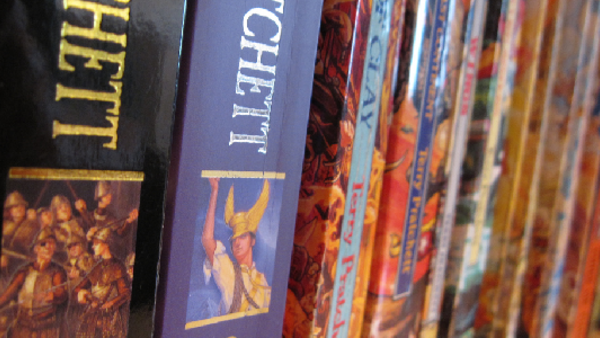
Sometimes perusing the biographies of your favourite artists can be cause for reassurance. Discovering that it took the likes of Raymond Carver decades to break through into the writing world, before that working endless crummy minimum-wage jobs, is exactly the boost you need when your confidence is flagging and that dream profession seems impossible. Then there are those annoying over-achievers who hit the ground running and don't appear to have ever stopped, with no build up to their amazing careers. Terry Practhett was one of those annoying over-achievers. Whilst his first published work was technically a short story, €œThe Hades Business€, he had published in his school magazine age 13, the first commercially published story of his came just two years later. As in, he got paid for it, and it was read by a wider audience than just schoolboys and their nosy parents. Which just seems like showing off, really.

8. He Worked For A Nuclear Power Station

There was that early success in his career that convinced Pratchett writing was for him, but it didn't quite push him over into becoming a full-time published writer straight away. Far from it. But a man like Terry Pratchett never looked the sort to have bussed tables or washed dishes by day, before toiling over his typerwiter by night. He did, however, have another job before the writing thing became serious. After working in various journalistic professions after leaving school he became Press Officer for the Central Electricity Generating Board, with his jurisdiction taking in a handful of nuclear power plants. Pratchett joked that he showed €œimpeccable timing€ with that particular career move, happening as it did some short months after the Three Mile Island partial nuclear meltdown in the US. He once considered writing a non-fiction book about his time in the Press Office, if he thought anyone would believe it.

7. He Loved Orangutans

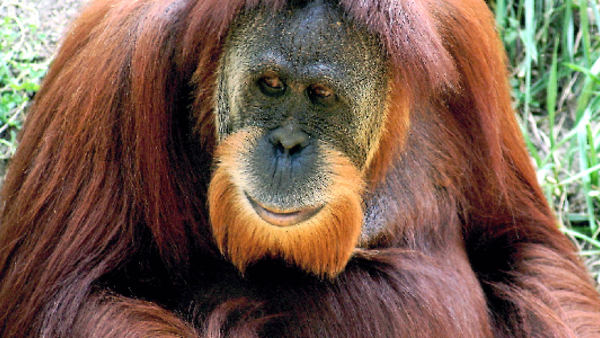
This one probably isn't much of a surprise to anybody with a cursory knowledge of Pratchett's Discworld novels. The Librarian of The Unseen University school of wizardry debuted in the first Discworld book, The Colour Of Magic, a wizard who had been transformed into one of the marmalade-coloured apes by accident. He made the most of it, using his new-found simian skills to easily scale bookcases, refusing to ever be changed back. The orangutan Librarian appeared in countless more Discworld stories since, and Discworld Conventions have adopted the Orangutan Foundation as their nominated charity. The ubiquity of orangutans throughout his work, Discworld and otherwise, was no coincidence either. Pratchett was apparently very fond of the creatures, being a trustee of the same charity for much of his professional life, partly because he was pessimistic about the animal's future.

6. He Won Basically Every Award Going...
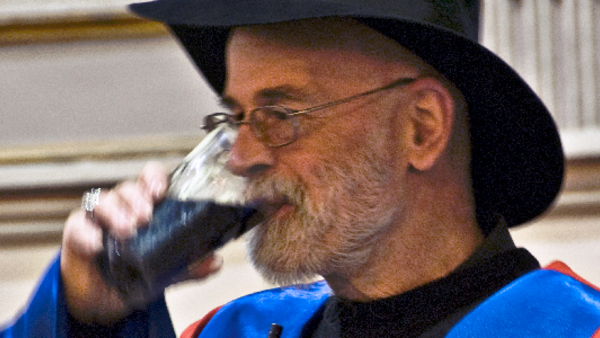
A bonus animal fact regarding Terry Pratchett is that he was fascinated with natural history in general, owning a greenhouse full of carnivorous plants and having a fossil sea-turtle found in New Zealand named after him. Psephophorus terrypratchetti was just one of many honours the writer had bestowed upon him throughout his life. He was awarded nine honorary doctorates over the years, downing a pint of Guinness after receiving one from the University Of Dublin in 2008. He also receieved on from the University of Warwick in 1999, of Portsmouth in 2001, Bath in 2003, Bristol in 2004, Buckinghamshire in 2008, Bradford in 2009, Winchester in 2009 and The Open University in 2013. Along with all those degrees he won the British Science Fiction Award in 1989 for his novel Pyramids, a Locus Award for Best Fantasy Novel in 2008 for Making Money, was the British Book Awards' €œFantasy and Science Fiction Author of the Year€ for 1994, and the 2001 Carnegie Medal from British librarians recognising The Amazing Maurice and His Educated Rodents as the year's best children's book. Phew.

5. ...And Had A Sword Made When He Was Knighted

Along with all of those highly prestigious doctorates and gongs Terry Pratchett received plenty of encouragement from Her Royal Majesty as well. In 1998 he was appointed Officer of the Order of the British Empire for €œservices to literature€, joking €œI suspect the 'services to literature' consisted of refraining from trying to write any. Still, I cannot help feeling mightily chuffed about it.€ In 2009 that was upgraded to a full knighthood in the New Year's Honours List, making him Sir Terry Pratchett. To celebrate, Pratchett was also granted a coat of arms with the motto €œNoli Timere Messorem€ - which in English means €œDon't Fear The Reaper€, a Blue Oyster Cult reference the superfan put into a few of his novels. Not only that, but having been €œflabbergasted€ at the thought of being knighted in the first place Parcthett also decided to have a sword forged. Rather than simply going to a speciality blacksmiths, though, Pratchett went out into the fields behind his house and found some iron ore from a meteorite and smelted it himself.

4. His Daughter Is A Video Game Writer

When making preparations for his imminent demise, Pratchett announced that he was handing the keys to the Discworld kingdom over to his daughter Rhianna. This isn't some Tolkien or Frank Herbert situation where a novice writer is being tasked with continuing on the incredibly popular and beloved fantasy series, however. For one thing, Rhianna Pratchett most likely won't be writing new books, instead continuing to oversee the TV and film adaptations of his work, saying €œThey€™re sacred, they€™re Dad€™s legacy and I€™m the protector of Discworld and that means protecting it from myself as well.€ For another thing, she is a pretty great writer herself. And you may very well have come across some of Rhianna Pratchett's writing without even realising it: she mainly work sin video games, most notably the Overlord series, Mirrors Edge, Heavenly Sword and the recent Tomb Raider reboot. The apple really doesn€™t fall far from the tree...

3. He Had A Great Relationship With Fans...

Some fantasy authors, after a while, appear to become jaded and cynical. They hate having to continue writing their famous series, only doing it for the money, and scorning their legions of adoring fans. Not Pratchett. He once said in an interview €œmoney is an unavoidable consequence, but it isn€™t the reason I write.€ Why did he write, then? Surely part of the reason was the frankly staggering fan following he found himself with as he ploughed on with the Discworld series, inspiring any number of conventions, correspondences and pieces of fan art and fiction. Pratchett's relationship with fans when a great deal further than even the most friendly of fantasy authors, the writer making sure to go to as many conventions as possible, to the point that fans joked unsigned copies of his books were going to be worth more than signed ones. Big into computers, Pratchett was also a member of early usenet groups, talking directly to fans online.

2. ...But Less So Critics

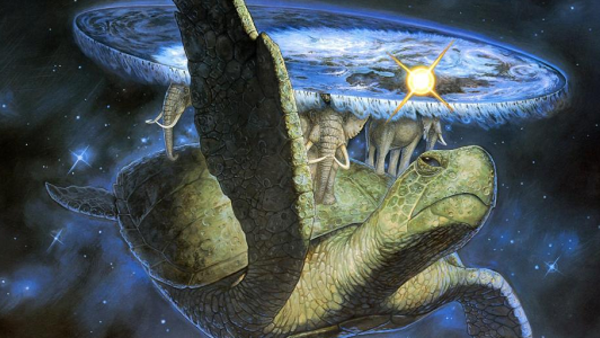
Who Terry Pratchett had less time for €“ and this is a trait he shared with many writers €“ were critics. On more than one occasion he kicked off about the fantasy genre being €œunregarded as a literary form€ despite it being €œthe oldest form of fiction€, and commented on how the elevation of Harry Potter author JK Rowling appeared to be at the genre's expense. Where the Discworld novels shined was in their skewering of all manner of subjects, with Pratchett's equally sharp analytical eye and wit often picking apart fantasy tropes and societal norms. Except, well, in stories set on the back of a giant tortoise floating through space. Rarely did he tackle topical issues, though. He was worried that would date the books somewhat, but he made an exception once. For his critics. His earlier Discworld titles had no chapter breaks €“ something he changed first for his Young Adult books, and then in his adult work, responding to reviews suggesting he was incapable of writing in chapter form. To drive the point home he used ludicrously long Victorian-style headings for his chapters.

1. His Last Few Books Were Written Through Dictation

In March 2008 Terry Pratchett revealed that he had been diagnosed with Posterior Cortical Atrophy, a rare form of Alzheimer's disease. The author had to pay for the medicine he took as part of his treatment, with the NHS saying he was too young to get it for free, something which often comes with the diagnosis of early onset diseases. Despite those and numerous other setbacks from the diagnosis, Pratchett vowed to keep on writing. As his motor skills and memory started to fade, however, it became difficult to type himself. So how did he manage to keep putting out Discworld books at a similar rate as before the Alzheimer's? Dictation, mostly. Pratchett would €œwrite€ the novels aloud, with either his assistant Rob Wilkins typing them up or else relying on speech recognition software. In all Pratchett produced ten books with this method, from his Dodger titles for children to his Stephen Baxter collaborations to the upcoming Discworld novel The Shepherd's Crown. As recently as 2009 he announced €œI will not die of Alzheimer's. I shall make other arrangements; I'm going to take the disease with me.€ In the end, it was one of the few things Terry Pratchett was ever wrong about. RIP.

Contributor
Contributor

Tom Baker is the Comics Editor at WhatCulture! He's heard all the Doctor Who jokes, but not many about Randall and Hopkirk. He also blogs at http://communibearsilostate.wordpress.com/