10 Strangest World War II Unsolved Mysteries
Just who did give up Anne Frank to the Nazis?

World War II was the most-widespread and bloody war in history, with upwards of 85 million fatalities between 1939 and 1945. Much is known about the key men involved in the war - notably Adolf Hitler, Winston Churchill, and Joseph Stalin - and about both the opposing Allied and Axis Powers. In fact, the Second World War is one of the most-discussed and talked-about events in human history, with countless books, films, and TV series about an event that directly affected the majority of the world's population.
Despite the wealth of information that is available on World War II and the various operations involved within it, some mysteries still remain a full seven decades after its conclusion. The whereabouts of the "Führer Globe", owned by Adolf Hitler and made famous by Charlie Chaplin in his 1940 film The Great Dictator, is unknown for example. Furthermore, what exactly were the mysterious UFOs that appeared during the conflict that became known as the "foo fighters"? Also, the legend of the Bermuda Triangle was given much fuel by the mystery disappearance of Flight 19 in the aftermath of the Second World War.
Here are the 10 weirdest and most-bizarre unsolved mysteries from World War II - and be warned, some of them are extremely freaky...
10. The 'Foo Fighters'
Most people may know the 'Foo Fighters' as a Seattle rock band founded by Nirvana drummer Dave Grohl, but the term was actually first used by Allied aircraft pilots during the Second World War to describe unidentified flying objects (UFOs).
Originally coined by the US 415th Night Fighter Squadron to report any UFO sightings during World War II, it became formal military language from November 1944. As well as referring to UFOs spotted over the European and Pacific battlefields, the term could also be applied to any mysterious aerial phenomena - such as the strange objects flying past the planes in the picture above.
Military personnel from the Western Powers often assumed foo fighters were secret Nazi weapons that were either spying on them or planting some sort of explosive device near Allied strongholds. However, a scientific investigative group named the Robertson Panel met in January 1953 in order to determine exactly what these supposed UFOs were - and returned some findings, although none were conclusive. They determined that one possible explanation could be St Elmo's fire, a weather phenomenon whereby a strong electric field in the atmosphere illuminates objects and makes them look like a glowing ball of light. Another theory is that "ball lightning" was the cause - this is when luminous, spherical objects during a thunderstorm last longer than lightning bolts and remain around in the atmosphere.
Author Renato Vesco remained convinced that it was a Nazi secret weapon, however, and claimed foo fighters were a ground-launched automatically-guided jet-propelled flak mine name the "Feuerball", although nothing was ever proven. It is unlikely that a definitive explanation will ever be found...
9. The Fate Of Raoul Wallenberg
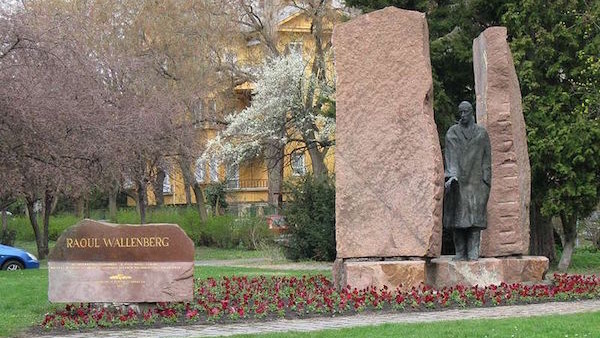
Raoul Gustaf Wallenberg is considered a humanitarian hero of World War II - having saved up to 60,000 Jews from Nazi-occupied Hungary during the Holocaust, offering them fake passports and shelter, as well as providing food, soup kitchens, and hospitals to those threatened with death camps.
Yet when the Soviets advanced through Eastern Europe, "liberating" the region country by country, the Swedish businessman was arrested by the Red Army during the Siege of Budapest on suspicion of espionage. Although the Soviets claimed that Wallenberg had died in his cell at the KGB's Lubyanka prison on July 17, 1947, this account appears flimsy at best.
Their explanatory document read:
"I report that the prisoner Wallenberg who is well-known to you, died suddenly in his cell this night, probably as a result of a heart attack or heart failure. Pursuant to the instructions given by you that I personally have Wallenberg under my care, I request approval to make an autopsy with a view to establishing cause of death... I have personally notified the minister and it has been ordered that the body be cremated without autopsy."
Most remained unconvinced by this explanation, and in 1991 the Russian government asked Vyacheslav Nikonov to investigate Wallenberg's death. The investigation concluded that the Swede was likely executed at Lubyanka in 1947, possibly via the C-2 poison (carbylamine-choline-chloride) that was being tested by the Soviet secret services at the time, and that was why the body was cremated pre-autopsy.
In the years since, various other claims have arisen - such as Wallenberg having been shot in 1947, that he was poisoned by other means, or that he was beaten to death. More bizarrely, however, various prisoners - right the way up until 1987 - have claimed to have spoken to Wallenberg, and some believe he was not actually murdered early and was instead incarcerated for up to 40 years.
None of these explanations provide a reason for why exactly he was imprisoned or killed, but it was likely to have been because he was considered dangerous to the state - maybe due to suspected connections to the US intelligence services. Certainly a strange case.
8. Adolf Hitler's 'Führer Globe'
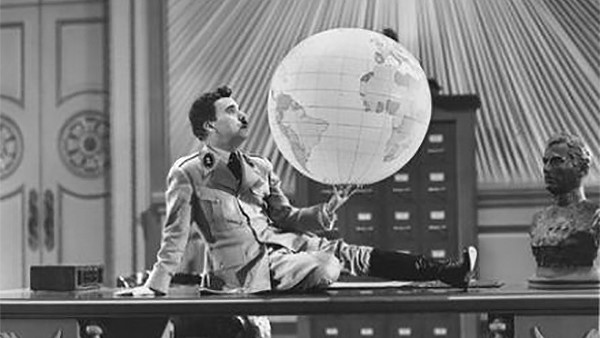
"The Führer Globe" or "The Columbus Globe for State and Industry Leaders" was a globe specifically designed for Nazi leader Adolf Hitler - although his most-prized one has never been discovered. Made famous by Charlie Chaplin throwing about an inflatable replica in "The Great Dictator", Hitler commissioned at least two expensive globes with wooden bases to be made by the Columbus factory - but the one he kept in the New Reich Chancellery was never found by the Allies.
Replicas and other Nazi globes exist - including some with Germany bullet-holed, almost certainly by Soviet or American soldiers - but the iconic "Hitler Globe" has an unknown whereabouts. Soviet Minister of Internal Affairs Lavrentiy Beria was the first to inspect the Reich Chancellery once the Red Army had captured Berlin, and it is possible that he took the globe to the KGB headquarters at Lubyanka. It could still remain there, but the KGB (and now the FSB) refuse to confirm or deny this.
Interestingly, a globe was discovered by an American soldier among the ruins of Hitler's Eagle's Nest complex near the Bavarian Alps, although it is believed to be too small to have been "The Führer Globe". This globe was sold for £68,000 ($100,000) in 2007 - but exactly what happened to the "Hitler Globe" will almost certainly never be known.
7. Flight 19's Disappearance Over The Bermuda Triangle
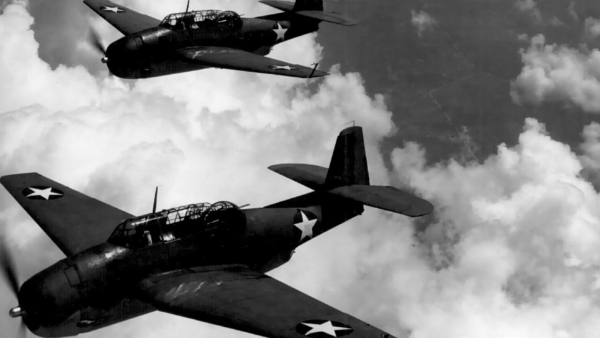
The legend of the Bermuda Triangle still exists (albeit in a lesser capacity) to this day - and Flight 19 was one of the first and most-famous disappearances near the east coast of Florida. On December 5, 1945, - yes technically a few months after the war ended, but it still counts - five TBM Avenger Torpedo bombers - who came to be known as "Flight 19" - and the crew members of a PBM Mariner flying boat sent to find them all disappeared during a US Navy overwater navigation training flight from Naval Air Station Fort Lauderdale, Florida.
In all, 27 men disappeared, presumed dead, including the 14 original airmen. The Navy's original report into the incident determined that Lieutenant Charles Taylor, who was leading the group, had a habit of getting lost and that he had led the junior members around in circles until they all ran out of fuel. It even alleged that the junior pilots knew where they were, while Taylor didn't, but they felt compelled to follow their leader further into the Bermuda Triangle instead of back to Florida. This ruling was later changed to "Cause Unknown", and Navy investigators have since been unable to determine the reason for the disappearance of Flight 19.
No bodies or aircraft have ever been discovered - leading to the legend of the Bermuda Triangle. Many supernatural theories have arisen as a result - could Flight 19 really have been destroyed by some other-worldly force?
6. What Happened To The "Blutfahne" Flag
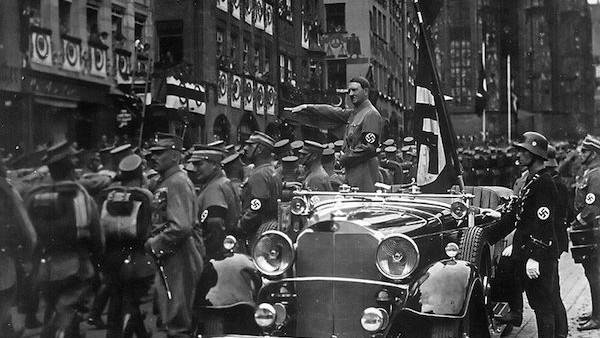
The case of the "Blutfahne" is a curious one - seeing as the actual existence of the legendary and sacred Nazi flag has been disputed, never mind what became of it. Supposedly the Swastika flag, designed by Hitler himself, became such a key Nazi symbol when a white flag bearing the symbol in the centre was carried and then covered in blood during Hitler's attempted Beer Hall Putsch in Munich in November 1923.
Carried by the SA, they were halted by Munich police, and placed the flag on the floor - before some Nazi blood was shed on it during the resultant armed conflict. In the most-often used version of the events of the Blutfahne flag, supposedly the wounded flag-bearer Heinrich Trambauer gathered up the blood-soaked relic, ran off to a friend's house and then hid it in his jacket. Then Hitler was allegedly given the flag - now attached to a new staff with a decorative finial and silver sleeve commemorating the 16 Nazis that died during the Beer Hall Putsch - after being released from Landsberg prison.
The flag bore no colour of dried human blood and was not the same shape as the one carried in November 1923, yet the legend of the Blutfahne was still born. Hitler would display the Blutfahne at his annual Nuremberg rallies - supposedly consecrating other Swastikas by holding the sacred flag in his other hand - and at other times it would be kept at the Brown House in Munich, the Nazi Party's HQ. Last seen in public at Heinrich Himmler's Volkssturm induction ceremony in October 1944, what became of the Blutfahne is unknown. The Allies originally believed they had destroyed it during the continuous bombing of Munich, but later they were unconvinced, while many people have since claimed to own the supposedly sacred Nazi flag.
Is the Blutfahne still around somewhere today?
5. Pearl Harbor's Missing Pilot

Numerous tales of supposed "ghost planes" spotted during World War II exist, but perhaps the most freaky and spine-tingling is the P-40 fighter that allegedly returned to US soil a full year after the Pearl Harbor attack. On December 8, 1942, US radar picked up an unaccounted-for plane heading straight for American soil from Japan - with many fearing a new type of attack or diversion from the Axis Powers. In order to determine what was happening, two fighter planes flew up alongside the UFO and reported back that it was a P-40 not used since the defence of Pearl Harbor a year previously.
What was even more bizarre was that the landing gear was completely disabled, the plane had bullet holes in the side, and the pilot was covered in fresh blood and slumped forward in his cockpit. The pilot then waved moments before the flight nosedived towards the ground and crash landed. Yet when the wreckage was analysed, there was no trace at all of any pilot - and a diary was discovered that claimed the plane had come from the island of Mindanao, 1,300 miles into the Pacific Ocean.
If the pilot had crash-landed on the island following the Pearl Harbor attack, then how did he survive for a full year, how did he get the plane off the ground without a landing gear, why did he have fresh blood on him, and what happened to his body? Extremely freaky, isn't it?
4. The List Of British Soldiers At Auschwitz
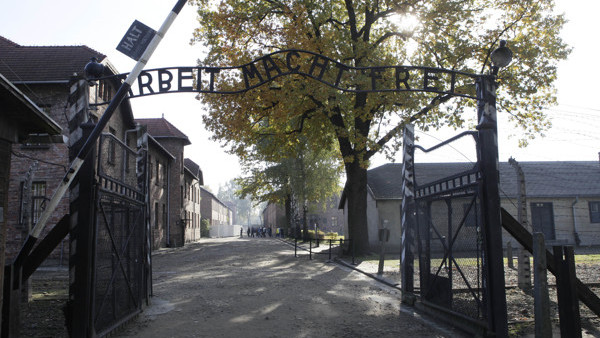
In a mystery that only came to light more than 60 years after the end of World War II, in 2009 a list was discovered during excavations at Auschwitz Concentration Camp that held the name of 17 British soldiers who are believed to have been PoWs. With surnames including Osborne, Lawrence, and Gardiner on the list, eight of the 17 British names had ticks next to them.
Some believe this refers to the fact that eight of them had been successfully executed along with many other British soldiers from E715 camp, but others are not as convinced. German words "since then", "never", and "now" also appear on the list - and this has led many to the conclusion that the men were in fact members of the British SS division who fought alongside the Nazis and the Axis Powers against the Allies during World War II. Neither theory has been proven conclusively, but the secrecy of the list suggests something is not quite right about it...
3. The Russian Amber Room

Once considered as the "Eight Wonder of the World", the Amber Room is a legendary chamber that existed in the Catherine Palace of Tsarskoye Selo, near Saint Petersburg. Built in Prussia in the 18th Century, the room was decorated in amber panels backed with gold leads and mirrors. Following Operation Barbarossa and the German invasion of the USSR during World War II, the Wehrmacht asked curators to remove the art treasures from St Petersburg (then Leningrad) and to disassemble the Amber Room.
Due to the fact the relics in the room had dried out, they started to crumble when they were pulled down - yet it was still transported to Königsberg in East Prussia and displayed at the castle. In January 1945, Hitler then ordered all relics be moved from the city - although Erich Koch, who was in charge at Königsberg, fled before the Amber Room could be disassembled. Furthermore, Königsberg endured heavy bombing by the RAF during August 1945, as well as being almost completely destroyed by the Red Army in April 1945, and it is believed the Amber Room could have been damaged as a result.
In the aftermath of the Second World War, various reports of people owning pieces of the Amber Room came to light - while many witnesses claim to have seen the entire room loaded on to the German passenger ship Wilhelm Gustloff in January 1945. Despite this, two British investigative journalists determined in 2004 that the Amber Room was likely destroyed during the bombing raids on Königsberg Castle - although this has not been proven. Interestingly, however, the Soviet government commissioned a replica of the Amber Room to be built in 1979 at Tsarskoye Selo. Taking 24 years to complete, it is now available to be viewed - while a miniature Amber Room also exists in Kleinmachnow near Berlin.
2. Rommel's Underwater Treasure
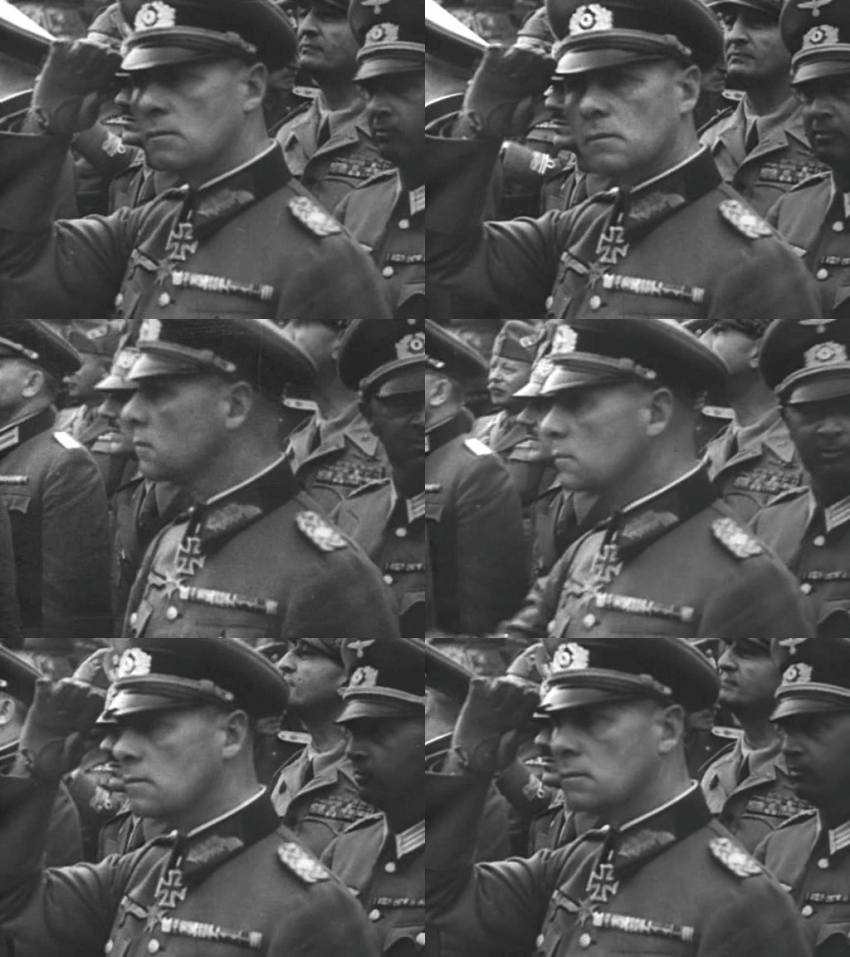
German Field Marshal Erwin Rommel was one of the most-high-profile Nazi generals during World War II,and he was so dedicated to the state that he attempted to hide treasure when he began to fear the worst during 1944. Supposedly, Rommel gave four SS divers six steel ammunition boxes containing German "treasure" - including 440lb gold bullion, silver, precious stones, artwork, and jewellery - and they buried it somewhere under the sea.
Although no-one is entirely sure of its whereabouts, many believe it is in one of the many underwater caverns located off the eastern coast of the Mediterranean island of Corsica. In all, it is believed the treasure would be worth at least £20million - and that is a conservative estimate.
British investigators claim to have discovered a code on the back of a photograph of a German soldier with his parents - and they believe this could lead them to Rommel's Treasure. The co-ordinates suggest it is located just off Marana beach, which is less than a mile from the Corsican port of Bastia. This mystery could be close to being solved some 70 years on, after all...
1. Who Turned Anne Frank In?

Everyone knows the tragic story of Anne Frank - the German Jew who was captured and killed during the Holocaust at Bergen-Belsen Concentration Camp, but not before she wrote a diary while in hiding in Amsterdam that came to light in July 1945.
From her family, only her father, Otto Frank, survived the war - and this tragic tale has asked an important question ever since: Who made the anonymous phone call that told the Gestapo about their hiding place in a secret annex (or "Achterhuis") above the so-called "Anne Frank House" and shopped them? Various suspects have been suggested over the years - with the most-often blamed being Willem van Maaren, who was a warehouse manager.
When allegations were made towards Van Maaren, however, all potential witnesses had died - including Julius Dettman the Nazi officer who received the phone call. Another suspect is long-time friend of Otto Frank, Tonny Ahlers. Ahlers' son Anton helped in the creation of a biography of Otto Frank in 2002, and he claimed his father had indeed reported the family to the Gestapo. Lena Hartog-van Bladeren, a cleaning lady, may also have turned over the family because she feared her husband would be arrested and she is known to have testified that Jews had lived in the property.
In addition, other employees in the warehouse that became "Anne Frank House" also revealed in a 1948 investigation that they knew the family were hidden in the secret annex - meaning they are certainly suspects as well. Dettman committed suicide in the immediate aftermath of Germany's surrender, meaning that no conclusive proof could ever be found as to who made the phone call. The person who betrayed Anne Frank and her family will almost certainly never be determined, it seems.