10 Seemingly Harmless Things You Didn't Realise Killed People
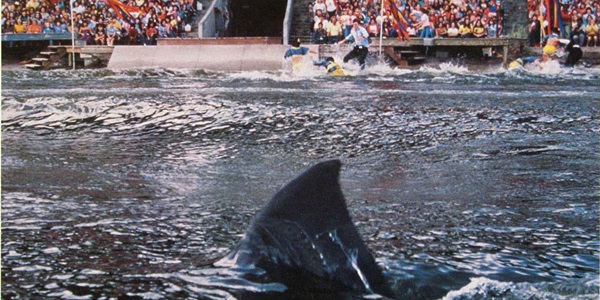
People are killed every year by seemingly harmless and innocuous things. Alongside this, those things that are supposed to be massively dangerous, such as sharks, turn out to be less of a problem than we imagine. Sharks cause five deaths a year. Soda Machines cause 13 deaths a year. This means getting a can of coke is more dangerous than nature's most feared killing machine. According to the International Shark Attack File (ISAF), just 1,909 confirmed shark attacks have occurred around the world between 1580 and 2003! Of these, 737 happened in the United States, and 38 people died as a result. That said, what are your real odds of being attacked by a shark? One in 11.5 million, says the ISAF. Being killed by a shark? Zero in 264.1 million. Some innocuous things that can kill you are really just a matter of luck. Probably no one reading this is going to die in the same way as Henry Hall, who in 1755 was looking up at a burning lighthouse and got killed by molten lead falling into his throat. Neither will we all suffer the same fate as Aeschylus, the ancient Greek author who was killed by a tortoise dropped by an eagle that had mistaken his head for a rock suitable for shattering the shell of the reptile. These things are better described as unusual rather than examples of the seemingly harmless killing us. Mind you, I've always maintained that writing can be such a hazardous game. 'Innocuous' or 'harmless' comes in various guises. It could be accidents, the things you have on your person every day of your life, seemingly inert vegetables, or it might be statistics themselves. All of them kill in surprising ways.

10. Icicles

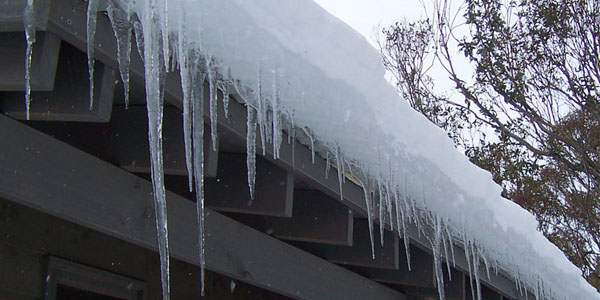
Icicles are cool. Not only are they cold, but they are pretty. Unfortunately, they're responsible for damage and are deadly killers if you fail to show them some respect. It's great when you get up on a frosty morning and look up at the guttering around your home. Hanging just below the snow on the roof, a wall of icicles can sometimes be found glinting in the sunlight. That's not something I need to worry about much where I live, but if you live somewhere cold with snow that hangs about all winter then you had better watch out. Acting like a dam, the icicles can force melting water to back up under the shingles of the house and sometimes into the ceiling. Apart from ice dams they can cause decay and rot, or cause mould and mildew to build up in attics and on wall surfaces. And I wouldn't stand under them for too long, especially not the long heavy variety. In 2010 icicles killed a staggering 150 people in St Petersburg alone as they fell on people around houses and in the city streets. Deaths and injuries included a six-month old baby in her pram, an eight-year old boy that suffered serious spinal injuries after an icicle struck his back, and various other people were speared as the javelin-like objects fell from tall buildings. It is tempting to think of icicles as being lightweight objects, because they are transparent. That would be a mistake. A big icicle of the type found in St Petersburg in 2010 could ordinarily contain 5 gallons, or approximately 19 litres of water. Weighing in around 1 kg per litre that means an icicle might weigh 19kg, or nearly 42lb. Think of it more like the weight of a medium sized dog, forced into the shape of a long sharp cone hurtling towards you out of the sky and you'll have got a better idea of how dangerous icicles can be.

9. Ants

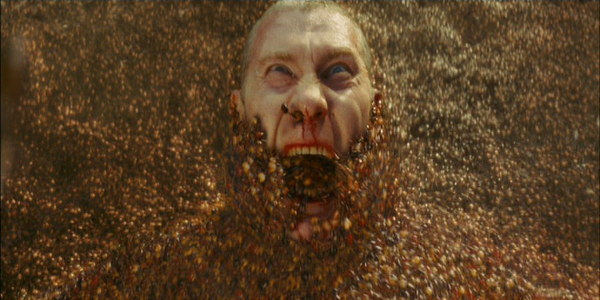
Ants kill 30 people a year, so what are the chances of that? Quite low I suppose, since there are over 6-billion people on the planet today. That's doubly surprising when you consider that they spend a lot of their time trying to kill themselves. Who'd have thought they had time to kill anybody, also they're ridiculously small. They really do kill themselves in a ritual known as the Death Spiral. This video proves it: http://www.youtube.com/watch?feature=player_embedded&v=2fFgHUL8Oiw Once they get into that endless circle they can't stop. It's been known for them to walk round and round in their millions until eventually they all die from exhaustion and starvation. These hapless insects habitually follow pheromone trails laid down by other ants, or they simply follow other ants visually. The system works well normally and the method is used very successfully for leading the colony out to find and retrieve food. If they tramp over the same place too much, however, then a loop is initiated and the ants will march ever onward in a circle until they die. There are over 280 different species of ants that can kill and some species, like the Siafu and fire ant can live in colonies up to 20 million strong. Some ants hunt down living prey and overpower it by repeatedly stinging it. Most reports of deaths among people are due to them falling asleep near an ant hill and succumbing to anaphylactic shock from countless ant bites and venom.

8. Wind Turbines

To be absolutely fair, a wind turbine at full throttle does not look entirely innocuous. When you get up close and listen to their unholy banshee 'whirring' it can be slightly unnerving. That said you do not necessarily expect that the one you happen to be passing will kill you and I've even heard some odd souls refer to them as being beautiful. It is with regret I report that the numbers tell a different story. According to figures* collected on the subject there were 151 accidents involving wind turbines in the UK alone, of which 3 proved fatal during 2013. Even the body collecting the figures believes that this represents only a tip of the wind farm accident iceberg, since a lot of incidents do not get reported. Taken collectively the figures from around the world are much greater. The trend for accidents is ever upward, for blindingly obvious reasons when you think about it. More and more turbines are being built as governments struggle to meet their Kyoto and other targets on global warming, thus increasing the sheer numbers of windmills throughout the world. Additionally, pre-1997 only figures on fatal accidents were collected and now that better reporting is happening we are finding out more about what is really going on. So, how do these magnificent monuments to progress cause harm? In various ways, but the biggest numbers of accidents are caused by blade failure. Ouch! This probably explains why there are actually often more fatalities recorded than there were accidents. It can take just one statistical wind turbine blade failure to cause more than one fatality. 17 bus passengers were killed in a single incident in Brazil in March, 2012. The second biggest cause was fire, if you were wondering. That and improper maintenance, that is. Structural failure is next, with 'ice throw' coming after that. Some governments are beginning to recognise the major risks attached to them and recommend that none should be placed within 2km of a house. I suppose it's the fact that these things occupy land right next to us that's puts them into the category of seemingly harmless. They are familiar fixtures in the countryside nowadays, so have become comfortably familiar to us. Moreover, they're there to help us survive, surely? Not wipe us all out like some alien attack by walking war machines from Mars, 'War of the Worlds' style. -- *Caithness Windfarm Information Forum: www.caithnesswindfarms.co.uk

7. Hay

You might imagine that hay is an unlikely source of dreaded nasties. Only if it falls on you as a dirty great big soggy lump, perhaps in the form of an overly large bale, you ask? Nope, I am afraid it's not as straightforward as that. Hay and other vegetable matter have a nasty habit of attracting any number of harmful bacteria to them. In 2011, in a Colorado high school some high-spirited pupils spread bales of hay around the building. Leaving it to fester for the next day they gleefully departed the scene of the crime only to find the school shut when they returned and it dumped with a $100,000 clean-up bill! Ever wondered why a Dutch barn has no sides? I used to think it was to save the farmer on building costs, but the real reason is that hay kept in a confined space allows it to build up highly toxic moulds. So toxic in fact that it can make breathing severely difficult and cause asthma sufferers especially to choke. It's worse than that, too. Toxins may be introduced through weed contamination and insect infestation. It's a veritable riot of harmfulness in there. If you keep hay for a long time, in certain carefully controlled conditions you get silage from it. You know silage, it's that pungent whiff in the countryside air that either revolts or delights depending on your attitude to it. The hay undergoes a process of fermentation as it passes into silage, but if its pH rises above 5.0 then a potential problem arises. Improper fermentation can produce silage that causes botulism or listerosis. Who'd have thought that such a bucolic scene of bovine quadrupeds munching their way through gob-fulls of hay in the restful great outdoors might harbour such terrible harm?

6. Any Water You Can Find In Your Own Home
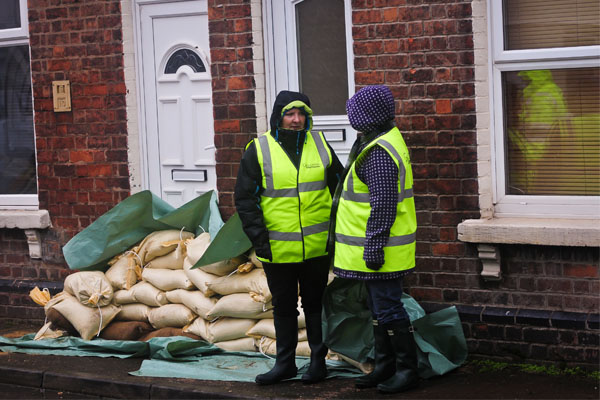
Well, maybe not that bit of water left at the bottom of your kettle or some water in a bird bath that wouldn't cover a sparrow's chest. To suggest that sort of water is dangerous would be faintly ridiculous. Just about anything else will kill you though. Expressed as a percentage more people drown in their own bath water than in public swimming pools. Young children and the elderly are most at risk for pretty obvious reasons. It is perhaps surprising that 25 babies drown in baths every year. Other inland waters prove notoriously fatal. Take 2006 in the UK, because that's a good year for illustrating stuff. It will not be of too much of a surprise to learn that 61 fatalities involved people unintentionally becoming immersed in water, e.g. slipping, falling in and drowning. 21 happened to people who were out swimming and 17 happened after vehicles entered the water. Three deaths occurred during commercial, presumably supervised activities. Nevertheless, a surprisingly harmful place to enter water was around the home that year, since a further 22 deaths occurred in residential settings. These included slipping into garden ponds, baths and home swimming pools. If you're wondering do these include murders in the bath, suicides and drug overdoses around water then no, they are not included. They're extra €“ these were just the surprising deaths by misadventure in your own home.

5. St Anthony's Fire

Huh? St Who's what? It's all about foodstuffs and we're not just talking nut allergies here. We all know that if you have a specific condition then some foods can kill. Neither am I talking about parts of animals that you should know better than to eat, such as the 'dead man's fingers' from a crab, or parts of a pufferfish. Harm can come from the most innocuous directions when it comes to foodstuffs and seemingly natural, wholesome products at that. Anyhow, the fire. You probably thought you were clear of this one, since you know no saints and at any rate had never heard of one likely to fire at you. St Anthony's Fire, - Ignis Sacer for the classicists out there €“ is the ancient name for ergotism, or ergot poisoning. Leaving you with gangrene and a tendency to hallucinate, this has definitely been around since at least the middle ages. Some historians think that many witchcraft events, such as at Salem, can be explained by bread contaminated with ergot. The likelihood of your getting it is remote in modern times, but where dampness, cool conditions, a delayed harvest in lowland crops and rye consumption combine, an outbreak is possible. So, watch out. That loaf of bread you're taking home might not be all that it's cracked up to be. On the plus side, modern occurrences do not happen often. It is a blight that affects rye especially, but other grains are known to suffer from it. The last major outbreak happened in Ethiopia in 2001. Popcorn, that's another. If you microwave it and inhale the stuff that they add to it to give that buttery taste - diacetyl for the chemistry minded out there - then you could damage your lungs. Don't be too alarmed at this, since you would probably need to eat several large bags of it per week to inhale harmful quantities. Still, makes you think. I wonder if eating popcorn is a new occupational hazard for professional film critics other than being ignored by people that like the films they pan?

4. The Pavement In Your Home Town

http://www.youtube.com/watch?v=nNsvJmni5wI The street in which you live may be liable to explode at any moment. Best walk on the grass if I were you. It's true and I'm not going to guess at the causes yet, since boffins don't even know. Theories range from underground electrical installations heating up the ground above them to the Earth itself undergoing sudden random wobbles in its orbit. Others say little pockets of raw chemicals are trapped in the slabs that make up the average pavement, which boil gas on a hot day to the point where the stonework explodes. I don't know if anyone has been killed by these yet, but they are not isolated incidents. Have a look at this film. The clip you above is the second of three explosions filmed on amateur video. I leave you to judge for yourself, but think you'll agree that the possibility of death would be high if you were to walk across one of these as it happens.

3. Any Movie Set

This should be the safest activity in the world, or so you'd think. Movie making is all about make-believe and no one ought to end up taking a risk. It is theoretically the most controlled environment possible. There's even a person who is paid to stand in for the actor at the merest hint of danger just so that the professional risk taker can reduce any perceived risk. Over half of all film-related injuries are as a result of stuntwork and from 1980 to 1990 there were 37 deaths relating to accidents during stunts. The theory of controlled environment leading to maximum safety does not bear out the facts and the list of unfortunate movie accidents grows every year. Do any of these examples ring a bell with you? Roland Schlotzhauer, a cameraman who died in 2007 when the helicopter he was filming from crashed into power lines. Another helicopter accident, this time in 1983 involved Vic Morrow and child actors Myca Dinh Le and Renee Shin-Yi Chen. They were flying over incendiary devices when filming a scene for 'Twilight Zone: the movie', which brought their helicopter down. George Camilleri, an extra making the film 'Troy' who died of a blood clot after he broke his leg on set. Roy Kinnear, who broke his pelvis and bled to death after falling from his horse on set in 1988. The list goes on. Like it as not, there are just some places where accidents always seem to happen and the movie set is one. Statistically, I wouldn't mind betting that making a movie is almost as dangerous as crossing the road in the middle of New York.

2. Contact Lenses

You might think I am about to launch off on some story here about people's contact lenses getting dislodged and swimming round into the back of the eye socket. Well, I'm not. That's impossible. I was actually talking about granulomatous amoebic encephalitis, (GAE). This is a disease you have probably not even heard of, yet paying attention to how you get it could save your life. Lesson one €“ don't wash your contact lenses in water. Use the proper cleaning stuff instead. So, what does GAE do? Nothing nice as it turns out. It gets into the central nervous system, presenting itself as any number of classic brain and nervous system conditions. That's why it's hard to detect, but the tell-tale sign, post mortem I am afraid to say, is the presence of pathogenic amoebas. Found all over the world, these are tiny organic species four of which are known to cause disease in humans: Balamuthia mandrillaris, Acanthamoeba, Sappinia pedata and Naegleria fowleri. Acanthamoeba is the one associated with contact lenses. It is transmitted by washing contact lenses in tap water. Personally, I wouldn't take comfort from the fact that statistics show only a very few people anywhere in the world have presented with the condition. This one might turn out to be one of those cases where up until now no one was actually looking. It could be that it is far more prevalent than the historical data suggests. I write 'post mortem' too, because even with treatment GAE infection is often fatal.

1. Living In The North East Of England

There are all sorts of dangerous numbers out there and not one of them has an Anti-Social Behaviour Order on it. Wherever you look, they're ready to jump out, trip up the unsuspecting then jump on the victim's head just for good measure. In Britain the agency responsible for breeding dangerous numbers is the HSE, (Health and Safety Executive). It examines perfectly normal events such as being a worker in a factory, then uses this as raw material to breed numbers and ratios like 1 in 50, the unlikely 1 in 650,000 and the ravenous 1 in 3. Some numbers recklessly released onto public streets include 311.6 per 100,000 workers were injured non-fatally in 2012 / 2013, in the workplace. Some people took to counting the accidents as they mounted up in the year following that, flatly refusing to go to work. This only led to numbers being bred in captivity by rival departments like The Department for Work and Pensions, which when released caused 5% more people to claim benefits from the state in the first quarter of 2013 while they waited for the non-fatal accident rate to get past 311.6. That way they could return to work in safety. It was no good, because in the following year new numbers escaped from their pens at the HSE number farm decreeing that 327.2 non-fatal accidents had to happen in the workplace from then on; a rise of 1,000,000.8572%. Wow! In the North East of England, where times have always been ridiculously bad, numbers caused 4.6% of workers in every 100,000 compared with just 2.9% in London to get injured simply because they went to work. Then scientists came along and created hi-tech, academic numbers that could reproduce themselves from year to year, or day to day. Called trends, they proved that over a 3-day absence the figures remained the same leading to 1.9% more people getting injured in the North East than anywhere else in Britain. Even though the North East had the lowest number of fatal injuries, just 2, compared with 22 in Scotland and the South East, the presence of dangerous numbers up there means it is a stupid idea to move to Newcastle. It's just not for softies.

 
Posted On: 
Contributor

Hello, I'm Paul Hammans, terminal 'Who' obsessive, F1 fan, reader of arcane literature about ideas and generalist scribbler. To paraphrase someone much better at aphorisms than I: I strive to write something worth reading and when I cannot do that I try to do something worth writing. I have my own Dr Who oriented blog at http://www.exanima.co.uk