10 Reasons MySpace Was The Best Social Network Ever

Isn't it time we returned to the original social network?
Facebook turned TEN this year (and didn€™t we all love those €˜look back€™ videos showing our most embarrassing pictures, statuses and moments?). But before we praise the onset of the modern social networking site, it is worth remembering how amazing its forerunner was. MySpace, for many, was the gateway to the Internet, and the first website we shared personal information. Facebook could be easily improved by adopting elements of MySpace€™s glory days, not just because nostalgia is an excellent marketing tool, but because they were genuinely good features. Zuckerberg is not blind to this, and many MySpace features have slowly found their way onto Facebook. While Facebook was the localised shadow of its current state, MySpace was gathering momentum: it was the first Internet phenomenon to go global; it introduced musicians to new audiences and set the entertainment industry on a new path, allowing fans to capture a glimpse into the private lives of their celebrity icons. Twitter, Facebook and Pinterest dominate now, but for a long time it looked as though MySpace was going to remain a dominant force in the brave new world of the Internet. So what happened? MySpace dwindled and declined following its induction into media conglomerates, allowing its smaller and competitive counterparts (like Facebook and Twitter) to prosper, although these social networks are now facing a similar fate as they become conglomerates themselves; Facebook owns Instagram and WhatsApp, buying up any threat. With the prospective fall of these giants, is it time we returned to the original social network?

10. MySpace Tom
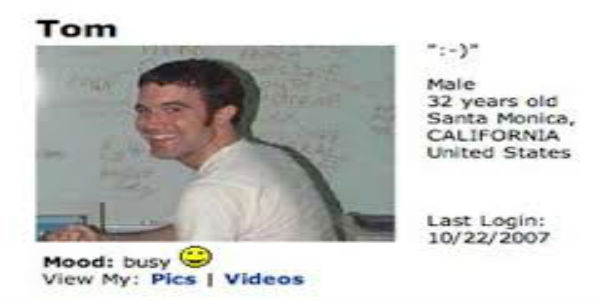
Good old Tom. No matter how popular or unpopular you were within your physical friendship group, your first friend on MySpace was this man. Without Tom, MySpace would not have existed; and as the first friend of many, the digital realm was considerably improved by his involvement. Tom€™s MySpace profile now states that he is a €˜former first friend,€™ and this is precisely what he was. Unlike Mark Zuckerburg, Tom was a visible presence on your social network. Tom has now left MySpace, but his presence on the social media landscape is monolithic; you could rely on Tom to bulk up your friends list if you were unpopular, and this first friend gave MySpace a prevailing sense of equality upon signing up that is unmatched by Facebook and Twitter. Yeah, Tom wasn't really your friend, but is that important? Everyone had the same friend with the familiar white t-shirt and grin. He may not have been an integral component, but it was nice to impart a sense of familiarity to the scary new Internet phenomenon. Facebook gives you the opportunity to follow Mark Zuckerburg, but we are not quite classified as his friend are we? Facebook has a hierarchy separating fans from friends; Myspace (like Twitter) gave us the minuscule opportunity for celebrities to befriend you- even if it was destined to remain little more than a strange aspiration to hold.

9. The Glory Of Music

Do you remember the amount of time you spent deliberating the perfect profile song to represent your personality? Hardest decision, ever. Teens today will never understand the ultimate first world problem of using a song to introduce yourself; it was, after all, the first thing to really hit any one stumbling upon your digital abode. MySpace also led to a brand new phenomena; the Internet musician. While we can (quite rightly) blame MySpace for being the root cause of the rise of Justin Bieber, it also created a new community of musicians: local bands and newly formed groups would upload their music in the hope of being discovered, and there were a few success stories - The Arctic Monkeys and Lily Allen became household names through the unprecedented power of Internet communications. YouTube may have taken this role, but MySpace was the first website to create celebrities in this manner. MySpace was like the LinkedIn for musicians, and while there certainly was a multitude of mediocre musicians, there were some resounding success stories and astoundingly unique musicians who prospered under MySpace. Is it not time we ditched the video focused world of YouTube and Facebook and returned to MySpace?

8. It Made You Think About Your Friends

Myspace valued the quality of friends, rather than the quantity. The average person has around 200 Facebook friends, but MySpace forced you to choose your top eight. By imposing this friendship hierarchy MySpace forced you to assess your friend€™s worth, and prevented the competition to see who could get the most friends (or more realistically, acquaintances). This painstaking process led to a true assessment of your friendships, and you knew where you stood with others by where they placed you in their top eight. This may sound like a minor part of MySpace, but it was a memorable part; being upgraded to some else€™s top eight made you feel special, and that warm fuzzy feeling is one that all of humanity seems to be in a constant pursuit of. We all yearn to feel wanted, and we all desperately seek social validation. Yes, there were arguments. Yes, friendships were risked because of insincere and callous decisions online. But, can you deny that MySpace was the breeding ground of many friendships which went on to prosper? Placing your friend as a number one friend was like a rite of passage, while being a number two felt like the ultimate insult. MySpace taught everyone to deal with rejection and success in a semi-mature manner, and that is something that should be applauded.

7. You Had To Be Concise

Each time you fill out a job application you have to present yourself in as few words as possible; being concise really pays off in today€™s world. MySpace gave you the opportunity to hone these skills, even if the MySpace version of you was far from your modern day self. LinkedIn enables you to network online for career advancement: without your formative years on MySpace, this task would have felt impossible. These days almost everything can be done online; dating, job hunting, gaming. Each of these requires you to sell yourself online, and without those awkward and shameful attempts to popularise yourself through MySpace you would most likely fail in this endeavour. MySpace was the first time most people realised that it is best to self censor online, stopping you from becoming a social pariah due to your mortifying online escapades. The modern world places immeasurable value on succinct and easy to digest information. MySpace did not go as far as Twitter in limiting us to 140 characters (which can be a real challenge), but it did place a premium on your ability to filter your personality and uniqueness into digestible portions. MySpace enabled everyone to function in the modern world, preparing us for much more than different social networks, but endowing us with the capacity to progress in the real world.

6. It had Groups (Before It Was Cool)
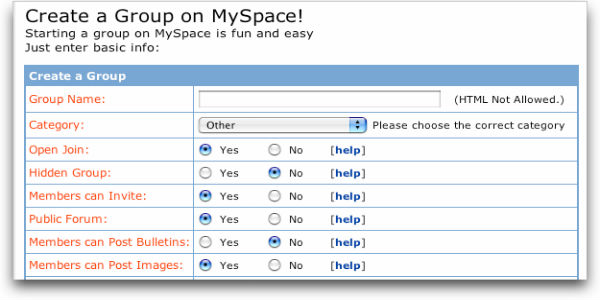
Facebook exploded due to its communal aspects; groups enabled like minded people to create a page where they could feel appreciated. MySpace used the groups function prior to Facebook and created a communal message board so that everyone interested in a topic (e.g. a TV show) could interact. This recipe has been replicated by almost every social network after MySpace, and it shows how MySpace was well ahead of its time. This sense of online community arguably led to the decline of physical social circles, but it opened up a new world of digital friendships. Some will argue that this was a negative thing, but is it not amazing that you can now communicate with fans of a similar TV show in a different country? Facebook still has groups, but after the initial flurry of success they became a nuisance; groups multiplied by the hundred, with €˜join this group if you ever...€™ becoming a global trend. MySpace successfully avoided this flaw, and it is this avoidance that makes MySpace the superior network. The MySpace group function had a utility to it which remains unrivalled; Facebook€™s group feature is now unnecessary and ignored. Twitter enables you to create lists, but these are distinct from the like-minded groups you could find on MySpace; you could make a comparison to Reddit, but MySpace was always far more personal than the wonderfully bizarre world of Reddit.

5. It Was Mature

MySpace gave every teenager the facade of maturity when handing out their MySpace address; at a party you€™d always feel far more grown up to request that someone add you on MySpace rather than getting a phone number (or having to risk the embarrassment of trying to add someone on MSN). Unlike your peers who had stayed with Piczo (the site that enabled you to create an entire website), MySpace marked you as different. You were an adult on MySpace, not some child toying around on the internet. MySpace gave you a space where you could show your maturity, although in hindsight immaturity is probably a more fitting description. MySpace gave an almost unprecedented level of personalisation to social networks; even now Facebook retains is blue and white motif, whereas MySpace started off with this theme but gave you the opportunity to make endless changes to your space, so that it would feel like you owned it. This personalisation inferred a level of maturity which is priceless as a teenage seeking an identity in this world. Social networking does not make you a grown up, but as a teenager it sure did make you feel like an adult. The potential negative repercussions of these Internet relationships is obvious (and it remains important to never trust what someone says on the internet), but MySpace was the place where teens could grow up. Adulthood seemed around the corner when you were grown up enough to make your stamp on the Internet world.

4. Status Update Moods

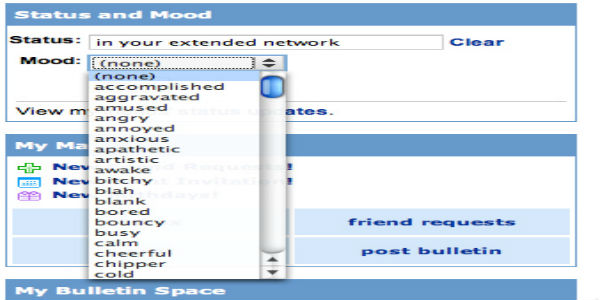
We have all been unsure of whether a status is sarcastic or sincere, or whether someone is simply seeking sympathy and attention. MySpace did not have all the solutions, but in its mood showing emoticons, the network was miles ahead of its counterparts. Facebook did not include these mood indicators until relatively recently, whereas Twitter is still devoid of the feature. There was very little that set Facebook as miles above MySpace to begin with, but the world€™s biggest social network has adopted many of MySpace€™s popular features in order to retain members and remain popular. These tiny emoticons were often used as attention seeking devices, but social networks inherently contain this annoyance; very few people honestly care if you are at the cinema or whether you feel upset by a trivial matters in your life. What made MySpace unique, and better than Facebook, was that the status updates had considerably less ambiguity and far more personality. Facebook may have adopted this feature now, but MySpace was the superior network by realising people needed this feature, while Zuckerburg€™s brainchild was in its infancy. MySpace has now removed this feature as it is now focused on catering to music and entertainment audiences, yet this was part of the initial appeal for many of its initial users.

3. It Prepared Everyone For Online Dating
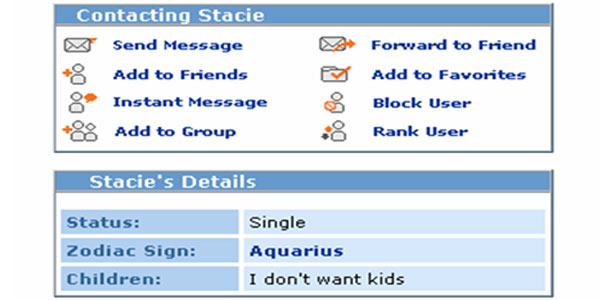
The power of the profile picture has become the archetypal first world problem; what do you want the first thing people see of you to be? MySpace introduced this to the world, and while what you write about yourself is extremely important, having an eye-catching profile picture is equally important. MySpace was not designed for people to meet each other, but regardless of intentions it was used for this purpose in one way or another. As a society it is becoming increasingly acceptable to meet partners online (the stigma is slowly slipping away), and MySpace was a factor in weakening this stigma. It introduced people to the Internet without fear and scepticism, meaning that friendships built on MySpace received some legitimacy. This legitimacy in turn followed through to online dating; MySpace was a trailblazer in this respect, and while it taught us the value of being concise with our words, it also taught us the value of making oneself memorable in a positive way.

2. It Introduced Us All To The Wondrous World Of the Internet
Most young adults experienced their first flurry into the mysterious and daunting digital world through MySpace; it was almost a rite of passage. As we all know (by virtue of the fact that you have stumbled upon this page) the Internet is a truly wonderful thing. You can buy, sell, watch TV, talk, date, look for jobs, plan your holiday or simply waste time looking at cats. MySpace was a brand new domain asking to be conquered by masses of online travellers willing, and keen to make a lasting mark on the digital world. Remembering your MySpace password can bring back an array of memories, and if you can, it's well worth embarking on this strange journey through memory lane. MySpace provided a semi-safe haven when we began to walk out into this new digital wilderness and make marks- it is virtually impossible to remove all evidence of yourself on the Internet now. While this is probably pretty negative if you are planning on going on the run, it is amazing to think MySpace was where many people began to permanently place everlasting symbols of their existence.

1. It Was Truly Personal

Personalisation endowed MySpace users with a sense of maturity, but it also endowed them with sense of distinctiveness. To have picked a theme that suited you, chosen a profile picture showing the best version of you, and then found a song that you wanted to use to show others what you liked, well, it was incredible. You were unique in a world of uniformity, and while it was only a small component of MySpace, it felt massive. An inherent part of being a teenager is constantly reinventing yourself, trying to find your identity and let it shine through; MySpace was incredible in catering to this niche in the market: you could have almost any theme you wanted, and could change it at the click of a button. Facebook€™s monotony is its strength, as there is a sense of standardisation to it, but MySpace€™s chaotic free range was far more fun. Individuality is always positive, and MySpace€™s ability to grant you this freedom was something that could be immensely successful if Facebook adopted a similar system. So there we have it, MySpace not only had many of the features of Facebook now, it had features that would vastly improve Facebook. MySpace is a different place now, but if it were to be reverted back to its original format people would migrate in their thousands- MySpace was, quite simply, the best social network.

Contributor
Contributor

A 21 year old History graduate looking for someone to listen to his ramblings. Lover of comic books, movies and all other superhero related things. Published in The Independent, always looking for interesting things to write about...Follow me on Twitter at @samclements1993, and check out my blog: http://samuelclements.wordpress.com/