10 Real-Life Spies More Badass Than James Bond
Who needs Spectre when you have this lot?
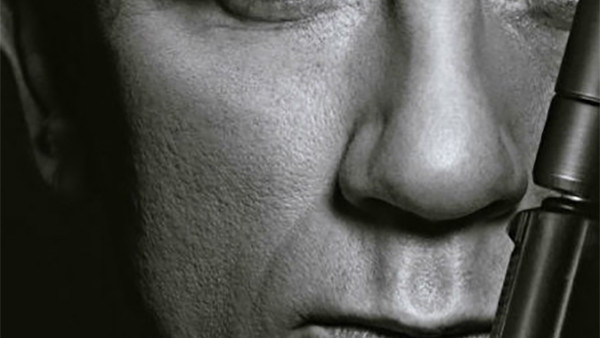
Last November saw the release of the twenty-fourth James Bond film, Spectre, with Daniel Craig returning as the super-spy beloved of MI6. Over the decades, the franchise has seen the various 007 agents indulging in all sorts of ludicrous feats, from Roger Moore's ski jump to Pierce Brosnan referring to Denise Richards as a nuclear scientist with a straight face.
Impressive though all those on-screen espionage stunts are, however, it's nothing compared to the real thing. Ian Fleming's original novels drew more on actual spy work - they had some of the more bombastic set pieces that the films would expand upon (and then some), but otherwise they mostly reflected how the likes of MI6, the KGB, and the CIA went about their war time business. Thanks to the likes of Bond, Bourne, and all points in between, spies seem more like works of fiction, stock action characters, than agents who exist in reality, ones who are particularly important in times of war.
Even if, in filmmaking and thematic terms, the 007 movies have increasingly flirted with realism, they still feel a fair bit removed from real life. That's because the true stories are actually often far more unbelievable. Espionage is a dangerous enough game without throwing supervillains and volcano bases into the mix. There are agents who have risked life and limb (literally) and, for their efforts, have helped save the world innumerable times.
These are ten real-life spies more badass than James Bond.
10. Sidney Reilly Tried To Kill Lenin
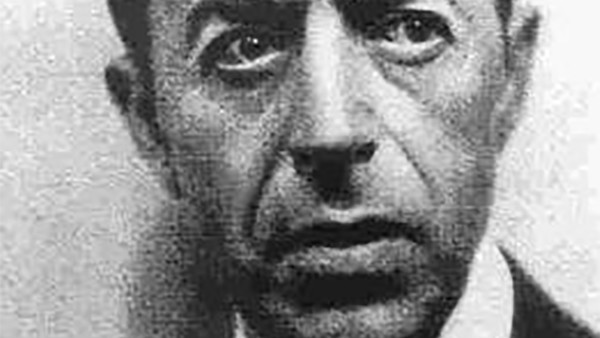
Ian Fleming's original character was sort of a mish-mash of various different real-life spies he knew either by reputation or personally, taking elements of their service career and personality in creating James Bond. The name, meanwhile, came from the author of a book about birds of Jamaica that Fleming had bought when he moved to the country in his retirement with the intention of writing full-time.
One of the major inspirations for 007 was Sidney Reilly, dubbed the Ace Of Spies by his peers at the time, with his exploits reaching a wider audience thanks to the writings of his pal Robert Bruce Lockhart. Mind you, Reilly was kind of a master of deception and lies - it was his job, after all - so nobody's ever quite pinned down how many of his adventures were actually true.
Supposedly he worked for a variety of international intelligence agencies during the early twentieth century, led an attempt to overthrow the Bolshevik government in Russia in 1917, masterminded an assassination attempt of Lenin soon after, and travelled the world thanks to his unparalleled ability to create false identities good enough to allow him to cross borders without incident.
9. Nancy Wake Lead A Guerilla Army
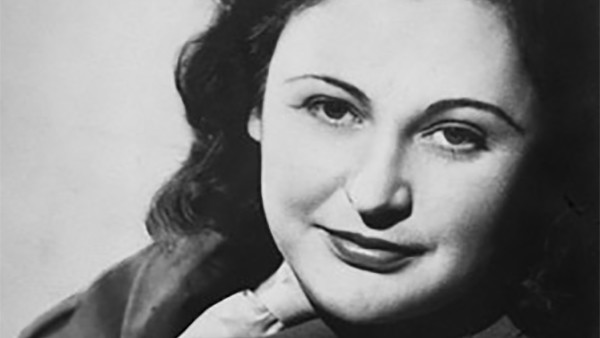
Sure, old 007 has found himself in some tight spots from time to time, and often his reputation precedes him. But he never managed to p*ss of the Gestapo so much that the Nazis made him public enemy number one and placed a 5 million-franc price on his head, did he?
No, but that was what happened during the life of Nancy Grace Augusta Wake, a British Special Operations Executive agent (the SOE later became MI5) during the Second World War, who was a key member of the French resistance and played a major part in fighting back the Germans. Eventually she wound up leading her own guerilla army of French rebels - numbering around 7000 - against something like 20,000 SS soldiers. The group caused around 1,400 casualties, while suffering only 100 themselves, in the process helping to make Wake one of the Allies most decorated servicewomen of the war.
Before all that, however, she was a journalist who married a wealthy French industrialist. She moved from Britain to Marseille just in time for Germany to invade. Wake quickly became a courier for the French Resistance and joined the escape network of Captain Ian Garrow, with her uncanny ability to evade capture earning her the Nazi nickname of The White Mouse. They tapped her phone lines and watched her at all times. And yet she managed to do so many missions for the French resistance and the SOE that, well, the bounty happened.
8. Oleg Penkovsky Stopped A Nuclear War
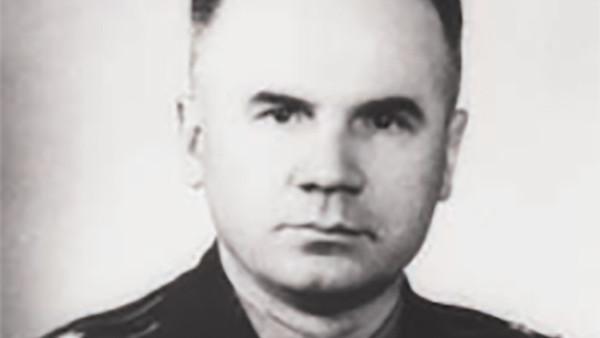
The Cuban Missile Crisis was the hottest the Cold War ever got, with the US discovering Russian weapon silos off the coast of the nearby Communist state and assuming the worst. Thankfully, the nuclear stand-off was halted and the entire world wasn't decimated leaving it free for hyper-intelligent monkeys to take over.
But if the American government had remained in the dark about the enemies to the East and their weapons capabilities, it could've been much worse. So thank the good Lord for Oleg Penkovsky, the man who informed JFK's people about the missiles in the first place.
Codenamed HERO, Penkovsky was a colonel with Soviet military intelligence who leaked information to both the British and Americans. And he did it over the course of decades, too, risking his life to try and even out the Cold War. The CIA believed him to be under constant surveillance, which made the transmission of materials difficult, but he helped with a lot of anti-Soviet spy work in the era and was the guy who drew attention to those Cuban missiles in the first place.
Ultimately, Penkovsky died for his cause, having been apprehended by Soviet authorities, questioned, shot, and cremated.
7. Violette Szabo Killed So Many Nazis
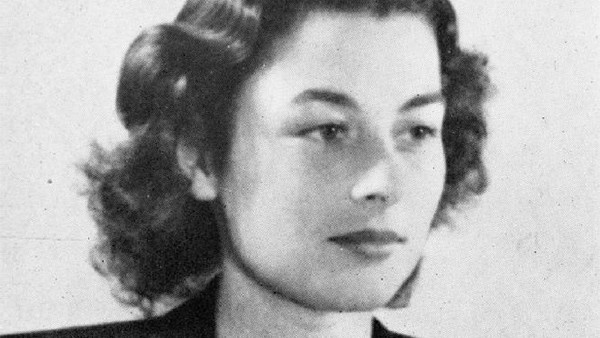
Many of these stories have unhappy endings. It's just the nature of spy work, especially during wartime, when an abundance of casualties on either side is sadly par for the course. If there's anything that's unrealistic about the James Bond films and books, it's that he's an agent who's been working consistently for decades without permanent capture, death, or retirement. Let alone the insane amounts of PTSD he should be suffering after all his escapades.
Violette Szabo was another unfortunate life lost during the Second World War, but she made the best of her time on Earth before being captured by the Nazis, deported to Germany, and eventually executed at Ravensbrück concentration camp. There's a reason the Gestapo wanted her dead: she was one of the best spies SOE had.
After the death of her French-Hungarian husband during battle, she quit her switchboard operator job and joined the war effort full time, recruited by the SOE's F-Section thanks to her technical skills and fluency in French. As a field agent, she pretended to be a nurse, but in actuality smuggled information in and out of Nazi-occupied France. It was at the beginning of her third mission proper that she was captured, tortured, and executed - but not before putting up a good fight, single-handedly taking several Germans down in a prolonged fire fight.
6. Wilfred Dunderdale Ran His Own Spy Network
Another real-life figure said to have inspired Fleming's creation of James Bond, Commander Wilfred Albert 'Biffy' Dunderdale was a British spy and intelligence officer, the history of whom was mostly a secret until old MI5 files were uncovered following his death in 1990.
Born in Odessa, the son of a shipping magnate, Dunderdale worked his way up through the ranks of the SOE and MI5 until he became first a liaison with French intelligence and then Polish during both World Wars. An incorrigible raconteur who had a weakness for the same fast cars and faster women as 007, Biffy didn't quite have the matinee idol good looks of the movie spy but could handle himself in a fight - that nickname a hold-over from his time as a boxer in the Royal Navy at the end of the First World War.
He claimed to recognise some of his stories in the Bond books, too. He spoke fluent Russian and was so sent to work on special intelligence duties in the port of Sevastopol in 1919, and was head of the Secret Intelligence Service Paris station in the 1930s. He got information out of informants and prisoners alike, ran several networks of spies bringing him more, as well as overseeing operations that helped spring captured agents through Spain and Gibraltar.
The man did a lot of work. He probably earned a drink every now and then.
5. Tony Mendez Smuggled Hostages Out Of Iran
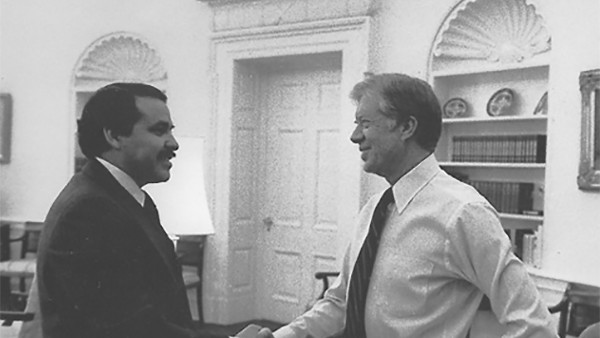
Mendez is now retired from his long-time position as a CIA technical operations officer, but during his tenure at the premier American intelligence agency, he was known as the master of disguise. For the most part, Tony Mendez wasn't a field agent himself, instead crafting all the documents, disguises, and fully-fledged personas that his fellow spies would need to travel under enemy lines undetected. He's more like the real-life badass Q to all these real-life badass Bonds.
His skills were such that he managed to get an Asian man and a black CIA agent to look like two plain white businessmen in order to avoid the attention of Laos counter-intelligence. His most successful mission, however, is one you might recognise, because it's the story told in Ben Affleck's Oscar-winning historical drama Argo.
Yep, it's that Tony Mendez, the one who cooked up the fake movie production plot to help get a bunch of American and Canadian ambassadorial hostages out of Iran in the seventies. That involved a lot of fake documentation, disguises for him and his fellow agents, and resulted in Mendez successfully overseeing the safe flight out of the country by all the hostages. No casualties, a lot of make up, and an Academy Award.
4. William Stephenson Was Basically IRL Bond
Apparently there was no end to the true stories Ian Fleming cribbed for his creation, but there's one he explicitly fessed up to. James Bond is a highly romanticized version of a true spy, he admitted: William Stephenson.
A Canadian soldier, airman, businessman, inventor, boxing champion, and the head of British intelligence for the entire western hemisphere throughout World War II, Stephenson is best known by his wartime intelligence codename Intrepid, and it's true that he's as close as we've got a real 007.
Stephenson's biggest work was founding and running the spy training facility Camp X, referred to as the Ottawa School Of Murder And Mayhem by its students. It was there that he taught a bunch of future spooks all the skills they needed to spy on America, mostly by befriending important and influential people and figuring out where they stood on the politics of the time. During this time, Stephenson got so close to President Roosevelt he was made a special advisor, and helped set up what would later become the CIA.
He did a lot during his career as a spy, but the main success of Stephenson's time in espionage was shunting the public opinion in America to the point that they finally stopped lollygagging and joined the Allied side in the war, helping to end the darn thing once and for all.
3. Virginia Hall Smuggled Secrets In A Wooden Leg
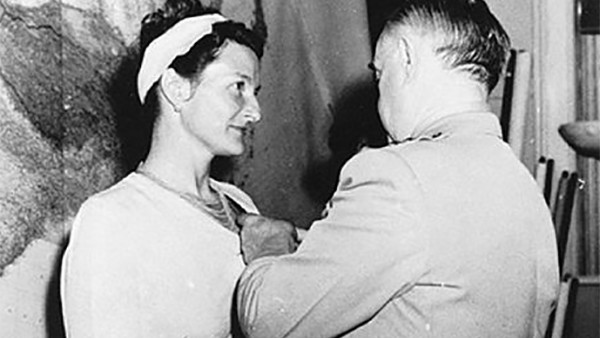
There's a trope in the Bond books and films of villains to be scarred, disfigured, or otherwise disabled or impaired. You know they're a bad guy just by looking at them, then - something about them is missing, or else slightly off.
In real life, it's a lot less cut and dry than that, since A) you shouldn't judge a book by its cover, unless it's stroking a white cat in a menacing manner, and B) one-legged spy Virginia Hall was one of the best in the business. Having literally shot herself in the foot by accident on a mission, Hall lost her leg and used the prosthetic that replaced it - affectionately named Cuthbert - to smuggle information, a place where enemy officers would never think to look as she crossed various borders.
She was an American spook who started off at SOE and eventually wound up at the CIA. Working with the French Underground in Vichy, she wrote about the resistance as a correspondent for the New York Post, and eventually worked her way into the spy game in occupied France where she mapped drop zones, found safe houses, trained commandos, and linked up with a team after the Allied Forces landed at Normandy.
The Gestapo referred to her as the most dangerous of all Allied spies. And for a good reason, too.
2. Richard Sorge Knew All The Axis Secrets
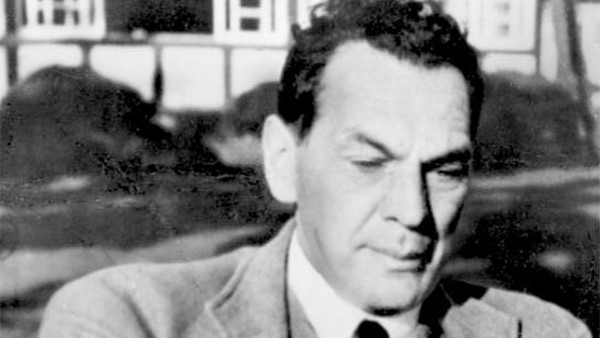
Most of these awesome spies, much like James Bond, worked for British forces. Richard Sorge was a communist sympathiser, meanwhile, and yet he basically managed to halt the forward march of the Nazis across the globe single-handedly.
How did one man manage such a feat? Well, because he was the man running an whole network of Japanese and European agents in Tokyo during the Second World War. For eight years. Without Japan's secret police cottoning on. It was through these contacts that he could know all about Japan and Germany's plans, including the Pearl Harbour attack and the German invasion of the Soviet Union - information which he reported back to his superiors, but apparently Stalin and co. didn't care so much for the life-risking work he was doing, mostly ignoring it.
Still, the bits people did pay attention to and which filtered throughout the Allied movement - which Sorge was technically doing solely for the benefit of Red Army intelligence - was so important in bringing down the Nazis that Ian Fleming referred to him as "the man whom I regard as the most formidable spy in history." And yet Stalin's blind eye and callous nature carried over to when Sorge was found out by Japanese forces in 1944, refusing to secure his release;he was subsequently hung.
1. Ian Fleming Was Totally A Spy, Too

So by this point it's obvious that Ian Fleming drew on the careers of plenty of intelligence officers he had had contact with or otherwise knew about throughout the war in the creation of James Bond, but there's one particular influence that hasn't been touched upon yet: himself.
Yes, there was a degree of autobiography to 007, although the womanising ways may have been a bit of artistic licence/wishful thinking, nabbed from Wilfred Dunderdale. Or Roald Dahl, since he was a spy too, who actually worked alongside Fleming. The two were part of the aforementioned William Stephenson's group of young intellectuals tasked with befriending, spying on, and influencing the great and the good of the Western world - a group who used to hang out at Sir Arthur Conan Doyle's old digs and called themselves the Baker Street Irregulars.
Eventually, Fleming graduated from simply spreading gossip and eavesdropping, becoming a high-ranking naval intelligence officer, involved in the planning and oversight of two intelligence units (30 Assault Unit and T-Force) and helping to sort out Operation Goldeneye, which sabotaged attempts at a Nazi occupation of Spain. His two units, meanwhile, did tonnes of good Nazi-smashing work.
In fact, if anything, Fleming toned down the level of his work for 007. But he also put a lot more booze and ejector seats into it.