10 Questions Surrounding Missing Malaysian Flight 370
10. Were The Pilots Responsible?
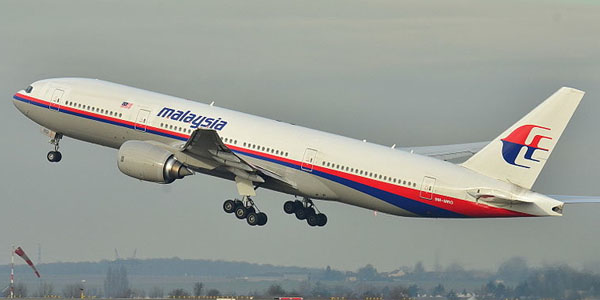
 Heres what we know about the pilots. The pilot of Flight 370 was Captain Zaharie Ahmad Shah, a 30-year veteran with over 18,000 flying hours logged. He was one of Malaysia Airlines longest serving pilots. First Officer and co-pilot Fariq Ab Hamid is a 7-year veteran, logging in just under 3,000 hours. Malaysian police searched both mens homes last Saturday. So far, no evidence has been released to suggest they had ties to terrorist organizations, or any other ulterior motives. Furthermore, the two men did not request to be on the flight, signifying little chance of collaboration. While it is true that Captain Shah built a flight simulator in his home, this is not as uncommon as you might think. Many tenured pilots have flight simulators to keep them updated on software enhancements and changes made to the Boeing 777, not to mention just staying sharp while in the cockpit. In the case of Captain Shah, it is doubtful that he used the simulator to practice maneuvers he wasnt used to. Now, there are reports suggesting the plane climbed to 45,000 feet before sharply descending. But it happened shortly after takeoff, while the plane was still loaded with fuelmaking such a climb impossible for a Boeing 777. Furthermore, to attempt such a stunt is incredibly reckless for a veteran pilot. A 777 is not built to operate at such an altitude, and would probably be uncontrollable. Communication from the plane also suggests it was airborne for several hours after this maneuver/radar glitch. This would rule out suicide, as its hard to believe a pilot would fly around for hours before intentionally flying it into the earth. What is clear is that the plane deviated from its intended northerly course toward Beijing sometime after 1am. The aircraft made a turn west, reportedly due to a reprogramming of the planes flight path. Such a sophisticated way of altering course suggests expert-level knowledge of the aircraft. Whether one of the pilots made the alterations is unknown. Nor is it known if the changes were pre-flight or during. But the plane changed course deliberately. That much is certain.
9. What Happened To The Transponders?
https://www.youtube.com/watch?v=fYrCrHIBSU0 All right, good night. That was the last known vocal communication from Flight 370, received at 1:19 a.m. It is believed the co-pilot, Fariq Ab Hamid sent the message. Sometime between 1:07 a.m. and 1:37 a.m., the transponders on the 777 were turned off. Why? Nobody knows for certain, but if someone wanted to hide the plane from radar, this would be the first and most crucial step. A transponder is basically a radio transmitter that receives and relays signals to and from the ground. Air traffic systems rely on transponders to detect and monitor aircraft. Its constantly active, relaying such information as call sign, altitude, and aircraft position. Its possible one transponder failed, but this is why there is a backup transponder. Both were off. But heres the thing: Transponders only work in areas with typical radar coverage. Oceans and lesser-populated areas dont have proper radar coverage. In fact, most of the world doesnt, making transponders only relevant when close to land. Satellites are typically used to track aircraft over oceans and areas without radar. So why would anyone turn off transponders if not for insidious motives? Well, for safety. In the event of a fire or electrical incident, it would be important for the pilots to isolate and protect vital equipment. This should not be discounted as a possibility. Still, both commercial and military radar records are being examined. In fact, military radar last detected the plane hundreds of miles off course, at around 2:15 a.m. As of this writing, no other radar picked up the aircraft again. But there were two other forms of communication from the plane.8. What About ACARS Or Satellite?
 ACARS is an acronym for Aircraft Communication Addressing and Reporting System. Modern jets are all equipped with computers that monitor the aircrafts systems, and subsequently send reports to flight control and the jet companies themselves. Thats basically what ACARS is, and according to the one aboard Flight 370, no message was sent that indicated a problem. Both Boeing, the manufacturer of the 777, and engine-maker Rolls Royce received data from Flight 370 that indicated all was well. However, ACARS ceased to function around the same time the transponders were turned off. How do you turn off ACARS? Someone would have to disconnect a circuit breakersomething the planes manual would explain how to do, and something a trained pilot knows how to do. Why? Either subterfuge, or for the same reasons as the transponderssafety in the midst of a fire or electrical incident. It was also recently revealed the 777 was linked to a satellite. This satellite, operated by Inmarsat, a London-based company, would record pings sent by the aircraft during flight. These recorded pings are known as electronic handshakes, and the plane sent six of themthe last coming at 8:11 a.m. on Saturday. This indicates the aircraft continued to fly for something close to seven hours after contact was lost, and six hours after it was last spotted on radar. But its also inconclusive. Currently, according to the data from the satellite, there are two possible paths the plane could have taken. One leads it south into the open ocean, while the other leads it north toward central Asia. But if the plane was in the air for such a long time, how could it have evaded the commercial and military radar of the surrounding countries?
7. How Did The Aircraft Avoid Radar Detection?
 Radar is a technology developed to track things high up in the sky, not near the ground. As such, many people have speculated that Flight 370 flew very close to the ground for hours upon end to avoid detection. This is pretty dumb. First, commercial aircraft, including the Boeing 777, dont have radar evasion technology on board. They dont even know when theyre being picked up by radar, and assumptions of flying at something like 5,000 feet to avoid detection is silly, since radar would still pick that up. Second, consider the timing. Almost the entire journey of Flight 370 was made in total darkness during the early morning hours. To suggest a pilot flew below radarwhich he couldnt be sure ofwhile in the dark, and avoiding any big objects like mountainswhich they could only detect with their eyes, since commercial jets dont have warning systems for terrain or structuresis ridiculous. The more plausible explanation is also the more frightening one: The airspace in that region just isnt monitored well by radar. Remember that vast swaths of earth do not have proper radar coverage. Now include a comment from Indias Rear Admiral Sudhir Pillai, stating that Indias military radars are used on an as required basis due to cost. Only on the border of Pakistan are they continuously on. He admitted that it was possible the military radars were switched off at the time of Flight 370s disappearance. If this is the case, how well do other countries fund their radar systems in the region? Australias radar only extends about a hundred miles off its coast. Chinas is certainly high-level, but the plane flew west, away from the sociopolitical hotbed of the South China Sea. Would any other countries really have sophisticated enough radar detection to identify Flight 370? Would they even be on?
6. Why Hasnt There Been Satellite Detection?
https://www.youtube.com/watch?v=MRE0yCIvDmg Contrary to popular belief, satellites do not have ubiquitous oversight on the entire planet at once. Each satellite in orbit costs money, and this money is allocated toward certain things, such as cell phone coverage, television distribution, military use, and so on. As such, those satellites that monitor the ground are only tasked with monitoring a very specific area. Satellites dont monitor huge areas on the open ocean because, frankly, theres nothing there, and it would be a colossal waste of money. The chances of a satellite picking up some visual evidence of Flight 370 during its route is almost nil. Now, satellites can be re-tasked to search areas for visual evidence of a crash or potential landing spot, but at this point, thats all they can do. The Inmarsat satellite is the only one to be in communication with the aircraft, and even it isnt sure of where the plane is since the pings from the aircraft stopped sometime after 8 a.m. For investigation purposesespecially this onesatellites can only be used to search for wreckage, and to a lesser extent, for the plane somewhere on the ground.5. How Big Is This Search Area?
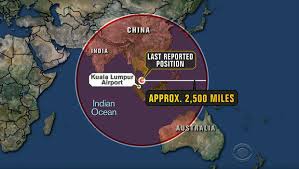 In a word, humongous. Putting it to scale, it would be akin to finding one person somewhere in the continental United States. One person. The needle in a haystack analogy fits perfectly here, and although nobody is eager to admit it, Flight 370 may never be found. In fact, the search area circle has more people living inside it than the rest of the planet combined. This would also mean that landing the plane in a relatively uninhabited area would be a difficult thing to accomplish. Keep in mind, though, a plane the size of a Boeing 777 needs a large runway at least a mile long to land. Yes, lots of airports are secluded and small, but it would be incredibly difficult to believe that even such airports would accept a Boeing 777 unnoticed. Such a landing would be obvious to anyone within miles of the airport (not to mention personnel at the airport itself), and something far out of the ordinary. To date, there have been no reports of such an occurrence. Could the plane have landed in an area outside of an airport? Its possible, but not likely. No one piloting the plane that valued his or her life would want to attempt such a feat. Runways are there for a reason. Not to mention the logistics of landing the plane and subsequently hiding it as quickly as possible. Airports are the most logical place to land, and given current information in nearly two weeks time, it doesnt seem probable the plane landed at one.
4. What About The Passengers And Their Cell Phones?
3. Could There Be Hostages?
2. Was The Plane Hijacked?
1. So Where Is Flight 370?