10 Horrifying Serial Killers You've Never Heard Of
A collection of some of the worst monsters in human history.
The 21st century has seen the concept of the serial killer achieve near mythical potency in popular culture. Never have they been more charismatic, more intelligent, artistic, even poetic. They're played by the best and brightest of the acting community, seeking to make them more than human, their insanity recast as some form of super-sanity designed to mesh better with the hopeless, deviant mess that the human condition has become.
Mads Mikkelsen portrayed Hannibal Lecter as a Byronic, Luciferian creature, the Devil in an exquisitely tailored three-piece. Michael C. Hall's Dexter Morgan is a ruggedly handsome killer-of-bad-men, the unsavoury aspects of the serial killer displaced onto his foes. James Purefoy played Joe Carroll, leader of The Following, as a hunky college poetry professor (and the show's narrative was so clumsy that they actually had Carroll be a hunky college poetry professor before his capture). The Joker is regularly depicted as a kind of savant, a terrible force of nature with a clown's leering face.
Real life serial killers are terrifying men and women, it's true: but for the most part, they're also hopeless creatures, bent and broken by their environments; damaged, evil little children acting out fantasies. There's nothing charismatic and devilishly charming about real serial killers yet still we know their names, buy coffee table books about their crimes, pore over the details of their lives over and over and over again.
We want to know about the monsters in our midst. Whether it's to put them on some form of warped pedestal in popular culture, or to obsessively learn all we can about them in real life, the monsters have a kind of power over us.
10. The Real Life Dexter Morgan

Pedro Rodrigues Filho was a Brazilian serial killer who might be classified as less a random murderer of innocents and more a vigilante. Filho specifically chose his victims from amongst the criminal community. He saw his victims as requiring a kind of rough justice.
That' not to say that Rodrigues Filho was some kind of South American Punisher: he was as damaged and warped as any other serial killer. His first attempted murder was an impulse decision, when he tried to shove a kid into a sugar cane press. He was thirteen years old.
His next victim was the vice-Mayor of Alfenas. Rodrigues Filho's father had been falsely accused of theft and fired by him so his son reasoned that the vice-Mayor deserved to die. Determining who the most likely culprit really was, Rodrigues Filho then murdered him, too. That wouldn't stop him from killing his own father, though. When Rodrigues Filho Sr. killed his mother with a machete, Rodrigues Filho returned the favour, tearing out his heart and eating it.
Going on the run, Rodrigues Filho's next victim was a random drug dealer. Then, the woman that he was living with was killed by gang members, sending him on a vicious killing spree until hed found and butchered all the men responsible.
Rodrigues Filho was still a teenager. He'd violently murdered at least ten people before he was eighteen years old.
Rodrigues Filho was finally imprisoned in 1973: convicted of seventy-one killings, he was sentenced to thirty years, the maximum sentence possible. This would only serve to increase the bodycount. While in jail he managed to murder another forty-seven people. Well, they'd locked him up with the scum of the earth - what did they expect?
Due to be released in 2007, Rodrigues Filho has barely been heard from since. He may have reformed or he may simply be a little wiser about disposing of the evidence these days.
9. The Ravening Predator
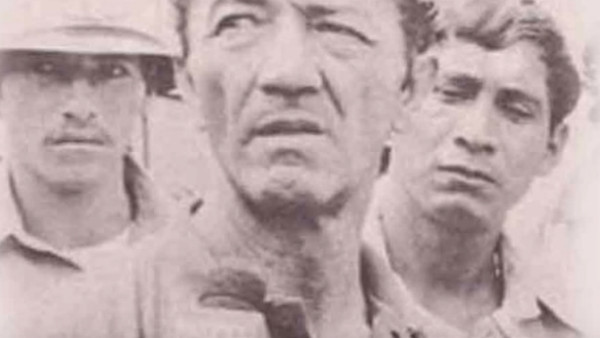
In his middle age, Daniel Camargo Barbosa may have raped and killed as many as three hundred young women over a twelve year spree in the seventies and eighties, although there's only evidence to prove between seventy-five and a hundred and fifty victims, (which is absolutely enough to be getting along with).
He had a vicious, predatory pattern to his psychosis, selecting lower class young women in his home country of Columbia, enticing them to the woods with a promise of payment if they helped him find a local pastor. Once lured into the woods, he would assault and then strangle the girl, stabbing and hacking at the body, leaving the body where it lay.
Camargo Barbosa's last victim was only nine years old. He was carrying a bag containing body parts and her bloody clothing when police officers noticed him acting suspiciously. He took police to the sites of many of his murders, calmly reciting the details of his crimes to them, telling them that he usually selected younger girls "because they cried".
When interviewed, the brute was found to be intelligent and incredibly literate. Hidden amongst the scraps of clothing and bloody flesh in that bag he'd been carrying was a copy of Crime & Punishment, by Dostoyevsky. Serving part of a twenty-five year sentence in 1994, Camargo Barbosa was attacked and brutally murdered by a fellow inmate.
8. The Bloody Benders
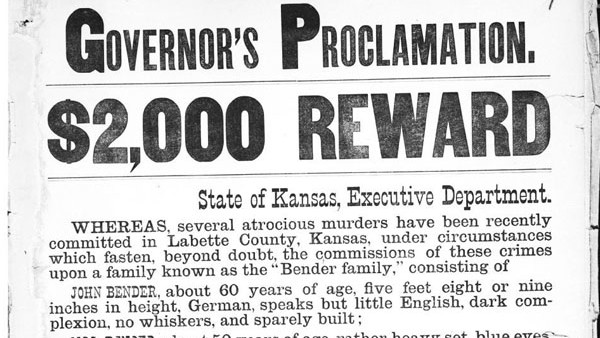
The Bloody Benders were a family of serial killers who owned an inn and small general store in Labette County in Kansas between 1871 and 1873.
The family consisted of John Bender, his wife Elvira Bender, their son John Bender Jr., and their daughter Kate. Those family relationships were just for show, however: the Bender family appears to have been one of convenience, and John Jr. and Kate may even have been husband and wife.
The Benders are believed to have murdered at least a dozen travellers before they were discovered, but fact and fiction have blurred together, and it's likely to be many, many more: those are just the bodies that were discovered when their cabin was raided in 1873. The house was found deserted, the family long gone, and they were never heard from again, at least, not in Kansas.
If none of the bloody Benders were actually related to one another, then that's a whole different kind of terrifying: that four so similar people would find each other, gel to the point where they could pose as a family, and then commit mass murder together, as a family.
7. The Werewolf Of Chalons

In 1598, an unnamed tailor from Chalons, in France was arraigned accused of torturing, molesting and murdering children from the local area. The name of the man is no longer a matter of note, only his crimes, which were some of the most horrifying ever recorded.
He was convicted of luring children into his shop, or kidnapping them from the nearby countryside. He'd sexually abuse them and torture them with knives, before cutting their throats, skinning and dressing the corpses like slaughtered calves, and eating them for his dinner.
With dozens of children going missing, the tailor eventually became a suspect. His shop was searched by the authorities. Horrifyingly, there were barrels in his basement filled with the small, bleached bones.
It was estimated that there were sufficient bones for around fifty murders, and the tailor was swiftly convicted and sentenced to death by burning at the stake. The accounts say that, from sentencing until he was actually on fire, the Werewolf of Châlons made no effort to plead for mercy, continuing to curse the families of those standing about him until he expired.
6. The Spirit Of Hatred And Vengeance
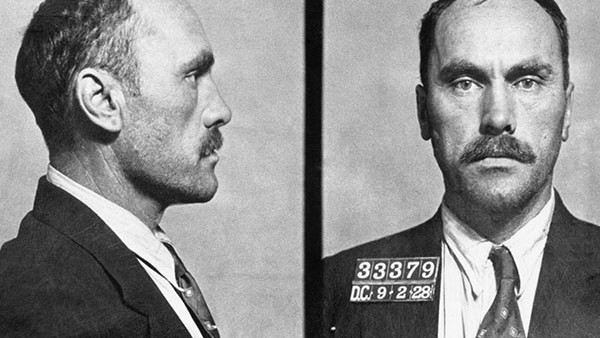
Serial killer, rapist, arsonist and burglar: Carl Panzram was a horror story in human form. In his autobiography, he claimed to have committed twenty-one murders, but raped a thousand men. Constantly being imprisoned or escaping from prison, Panzram would attack and kill guards and fellow prisoners too.
Panzram claimed that he was "rage personified", and recalled that he would usually rape the men he robbed - not because he was homosexual, but because he loved to humiliate them. Possessed of enormous physical strength, Panzram was capable of overpowering most men with ease.
He began a murder spree that spanned eight years and multiple countries in 1920, purchasing a yacht, which he used to lure away his victims. Often, they were sailors: he'd get them drunk, take them sailing, and rape them and shoot them, dumping their bodies overboard, ten in all. Those killings stopped when his boat ran aground and sank, allowing two of his victims to escape
Fleeing to Africa, he continued raping and murdering at random and at a whim, rarely bothering to hide the evidence, simply moving on. He'd attack both men and boys, seemingly indiscriminately: however, in prison he lovingly related fantasies about increasing the scale of his crimes: poisoning a city water supply, or attempting to start a war to sit back and watch cities burn.
Panzram was hanged in 1930 after killing a man in an American prison. Panzram refused to appeal the death sentence, and threatened to kill human rights activists who tried to intervene for him. While the noose was fitted around his neck, he spat in his executioner's face, shouting, "I wish the entire human race had one neck and I had my hands around it!"
5. The Saltychikha
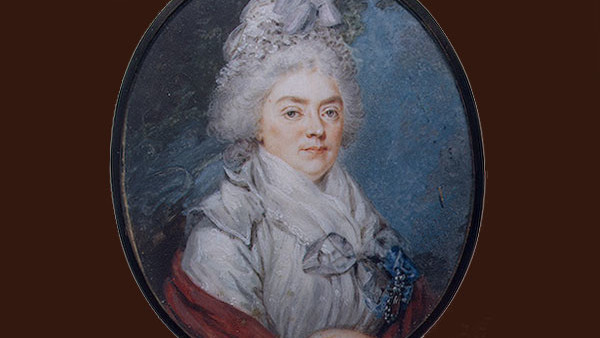
Darya Nikolayevna Saltykova, commonly known as the Saltychikha, was a Russian noblewoman and sadist and serial killer, infamous for torturing and murdering over a hundred people in the mid seventeenth century, mostly women and young girls.
Widowed before the age of thirty, she inherited a huge estate where she lived with her sons. Well-connected, she managed to avoid being investigated (despite the large numbers of commoners missing from her lands) for over a decade, until relatives of the murdered women managed to place a petition before the Empress, who elected to try Saltykova publicly in order to demonstrate her impartiality.
It took the authorities six years to fully investigate the matter: 138 suspicious deaths were found to have occurred on her estates, the majority of which were considered by have been caused by the Saltychikha. She was found guilty of personally torturing thirty-eight women to death, but the death penalty had been abolished a decade earlier, and the Empress was well aware of the effect that a drastic punishment would have on her support with the Russian nobility, regardless of the nature of Saltykova's crimes.
In 1768, the Saltychikha was clapped in irons and displayed on a platform in Moscow for a single hour, with a sign around her neck saying, "This woman has tortured and murdered." After this small humiliation, she was imprisoned for life in the basement of a convent in Moscow, out of the public eye.
4. The Meanest Man In America
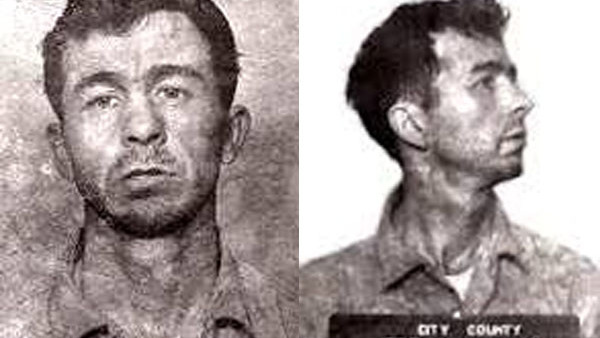
Donald Henry "Pee Wee" Gaskins - so called because of his small stature, which caused him no end of grief - was a rapist and killer, active in America in the 1950s and 1960s.
Before he was twelve, he was part of a boys club that stole and raped outside of class: Gaskins would be sent to reform school for a hatchet attack at the age of thirteen, and was sent to a mental hospital after escaping from the reformatory three times.
A little more than a year after escaping yet again, he was back in prison: this time for attacking a woman with a hammer. Escaping once more, he ran away with the circus, leaving a horrific trail of rapes and assaults behind him as the carnival travelled.
In late 1969, Pee Wee picked up a hitchhiker, tortured and raped her, then threw her into a swamp, still alive. He claimed it was the best he'd felt in his whole life, and pursued his new hobby with a passion, killing hitchhikers, tourists and anyone else he felt like murdering: twenty people between 1970 and 1972.
The following year, he bought himself a hearse, joking that he needed it to carry the corpses of his victims. That was more or less accurate: Gaskins would claim to have killed over a hundred people.
Gaskins loved to boast, and would often take on contract killing as well as his own murders, occasionally working with accomplices. It was one of them who would turn him into police, having shown him his private graveyard, where the authorities found the bodies of eight people, including a toddler.
He was sentenced to life in 1976, because South Carolina had recently abolished the death penalty, however, hired to kill another death row inmate by the son of one of the man's victims, he was tried for that killing just as the state reintroduced the death penalty, and given the electric chair for murdering another murderer.
3. The Reading Baby Farmer
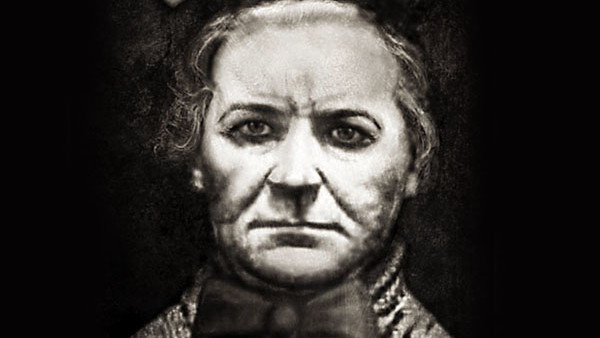
Amelia Elizabeth Dyer, born Amelia Hobley in 1837, was probably one of the most prolific and least remembered serial killers in recorded history.
Dyer was involved in a Victorian phenomenon called "baby farming": unwanted children were palmed off on others, who would charge a fee to look after the babies. In some of those cases, the babies were fostered on, in others, they were strangled at at birth, since Victorian doctors were unable to tell the difference between suffocation and a traditional stillbirth.
Doctors grew concerned at the number of death certificates that they were being asked to issue, and Dyer was arrested: alarmingly, she was only charged with neglect, and spent six months in prison. When she got out, she knew that her method had to change to avoid a similar occurrence.
Taking in babies for permanent adoption only from that point, Dyer would stay in one place for a few months and then move on, sometimes changing her name. The fees pocketed, the babies were suffocated shortly afterwards, a length of tape wrapped around their throats.
Death would not have been instantaneous: but Amelia enjoyed that, saying "I used to like to watch them with the tape around their neck, but it was soon all over with them."
Although over fifty bodies were recovered when the Thames was dredged, their condition was such that identification proved impossible. In the end, Amelia Dyer was convicted in May 1896 of the murders of Doris Marmon, Harry Simmons and Helena Fry, all a year old or younger, and hanged the following month.
Police confirmed that in the two months before her arrest, she had taken at least 20 tiny children into her murderous "care", none of whom had been found alive. Extrapolating her likely death toll over her thirty year career as a baby farmer, even a conservative estimate of ten children a year places her as having personally taken the lives of 300 babies.
2. The Murder Castle
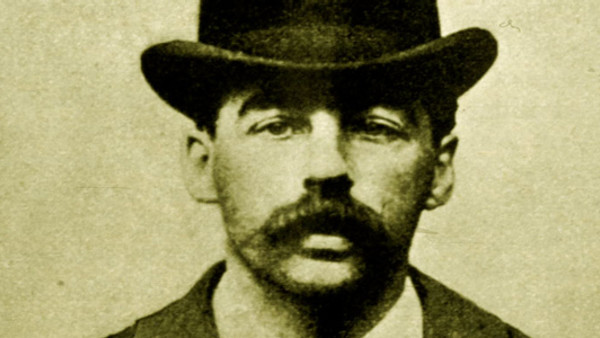
In 1886 Dr. H. H. Holmes, an affluent Chicago pharmacist, purchased a drug store in Chicago, buying up property around it over the following months until he owned the entire block, which was painstakingly remodelled into a hotel. Holmes' hotel was opened in time for the 1893 World's Fair, which gave the new building its name: the World's Fair Hotel.
Unbeknownst to the men and women who'd worked on the project, this was more than just a hotel.
Holmes, whose real name was Herman Webster Mudgett, was a sadistic psychopath, and he'd carefully had the building designed and built to his specifications. The workers had worked on small pieces of the building each, and all were sacked before their part was completed: no one except for "Holmes" was ever able to see even a fraction of the complete picture.
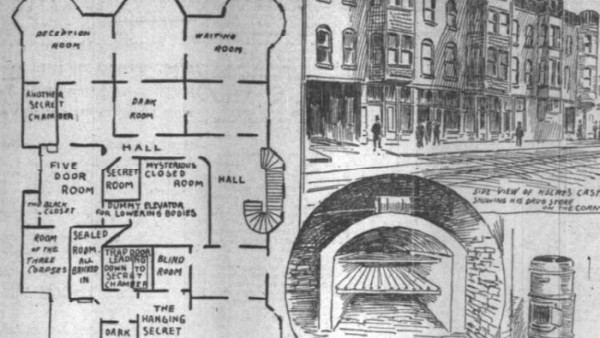
The World's Fair Hotel was a horror house, created for torture and murder. Most of the rooms had no windows, while several doors and stairways went nowhere and some hallways were dead ends.
One room was reserved for hanging, one cell lined with brickwork earmarked for his victims to die of hunger or thirst. Blowtorches were built into the walls of some of the rooms and gas jets into the walls of others, while a chute led from the upper floors to the basement. That basement contained two furnaces big enough to incinerate multiple corpses at once.
Holmes would take advantage of the influx of tourists and new citizens brought in by the World's Fair to entice young men and women back to what would later become known as the Murder Castle. He'd torture, mutilate and kill dozens before he was caught: because the remains were thoroughly disposed of in the ovens, or in lime pits or by acid - some remains even sold on to medical schools - the full body count couldn't be proven.
Nine murders were forensically confirmed from what little physical evidence was found after the Castle was ransacked by police. An inveterate liar and fantasist who claimed to be a vessel for Satan himself, Holmes initially confessed to killing 100 people, then confessed to killing 27 people, then 30 and finally claimed only two, but the estimates place the real total as potentially over 200.
Holmes was convicted and hanged in May 1896: the noose didn't break his neck, leaving him to slowly asphyxiate over the next fifteen minutes.
The hotel itself was mysteriously gutted by fire the year before he died, and the shell of the building demolished a few decades later: it's now the site of the Engelwood branch of the US Postal Service.
1. The Monster Of The Andes
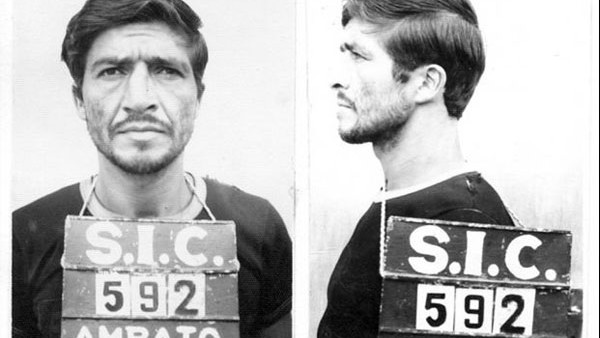
Pedro Alonso López is a South American serial killer, thought to have raped and killed more than 350 girls across Colombia and Peru, but with a particular fondness for Ecuador.
According to Alonso López, he was on the streets by 8 years old and the victim of repeated sexual abuse. As a young man, he was imprisoned for car theft and brutally gang-raped: he would murder every last man who'd attacked him while still inside. Upon his release around 1976, he began the killings that would take over his life for the next few years.
Only active for a few years, López claimed to have raped and killed more than 100 young girls in Peru by 1978. He'd been caught by an Amerindian tribe and was nearly executed they'd buried him up to his neck and were smearing his head with syrup so that ants would eat him alive, when a US missionary stepped in on his behalf, saying she would hand him in to the proper authorities.
For reasons known only to herself, she let him go at the Colombian border, where he'd continue his murderous rampage, killing around three girls a week before moving to Ecuador where his predation would continue.
It was near Ambato in Ecuador in 1979 that a flash flood uncovered the recent grave of four children. Three had been strangled with such rage that their eyes had bulged out of their sockets. Shortly afterwards, with word of the bodies spreading around the town, López was caught approaching a young girl in a market in Ambato and held by market traders until the police arrived.
Confessing everything to an undercover policeman in his cell who claimed to be a fellow rapist, López admitted to the four killings and took police to the graves of another 53 in Ecuador alone, claiming that he'd killed far, far more.
But charging him with murders committed in Peru and Colombia would have been prohibitively expensive: López was convicted of raping and killing 110 young girls in Ecuador, and sentenced to the maximum Ecuadorian jail term of 16 years.
Unbelievably, he was released after serving just 14 years, having had his sentence cut by 2 years for good behaviour. However, he was arrested an hour later as an illegal immigrant and taken over the border back to Colombia. Colombian authorities picked him up shortly afterwards, detaining him over a further murder: he was declared insane and committed, but was released in 1998 on $50 bail, having been declared sane again.
Interpol have apparently issued an advisory for his rearrest since then, over a killing in 2002, but Pedro Alonso López, the Monster Of The Andes, hasn't been seen for seventeen years.