10 Dystopias You Must Read Before Divergent

These fictional forays into the future highlight how easily the society we think so seemingly firm now, could slip into something much more sinister.
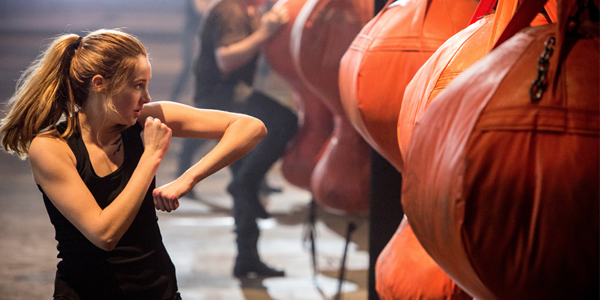
That's right. There's another 'young adult' dystopia making its way to the silver screen. Whilst this may appear to be reminiscent of Twilight being followed by all those terrible supernatural romances, the new trend for YA dystopian adaptations seems to be of much better quality. Divergent tells the story of a world in which people are allocated into factions by their personality. The book follows a teenager who discovers her personality does not fit into those of her family, so chooses to leave their faction in a moderately transparent metaphor for puberty. Judging from recent trends in Hollywood, dystopian fictions are the new vogue. Often laced with satire and several levels of meaning, the genre allows a writer to comment on society without being bullish. Most dystopias either follow the aftermath of some sort of disaster (plague, nuclear war) or the results of a totalitarian regime taking absolute power. Margaret Atwood, one of the most prolific writers when it comes to what she calls "speculative fiction", has said that these forays into the future are to be treated like warning signs, a "do not enter" if you will. Either way, it can be fascinating to examine a writer's image of a world not so far from our own, including how easily the society we think so seemingly firm now could slip into something much more sinister.

10. The Hunger Games - Suzanne Collins

As The Hunger Games seems to have kicked this trend off it would be silly to not start with it here. Say what you will about the series - the most common criticism is usually the startling similarity it has to Battle Royale, but author Collins has maintained she hadn't heard of it until after she'd submitted her book - it has been a runaway success with no sign of slowing down anytime soon. Whilst the kids-fighting-to-the-death plot has caused controversy, what is most striking about the Hunger Games novels is the world Collins has created. Panem is a convincing portrayal of fractured America, split into factions and presided over by the tyrannical Capitol, and President Snow. We're given this society of great wealth versus great poverty where the smallest rebellion is met with the harshest punishment and it feels unsettlingly familiar. The idea of The Hunger Games, watching a select set of innocents fight to the death on live television, is not miles away from current entertainment. Reality shows are omnipresent, and the most popular ones usually involve the degradation of contestants. ITV's I'm a Celebrity...Get Me Out Of Here allows the audience at home to choose their least favourite contestant to undergo "Bushtucker Trials". These generally involve eating some sort of foul live animal, being covered in rats, or something similarly horrifying. Forget that it's a Young Adult novel: its themes are incredibly mature. Every now and then when reading a particularly violent occurrence you realise this book was meant for teenagers, but it certainly doesn't treat the teens it is aimed for like children. This is surely a good thing, that it doesn't shelter them from both everyday violence or the scathing satire lying underneath And remember, the odds are never in our favour.

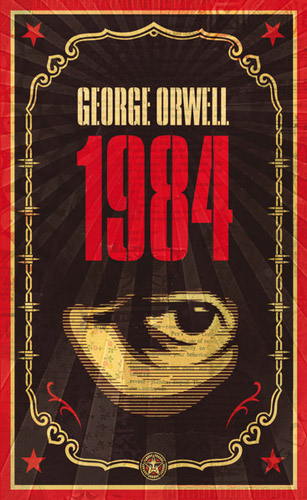
9. 1984 - George Orwell

http://world.edu/wp-content/uploads/2011/07/1984.jpg

1984 is probably the most famous dystopia on this list, whether directly (it's a classic novel!) or indirectly (reality show Big Brother has brought the fascist regime of the same name in the book unprecedented fame). 1984 is set in a broken England that is constantly at war, where its citizens are under perpetual surveillance and are punished for independent thought. Protagonist Winston works for the Ministry of Truth, which is anything but. Winston's job is to rewrite past newspaper articles so the current political party is always supported. In spite of harsh punishments against "thoughtcrimes", he dreams of a rebellion against the totalitarian regime personified by Big Brother. Winston's downfall comes from these dreams and his personal rebellion becomes physical when he begins an illicit affair (sexual desire is illegal in 1984). The second half of the novel deals with his capture and sadistic "rehabilitation" into this society. The influence and indoctrination into society that this book had and has is unquantifiable. The most powerful sign is that the term "Orwellian" is synonymous with governmental totalitarianism. Though he wrote several novels, most people are hard-pushed to name one that isn't 1984 (or Animal Farm). There are many dystopian fictions that pre-date 1984, or arguably have better plots, or are more convincing, but 1984 unanimously takes the title for most prolific dystopia to date.

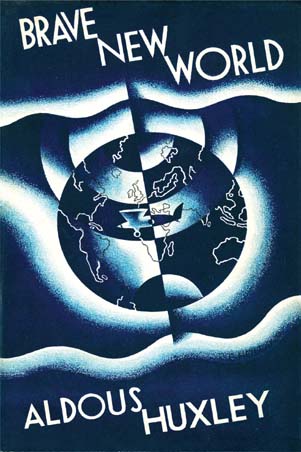
8. Brave New World - Aldous Huxley

http://upload.wikimedia.org/wikipedia/en/6/62/BraveNewWorld_FirstEdition.jpg

Brave New World is like the other half to 1984 in the sense that it is one of the archetypal Classics with a capital C. It was written in 1931 and was primarily concerned with the issue of humanity adapting to science, rather than science adapting to humanity. One of the most strikingly prescient themes, almost a century later, is the fear that Huxley appeared to have for disposable consumer culture. The citizens of this new England learn the slogans "ending is better than mending" and "more stitches less riches" encouraging a culture that discards anything with the smallest fault which draws uneasy comparisons to our own world. Not only that, but the novel concerns itself with reversed notions of the merits of public and private. If something happens in private, it is essentially judged as to have not happened, and what's the point in that? Everybody must know everybody's business in order for it to have any worth. In our current culture of sharing every little detail of our mundane lives (I told Twitter I was eating cheese the other day), seeing it predicted in a book written so long ago is jarring, and makes it all the more relevant to the modern reader.

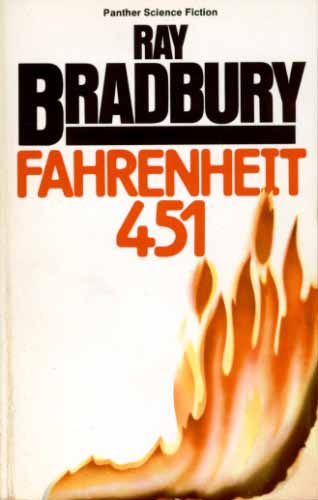
7. Fahrenheit 451 - Ray Bradbury

http://home.wlv.ac.uk/~in5379/covers/fullsize/451.jpg

Fahrenheit 451 is based in a dystopian America where books are illegal and firemen, rather than putting out fires, are employed to find and burn any that remain. We follow the story of Guy Montag, a fireman who starts to become disillusioned with his life after witnessing a woman burn herself alive rather than give up her books. He starts hoarding books, and then finds himself on a slippery slope as his highly depressed wife discovers his secret. Fahrenheit 451 stands alongside Brave New World and 1984 in its exploration of the governmentally enforced idea of "ignorance is bliss". The masses are encouraged to not pursue knowledge, but to be neutralised by stodgy media. Guy's wife, Millie, is addicted to sleeping pills and watching vacuous soaps which keep her shallow and unquestioning of the life that has been enforced up everyone. As the novel progresses, Guy finds this frightening as he realises how much there is that needs to be questioned. Fahrenheit 451 is usually attributed the as the classic novel that explores the movement of censorship particularly as it was written during the McCarthy era where state-censorship was becoming a real cause for concern. The burning of books is the burning of illicit information that could incite rebellion and so the public are encouraged to watch mindless stories that keep them calm, that suppress individualism. Think about it next time the temptation to watch the film, rather than read the book, arises.

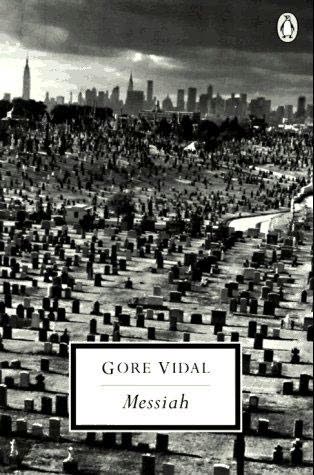
6. Messiah - Gore Vidal

http://img1.fantasticfiction.co.uk/images/n3/n16043.jpg

Messiah is arguably one of Gore Vidal's most unfairly neglected books, and an unfairly neglected dystopia at that. Messiah follows the collapse of Christianity and most of Islam as a new "fad" religion sweeps the Western world. Written in 1954, Messiah is another spookily prophetic vision of how mass media will change (and now has changed) our world. The novel follows Eugene Luther's account of the new "Messiah", John Cave. Cave is a mortician who brainwashes the masses via television into believing that death is a holy state, and therefore much preferable to life. Vidal explores America's tendency for religious extremism, as his followers start to call themselves Cavites, and the ease with which a new indoctrination could sweep the Western world through mainstream media. Whilst Cave's religious doctrine sounds insane from the outset, Vidal convincingly shows us how the 'masses' could take it on with waspish and witty satire. Messiah's religious themes are distressingly similar to infamous religious groups such as Heaven's Gate, which managed to convince members to commit mass suicide in 1997, and looks at what would happen with Christianity's stronghold dropped for something potentially far more sinister.

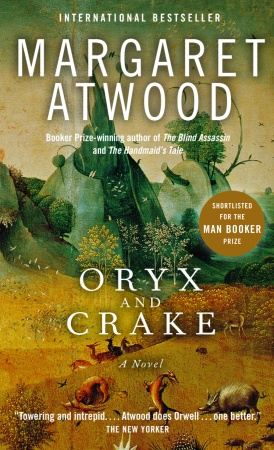
5. Oryx And Crake - Margaret Atwood

http://ardentreader.files.wordpress.com/2009/10/oryx-and-crake-22.jpg

Oryx and Crake is very like the kind of dystopias that most gamers (particularly of the Fallout series) will be used to. Oryx and Crake is the first of a tour-de-force trilogy in which humanity has been wiped out by a plague, dubbed "the waterless flood" by a remaining religious group, and the world has been taken over by vicious man-made animal splices. In Oryx and Crake we follow Jimmy, who has come to believe he is the only human left alive. He survives, rather than lives, and only really with the help of the Crakers, a bizarre human-esque lab-engineered race that believes Jimmy is a prophet. Margaret Atwood creates a wholly absorbing tale in Oryx and Crake, and in the sequels Year of the Flood and MaddAddam. The world she creates is so familiar and so easy for the reader to inhabit that it is then impossible to view the "real world" without experiencing shades of it. Atwood has said, time and again, that every scientific advancement described in the book (such as using pig's bodies to grow human organs for transplant) could conceivably and scientifically happen. Disturbingly, scientists in Japan are currently working on exactly how to grow human organs in pigs, and if we learn anything from Margaret Atwood, it's that this is very unlikely to end well...

4. The Handmaid's Tale - Margaret Atwood

http://www.stationaryandthememorial.com/wp-content/uploads/2013/04/the-handmaids-tale.jpg

Margaret Atwood writes such convincing and powerful dystopias that it would be an oversight to only have one. The Handmaid's Tale comes from a radically different place from Oryx and Crake, and is arguably one of the most important dystopian fictions out there. Set in a totalitarian world where extreme Christianity has taken over America, Atwood shows us a world of oppression under a racist, sexist, and homophobic regime without mercy. Atwood explores controversial themes that show how ahead of her time she is. Though only written in 1985, Atwood imagines this Christian takeover put into play by a staged terrorist attack blamed on Muslim extremists where the president is killed, allowing this theocracy to step in. We follow the story of Offred. Women have had essentially all rights removed from them, and lower-class women have been turned into handmaids, given new names based on their male owner (Offred is literally Of Fred). These handmaids are essentially slaves of reproduction. Rich husbands do not reproduce with their rich wives, but have ceremonial reproductive sex with their handmaids. Fred begins an illicit affair with Offred, sleeping with her outside of ceremony for non-reproductive means, which leads to a series of highly illegal events. Atwood has always called her work "speculative fiction" rather than "science fiction" because she writes about technologies that already exist, whereas science fiction should be limited to literature concerned with advances which are not in our foreseeable grasp. With that as the case, it changes how we see books like The Handmaid's Tale, or Oryx and Crake. It can take very little for the entire world to crumble, and takes a lot for those inside this mess to be able to fight against it.

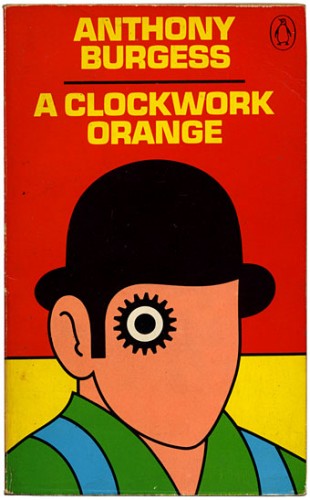
3. A Clockwork Orange - Anthony Burgess
http://bookcoverarchive.com/images/books/a_clockwork_orange.large.jpg

It can be fairly easy to forget that A Clockwork Orange is a dystopia as critical focus is so tight upon the characters that the environment gets washed away. The novel is set in the near-future (if you watch the film, the home decor suggests the 1970s) where youth violence has become out of control and the governmental response to it is similarly extreme, if ineffective on a large scale. We follow protagonist Alex, who leads a gang of "droogs" into various nefarious and ultra-violent activities. Their idea of a good night involves casual murder, rape, and the general destruction of other human beings which is then contrasted with Alex's love of classical music. Alex is eventually imprisoned and "rehabilitated" using a very extreme version of aversion therapy. Finding himself essentially castrated of his violent impulses, Alex is taken advantage of and beaten by his previous victims and gang-members, and then used as evidence by anti-governmental groups. Burgess' world preys on the omnipresent fear of ruling institutions (and the adult population) that 'today's youth' are more violent and more apathetic than ever before, and will inevitably bring about the downfall of everything the previous generation deems "civil". Even Alex himself, at the close of the book, ruminates on the outcome of having children and how they may become even more violent than himself.

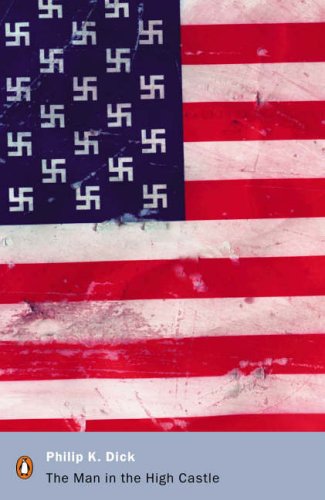
2. The Man In The High Castle - Philip K. Dick
http://upload.wikimedia.org/wikipedia/en/1/19/PKD-high_castle-penguinclassics.jpg

It's very difficult to pick out which of Philip K. Dick's dystopias would be a "must-read" because he is arguably the king of dystopian fiction. With Divergent in mind, it would be worth giving Clans of the Alpane Moon a go, as it also examines society split into factions determined by personality traits. However The Man in the High Castle is true innovative classic in which Philip K. Dick - alternative-reality-creator extraordinaire - shows us what life may have been like had the Nazis won World War II. The result is facist totalitarianism, and Dick takes us on a journey investigating the effects of this environment on everyday life. Dick weaves these individual storylines into one another, along with a story-within-a-story of The Grasshopper Lies Heavy which questions what would have happened, within this world, had the Allies won the war. The result is a very rich picture of a frighteningly possible existence, and the knowledge that maybe we don't have it so bad (yet) after all.

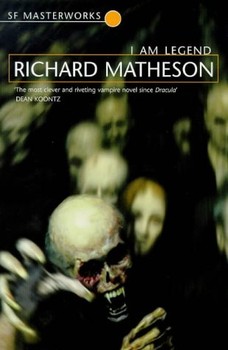
1. I Am Legend - Richard Matheson

http://www.examiner.com/images/blog/wysiwyg/image/i-am-legendbookcover.jpg

I am Legend is of a slightly different ilk to the rest of these books. Most people will have heard of the film starring Will Smith, but the book is an entirely different kettle of fish (and is really short, so doesn't take long to read). Set in a time where a deadly plague has swept the earth, the disease turns humans into what we would recognise as vampires, but act more like zombies. Zombie worlds - or zombie-like creature worlds - are arguably a different genre (or sub-genre) completely to the generic dystopia. However I am Legend treats the world that protagonist Robert Neville has found himself in very differently than most. I am Legend focuses on the futility of Robert's efforts for survival, his loneliness, and subsequent alcoholism, rather than following him fighting against the creatures like most depictions of a time plagued with monsters. The book is very psychologically frightening, as well as deeply touching. Robert's cyclical realisation and then denial of the worthlessness of his life is potentially more painful to read than the horrifying descriptions of the vampires. Written in 1954, I am Legend has helped popularise the trend of modern zombie apocalypses, and successfully created a tiny insular world that is both fascinating and suffocating.

In this post: 
Divergent
 
Posted On: 
Contributor
Contributor

Fan of Taylor Swift and the Dead Kennedys (a duet I can only dream of). I like dystopias, slasher films, and video games that make me feel things.