10 Deadliest Wars In History

More than 350million deaths - the world really can be a barbaric place.
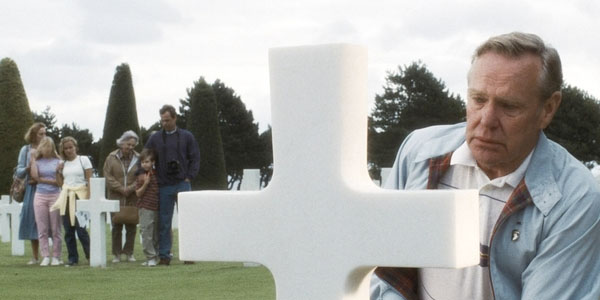
There has always been an almost unbroken constant in the history of mankind - and that has been conflict. Battles were fought between primitive tribes, they were then waged between cities, and eventually they evolved into being contested between nations and empires. So bloody has human history been in fact that, of the 10 wars listed here, a total of more than 350million people are estimated to have perished. To put that into perspective, only China (approximately 1.3billion) and India (approximately 1.2billion) have current populations greater than the number of people who it is believed died as a result of these 10 conflicts. In fact, five of these wars actually took place in China, killing approximately 161million people - and that does not even include the 15million Chinese deaths during World War II. It must be stressed that the numbers put forward in this list are estimates, because it is almost impossible to determine the exact figures in most cases, and they do not just include military deaths - they also include civilian casualties, as well as those who perished as a result of famine, genocide, atrocities, starvation, dislocation and disease during these conflicts. So prepare yourself, because here are the 10 bloodiest wars in the history of mankind.

10. Yellow Turban Rebellion (China, 184 AD-205 AD): 4.6 Million - 7 Million Deaths
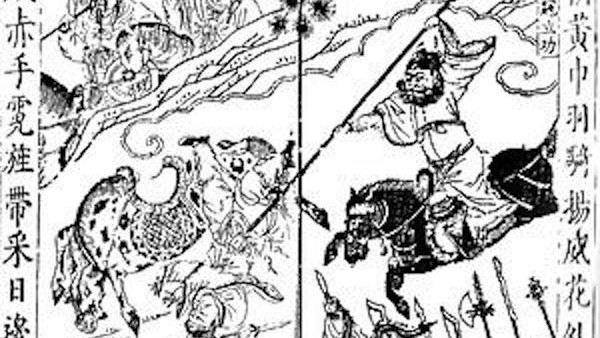
The Yellow Turban Rebellion - or Yellow Scarves Rebellion - saw a huge peasant revolt during the Han dynasty's rule of China, between 184 AD and 205 AD. As will be seen, China features prominently on this list of deadliest wars - partly due to its huge physical size, and partly due to its generally violent past - and during this rebellion it is estimated that anywhere between 4.6million and 7million natives were killed. A long but ultimately unsuccessful 21-year rebellion that was not suppressed until 205 AD, it started under the rule of Emperor Ling in 184 AD, largely as a result of a famine in the north of China that forced thousands of farmers and military settles to migrate to the south of the nation. High taxes and a weak central Han government also strengthened the rebels' belief that they could overthrow the ruling classes. Losses on both sides were significant - with the rebels stopping at nothing to try and overthrow the government - but it was the Han ruling class that were the more brutal, massacring more than 4million of the revolters. Interestingly, it is called the "Yellow Turban Rebellion" due to the distinctive cloths that the rebels - led by brothers Zhang Jue, Zhang Bao and Zhang Liang - wore on their heads to differentiate themselves from their "oppressors" and to highlight their commitment to the cause of revolution.

9. Napoleonic Wars (Europe/Atlantic Ocean/Pacific Ocean/Indian Ocean, 1803-1815): 4.9 Million-7 Million Deaths
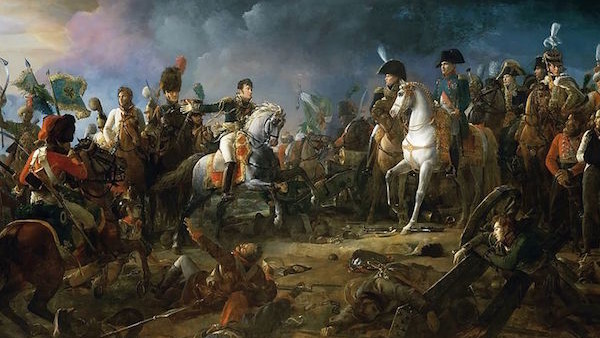
Few rulers in European history have embarked on such an ambitious expansion of their empire in such a short space of time as Emperor Napoleon I of France between 1803 and 1815. The Napoleonic Wars pitted the French Empire in direct opposition to a variety of separate coalitions of fellow European powers, including Britain, Austria-Hungary, Prussia, Spain, Portugal, Russia and the Netherlands - with the result being that between 4.9million and 7million people perished. Napoleon Bonaparte himself was one of the most experienced military leaders in history - he fought in more than 60 battles throughout his career, losing just seven - and the Corsican-border French Emperor managed to conquer the majority of the continent before his eventual demise in 1815. Defeating five of the seven European coalitions who opposed him, Napoleon's decline began in 1814 after a disastrous invasion of Russia forced him to retreat into France and briefly forced him to abdicate, but the final blow came at the Battle of Waterloo in 1815 when The Duke Of Wellington masterminded a brilliant victory for the opposing powers. The Napoleonic Wars not only resulted in several million deaths - they also forced the dissolution of the Holy Roman Empire, the emergence of a dominant British Empire, the decline of the Spanish Empire, and an upsurge of nationalism in Italy and Germany. Essentially, this 12-and-a-half-year period of wars in Europe set the world on to the destructive path it would follow over the next 150 years...

8. Chinese Civil War (China, 1927-1949): 8 Million Deaths
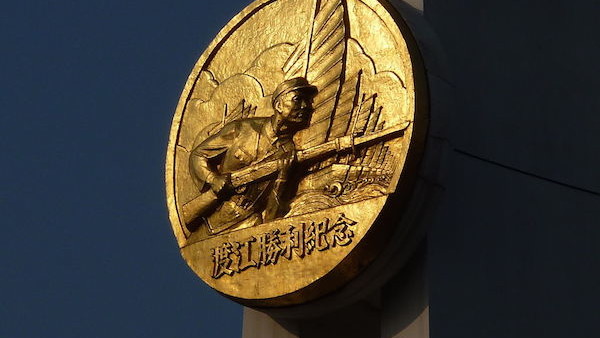
Returning to China for the second time, the civil war that enveloped the country between 1927 and 1949 saw 8million people lose their lives during a bloody and brutal campaign between the Kuomintang-led government of the Republic of China (KMT) and the forces of of the Communist Party of China (CPC). Arising from an ideological split between the nationalist KMT and the socialist CPC, the Chinese Civil War began when Chiang Kai-Shek's government forces launched the Northern Expedition in order to unify the nation behind the ruling classes. Although there was a 10-year quiet period from late-1937 until early-1946 as the two sides cooperated to form the Second United Front against a Japanese invasion, effectively there was non-stop fighting between 1927 and 1949 - when the newly-formed Communist People's Republic of China seized control of the country's mainland, while the Republic of China became based on the island of Taiwan. Yet both these parties claimed to be the legitimate ruling government of China. No peace treaty or armistice was ever signed - largely due to the fact both sides still claimed to be the legitimate government of China - and it is estimated that up to 3.5million of the 8million deaths were caused by atrocities committed on non-combatants by both sides, including forced conscription and unprovoked massacres.

7. Russian Civil War (Russia, 1917-1921): 6.7 Million-9 Million Deaths
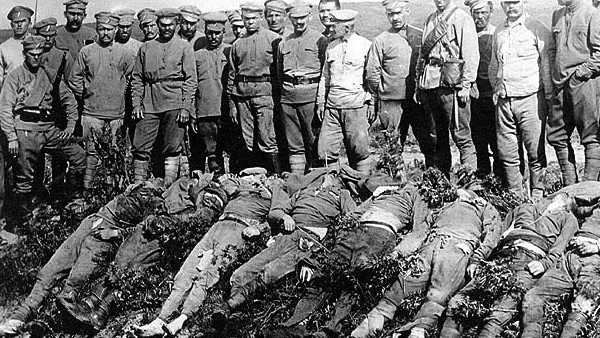
From one huge nation to another - and from one conflict between nationalism and socialism to another - the Russian Civil War between 1917 and 1921 saw between 6.7million and 9million belligerents lose their lives. The Russian Revolution of 1917 - provoked by a Bolshevik takeover of the central government - led to the execution of Tsar Nicholas II and the royal family, forcing a ferocious backlash from loyalist forces, and latterly from the Western Powers. The USA, Britain and France sent forces to Russia in an attempt to help the loyalist "White Movement" as the so-called "Green armies", while the Red Army of the Bolsheviks tried to unite Russia under a Communist banner. With Poland, Finland, Estonia, Latvia and many other newly-emerged republics forming in the aftermath of the Civil War, the former Russian Empire was dissolved and a new Communist structure in the country established once the Bolsheviks claimed ultimate victory in 1921. The Russian Civil War was brutal, with deaths caused by combat (300,000), disease in the military (450,000), "decossackization" of the Cossacks (500,000), murder of Jews in Ukraine (100,000), widespread typhus (3million) - and more than 1million summary executions of "enemies of the people" by the Cheka (the Bolshevik secret service) during the "Red Terror". Effectively the "Red Terror" was a campaign of mass killing, torture and oppression conducted by the Bolsheviks in order to establish power - and was the most horrendous period of an extremely bloody Civil War.

6. Thirty Years' War (Holy Roman Empire, 1618-1648): 5.9 Million-11.5 Million Deaths
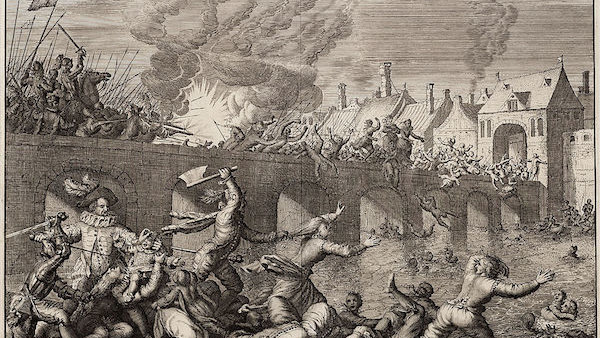
Strangely enough the aptly-named Thirty Years' War did actually last three decades - unlike the Hundred Years' War, which was 116 years long - and resulted in the dissolution of much of the Holy Roman Empire. A series of battles - primarily in what is now modern-day Germany - over religion between 1618 and 1648 resulted in the death of anywhere between 5.9million and 11.5million Europeans. Beginning as a war between Protestant and Catholic powers once Holy Roman Emperor Ferdinand II attempted to impose Roman Catholic absolutism on all his dominions, the Protestant nobles of Austria and Bohemia decided to rebel against him. So brutal were the Bohemian Revolt, the Huguenot Rebellions and the other wars brought about by intervention by nations including the French, the Danish and the Swedes, that it is estimated that the populations of the German states were reduced by up to 40% during the Thirty Years' War. In fact, the region of Württemberg lost three-quarters of its population between 1618 and 1648. As is so often the case during warfare, typhus and other diseases also accounted for millions of deaths - and half of the men in what is now modern-day Germany died during the war. The Thirty Years' War greatly diminished the power of the Holy Roman Empire - and the Peace of Westphalia agreement of 1648 helped formulate the modern-day sovereign nation-state. However, up to 11.5million Europeans lost their lives in the 30 years preceding this agreement...

5. An Lushan Rebellion (China, 755 AD-763 AD): 21 Million-36 Million Deaths
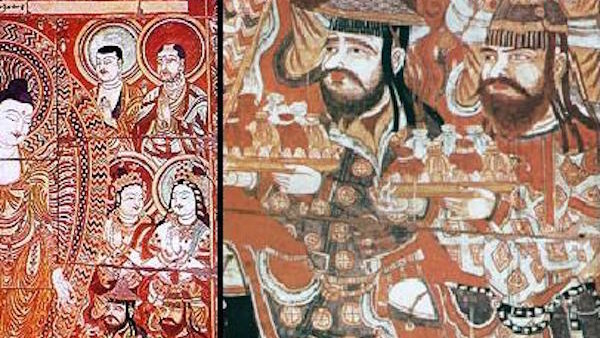
Returning to China yet again, and this time for a battle that was at least twice as bloody as the Russian Civil War, the entry before it on the list. The An Lushan Rebellion saw the rival Yan Dynasty - led by An Lushan - declare itself as a separate nation in Northern China in December 755 AD, revolting against the Tang Dynasty in the process. Spanning the reign of three Tang emperors - Xuanzong, Suzong and Daizong - the rebellion absolutely devastated the Chinese population, resulting in the deaths of between 21million and 36million natives. The Battle of Yongqui, the Fall of Chang'an and the Siege of Suiyang were the most bloody of the conflicts throughout that eight-year war, which ended in February 764 AD. Civil wars usually contain such high death tolls not because of the loss of life to combatants themselves, but as a result of disease, starvation and population dislocation - and the An Lushan Rebellion was no different. In fact, so brutal was the An Lushan Rebellion that it is believed that two-thirds of the entire population of the Chinese Empire died. That accounted for a sixth of the population of the entire world at the time - making it proportionally the largest atrocity in human history.

4. Wars Of The Three Kingdoms (China, 184 AD-280 AD): 36 Million-40 Million Deaths
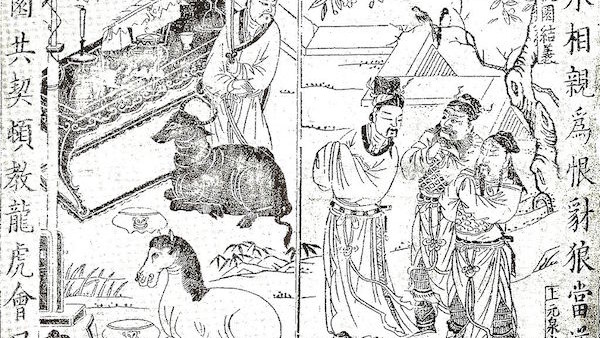
The Wars of the Three Kingdoms devastated China for the best part of 100 years between 184 AD and 280 AD, resulting in the deaths of between 36million and 40million deaths. A so-called "Period of Disunity" erupted following the loss of the de facto power of the Han dynasty in the nation, when the individual states of Shu, Wei and Wu arose to become effectively three separate entities. As well as the brutal fighting which took place at the Battle of Red Cliffs (208 AD), in Eastern Wu and in Cao Wei, a widespread famine also greatly affected the Central Plains of China - ravaging the population. Also, among the many atrocities committed during the Wars of the Three Kingdoms was the plunder and rape of women by Dong Zhuo's forces under his command - as well as the scorching of the earth in several parts of the country once areas had been conquered, meaning starvation became rife. The tripartite system of governance collapsed in 280 once Jin overthrew the Wu empire, but not before close to 20 per cent of the entire population of China had perished.

3. World War I (Worldwide, 1914-1918): 31 Million-65 Million Deaths
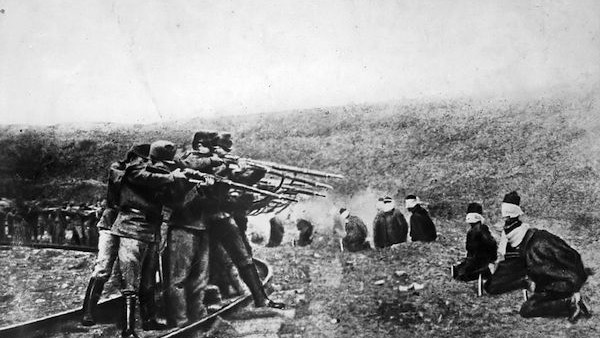
It was always going to feature somewhere on the list - for it is not referred to as "The Great War" for nothing, although there is nothing great about it. World War I was the first truly global war and, although it centred primarily in Europe, it affected the population of the entire planet. Lasting from July 1914 until November 1918, it is estimated that between 31million and 65million people perished during the First World War - including more than 9million combatants. The assassination of Archduke Franz Ferdinand of Austria by Yugoslav nationalist Gavrilo Princip in Sarajevo may have been the match that lit the fuse that started the conflict, but for decades beforehand tensions had been arising in Europe between the Great Powers. Germany used Ferdinand's assassination to attempt to expand their influence, and as a result the Triple Entente of Britain, France and the Russian Empire would assume conflict against the Central Powers of Germany and Austria-Hungary - before the USA, Italy and Japan joined the Allied side, and the Ottoman Empire and Bulgaria the German side. More than 70million military personnel were mobilised during the Great War, and alongside the 9million combatants who perished, many died in such tragedies as the Armenian genocide and the so-called "Rape of Belgium" - when German invaders summarily executed the local populous. Not only did World War I result in in up to 65million deaths, it also greatly facilitated the onset of the Second World War - and the loss of tens of millions more lives.

2. Taiping Rebellion (China, 1851-1864): 32 Million-70 Million Deaths
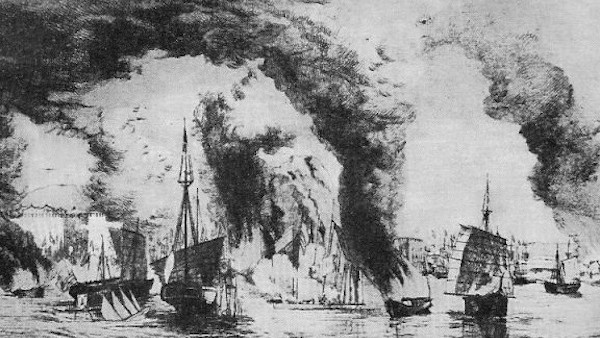
Returning to China for a final time, on this occasion it is for the Taiping Rebellion (1851-1864) in which anywhere between 32million and 70million natives lost their lives. In one of the most bizarre - and unfortunately, bloody - uprisings in history, Hong Xiuquan led a millenarian movement against the Manchu Qing dynasty in southern China after claiming he received visions that taught him he was the younger brother of Jesus Christ. After establishing the Taiping Heavenly Kingdom in southern China, Xiuquan attempted to destroy the remaining imperial government - but the Qing dynasty was aided by French and British forces, who wanted to retain the status quo in the nation. In one of the first examples of "total war" anywhere in the word, almost every single citizen of the Taiping Heavenly Kingdom was given formal military training and was conscripted into the army - helping lead to such a huge death toll. The number of deaths was further exacerbated by the decision by both sides to burn large agricultural areas, completely massacre the population of 600 entire cities and burn infrastructure in order to greatly weaken the opposition. In one example, the province of Guangdong saw more than 1million civilians executed by the Imperial forces. Undoubtedly the most brutal rebellion in the history of mankind.

1. World War II (Worldwide, 1939-1945): 40 Million-85 Million Deaths

No surprises that the conflict which tops the list is World War II - a six-year global war that claimed the lives of between 40million and 85million people between 1939 and 1945. Adolf Hitler's Nazi regime in Germany provoked the Allied Powers of Britain and France (and latterly the USSR, China and the USA) to take up arms against the Axis Powers of the German Empire and Italy (and latterly Japan). "Total war" took complete hold of the continent of Europe, with almost every single nation completely geared towards production of arms for conflict and for aiding the war effort. More than 1million civilians were killed during bombing raids throughout the war - including more than 200,000 when the USA dropped nuclear warheads on the Japanese cities of Hiroshima and Nagasaki in 1945 - while up to 11million Jews, homosexuals, political prisoners, people with disabilities and travellers were massacred by the Nazis during the Holocaust (one of several genocides carried out throughout the war). It is believed more than 25million military personnel and more than 50million civilians were killed during the war - including 27million in the USSR (8.7million military deaths and 19million civilian deaths). Approximately 85% of those killed were on the Allied side (with the majority being Russian or Chinese), while only 15% of those who perished were believed to be on the Axis side. The Katyn massacre (carried out by the Soviets on 22,000 Polish officers) and the Nanking massacre (carried out by the Japanese on 300,000 Chinese civilians) are just two of the atrocities committed during the conflict, while tens of millions of people also died from starvation, famine, disease and dislocation. The Second World War really did affect the human race on a global scale - with the adult-male population, already decimated by the Great War, severely depleted once more.

Contributor
Contributor

NUFC editor for WhatCulture.com/NUFC. History graduate (University of Edinburgh) and NCTJ-trained journalist. I love sports, hopelessly following Newcastle United and Newcastle Falcons. My pastimes include watching and attending sports matches religiously, reading spy books and sampling ales.