10 Celebrities Who Were Actually Secret Agents‏

Including the only monk on the CIA payroll...
More often than not they're patently ridiculous, but there's a reason so many people believe in conspiracy theories involving celebrities. Particularly the nutball YouTube commenter's tipple of choice, the claiming that every Tom, Dick and Rihanna is a member of the Illuminati - the shadowy organisation that secretly controls everything that happens in the world, from the pop charts to international politics. Obviously Jay-Z and Beyonce aren't figureheads for a global conspiracy, but whether you like it or not, there's no denying that celebs have a surprising amount of pull in the way our society works. There are all the actors who have charitable and political causes under their belts, of course, and then just the fact that the rich and the famous tend to move in similar circles, regardless of how they made their millions. Rappers rub shoulders with foreign dignitaries, movie stars with presidential hopefuls, footballers with dictators; all the people with actual power spend a significant amount of their time hanging out with the people who wield power over our TVs, cinemas and stereos. And as much as they try to convince us otherwise, the intelligence agencies of the world aren't stupid - they know full well how much influence celebrities have, along with how much time they spend around powerful people. Which probably explains why so many people in the public eye have covertly been recruited by the likes of MI5 and the CIA. When you think about it, it makes perfect sense: nobody questions why a celeb is jetsetting around the world, hob knobbing with politicians and spreading spurious rumours. It's just what they do. And if they happen to hear some gossip that might be of some use to their local government, well, it makes sense to keep them on the payroll, right? It's a tactic that's been used since the First World War and all the way up to the present day, taking in Tibetan monks and game show hosts alike. These are ten celebrities who were - and possibly still are - secret agents.

10. Frank Sinatra

Hearsay plagued the famous fifties crooner throughout his life and, perhaps even more so after his death, with many theorising over his supposed ties to organised crime. Turns out that there's probably a pretty good dossier of evidence out there about old blue eyes and his relationship with the mob - the FBI kept Sinatra under surveillance for almost five decades, owing to avowed professional and personal links with mafia dons Carlo Gambino, Sam Giancana, Lucky Luciano, and Joseph Fischetti - and he even had a character modelled after him in The Godfather. What's less known is that Sinatra may have gotten involved with criminal underworld in the first place because, in actuality, he was working as an informant for the feds. Declassified documents from the FBI hint at a time in the mid-fifties where Sinatra himself volunteered to work as a spy for them, himself stating that he felt "as a result of his publicity he can operate without suspicion". Apparently they turned him down but, according to his daughter Tina, his offer was taken up by the CIA. Rather than doing anything approaching espionage, however, the singer instead act as a secret courier for them. A courier of people. Because he flew all around the globe on his own private jet, it was pretty easy for him to cover for the CIA when they wanted somebody out of the country, without leaving a trail. Which makes his rendition of Come Fly With Me a heck of a lot more sinister.

9. Ian Fleming

James Bond does not exist in the real world. Which is probably a good thing because a racist, sexist dinosaur who has committed enough murders in the name of queen and country to be tried for genocide would be absolutely terrifying in reality. He also wouldn't be much of a spy since, as journalist Jon Ronson found when he recreated one of Bond's journeys - a cross-country car trip from Goldfinger, replete with mutli-course meals and copious amounts of booze - he would've barely slept and suffered from terrible gas. Ian Fleming's super spy was, really, nothing more than wish-fulfilment for both the writer and his audience, save for one particular aspect: the espionage was, for the most part, true to the everyday operations of MI6. Which Fleming knew, because he used to work for them. Before he retired to write pulp novels in a Jamaican shed, Fleming spent a good part of the Second World War working for Britain's Naval Intelligence Division. He put together Operation Goldeneye (he was good with names) to sabotage Nazi plans to invade Spain, and was involved in in the planning and oversight of two intelligence units, 30 Assault Unit and T-Force, and was instrumental in getting MI6 off their collective arses and actively pursuing the details of the Enigma codes used by the German Navy, in collaboration with Bletchley Park codebreakers like Alan Turing. He might have been as sexist and racist an old dinosaur as Bond himself, but Fleming too could back it up with some legit espionage.

8. Christopher Lee

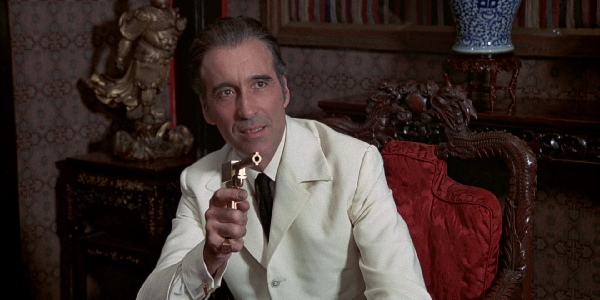
Christopher Lee has done a lot of badass things throughout his life. He's played Dracula multiple times, appeared in both the Lord Of The Rings and Star Wars franchises - thus securing a place amongst nerd royalty - and recently recorded a heavy metal album, at age 92. Pretty badass. All of that pales in comparison, however, when you consider the actor's war record - something which inevitably gets entangled with that of Ian Fleming, his step-cousin. Yes, years before their paths crossed with Lee taking the role of the eponymous Bond villain in The Man With The Golden Gun, Lee was a member of the Special Operations Executive, aka the Ministry Of Ungentlemanly Warfare. As was Fleming, and they were based out of Baker Street. You know, where Sherlock Holmes lived. Under direct command of Churchill himself, the Ungentlemen dealt with espionage and sabotage behind enemy lines, which meant they were effectively spies. In his own autobiography Lee mainly speaks of his on-the-record military service, including a spell fighting for the Finnish forces in the Winter War against the Soviet Union, before enlisting with the RAF. Due to trouble with his eyesight he was discharged, spent the remainder of the war working in intelligence. It's said that Lee's North African spy group "caused us more damage than any other British unit of equal strength", which isn't bad. Not quite Saruman levels of destruction, but not bad.

7. Harry Houdini

Stage magician Houdini prized himself on being able to escape from even the most dire of circumstances and seemingly impossible traps, his routine often featuring things like the Chinese Water Torture Cell (pretty much what it sounds like) and wrestling his way out of a straight jacket bound with padlocks, all whilst suspended upside down. It's this level of ingenuity and, frankly, lack of regard for his own safety that reportedly grabbed the attention of both Scotland Yard and the American Secret Service during the early 20th Century. Again, Houdini's schedule perfectly fit into the spy game - he was always travelling all around Europe, so nobody would be suspicious of his appearance. According to William Kalush and Larry Sloman's book The Secret Life of Houdini: The Making of America's First Superhero, he managed to fit in a fair amount of espionage in between public appearances. An abrupt cancellation of a load of shows in 1900, followed by a trip to Europe, suggests that he may have been spying in Germany on behalf of Scotland Yard, feeding information back to superintendent William Melville. His first trip out to the west coast in 1899 may also have been funded by the United States Secret Service, who needed someone to keep tabs on the burgeoning problem of counterfeit of silver dollars. We've certainly heard weirder stuff about old Harry...

6. Marlene Dietrich

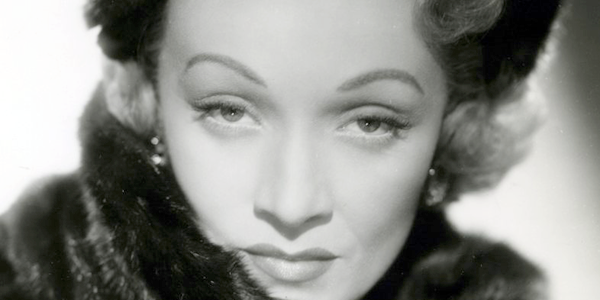
Quentin Tarantino's Inglourious Basterds isn't a film well known for its historical accuracy - after all, it SPOILERS ends with a couple of Jewish Nazi hunters gunning down Adolf Hitler in a French movie theatre - but one part of the film that particularly stretches credibility is Diane Kruger's character. Surely the glamorous German film star, Bridget von Hammersmark, who operates as a Nazi propaganda actor but is actually a double agent feeding information back to the British, is simply a creation of QT's dangerous obsession with movies? And feet? Well, we can't speak to the latter, but the former isn't nearly as ridiculous as you'd think. Step forward Marlene Dietrich, jewel of the silent cinema era and secret agent. Whilst she's better known for her early film appearances, post-war move to Hollywood and decades spent as a stage performer around the world, Dietrich did have a period where she helped bring down Hitler. In fact she was involved in a plot not unlike that of the Inglourious Basterds, at one point planning to seduce and then murder the fuhrer with the help of her lover, Douglas Fairbanks, Jr. That's more rumour, but what's fact is her time spent as a volunteer for the OSS, in between entertaining troops on the front lines and broadcasting nostalgic songs as propaganda to battle-weary German troops.

5. Walt Disney

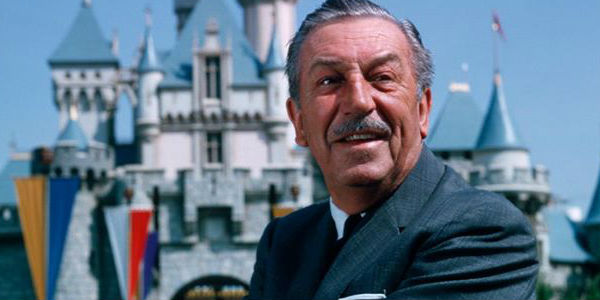
This shouldn't be a big surprise to you, dear reader, because it's one of the better-known juxtapositions between art and artist in popular culture: Walt Disney, creator of some of the most enduring and beautiful animations of our time and inventor of theme parks he aimed to be the "happiest place on Earth" for their pint-sized attendees, was not a nice man. Not a nice man at all. Not only was there all the rumoured anti-semitism and avowed racism on his part (have you seen Songs Of The South recently? Nope, because Disney have done their best to repress it, because it's SO OFFENSIVE), but also the period during the forties where he willingly and happily chose to spy on and rat out his fellow Hollywood luminaries. This was during the era of Joseph McCarthy, a crackpot senator who not only saw communism as the single biggest threat against America, but also saw possible reds behind every corner, and under every bed. As part of his campaign against Un-American Activities he enlisted the help of the FBI, who in turn looked to Hollywood for potential informants to bring attention to commies from the inside. Disney was one of those informants, ferreting out communists and sympathizers throughout LA. As a staunch right-winger who'd had his own trouble with labour unions, he was happy to help. In fact, blacklisting many innocent moviemakers and ruining their lives was something he saw as his patriotic duty. Then he went back to making Snow White, we guess.

4. Cary Grant

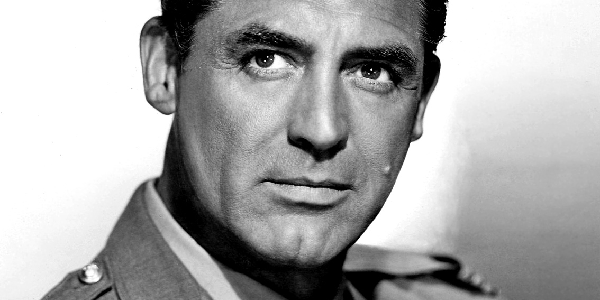
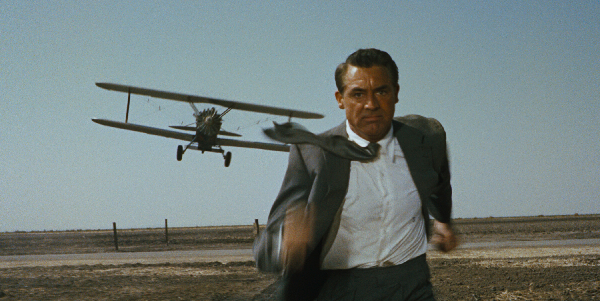
Turns out that Ian Fleming wasn't the only one to parlay a real-life espionage career into an even more gainful employment in the entertainment sector. Cary Grant, who memorably turned up in Hitchcock spy thrillers like North By Northwest and Notorious, was apparently the one to uncover the Nazi sympathies of fellow thespian Errol Flynn. And how did he do this? Because Grant was working for British intelligence, counter-spying on him. Yes, in between making films about being a spy, Cary Grant was actually...well, being a spy. In the summer of 1939, a Hollywood partnership was put together as a front for MI6, made up of a load of film producers and Cary Grant. Grant was to flush out Nazi sympathizers in Hollywood and its surroundings. Oh and Noel Coward was his main contact back in Britain, if this story wasn't star-studded enough for you as it is. Flynn had reportedly been in with Hitler since 1933, writing letters of support to the Nazi party, and it was up to Grant to rat him and his fascist mates out. After handing Flynn's name to authorities he went on to intercept the mail of suspected German spies, learned to crack safes and successfully hide top secret data from covert missions, and donated the salaries from several of his films to the war effort. During the Second World War Grant helped bring down Hitler both on and off the screen, to the point that when it was all over he received a special set of star and stripes from the US military, "for his work as a special agent, provider of funds for the war effort, and champion entertainer of the troops." Nice to be appreciated, innit.

3. Chuck Barris

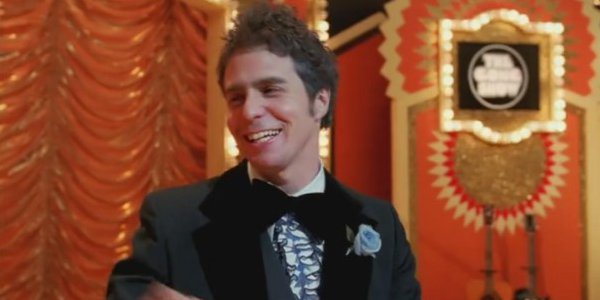
If you haven't seen Confessions Of A Dangerous Mind, George Clooney's directorial debut, or else read the memoir it was based on, then...go do so. They're both super good. The former has a creepy early performance by Michael Cera as a kid getting another small girl to suck him off, and Sam Rockwell plays him as a charming-yet-morally-compromised adult. The book, meanwhile, is even more staggering to behold. Not least of all because its story of a game show producer and host recruited as an assassin for the CIA is purportedly all real. Or at least that's the line Chuck Barris has been towing with regards to his so-called "unauthorised autobiography". The confirmed biography of Barris is impressive, if a little prosaic in comparison. Getting his start in television as a staffer at NBC, he had his first big break as the co-writer of hit pop song Palisades Park in 1962. From there he had a stint writing the theme tunes to ABC game shows, which eventually lead to developing his own shows, including such iconic programmes as The Dating Game (adapted to Cilla Black's Blind Date over here) and the infamous Gong Show. The "unauthorised" version is that, whilst all this was happening, Barris was carrying out hits for the American government. The CIA denies Barris ever worked for them in any capacity, but in both the book and the film it's asserted that he worked as an assassin for the spy organisation throughout the sixties and seventies, mainly knocking off Russian agents, with 33 confirmed kills in all. After the release of the movie, a spokesman said Barris' claims the CIA are "ridiculous. It's absolutely not true", but we want to believe.

2. The Dalai Lama

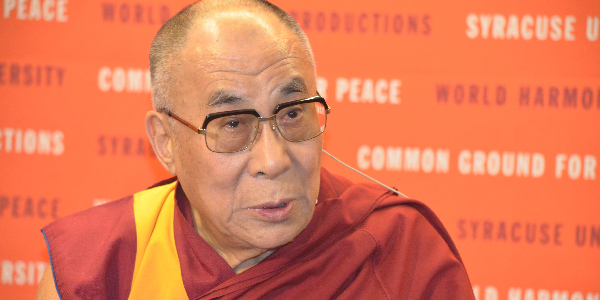
Okay, so how about something that the CIA can't deny? Like, say, the fact that they had the Dalai Lama on their payroll from the late fifties until 1974, reportedly receiving $15,000 a month? Yep, the honest-to-goodness grand puba of the Tibetan Buddhists was, technically, kind of a spy for a while. The 14th Dalai Lama, Tenzin Gyatso, shortened from Jetsun Jamphel Ngawang Lobsang Yeshe Tenzin Gyatso, born Lhamo Dondrub (that's, like, more names than Prince has), won the Nobel Peace Prize in 1989, and is also well known for his lifelong advocacy for Tibetans inside and outside Tibet. He's a peaceful type on the outside. But you can tell that living in exile from his home country makes him kinda mad. After the 1959 Tibetan uprising, the Dalai Lama fled to India, where he denounced the Chinese occupation of his country and established a Tibetan government in exile. Which is round about the time that the CIA got interested in his campaign against the nascent People's Republic, another one of those pesky communist regimes that could threaten the very fabric of good, God-fearing American society for some reason. The Lama was apparently aware that "the U.S. Government had involved itself in his country's affairs not to help Tibet but only as a Cold War tactic to challenge the Chinese", but he took their money and helped out anyway. What exactly this "help" entailed is not known. The man himself says the CIA involvement "helped the morale of those resisting the Chinese", but from the looks of it he was involved in guerilla warfare against the Chinese occupation of Tibet, as well as the dissemination of anti-Chinese propaganda in the country. So the pacifist head of Tibetan Buddhism, erm, presided over insurgents and the spread of spy materials. That's cooler than the head of most religions, even if it is a little hypocritical.

1. Roald Dahl

There's a lot of things that might surprise you about Roald Dahl, children's author and creator of such enduring, magical works as Matilda, The BFG, and Charlie And The Chocolate Factory. Did you know, for instance, that he wrote books for adults as well - and often pretty smutty ones at that? Or that he produced the screenplay for the Bond film You Only Live Twice, starring Sean Connery? Or that he pretty much despised children, Jews, and minorities? All true! Perhaps the most surprising hidden truth about Dahl's life, however, was the period he spent serving as a spy for the British government during World War II. As part of the same initiative that saw the recruitment of Ian Fleming, Christopher Lee, Noel Coward, and many others on this list, as a matter of fact. Stalling as a writer and frustrated with his lack of progress, Dahl was eager to enlist during the Second World War. Unfortunately, after a brief period as an ace RAF pilot he was injured in action and sent home. Undeterred, he was posted to an RAF training camp in Uxbridge, with instructions to become an instructor upon his recovery. Instead he got drafted into being assistant air attaché at the British Embassy in Washington, a position which later evolved into being a spy keeping an eye on the Americans. Having been promoted to flight lieutenant Dahl began working with Canadian spymaster William Stephenson, having been introduced by mutual friend and famous writer CS Forester. He supplied information to Stephenson and his organisation known as British Security Coordination, a section of MI6, serving to help promote Britain's interests and message in the United States. He also did his best to, ahem, convince various Washington politicians of the importance of getting involved in the fight. By which we mean he slept with a bunch of their wives in order to (figuratively) seduce their husbands. Sure, Fleming had some experience, but if you want your real life James Bond? Look no further than the future writer of James And The Giant Peach. Apparently.

In this post: 
Cary Grant
 
First Posted On: 
Contributor
Contributor

Tom Baker is the Comics Editor at WhatCulture! He's heard all the Doctor Who jokes, but not many about Randall and Hopkirk. He also blogs at http://communibearsilostate.wordpress.com/