Slayer: All 10 Albums Ranked From Worst To Best
The never-ending search for a truth never told.
10. Divine Intervention
It's important to state from the outset that there is no poor Slayer album (except for Undisputed Attitude, which isn't original material anyway). Divine Intervention is at the bottom of this list partially due to the wealth of strong material elsewhere, but also because its the Slayer album that you are least likely to select if you're showing off the band to someone. Divine Intervention is, really, Slayer by numbers. After their incredible run of five masterpieces on the bounce (how many bands can claim to have achieved that?), this mid-1990s album begins to show a band that is treading water a bit. Of course it would have been easy for them to try to cash in on the alt-metal and industrial sounds that were starting to dominate metal at the time, and the band deserves credit for sticking to their guns, but in an era when even death and black metal no longer sounded new or threatening, Slayer's 1980s style just didn't seem scary anymore. It is also telling that Slayer's weakest album is their first without Dave Lombardo. His pounding drums, which fused the blastbeats of extreme metal with the complexity of avant-jazz, had pulled Slayer's crazy guitar work into pulverising and fascinating spaces during their classic period. Although there have been many monstrous drummers in extreme metal, all acknowledge the trailblazing approach and incomparable skill of Lombardo. Paul Bostaph does a great job, offering very powerful performances, but his style is more measured than the off-the-rails chaos of Lombardo. Again, this highlights that the major problem with the album is that it is too straightforward. There are good tracks here (Serenity In Murder; Killing Fields), but it's ultimately Slayer doing Slayer, only without the unpredictability that had made their sound so enticing previously.9. Diabolus In Musica

8. God Hates Us All
Slayer are no strangers to controversy. Their albums feature songs that empathise with the perspectives of Auschwitz's Doctor Mengele and a Jihadi terrorist, for instance. But their biggest moment in the media spotlight came with the unforeseen fact that their album - already confrontationally titled God Hates Us All - was released on the same day as the September 11 attacks. Regardless of the impact of this interesting piece of trivia, the album itself is a pretty solid effort by Slayer's standards. It is undoubtedly a step-up from the two releases that preceded it. It marks a return to the raw aggression that marks their best and earliest albums (which consequently top this list), dropping the experimentation and occasional grabs at accessibility that marred much of the band's 90s output, and features one of their best ever tracks in the Grammy-nominated Disciple. It is far more powerful than Divine Intervention, and it doesn't mis-step as often as Diabolus In Musica. However, despite its positives, King was the chief songwriter on GHUA and it shows. The tracks frequently feel like rehashes of older ideas in the band's discography, an indication that Hanneman (who wrote many of the classics) was the songwriter with the more progressive ideas. The continuing absence of Lombardo is also telling, and by this stage he was publicly showing up Bostaph with his chaotically experimental gig as the drummer for Mike Patton's avant-metal freakout supergroup Fantômas. As noted, though, GHUA signalled a return to more extreme pastures for a band in danger of losing its way during a fairly average 90s period. Their other two new millennial releases would build on this platform excellently.7. World Painted Blood

6. Christ Illusion
5. Show No Mercy
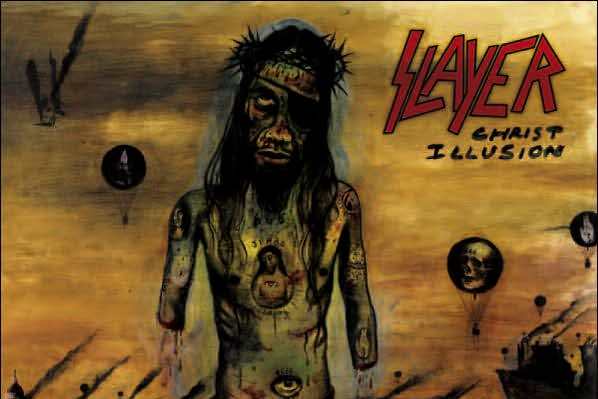
This is where it all began. Slayer's first album, the beginning of their classic period, is undoubtedly the weakest that they put out in the 1980s - but it remains an awesome listen, especially with the benefit of hindsight. When it first arrived, Show No Mercy felt more like an EP than an album. It's only 35 minutes long. However, given the length of several of Slayer's other releases, it is now generally considered to be a full-length release. Regardless, SNM is as close as any Slayer album has ever come to being a "classic" heavy metal band. Just check out the artwork, which looks like something from a particularly controversial Judas Priest record sleeve. Check out the call-and-response vocals of opener Evil Has No Boundaries, or the early-80s sound (evocative of Ride The Lightning-era Metallica) of standout moments like The Antichrist and Black Magic. Perhaps the closest comparisons here are Venom's highly innovative 1982 release Black Metal and the music of Mercyful Fate, both of whom are clear inspirations on the sound forged here by a young Araya, King, Hanneman and Lombardo. However, Slayer are faster than either of those bands already here, drawing on a speed metal influence that would clearly inform their more extreme later releases. SNM is not perfect, and it isn't as good as the next four albums, but it is a fascinating snapshot of a moment in time - an exciting image of a band yet to fully find its sound.4. South Of Heaven

3. Seasons In The Abyss
South Of Heaven is a crawling masterpiece of darkness. Reign In Blood is a hate-fuelled thrashing monster. But Seasons In The Abyss is an immaculate fusion of the two sounds, formed of complex soundscapes that show the band's ability to stretch its legs a bit (it's a whole 42 minutes long!). Undoubtedly Slayer's most accessible album (even more so than their recent output), it signalled a moment of relative infamy for the band. Its singles, the could-easily-have-been-on-Reign In Blood thrash of War Ensemble and the could-easily-have-been-on-South Of Heaven sludge of the title track, earned substantial airplay on MTV. Every track is a cracker here. Dead Skin Mask is a personal favourite, with its Ed Gein-inspired lyrics, half-spoken vocal interludes, rolling double-bass drumming and creepy-as-hell multi-layered riff making it one of the band's best live tracks. Expendable Youth is almost groovy, while Skeletons Of Society features some of the weirdest sounds in the band's oeuvre, including truly bizarre guitar solos that seem to be both rapid and meandering at the same time, as well as Araya's heavily-processed spoken word sections. There's a clear move away from the Satanic imagery of their first four albums here towards more politicised lyrics (themes that continue to dominate their work), and the album is rendered even better because of it. The fact that the songs feel like they actually mean something, rather than being mere tirades against religion like on SOH, is a positive. The only reason why this album doesn't finish in the top two is because of the historical significance of those with a higher placement. But make no mistake about it - Seasons In The Abyss is a masterpiece, and compositionally it undoubtedly houses Slayer's most interesting and ageless material.2. Hell Awaits
