8 Albums You Didn't Know Are Based On Movies
Who says musicians can't love films?

You hear about interesting sources of inspiration all the time: movies inspired by novels, novels inspired by stage plays, video games inspired by films but what you very rarely (if ever) hear about is music inspired by movies. Despite the fact that music is arguably more cinematic than it's ever been, there seems to be a reluctance to attaching music to a film unless it's a paid promotion.
But just because the instance is rare doesn't mean it's unheard of. In fact, there's a bunch of music out there by some of the most famous musicians in the world that is directly inspired by cinema. The truth is that just because artists don't make it one-hundred percent clear doesn't mean it's not happening. It makes sense, after all inspiration comes from literally everywhere.
So who is responsible? From Jay Z's love of Ridley Scott to Lenny Kravitz's inspiration-fuelled days spent on the set of the Hunger Games series, here are eight albums you didn't know are based on movies.
8. Jay Z American Gangster
Despite Jay Z's tenth studio album (released in 2007) sharing the exact same name as the Ridley Scott directed film American Gangster, Jay Z's record is not an official soundtrack album, nor was it ever marketed as such. It's for this reason that most people have no idea that the two are much more connected than they appear at first glance.
In fact, Jay Z loved American Gangster so much that he would apparently have the Ridley Scott film playing on the monitors above the recording booth in the studio in order to keep himself inspired. In an effort to create a more cinematic feel for the record, the musician also ordered its removal from the iTunes store, saying as movies are not sold scene by scene, this collection will not be sold as individual singles. The general theme of the album and the lyrical content shares much DNA with the film, dealing with violent crime and the gangster lifestyle.
In the end, though, it ultimately didn't matter much that most didn't recognise the connection, as the album was critically acclaimed and sold almost half a million copies in the first week of its release. Interestingly, despite Jay Z's insistence on fans listening to the album in its complete form, he still dropped three promotional singles...
7. Rihanna Home

Home is a 2015 animated sci-fi comedy made by DreamWorks animation studios, vaguely based on the book The True Meaning Of Smekday by Adam Rex. Amidst the film's notable cast (including Jim Parsons, Steve Martin and Jennifer Lopez) is Barbadian singer and songwriter Rihanna.
Originally, Rihanna was to release a concept album based on the film a whole year before the movie released, presumably in an attempt to boost advertising for the project while also enjoying regular Rihanna-level record sales. It's not a bad move: the film gets a lift while Rihanna gets to sell music that otherwise might be seen as too kiddy or juvenile.
Unfortunately for Rihanna, however, the album was pushed way back to coincide with the release of the film. DreamWorks was obviously much more interested in the album as advertising tie-in rather than a standalone Rihanna project.
Nevertheless singles Towards The Sun and Feel The Light were released and did moderately well, with many completely missing the fact they're based on the plot of the animated film.
6. OutKast Idlewild
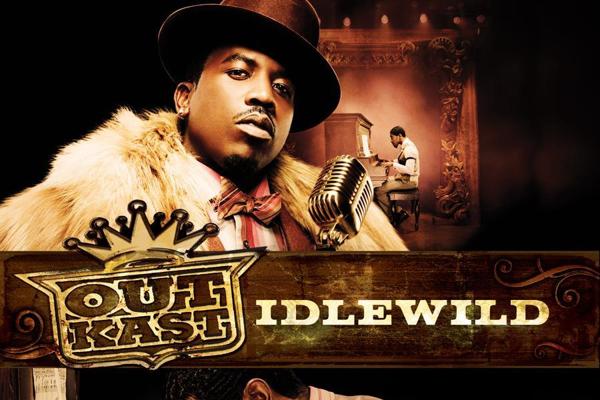
If you know of the existence of Id'ewild, the 2006 musical written and directed by Bryan Barber and staring Andre 3000 and Big Boi of Outkast, you'd be forgiven for wondering how anyone could miss the fact that this album is clearly based on the film. Yet it turns out the vast majority of people simply think that Idlewild is an OutKast album and nothing more.
This might be down to the fact that basically nobody actually saw the film. Despite a budget of ten million dollars, the film only grossed around twelve million, which is seen as a total commercial failure. Idlewild the album, on the other hand, did very well, debuting at number two on the US Billboard chart and having since been certified platinum.
Singles Mighty O, Morris Brown and Hollywood Divorce did well, alerting people to new music but not so much to the film. On top of that, the album was warmly received by critics, whereas the film was very poorly reviewed. This only drew more attention to the music rather than the movie, and so the true nature of the project went over most people's heads.
5. Fabolous Loso's Way
Hip hop musician Fabolous is responsible for a bunch of hit singles including Can't Deny It, Young'n (Holla Back) and Breathe. Fabolous has been on the scene for over a decade and a half, selling hundreds of thousands of records each release and with a net worth of approximately twenty-three million dollars.
One of Fabolous's most notable album releases came in 2009 when he dropped Loso's Way, which debuted at number one on the Billboard 200. Alongside the album came singles Money Goes, Honey Stay which features Jay Z and Everything, Everyday, Everywhere. Loso's Way is based on the 1993 film Carlito's Way, an American crime drama that stares Al Pacino and Sean Penn.
Not only were the album's themes and lyrics based on the movie, the musician actually went so far as to include a Lobo's Way movie with deluxe versions of the album. This movie opens similarly to Carlito's Way, with Fabolous being shot and rushed to the hospital. Despite Carlito's Way being something of a classic, Fabolous's record dropped almost two decades after the film's release, leading many younger fans to miss the parallels entirely.
4. Wu-Tang Clan Enter The Wu-Tang (36 Chambers)
When it comes to hip hop records, few are deemed more influential and essential than Enter The Wu-Tang (36 Chambers), released in 1993. The album's clear, distinct sound helped pave the way for hip hop in the nineties and thrust the genre into the national spotlight. Everything from the song-writing to the production of the record was extremely influential to artists like Nas, Jay Z and The Notorious B.I.G (among countless others).
While the record's acclaim can't be understated (nor can its commercial success the album has sold millions of copies in the United States alone) it's surprising how many people don't know too much about its creation, specifically what inspired it.
The bracketed (36 Chambers) of the title is actually a reference to The 36th Chamber Of Shaolin, a 1978 kung fu film that the group were known to love. According to the clan, they had knowledge of 36 chambers of hip hop music when everyone else in hip hop was striving to attain the knowledge of 35 lessons. Basically, they were one stop ahead of everyone else. Not only that, but the group wanted the record's message to be a blend of the kind of philosophy found in the movie as well as Eastern kung fu films in general.
3. Cage Movies For The Blind
American hip hop artist Cage (whose real name is Christian Palko) has released four albums since the beginning of his career in 1991, and has a new record soon to be released in 2016. It was Cage's debut record Movies For The Blind, however, that really cast him into the spotlight.
Despite the fact that the title Movies For The Blind strongly suggests a connection to cinema, the record's main connection is much more obtuse, and unknown by many of the musician's fans. In fact, the connection runs so deeply that it actually extends to Cage's original stage name.
Whereas Movies For The Blind's album cover is a clear reference to the poster for the satirical sci-fi horror film They Live (directed by John Carpenter), the record is actually much closer in reference to Stanley Kubrick's A Clockwork Orange. The record follows the novel's extremely violent tone, but the violence isn't gratuitous for the sake of it. It's used to comment on and criticize modern society. Not only that, but Cage's original rapper pseudonym was Alex, named after the protagonist of A Clockwork Orange. it's clear, then, that from the start of his career to the release of Moves For The Blind, cage was strongly inspired by the movie, and wanted to channel that through his music.
2. Lenny Kravitz Strut

Lenny Kravitz is an American singer-songwriter and multi-instrumentalist who has delved in a massive range of genres of the years, from rock to blues to soul, jazz, reggae and beyond.
If you aren't familiar with his music, however, fear not. He's recently been seen in the Hunger Games series of films, based on the novels by Suzanne Collins and that's exactly where Kravitz began deriving inspiration for the record. Appearing with a fairly prominent role in the first two films (Kravitz plays protagonist Katniss Everdeen's stylist), the musician has stated how his filming schedule was so rigorous that he couldn't sleep at night, causing him to lie awake thinking about new music.
Specifically, Kravitz states Taking those years off and dropping into films has fuelled the fire in me to make music.What this ultimately amounted to was the release of Strut, a record that received a great critical reception.
1. Kimbra The Golden Echo
Kimbra is a New Zealand musician based in Los Angeles, a woman whose music blends elements of electro-pop, R&B, jazz and soul. Over the years Kimbra has had a bunch of successful singles including Settle Down, Cameo Lover and Good Intent. Notably, she also won a Grammy Award with musician Gotye for their collaboration on Somebody That I Used To Know.
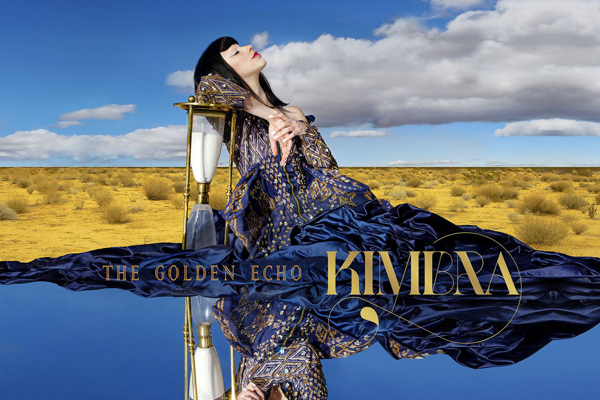
Kimbra's second studio album The Golden Echo released in 2014 to a warm critical reception across the board. Leading up to the record's release Kimbra commented on the album being inspired by animation and Disney films, but one movie in particular tied the whole thing together. The move in question was legendary Japanese director Akira Kurosawa's final film Dreams. According to Kimbra, when she saw the film she had the sudden urge to create music that existed in a different universe.
This is likely the reason for such a broad amalgamation of influences and inspirations, as dreams are not typically bound by any restrictions. In the end, though, the album's ultimate aesthetic is definitely dream-like, right down to the record's languid, otherworldly cover.