5 Key Ways The Music Industry Will Change In 2014
The music industry is an entity that is tied to developments in technology, which means constant change in line with innovation.
5. More Streaming & Less Sales
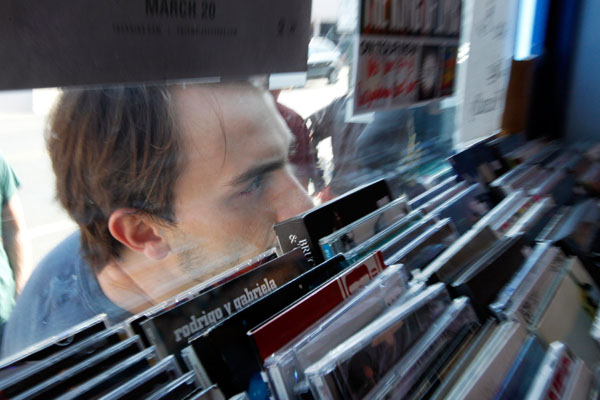
 For the first time sine iTunes launched in 2003, global digital music sales fell in 2013, according to Nielsen SoundScan. The same data revealed that individual track sales were down 6%, with Robin Thicke's "Blurred Lines" leading the charge at 6.5 million copies sold. CD and album sales also dropped 8% with Justin Timberlake's 20/20 Experience on top spot. The results point to a bleak future for the traditional way to consume music, either by purchasing it on hard copy CD or a locked in digital source. However the emerging trend and one that will be continue to grow in 2014 is the online streaming of music. Many people will know of services such as Spotify & Pandora. So much are their influence, that Businessweek described Spotify as "music's last great hope". But what exactly does Spotify do? Well the company's vision from the start was to create a vast online database of songs, that music lovers could access legally. Basically an improvement on the Napster model, that gave labels so much headache in the early 2000s. Spotify can be accessed via your Facebook account, or you can sign up for free. The system is used by all the major record labels, in return for revenue of course. Playlists can be streamed from a computer, smartphone or tablet. Ad revenue is the crux of earnings for the free service, but a $10 monthly subscription can eliminate this. Streaming of music was found to be 24% higher in 2013, from the same Nielsen study. It gives consumers a level of choice and flexibility that has never been available before and users are choosing streaming options in their thousands. 2014 will see this upward trend of streaming continue, especially with the launch of Beats Music, off the back of the same people who brought the world the wildly popular Beats Headphones. There will be no free Beats Music service, instead a flat $10 rate for monthly subscription will be available. Furthermore, this service is tailored to mobile devices which I feel will become a dominant form of music consumption in the next twelve months. Streaming music from your phone is the height of convenience, especially when you could plug that phone into a larger sound system if needed. Spotify has been criticised in the past for extremely low royalty payouts. A BBC News report in December of last year reported that artists receive $0.007 per play. That same report stated than $1bn in royalties has been paid out since 2008, with $500m of that paid in 2013. It is certainly compelling evidence that points to streaming earnings increasing once again this year with artists eventually being able to make legitimate money from the services.
4. More Tours & Festivals

3. More Merchandising & Endorsements

2. Integrated Extras With Album Purchases
 Labels will always be in the business of shifting records, even with an increase in content streaming. But if this is to continue, record companies must amp up the traditional album with added extras for fans and casual listeners alike. In 2014, there will likely be an increase in the inclusion of added extras linked to with album releases. There will be a shift that will see artists cultivate an 'experience' around their music releases, instead of just chucking 12 tracks on an album and hoping for the best. We have seen this already with some of the biggest artists in the world and their 2013 releases. Lady Gaga created hype around her latest album "Artpop" by promising fans and accompanying app. The system promised to combine "music, art, fashion and technology with a new interactive community". It is a brilliant concept, because many fans download albums straight to their smart phones and tablets allowing for new levels of integrated listening. Beyonce stunned the world at the end of 2013 when she dropped an album with no promotion whatsoever, but took the concept of an 'experience' to the next level. The singer included high quality music videos to accompany EVERY song on the album and more, something totally unprecedented in the industry today. She labelled it a visual album and in another unique move, it was initially only released on iTunes. Of course it has seen a physical release, which gives the added benefit of being able to watch the videos on DVD. But this never before seen type of album is an indication of what is to come, where clever and unparalleled extras will become the norm. Of course, many albums are now released in two versions from the get go. It is possible to get your hands on a standard version or a deluxe version of the CD with the latter including between 3 to 5 extra tracks. On occasion standard and deluxe versions have different cover art, which is a great way to tap into the super fan market - those who must have everything in their collection. Top end true fan sets with the likes of posters, gifts and premium casings are also becoming more common, but at a hugely inflated price. 2014 will see labels get more savvy with their releases, creating even more choice for the already spoiled music lover.
1. Creative Marketing
 Promoting music goes hand in hand with music videos, which have been around since the early to mid 1980s. Back then music videos were played on the likes of MTV and VH-1 and viewers would have to hope that their favourite clips were shown, before we had on-demand service like today. Music videos were supplementary to radio play and record purchases in the early days, though the industry has been on a path of interactivity and video for years now. 2014 will see the fiercest competition between artists, competing for video views online. In todays connected environment, YouTube and Vevo have been integral parts of boosting awareness of upcoming singles. Integrating Top 40 tunes with social media platforms & online 'tubes' is undoubtedly the way of the future. Currently, "Wrecking Ball" is the most watched video in 24 hours according to Vevo. Before this, Rihanna, One Direction and Justin Bieber all had held onto such a crown. Twitter is always buzzing when a new music video is about to be dropped. There are hash tags trending left right and centre and tweets from the artists themselves hits an all time high. Crucially, Vevo and YouTube music videos have links to digital music markets like iTunes so viewers can get their hands on the music straight away. In addition to getting these views up, some artists have adopted creative marketing techniques to increase in engagement. Videos are shared around the internet on social media, this is nothing new - but when big moments occur on the likes of Twitter, they make their way over to traditional forms of media - being reported on TV and radio. Having that kind of mass airtime is priceless for a struggling industry. This is exactly what Bieber's management were hoping for, when they pulled off a brilliant piece of music marketing with his single "Beauty & a Beat". Justin tweeted out from his account, that his laptop had been stolen with some private videos on its hard drive. His fans were outraged and saddened by what they believed was the truth, when in fact it was an elaborate prank. The marketing ploy then linked fans to the missing footage, which was actually a uniquely filmed music video in 'selfie' perspective. The trickery immediately caught the attention of international media, that fuelled a global publicity fire storm that no record company could buy. Getting creative and thinking as far outside of the traditional proverbial box will be the crux of 2014. Pop went a little bit crazy in 2013, so expect it to be lifted up a notch again as we move into the bigger releases of the year. More exciting music videos, unpredicted release dates and big impact moments should be expected in this new year.