It's often hard to talk about music without mentioning singers. From the flighty tones of Jeff Buckley to the earthy warble of Louis Armstrong, a great voice can help a record maintain legendary status long after its initial release. Even now, in an industry that increasingly thrives on memorable phrases and catchy, sing-a-long refrains, vocals can make all the difference between climbing to the top of the pile and fading into obscurity. But what about the instruments behind the voices? Sometimes great tracks eschew singing altogether, relying instead on a mixture of intricate arrangements and technical prowess to make their mark on the musical landscape. Far from meaningless melodies, these tracks can weave elaborate narratives and conjure up a complex array of emotions - all without using a single word. The power of a good instrumental is best summed up by legendary guitarist Carlos Santana: "I realised a long time ago that instrumental music speaks a lot more clearly than English, Spanish, Yiddish, Swahili, any other language. Pure melody goes outside time." And so it is for this list of songs - a collection that spans six decades and multiple genres, ranging from laid-back blues to heavy metal, post-rock and acoustic jams, and featuring some of the best examples of instrumental music in recent memory. In each case, they serve as a timely reminder that, rather than acting as a disadvantage, a lack of lyrics can allow songwriters to open up a world of opportunities. Some honourable mentions: Beastie Boys - Electric Worm The Smiths - Oscillate Wildly Pink Floyd - Interstellar Overdrive Eric Johnson - Cliffs of Dover Explosions in the Sky - Your Hand In Mine The Cinematic Orchestra - Arrival of the Birds Rush - YYZ
10. Rodrigo Y Gabriela - Tamacun
https://www.youtube.com/watch?v=Rrd6s1B2UEY Find it: Rodrigo y Gabriela (2006) It's safe to say that Rodrigo y Gabriela create a surprising amount of noise for such an unassuming package. Despite relying on classical guitars alone, the Mexican duo list heavy metal bands like Metallica and Megadeth among their influences - something that comes across in the breathless playing style of 'Tamacun'. The result is an exciting mixture between metal's pulsating rhythms and the traditional melodies of flamenco guitar, and this song is a worthy example of how well such an unlikely mish-mash can work. Having earned no small amount of exposure with an appearance in Breaking Bad's pilot episode back in 2008, the song has helped the duo earn a deserved reputation for their mind-boggling fingerwork and unshakable sense of fun. With an approach that's as frenetic as it is fearless, 'Tamacun' is the perfect example of how far you can go with only a couple of acoustic guitars for company.
9. Sigur Rós - Untitled 3
https://www.youtube.com/watch?v=UeuvegBZFuM Find it: ( ) (2002) If ever you needed proof that music can transcend the mightiest of language barriers, Sigur Rós is it. Up until their 2008 song 'All Alright', the band stuck firmly to singing in their native Icelandic ("Jónsi has the thickest Icelandic accent," according to their official website), as well as the odd bit of semi-gibberish they call "Hopelandic". 'Untitled 3' uses neither, relying instead on a gorgeous blend of piano and strings. The song came out over a decade before the widely-acclaimed release of their comparatively heavy seventh album Kveikur, at a time when the then-quartet were poster boys for subdued post-rock elegance. It is one of their most impressive tracks from this early period, typically unspoilt by cluttered instrumentation or overwrought production. Sigur Rós are masters when it comes to making the most of the spaces between notes, and this song is no exception. A cameo in the latest season of Game of Thrones is just one sign that language barriers haven't stopped the band from garnering a huge fanbase among English-speaking listeners. With songs like 'Untitled 3', Sigur Rós imbue a simple setup with the kind of emotional resonance that simply cannot be lost in translation.
8. The Black Keys - Black Mud
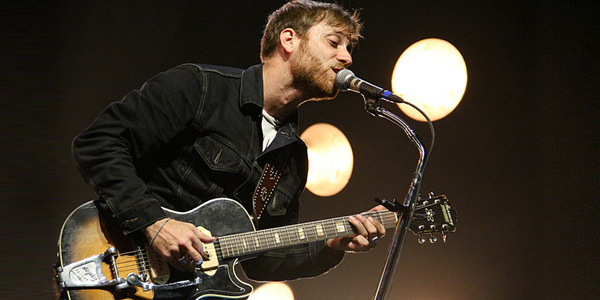
https://www.youtube.com/watch?v=muGRI66UljU Find it: Brothers (2010) The Black Keys have often been billed as misfits of sorts: the charismatic frontman and his bespectacled best friend, taking on the world with their thrilling brand of old-school rock and blues. However you label them, the Ohio duo's slow-burning ascent to stardom is a remarkable one. In little over a decade they have gone from recording independent records in basements to headlining some of the world's biggest arenas, all while echoing a list of influences that ranges from The Beatles and The Rolling Stones to Robert Johnson and Howlin' Wolf. 'Black Mud' sees them at the peak of their powers, mixing no-nonsense riffs with distorted electric guitar flourishes, all held together by Patrick Carney's typically composed drumming. It boasts a heady dose of throwback cool, tinged with an organ backing and guitar that offers up more than a hint of Creedence Clearwater Revival's 'Green River'. Like many of the entries in this list, 'Black Mud' is a song that benefits from being direct - two short minutes later, and it's hard not to feel like it's all over too quickly. Having successfully brought their energetic, unfussy songwriting to follow-up albums El Camino and Turn Blue, it epitomises The Black Keys' consistently fresh take on old genres.
7. Tom Waits - Closing Time
https://www.youtube.com/watch?v=ZGWJ5XiwbV0 Find it: Closing Time (1973) When Tom Waits released his first LP Closing Time in 1973, he set the tone for an extraordinary career that has so far spanned sixteen albums and five decades. During that time Waits' work has been characterised by versatility and experimentation, spanning film, stage, and poetry as outlets for his many talents. Closing Time the album is a startling insight into Waits' more conventional beginnings, showcasing a well-balanced collection of singer-songwriter fare and a voice that had yet to acquire all of the venom of his later years. Just as impressive is the lovely title track, which calls last orders on the album with a sombre, melancholy piece of jazz. As the title suggests, 'Closing Time' is the perfect companion to lonely hours spent ruminating on the events of the evening, with Waits' forlorn piano carrying mellow elegance alongside weary trumpet and a shuffling double bass. It's a song that wears its heart on its whisky-stained sleeve - the musical equivalent of staggering home in a creased suit and a loosened bowtie. Like the album on which it appears, 'Closing Time' isn't Waits' most revolutionary moment - but his humble, direct melodies arguably make it one of his most moving.
6. Santana - Soul Sacrifice
https://www.youtube.com/watch?v=3F3Cjr32QyI Find it: Santana (1969) In terms of live shows, it surely doesn't get much better than playing Woodstock in 1969. Not only did a 22-year-old Carlos Santana do just that, but he contributed one of the festival's highlights with his performance of this instrumental classic. Closing out the band's eponymous debut album, 'Soul Sacrifice' is a song that unfurls methodically, with an opening conga drum fill that's swiftly followed by a burst of organ and a blistering drum salvo. And, of course, it wouldn't be a Santana song if it didn't feature some outstanding guitar work. The man himself is on top form here, entering the fray with a series of clipped riffs before easing into a more prolonged sequence of guitar lines. Santana appears in the introduction to this list, and deservedly so; 'Soul Sacrifice' is a lesson in how to control an otherwise hectic instrumental jam by allowing each component enough breathing space to impress in its own right.
5. Frank Zappa - Peaches En Regalia
https://www.youtube.com/watch?v=RGQxI0G6mKk Find it: Hot Rats (1969) There are few musicians as enigmatic or difficult to categorise as Frank Zappa. After growing up with a classical background including the likes of Verèse and Stravinsky, as well as traditional rhythm and blues, he was never easily confined to one genre or style during his lengthy career. Fortunately for his fans, Zappa's mercurial tendencies yielded songs like 'Peaches en Regalia'; a joyous slice of jazz fusion that never fails to thrill with its ever-shifting medley of instruments. It's hard not to be sucked in by the sheer gleefulness of its melody, with an introductory drum fill soon trading blows with an effortless combination of piano and violin. Add to that splashes of flute, saxophone, clarinet, keyboard, and something called an "octave bass", and you're left with a track that's somehow both impressively complex and completely devoid of pretension. Weird, wonderful, inventive, and never willingly conventional; this song showcases everything that continues to make Frank Zappa such a sorely-missed figure in the music industry.
4. Booker T. & The M.G.s - Green Onions
https://www.youtube.com/watch?v=_bpS-cOBK6Q Find it: Green Onions (1962) No list about instrumentals would be complete without 'Green Onions', a song that's widely regarded as a hugely significant moment in music history. Booker T. & the M.G.s made a name for themselves with their own soul and blues recordings after having forged a career as a prolific house band for the likes of Otis Redding and Wilson Pickett, and 'Green Onions' undoubtedly stands out as the most successful of the lot. It revolves around an addictive piece of 12-bar blues set to an uncomplicated 2/4 time signature, pioneering the Hammond organ with one of the most recognisable hooks in music. Since then the song has paved the way for countless cover versions and continues to crop up in discussions about the greatest songs of all time - not bad for a song that was initially issued as a B-side. Like so many instrumentals it's a song whose meaning is entirely open to interpretation; rumoured origin stories for the title include being a marijuana reference, an homage to a pet cat, and simply sounding appropriately "funky". One thing's certain, though: 'Green Onions' left an indelible mark on the musical landscape of the '60s that continues to be felt to this day.
3. Led Zeppelin - Moby Dick
https://www.youtube.com/watch?v=4uD2uo85JDI Find it: Led Zeppelin II (1969) Led Zeppelin frontman Robert Plant may be renowned as one of the finest singers in the history of rock and roll, but one of his band's most memorable moments arguably came when he stepped away from the microphone. Appearing on the standout 1969 album Led Zeppelin II, 'Moby Dick' features some impressive drop-D guitar work that's blown out of the water by an absolute behemoth of a drumming performance from John Bonham - a suitably epic turn for a song named after the Herman Melville classic. In essence, the song is actually part of a much longer recording of Bonham's jam sessions, pieced together to form an extended drum solo and bookended by some crunching blues riffs from Jimmy Page and John Paul Jones. Whether you're listening to the album version or a longer live recording, Bonham hammers away at his drum set while retaining all the skill and dexterity that continues to see him ranked among the best drummers of all time. For a band that made a habit of playing with unconventional rhythms (see 'Black Dog'), this track epitomises the drummer's central role in keeping the Led Zeppelin rollercoaster on track. Setting so much time aside for a single instrument - Bonham's undulating display often lasted up to 20 minutes on early tours - is the kind of move that only a band like Led Zeppelin could get away with. And yet there's something wonderful about sitting back and enjoying this song for what it is: a breathtaking bit of showboating from a performer in his prime.
2. Metallica - Orion
https://www.youtube.com/watch?v=OzMJhOwBLqw Find it: Master of Puppets (1986) Crunching riffs? Check. Trippy midsection? Check. Multiple solos? You bet. There's something undeniably iconic about Metallica's 'Orion', with an acoustic cover by Rodrigo y Gabriela marking its lofty status among instrumentals. This track from the band's landmark third album Master of Puppets is a standout in every sense, careening in as the record's penultimate song and staying in the memory long after it's all over. And yet, admittedly, it may not immediately be clear why that is. At first there's nothing overtly overblown or complicated about the song itself, and its opening verses see James Hetfield and co. calmly go about their business in constructing a series of surging power chords. Impressive, yes, but for the most part it's vintage Metallica. Instead, the song's real significance lies in its title. 'Orion' was named after the well-known constellation as a nod to the spacey quality of its lengthy interlude - a sequence that's seemingly frozen in time, at once gentle, down-tempo, and astonishingly sweet. It's also a standout moment for Cliff Burton, the band's bassist and one of the song's co-writers. His bass playing here is an exercise in restraint between the barrage of guitars around him, and the song serves as a poignant reminder of his talent before his tragic death in a tour bus accident. His lasting legacy is considerable; 'Orion' ranks among Metallica's most progressive pieces of work while retaining all the weight and power of their trademark sound.
1. Fleetwood Mac - Albatross
https://www.youtube.com/watch?v=dAefTj7GXwQ Find it: The Pious Bird of Good Omen (1969) Years before Stevie Nicks and Lindsey Buckingham entered the scene, before they were beset by romantic turmoil and Rumours secured their status as one of the greatest bands of the '70s and '80s, Fleetwood Mac hit upon something rather special with this dream-like vestige of the late-'60s British blues scene. 'Albatross' is a product of the "old" Fleetwood Mac; there are no searing guitar lines or lengthy solos to be found here, and the song as a whole is a decidedly down-tempo affair in comparison to some of the later work they produced with a revamped lineup. Instead, it simmers with metronomic bass and woozy vibrato, churning under the steady beat of tom-tom and cymbal to give the impression of crashing waves. With little more than a few simple blues phrases, the band created an ambient sound that remains utterly intoxicating. Such was this song's influence at the time of its release that it influenced The Beatles' 'Sun King' shortly thereafter, while Pink Floyd's David Gilmour notably drew inspiration from its slide guitar and applied it to his own playing. And yet 'Albatross' was met with contrasting popularity either side of the pond, becoming the UK's number one single in February 1969 while failing to make much of a dent in the US charts. More consistent mainstream success would come later in the form of songs like 'Go Your Own Way' and 'Dreams', but this early hit stands among them not only as one of Fleetwood Mac's most arresting songs, but as a testament to the power of instrumental music as a whole.
History graduate, writer, and long-suffering Spurs fan interested in all things music and sports-related. Once briefly held the title of world's youngest person.
You can follow me on Twitter here: https://twitter.com/sgfcarter