10 7" Singles That Defined Punk

So with punk making a come back and protesting against pretension, let's acknowledge the bands that the new breed have taken their cues from...
In recent years, it seems that alternative (to use a trite term) music has become obsessed with replicating the sounds of the sixties. We can credit bands such as Tame Impala, Jagwar Ma and highly-touted new Northampton band, Temples, with carrying through the tradition of psychedelia in all of its hallmarks; distorted guitars, reverberation and woozy, double-tracked vocals. But, just as the ecstasy of the €˜60s bred the nihilist aesthetic of punk in the mid-to-late €˜70s, it appears that history is repeating itself in the rise of 'neo-punks' Parquet Courts, The Orwells and Drenge. Also eliminating the self-importance that bands such as Arcade Fire have brought to music, these bands are the harbingers of a punk revolution, the electric catalysts for many subsequent neo-nihilists and three-chord thrills. Indeed, €˜70s punk was recognised as the movement that €˜ripped it up and started again€™, albeit a little fallaciously, with a simplicity, urgency and minimalism that was a direct response to sixties€™ bands over-indulgence in drugs, sex and most importantly, the sound of their own music. The experimentalism of the psychedelic rock that was instigated by The Beatles and taken up by the Byrds, Love and the Jimi Hendrix Experience doubtlessly led to the advent of the most anal and self-indulgent of all musical movements, progressive rock. Although a few bands such as The Stooges and The Modern Lovers flew the flag for energetic garage rock in the early €˜70s (even Bowie erred on the progressive side), the scene was dominated by keyboard-plonking, double guitar-shredding, mythology-espousing bore fests such as Yes and Genesis. So with punk making a come back and protesting against pretension, it seems like a better time than any to create a list of 7€ singles that defined punk€™s original and first wave back in 1976, and acknowledge the bands that the new breed have taken their cues from...

-->

10. Gary Gilmore€™s Eyes - The Adverts (1977)

http://www.youtube.com/watch?v=XxxcJzma-Is

Punk rock was about breaking down the barriers and allowing absolutely anyone to form a band. But certain members of certain bands genuinelly knew how to play, such as The Clash€™s Mick Jones and Television€™s telekinetic guitar duo, Tom Verlaine and Richard Lloyd. Yet, The Adverts, the brainchild of TV Smith, whichever way you choose to look at it, were actually severely insufficient musicians. A fact they even testified to in their debut single, €˜One Chord Wonders€™. €˜Gary Gilmore€™s Eyes€™, a schlocky, B-movie tale that has much in common with the cheap theatricality of the Damned is a song that took a highly contentious contemporary issue (the donation of a serial killer€™s eyes for medical research) and envisions an unassuming transplant patient waking up and looking through these murderous eyes.

An abject horror story that is complimented by the group€™s jittery, energetic instrumentation, €˜Gary Gilmore€™s Eyes€™ is one of the most surreal singles ever released. But that was the beauty of punk. No subject was too gruesome and no topic was too offensive to be addressed. A creative and imaginative 7€ that will leave you scratching your head at its weirdness in between head-banging along to its infectious, novel charm.


9. Another Girl, Another Planet - The Only Ones (1978)

http://www.youtube.com/watch?v=lKuc3faQAEs Last seen hanging around with Pete Doherty when The Libertines were at their height between 2003 and 2004, Peter Perrett is responsible for one of punk€™s poppiest and most endearing singles. The sound of Perrett€™s band, The Only Ones, was heavily indebted to the spacey vibe of Ziggy-era Bowie and consequently soaring single €˜Another Girl, Another Planet€™ is an astonishing glam-punk hybrid that sounds otherworldly. A soppy love letter to Perrett€™s drug of choice, heroin (the probable reason he and Doherty became friends) this analysis of the illicit substance went one further than the Velvets€™ €˜Heroin€™ and openly touted the euphoric feelings that this drug alone could generate. Disguising itself as a lovelorn ode to a female companion, it€™s clear that Perrett€™s fascination with sticking needles into his arm is a joyous and hugely enjoyable experience. Perrett€™s admission that he €˜always flirts with death€™ suggests that he€™s well aware of the suffering that this habit causes but embraces this as a fate that he€™s happy to contemplate whilst becoming increasingly subservient to a drug-dominated existence that is both more soothing and comfortable than the harsh normality of living. Dangerous but delightful, one of the few punk songs to take a positive stance on such a controversial topic.

8. New Rose - The Damned (1976)

http://www.youtube.com/watch?v=rTfyUqVqX-0 The Damned may have been written off as a cartoon, cabaret act by their punk peers due to their fixation with Gothic make-up and theatricality, but they did win the race to release the first-ever British punk single. Coyly referencing the Shangri La€™s iconic €˜Leader of the Pack€™ in its first line (adapting punk€™s preceding musical heritage for a new audience), €˜New Rose€™ begins by showcasing the inimitable drumming chops that led to sticks man Rat Scabies being christened the €˜punk Keith Moon€™ and features probably one of the most prescient and memorable riffs of the punk era. This incessant, cavaliering guitar was the handiwork of one Brian James, who had been a member of the infamous proto-punk outfit, the London SS, which also included Mick Jones (of future Clash fame) and Tony James, later of the Billy Idol-fronted Generation X. Vehemently apolitical and firmly focused on unrequited, adolescent lust, New Rose€™s subject matter positioned The Damned away from the serious social critiques favoured by the majority of punk acts. An almighty canvas of cymbals and rip-roaring instrumentation on which Dave Vanian could paint juvenile feelings of excitement, innocence and admiration, New Rose may falter in terms of complex meaning but that really doesn€™t matter, it still sounds as fresh and mesmerising today as it did in €™76.

7. Blitzkrieg Bop (Hey Ho, Let€™s Go!) - The Ramones (1976)

http://www.youtube.com/watch?v=ElX7x_qNUYQ The Ramones€™ most famous song is something of an anomaly in the band€™s discography. Possessing a deeper meaning than the vignettes of teenaged hustling and drug consumption that make up the majority of their back catalogue, €˜Blitzkrieg Bop€™ can be seen to be about the brainwashing of youth perpetrated by Nazi Fascists in 1930€™s Germany. €˜They€™re forming in a straight line€™ describes the gathering of young, malleable brains that propaganda could be imposed onto, destroying any trace of free thought, resulting in the €˜kids... losing their minds.€™ Although many have interpreted it as a simple ode to sweaty, back-seat sex. Each to their own. Played at break-neck speed with surf drums and a searing guitar riff courtesy of Johnny Ramone, the song€™s repetitive nature and unassailably catchy hook was the New York outfit€™s attempt to create their own chant song in homage to their girl-group and teenage heartthrob heroes. How very UNpunk you could argue. But if punk was about having confidence in your art and not giving a s**t about the needless opinions of observers, then I€™d say the Ramones got it spot on.

6. Suspect Device - Stiff Little Fingers (1979)

http://www.youtube.com/watch?v=sKsN5cj9ehs In High Fidelity (the film adaptation), one of record store owner Rob€™s geeky vinyl-collecting co-workers introduces a customer to Stiff Little Fingers by billing them as one of Green Day€™s major influences. A subsequent spin of €˜Suspect Device€™ sees a fellow customer enquiring, humorously, whether this is €˜the new Green Day album€™ and the two bands do indeed share striking similarities, from their penchant for spiky guitar riffs to their bratty, whiny vocals. However, there€™s absolutely no question that Green Day are a watered-down version of SLF with the Northern Irish band€™s venom and attitude the realistic by-products of growing up amidst €˜the Troubles€™ in Ireland. Crucially, €˜Suspect Device€™ references the paranoia and hatred that permeated the Emerald Isle in the 1970s. In an environment of mutual suspicion between the opposing Nationalists and Unionists, Jake Burns articulates how the powers that be choose to neglect the tensions tearing the country apart by papering over the cracks, €˜putting up the wall€™ and €˜dealing us to the bottom€™ to intensify, rather than resolve, this ingrained animosity. The music is just as urgent as Burns' political bent with a searing guitar line and energetic bass supporting the front man's incitement to change and exposition of the impotency of bureaucratic governments. It€™s left ambiguous whether SLF were advocating radicalism in terms of violent demonstrations but they certainly advocated radicalism in terms of intellectual thought- the choice to ignore authority and engage with the fractured state around you. Tenacious and unwavering, putting your finger in an electric socket will leave you feeling less shocked and exhilarated than spinning this extraordinary single!

5. Holidays In The Sun - Sex Pistols (1977)

http://www.youtube.com/watch?v=2Ah1JM9mf60 The Pistols€™ fourth, and arguably best, 7€ is a song that can be best described, at least musically, as a stolen riff played on stolen guitars. Sounding remarkably similar to the Jam€™s €˜In The City€™ in the descending chords played on guitars that Steve Jones had pilfered from The Wailers, €˜Holidays in the Sun€™ sees front man, Johnny Rotten, shift his focus from the de facto totalitarianism of Great Britain to happenings in post-war Berlin. Shrewdly describing a desolate, divided Berlin as €˜the new Belsen€™ before analysing the extent to which the €˜West€™ and €˜East€™ had imposed their respective ideologies of Capitalism and Communism onto the separate zones of the fallen city, Rotten picks up on the futility of it all and chastises both governments for using Berlin as land on which to advertise the merits of their particular systems. A wry comment on how the rising British middle classes could now use their €˜reasonable economy€™ to jet around the globe and become voyeurs of €˜other people€™s misery€™, Rotten€™s vocals bleed confusion and bafflement at the state of a world in the midst of a childish, inflammatory war of words (the Cold War), backed by a musical racket loud enough to shake the globe of its stupor. A political postcard from the heart of despair and assimilation.

4. Jah War - The Ruts (1979)

http://www.youtube.com/watch?v=01zIS6oYqec The Ruts€™ career was cut short by the tragic death of lead singer, Malcolm Owen, who was found dead at aged 26 from a heroin overdose. But in the short time that they operated, their brand of militant, socio-political punk was as energetic and important as any other band that emerged in the late €˜70s. The younger brothers of The Clash in terms of their reggae vibe, a diverse style that referenced the punk-reggae crossover that was weaving its way through the London scene courtesy of icons such as Don Letts, the Ruts€™ music was unflinchingly realistic and political. €˜Jah War€™ tells the tale of a peaceful protest gone awry in Southall and lays into the police brutality and violence that was becoming an all-too-common occurrence on the streets of London. Voiced in Owen€™s shrewd cod-Jamaican vocal, the front man encapsulates the tension and chaos that abounded during the ensuing riot but displays enough poignancy to nail home the injustice of this aggression, referencing the injured €˜Clarence Beaker€™ as €˜no trouble maker€™ in an alternative headline of sorts to enlighten a popular consciousness blinded by a distorted, official truth. A pulsating bass line, clanging guitars and evocative brass ensure of a more complex musical soundscape that moves away from punk€™s conventional minimalism to reinforce the depth and integrity of The Ruts€™ message making this entry a seldom heard... but essential 7€.

3. Orgasm Addict - Buzzcocks (1977)

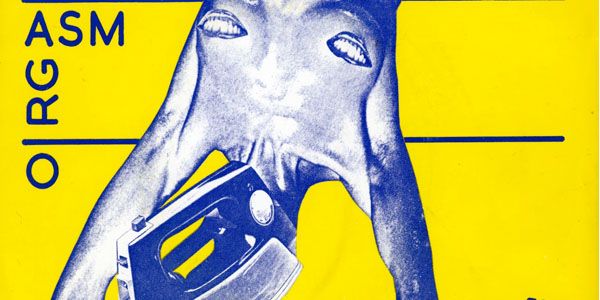
http://www.youtube.com/watch?v=p2Mi995ggFU Whereas The Clash were tied to CBS and the Pistols products of many a high profile label such as A&M and EMI, Buzzcocks were truly independent. Before eventually consigning themselves to United Artists, the Bolton group managed to release a sumptuous EP entitled Spiral Scratch on their own New Hormones label. This EP was a rough-and-ready four-song suite that featured €˜Boredom€™, a song noted for an infamous anti guitar-solo that consisted of a string of repeated notes, an astute comment on the sleep-inducing guitar histrionics of prog. After the departure of founder member, Howard Devoto (who had grown weary of punk before it really became popular), the group, under the guidance of Pete Shelley, opted to release €˜Orgasm Addict€™ as their first UA single. Bold and controversy-inviting in title alone, the track€™s lyrical content and graphic €˜sex noises€™ merely stoked Buzzcocks€™ provocative fire. The first verse, focusing on a youth€™s explorations of masturbation €˜with dirty magazines€™ creating €˜stains on his jeans€™ is abrasive but undeniably funny, Shelley€™s words and vocal inflections distilling the best that Northern wit had to offer into a deliciously dirty pop single. By the second verse, the protagonist has progressed into getting his kicks with real people, regardless of shape, size or gender (€˜international women with no body hair€™ and €˜even the lady who puts the little plastic bobbins on the Christmas cakes€™), proving an unquenchable thirst for sexual completion. Banned by the BBC on its release, Pete Shelley€™s ingenious slice of sexual advocacy still crackles with the crude humour it possessed in 1977. A delightfully filthy gem responsible for some of the most unique and hilarious sensual imagery ever committed to record.

2. Complete Control - The Clash (1977)

http://www.youtube.com/watch?v=KHtTkKNAbWQ A superb stand-alone single that riffs on both Bernie Rhodes€™ (their infamous manager) and CBS€™ (their big-bucks record label) desire for €˜complete control€™ over the actions, behaviour and aesthetic of a fiercely independent band. Bemoaning the authority that CBS held over them after the American label chose to release €˜Remote Control€™ as the first single from the band€™s debut LP without so much as consulting them, The Clash used €˜Complete Control€™ as an intense polemic on how an authority can try and doctor and dictate and wrench originality from an artist despite promises that €˜they€™d be artistically free, when they signed that bit of paper.€™ The bilious language that Joe Strummer spews on this 7€ is reinforced by Mick Jones€™ crackling, crunching guitar line and one of Topper Headon€™s tightest, most intense drumming contributions. Striking a blow for idiosyncrasy and speaking out against management in an iconoclastic manner, Strummer€™s well-measured lyrical attacks soon descend into incoherent ramblings, as if to mimic the power the record label has in silencing its charges. Astute and metafictional, this furious song foreshadowed the arrival of Sandy Pearlman at Clash HQ to produce their follow-up LP, Give €˜Em Enough Rope, as CBS strove to sanitise the group€™s raw, ragged sound for the American market.

1. Blank Generation - Richard Hell And The Voidoids (1977)

http://www.youtube.com/watch?v=TP3x-VdOb44 Richard Hell is punk royalty. Television€™s original bass player (before he was axed by head honcho, Tom Verlaine, for his supposed lack of musicality) and the main inspiration behind Malcolm McLaren€™s self-proclaimed visual styling of the Sex Pistols (although I€™m sure a certain Mr Lydon would dispute this claim), Hell has punk running through his veins. And if that wasn€™t enough, he also provided the fledging movement with its definitive anthem in the form of €˜Blank Generation€™. Hell€™s disinterested vocals and the band€™s screaming, out-of-tune guitars reinforce the track's dominant tone of nonchalance and apathy. The Voidoids had no time for conventional musical protocol, they were angry at the world but they weren€™t really sure why. Staking another impressive claim as the supposed direct inspiration for the Pistols€™ €˜Pretty Vacant€™, a track that dealt with the similar themes of the non-opportunities and futility of the working classes in a fiercely antagonist world, €˜Blank Generation€™, in all of its messy and rapid-fire glory, voiced the ubiquitous disaffection and disenfranchisement of America€™s forgotten youth. Barely taking a breath for the song€™s duration, Hell constructed poetry out of nothingness and beauty out of oblivion. Essential listening.

 
Posted On: 
Contributor
Contributor

A 22 year old English Literature graduate from Birmingham. I am passionate about music, literature and football, in particular, my beloved Aston Villa. Lover of words and consumer of art, music is the very air that I breathe.