The Wolf Among Us: 10 Most Harrowing Decisions We Had To Make

It's not easy being the Big Bad Wolf in a world of murder and betrayal.

When Telltale announced they were making a series of episodic games based off of DC Comics' relatively unknown Fables series, you would have been forgiven for being slightly apprehensive. After all, the company had just reinvented the graphic adventure genre with the immensely popular The Walking Dead; following up with a game based on a lesser known license could have been risky. Thankfully, Telltale have some magic up their sleeves and The Wolf Among Us is just as good as (in fact it could be, whisper it, better than) The Walking Dead. The game's titular hero might not be human but the problems and issues faced by Bigby Wolf make him as relatable as any character. Plus, he's a supernatural badass, which always helps. As with The Walking Dead, The Wolf Among Us allows the player to shape the story through their own choices and decisions. Nearly all of Bigby's dialogue can be picked from up to four choices, giving player control of nearly everything, from small snippets of chatter to huge, game-changing decisions. While the game may still follow a fairly linear narrative, making these choices helps involve the player more and appeals to our imagination, even if we're only deciding whether a character makes a silent appearance in a later episode or not. Some of the big choices are interestingly complex; they really make you question your morality; should Bigby Wolf be the monster everyone wants him to be or should he be trying to win people over with a friendlier outlook on things? These questions are posed to the player by the game and it's why it's so engrossing; several decisions in the game have harrowing consequences and its these choices which we're going to be exploring in this article. Some of these seem relatively minor but in the heat of the moment, with time ticking away, it's amazing what races through your mind as you attempt to work through the game in the manner you deem best. If you can think of any other choices which had you sweating in your seat, leave them in the comments below. Or, if you just want to declare your interest in a second season of this terrific series, leave your pleas below too and hopefully Telltale will give us exactly what we want.

10. Saving Prince Lawrence

Sometimes the worst decisions are the ones you didn't even know you were making. In the first episode of The Wolf Among Us - "Faith" - Bigby and Snow have to choose whether to head to Prince Lawrence's apartment (to tell him of the death of his wife Faith) or to Toad's apartment (to catch someone rooting through The Woodman's apartment above) first. It seems quite a simple choice (you do visit both areas eventually anyway) but which one you visit first has huge repercussions. If you arrive at Lawrence's apartment second (as in, after going to see Toad), you'll find him on the brink of death, only able to utter a few words before passing. However, heading to Lawrence's first gives you the opportunity to save his life; he will simply play dead whilst an intruder searches his home. Saving him in Episode One means he'll appear throughout the remainder of the series, giving you a welcome ally in the game's climax. Telltale's choice-based gameplay has been criticised by some for only offering the illusion of choice (particularly in The Walking Dead where the game's narrative only changed slightly) but the consequences of this one seemingly innocent choice in The Wolf Among Us shows the vast improvements they introduced in this series.

9. Sending Colin To The Farm

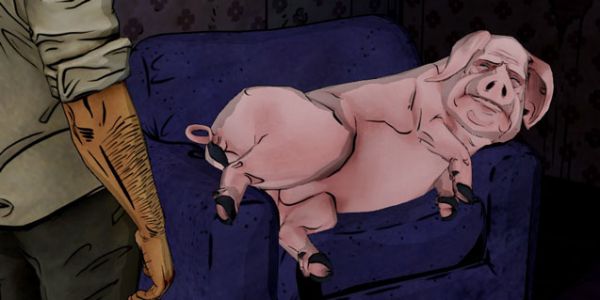
Derived from the story of the Three Little Pigs, Colin is a relatively minor character in The Wolf Among Us, especially in comparison to his more prominent role in the comic book series. Still, Colin acts as one of few friends to Bigby Wolf and he injects humour into the game with his constant chatter. Colin's main storyarc revolves around his living status. While most Fables are free to live their lives in Fabletown, all non-human Fables who cannot afford to glamour themselves up (basically, put on a permanent human costume) are shipped off to the Farm; while not a punishment, it's referred to as a prison by most of the Fables living there. Colin has been sent to the Farm repeatedly (well, he is a giant, talking pig) but always manages to find his way back to Bigby's couch. In Episode Four - "In Sheep's Clothing" - Snow White, in her new role as Deputy Mayor, orders Bigby to ensure that all non-human Fables are sent to the Farm. Of course, that includes Colin and Bigby has to decide whether to let him continue living in his room or ruthlessly send him away. This is a much smaller choice than others (it really only changes Colin's appearance in the game's ending) but disobeying Snow's orders to keep Bigby's roommate around could lead to some interesting developments if the series continues.

8. Helping Faith Out

The titular character of Episode One, Faith has a small but vital role in The Wolf Among Us' narrative. Her death sets all of the game's events into motion and the reasons behind her murder were the central mystery which kept us playing. That being said, we actually spend little time with Faith in the game; she only makes one appearance and it's quite a fleeting one at that. Still, there's plenty of time for Faith to put us through the emotional wringer. In the Homelands, Faith was a Princess, yet the tribulations of New York have left her and Prince Lawrence out of pocket, leading Faith to become a prostitute. Struggles to adapt to life in the mundane world are a recurring theme within the Fables universe and Faith's story is another tragic example of this. After Bigby saves Faith from the Woodsman in the series' opening brawl, Bigby questions her and uncovers some of the many secrets of the game. For example, Faith is reluctant to discuss her employer, simply stating that her "lips are sealed". Bigby deduces that she's a prostitute and offers her all of his remaining money to cover for the Woodsman's inability to pay. Her parting line to Bigby - "You're not as bad as everyone says you are" - is reward enough for a character who is regularly villainised for the actions he must take to protect Fabletown.

7. Lying To Beast

Beauty and Beast may have the longest relationship of all the residents in Fabletown but its a strained one, to say the least. Beauty is the first to appear in the Wolf Among Us, making a suspicious appearance late at night outside the Woodlands. She then leaves without specifying what she's up to, instead asking Bigby to tell Beast he hasn't seen her. Of course, Bigby runs into Beast just a few minutes later and can either lie or tell him the truth about seeing Beauty. Either way, the couple's story continues in Episode Two - "Smoke and Mirrors" - where Bigby learns that Beauty's secret is her job as a clerk at a hotel in order to help pay the couple's bills. She wishes to keep it a secret from Beast (who works several jobs to help pay the couple's debts) to help him keep his pride. While being shown around the hotel (where a murder occurred), Beast shows up and accuses Beauty of having an affair with Bigby. A brawl then ensues which is settled when the two bust a door open and stumble upon the bloody murder scene. The consequences of lying to Beast are actually a bit of a let down in the end; in Episode Four your lies to Beast have turned him cold and aggressive towards you, but if you told him the truth, Beauty will be reluctant to talk instead. Still, the game's exploration of one of Fables' most well known couples is a crowd pleaser and it underlines just how well the Fables universe takes classic characters and stories before twisting them on their head.

6. Sending Toad To The Farm

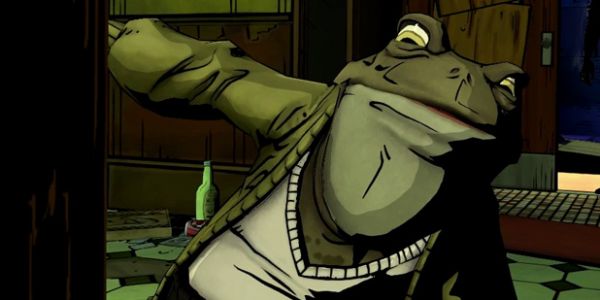
We've already touched on the Farm and how certain Fables view it as a prison with Colin's story but Toad and his son TJ show the plight of non-human Fables far better. While Colin escapes from the Farm seemingly just to be rebellious, Toad desperately wants to earn the money so he and his son can continue to live as free men in New York. Toad has a pretty prominent role in The Wolf Among Us; he's actually the first character Bigby interacts with in the series. He's also a pretty unfortunate character: he gets roughed up with Tweedledum, his son discovers someone disposing of a body whilst swimming in the river, his car gets destroyed... it's safe to say that the guy could use some luck. Unfortunately, he doesn't get any. Bigby can attempt to intervene in Toad's forced removal by giving him money (taken from Crane) to buy a glamour. He can also promise to speak to Snow White about being more lenient with her new rules; either path still results in Toad and TJ being removed to the Farm at the end of the series though. Toad doesn't go quietly though; if Colin doesn't join him and his son, he'll angrily confront the Sheriff about where he is, highlighting some of the more hypocritical decisions you can make as Bigby Wolf. As a final kick in the teeth you can refuse to give Snow White a gift from TJ (easily one of the sweetest characters in Telltale's arsenal), though surely even the Big Bad Wolf is incapable of making such a monstrous decision.

5. Killing Tweedledum

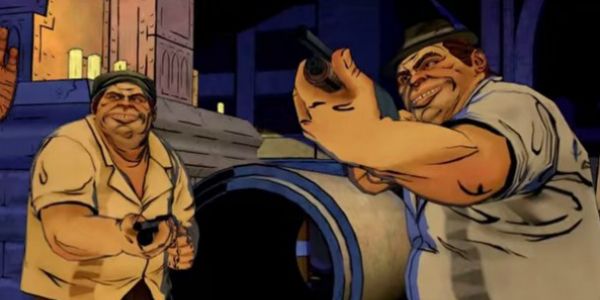
The climax of Episode Three - "A Crooked Mile" - is one of the most exciting moments in The Wolf Among Us. The character of Bloody Mary is introduced and Bigby is pushed to his limits by her and her two henchmen - Tweedledum and Tweedledee. Bigby has to deal with the two Tweedles constantly throughout the series and it all comes to a head here. Having been roughed up by their guns, Bigby goes into full wolf mode, unleashing his primal fury on both Tweedles in retaliation. This is the first time that the player can choose to have Bigby kill someone; he grabs Tweedledum by the throat and the player has to choose whether he deserves to die, just like a Roman Emperor of old. Choosing to kill him sees Bigby brutally rip out Dum's throat and leave him for dead, whereas if you spare him he'll simply slump to the ground and presumably flee with his brother. The latter him means he'll show up in the game's final episode, though he has no speaking lines (he was a man of few words anyway). This is a key moment in Bigby's development; the Tweedles have been a thorn in his side throughout the game but if he kills Dum, he's murdering one of the Fables he's employed to protect. It's a decision that can only be decided by the player's personal view on Bigby's role as Sheriff; is he a man wishing to seek revenge as well as justice or does he still abide by honor and duty? While we may not see all the consequences from these key moments in the game's narrative, in our own minds this incident changes the way we view Bigby and his role in Fabletown.

4. Roughing Up The Suspect

At the end of Episode One, Bigby takes either The Woodsman or Tweedledee into custody to interrogate them about Faith's murder. In Episode Two, you take control of Bigby as he handles this investigation and it's up to you how rough you want to be with your captive. You can play good cop, bad cop with Bluebeard (who will eventually start beating on the suspect anyway, stating that you're being too nice) or you can unleash your inner beast and start raining down on him yourself. It has a lot in common with Grand Theft Auto V's infamous torture scene, although it never quite goes to those extremes; the worst you can do to Tweedledee for example, is to burn him with his own cigar. Your actions during this scene have some pretty big repercussions. Crane, Mayor at the time, will react accordingly to how you treat the suspect and Bigby, in his fury, can even grab his superior and threaten him too. During the game's final showdown, the Crooked Man can use your brutal questioning tactics as a weapon to undermine your authority, making you look foolish and undermining your case against him.

3. Killing Georgie

There's not many nice things you can say about Georgie; he's a bit of a rotter. Owner of the seedy Pudding & Pie, he has several appearances throughout The Wolf Among Us as Bigby attempts to solve the murders of Faith and Lily. He's reluctant to co-operate and clearly has no ill feelings about running a prostitution ring using enslaved women. It also turns out that he is the murderer in the game's story, although he was acting on the Crooked Man's orders. Following the mass brawl that opens Episode Five, Bigby mortally wounds Georgie before chasing him back to the Pudding and Pie. Here, George's crimes are laid out in detail (although he refuses to accept responsibility for them). He also tries to trick Bigby into killing Vivian (the original Girl with the Ribbon who's magic was used to enslave all the girls) before she commits suicide. Vivian's death finally defeats Georgie and he collapses in a heap. Bigby attempts to take him in but George admits he's done for. He asks Bigby to give him a quick and merciful death; of course, this is left up to the player. It doesn't have any impact on the game but, again, it's all about developing Bigby's character. Is he the sort of man to leave a Fable to suffer? Should he give Georgie an easy death despite his many crimes? All of these things have to be thought upon within a short space of time before making this choice; it's pretty intense.

2. Punishing The Crooked Man

The Crooked Man is first mentioned in Episode Two (and only through chatter with some characters) but he's somewhat of a master puppeteer in Fabletown. Originally thought of by Bigby and Snow as a loan shark, The Crooked Man has several illegal operations all over Fabletown and profits from slavery, violence and oppression. He finally appears during the climax of Episode Four but only briefly as part of the cliffhanger ending. Bigby's mission to bring him to justice is the sole focus of Episode Five though and there's several outcomes. Bigby can kill him without taking him in for a trial (this makes the gathered Fabletown community deem Bigby a monster) or he can arrest him and escort him to the Witching Well where a trial takes place. Here, your actions from across the game are laid out and used as weapons either in your favor or against you. Nearly every character in the game is present and they will speak out in favour of Bigby and Snow (if you've treated them fairly) or they will use your cruel actions to boost the Crooked Man's case. Either way, the Crooked Man wins the crowd over by suggesting that Fables wouldn't have to turn to him if the Fabletown government made life better. Thankfully, Narissa (The Little Mermaid), one of Georgie's slaves now free from her spell, arrives to deliver the final evidence which condemns the Crooked Man; she heard him give the order to execute Faith and Lily. The Crooked Man's punishment then follows; you can permanently transform him into a crow and lock him away in the Business Office; Bigby can outright kill him by tearing his head off; or you can throw him down the Witching Well. Whichever way you choose to end the Crooked Man's crime spree, it's a hugely satisfying conclusion to the series. Bringing back all your previous choices and using them as a way to criticise the story you've created is a neat touch and the Crooked Man is an engaging villain who perhaps could have had more screentime. At the very least, it makes you regret some of your earlier decisions and that's an interesting feeling to undergo in a choice-driven game.

1. Burning Greenleaf's Tree

The Fables universe is hugely exciting (go and read the comics if you haven't already); its take on well known characters provides some interesting scenarios and dilemmas. We've already touched on the struggles that Fables went through to adapt to mundane life but there's one last scene in The Wolf Among Us which creates a truly harrowing picture of the hardships Fables are going through in New York. A rogue witch, Aunty Greenleaf creates illegal glamours for Fables who can't afford the official versions from the Fabletown government. She uses her tree to do this; a magical tree from the Homelands whose wood can be used to create such things. As seen in the Wolf Among Us, these glamours are used for nefarious purposes (like disguising a troll as Snow White) so it makes sense for the Fabletown government to try and limit their use. Still, as Greenleaf points out, it's a form of income for the Witch and without it, she might not be able to survive. Plus, she's fulfilling a needed service within the community; the plight of Toad clearly shows that there are Fables out there who want glamours but cannot afford them. Still, Snow White recognises the danger of the tree and tells Bigby to burn it, showing the disconnect between the Deputy Mayor and her people. It's left up to the player whether to destroy the Witch's only means of income or not; essentially ruining her new life. Of course, we also want to keep Snow in our good books too, so it's a tough decision to say the least. In hindsight, burning the tree grants the Crooked Man a powerful ally during his trial too; Greenleaf is quick to criticise our heroes and portray them as monsters in front of the community. It's these tough choices and life or death scenarios that allowed The Wolf Among Us to capture our imaginations and create an experience that's arguably even better than The Walking Dead. As most of history's greatest leaders have discovered; it's near impossible to please all of the people all of the time, and Bigby Wolf's early tales are a clear example of this. Which decisions did you wish you had more time to think over? Let us know in the comments!

Contributor
Contributor

I have an addiction to achievements, a craving for new bands and a dream to become Captain America. I once finished second in a Mario Kart 7 tournament so I'm kind of a big deal.