Why Are Superhero Video Games Almost Impossible To Pull Off?
The genre we need to be perfected, but don't deserve?

There’s a crushing bittersweetness that comes with any new video game based in the world of superheroes. On one hand, most fans are happy to lap up whatever comic-centric content they can get their hands on; but on the other, it’s likely to be bad.
This apprehensive mentality toward ‘super games’ hasn’t blossomed overnight, either.
No sir, only after a few decades steadily building a catalogue of super-sized disappointments can one lose so much faith in a genre that has the potential to dominate a sizeable chunk of the industry.
From the 1979 Superman release on the Atari 2600 all the way up to last year’s Marvel vs. Capcom: Infinite, superhero games have been falling short since way before Tom Holland, Marvel’s current Spider-Man, was a glint in papa Holland’s eye.
But why is it so difficult to pull these games off? And will we now see the end product we desire, now gaming technology has the tools to realise the kind of caped capers previous generations could only dream of?
It’s been a futile pursuit for the vast majority of superhero games out there, leaving us to question why they’re so darn tough to pull out of the bag.
Expectations Meet Reality
Rewind to the turn of the century; Spider-Man 2: Enter Electro had just come out on Playstation, one year prior to Tobey Maguire’s 2002 debut as Webhead. For the children this game was primarily aimed at, this represented the era’s standard in the genre.
Button command boss fights, simplistic graphics, a few recognisable baddies and the Amazing Bag Man alternate costume among more: life was good.
Fast forward a few years and team-up series such as X-Men Legends and Marvel: Ultimate Alliance set a new benchmark for what comic book games could be, where playing as such a wide array of Marvel heroes was novelty enough, never mind the fact the plots were actually engaging as well. The gameplay was allowed to be limited because consoles were, but just as importantly, so were our minds in terms of what to hope for in a superhero game.
But times have changed.
Insomniac will release a rebooted Spider-Man game later in 2018, one year following the arrival of Holland’s successful Spider-Man: Homecoming, and we can only hope it’s the open-world web-swing-fest its 16-year-old predecessor could have been.
That Spider-Man, released the same year Sam Raimi’s trilogy opener hit cinemas, was terrific in parts and perhaps to this day best captured what we’d want out of a superhero game, albeit too short considering you could complete the damn thing in three hours.
Generally speaking, anyone buying a superhero-based game will know precisely what they want. In Spider-Man’s case, that’s wall-crawling, web-swinging, villain-punching, spider-sense-tingling mayhem. We’ve grown up reading about these characters and know precisely how they should look and even sound, and yet developers get some of these key decisions so, so wrong (more on that later).
Another lineup that got things very right in this regard is Rocksteady’s Batman: Arkham series, which had a dark Gotham, awesome fight mechanics (the most pivotal aspect of any Batman game), gadgets and missions to last even the most dedicated a long time.

But Bruce Wayne, while massive in terms of his place in the DC universe, is almost street level in the understanding that he likes to beat up criminals, so that’s easy to pull off.
The problems occur when we want to fly around and protect the galaxy as Superman or traverse continents in seconds as The Flash. Previous Supes games have tried and failed to emulate that feeling, while Brash Entertainment once looked to be on the right path delivering an open-world Flash game, only to go under in 2008.
Such a waste.

As game engines and console capability has evolved, so too has our need to experience more demanding challenges. Why would our Flash be limited to speeding between only a couple of cities - as Brash Entertainment’s release had in mind - when the Scarlet Speedster is clearly capable of so much more?
And therein lies the problem. Avid comic book readers are liable to have bigger imaginations - and by extension, expectations - than someone who’s grown up on a much more grounded or realistic diet of, let’s say, Call of Duty.
Matching those expectations - people who regularly see super feats on a monthly basis - could be an impossible task, but that doesn't mean that developers can't try.
The Box Office Effect

Now, superhero films are no new thing. In fact, we can trace back as far as 1941 for the black-and-white serial, The Adventures of Captain Marvel, or 1943's equivalent Batman, released just a few years after Bats' debut appearance in Detective Comics #27.
But it's fair to say only in the last 20 years or less have things really started to take off. The technology boom of the 21st century has impacted film scope massively. Ever heard someone over the age of 50 look upon today's 3D wonders in sheer awe? Given what they grew up on, can you blame them?
It's a poisoned chalice to say the least. Granted, we're extremely lucky to see the Guardians of the Galaxy zipping about the cosmos taking on a Living Planet in IMAX or watching Wolverine eviscerate human meatbags before our very eyes, but it has a trickle-down effect into the gaming world.

Naturally, we come out of the theatre and think to ourselves: "By jove, I can't wait to step into Clark Kent's shoes and fly at lightspeed into Doomsday while shooting my laser eyes and also freezing him with my ice breath while throwing 16 punches per millisecond." Or at least that's what I think.
It's unfortunate that comic-readers have these kinds of big dreams in a way, simply because it's asking so much of the companies crafting these releases. It's great to dream big, but if you don't shoot for the stars, you can never be disappointed.
And that's the name of the game thanks to the magnitude of the modern superhero movie translating into game format: Disappointment. We're so utterly transfixed on becoming what we see on the big screen that when the major (major) majority of superhero games don't realise what we had in our heads, it's labelled a failure.
That's not to say these games can't still be fun. Injustice 2, for example, has likely taken up plenty of hours in many of our lives since it came out last year, but after the initial novelty of playing as our favourites heroes and villains wears off and we strip back the sheen, it can be described as just a very capable arcade fighter that happens to have characters we relate to more easily.

Guardians of the Galaxy: The Telltale Series stands as an example of a more role-player-esque title, the kind we really need in this genre to get the most out of said characters of whom we share such fond memories. But again, after the great voice acting and character interaction, it's not the space-faring butt-kickery we need when it comes to stepping into the shoes of people who regularly take on foes like Thanos.
This is where the impossibility of the task arises. No matter how much we hope it to be so, we're so far away from having the expectations that come from other media realised on a console that it simply won't come to fruition.
And the worst part about it all? It's a vicious cycle of advancing technology. Films will get better, but the gaming tech equivalent will always be lagging behind, and so the cycle goes and goes..
Developer Demons
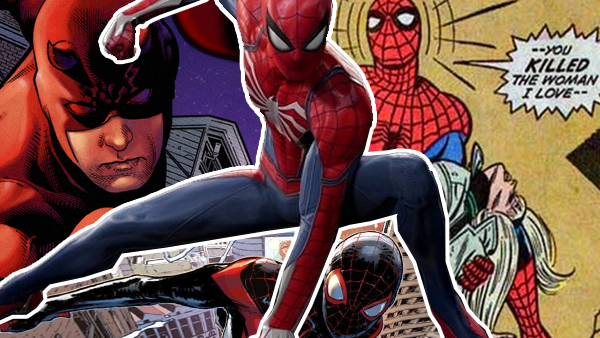
Licensing has arguably been the biggest bane to the existence of not just superhero games but comic book media in general. Heck, here we all thought Disney’s recent acquisition of Fox would lead to a crossover frenzy between the super groups we’ve all wanted to see intertwine for years now, only for Marvel Studios co-president Kevin Feige to swiftly kill our geek-ons, telling Vulture’s Kyle Buchanan that’s a long way from happening.
Who’s ready for a crossover or seven!? Not the Marvel honcho, that’s for sure:
“There’s been no communication. We’re not thinking about it. We’re focusing on everything we’ve already announced. If and when the deal actually happens, we’ll start to think more about it. Until then, we have a lot to do.”
See what we mean?
And you better believe the same applies to the video game world, where only one, maybe two developers will get the contract to produce a certain title, and if they’re not the right ones for the job - well, anyone who played Activision’s Amazing Spider-Man 2 can vouch even the big guns get these things wrong.
Revisiting the Batman: Arkham series, which Rocksteady has been responsible for crafting since the original Arkham Asylum in 2009, we can see an example of one studio getting things right and being handed the reins to keep running with it. On the other hand, it hurts to see when these games go awry, like when Double Helix and Griptonite tag-teamed for 2011’s Green Lantern: Rise of the Manhunters.
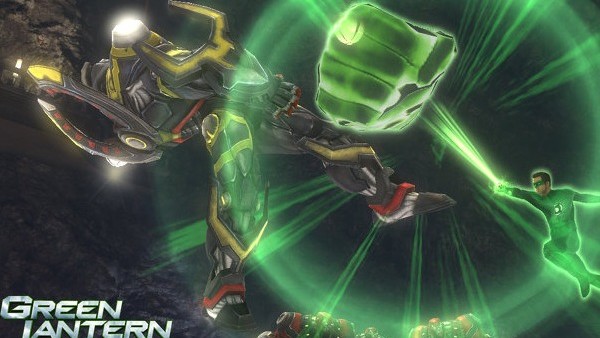
I’m Hal Jordan. My powers are quite literally limited only by my imagination, and you’re going to keep me down to a minuscule talent tree with a dozen or so attacks while making me walk around a linear map, with only the odd button-command special to break up the endless combos? Yeah, right...
Passion is what yields a great product, and all too often the end products we’ve been given until now display an air of complacency about them - “why take time creating this when we know you’ll buy it anyway?”
Take 2011’s Captain America: Super Soldier, a game based around one of Marvel’s most famous characters, boasting as rich a back story as any other and one Avenger upon whom you could truly base a successful combat title. But the story was dull, and the combat was just “good.”
Not sufficient proof to the nonchalant attitude of some developers? How about X-Men: Destiny, also released seven years ago, a game that had no fewer than eight X-characters on the front cover.
Did we get to play as even one of them? Did we heck.

The fault of course more than partly lies with Marvel and DC themselves, who should, ideally, sign off on these developers using their intellectual properties before they can go about producing them.
Quality and not quantity should be paramount when it comes to games, but superhero games - arguably more than any other - have pre-existing fanbases that all have a high bar in terms of what they want to see and experience.
The big two (Marvel and DC), should screen developers and their intentions properly to ensure the end goal isn’t garbage, but in a world where cash talks, mo’ games means mo’ money, and taking one’s time to perfect the piece just isn’t as sexy.
To Infinity…

So what would we like to see in future releases that can put an end to the inconsistency exhibited in superhero-based video games until now?
Well, if the virtual reality implications for first-person shooters are anything to go by, there may soon come a time where we can actually be deemed worthy enough to wield Mjolnir or Wonder Woman's Lasso of Truth.
Imagine an arcade fighter like Injustice 2 where a player could feel as though they themselves were being hurtled through destructible environments and had to react accordingly, punching in combos while Superman’s laser eyes charged up three inches from one’s face.
But that’s way, way off. More realistically, open-world formats look most appetising as just about any super being with some level of flight or speed would require that kind of scale. Sadly, these games are significantly larger and take more time to make, but that’s perfectly fine with us.
Speaking of scale, imagination is another thing historically lacking in superhero games. Earthworm Jim might settle for a simple button basher, but comics fans want bigger, non-linear maps; vast wells of talent trees that properly illustrate a character’s innovation; functional game mechanics and fight systems that don’t glitch us to high heaven.

Is all that so hard to ask? Maybe so.
Thankfully, the rampant growth of comic book-based movies in recent years has led to a greater spotlight being cast on the genre and the powerful movement it represents among nerdy adults, geeky teens and grateful children, whom we’ll refer to here as “the motherload.”
Video game developers, like movie producers, are largely motivated by money, and where the cash goes, they tend to follow.
Thankfully, because the comic genre now has a much bigger dollar-sign hanging above its head due to the rise of its film popularity, there’s a chance more investment will be made to ensure their game equivalents are done right and thus yield a stronger return. Not a strong chance, because quantity doesn't always beget quality, but a chance nonetheless.
In an ideal world, these games would be treated akin to movies themselves. That’s what the comics have always represented in our minds, tapestries of the highest calibre that few other genres can match.
But we don't live in the ideal world. We live in a world where our fantasies, the fantasies we read about and then watch unfold on the big screen, will always be acres ahead of whatever we hope to play first-hand.
Do you feel as though developers are setting themselves up to fail when it comes to superhero video games? Or are fan expectations closer to being realised than ever before? Be sure to let us know in the comments below!