Why Activision Stopped Making Games
Are they really just a Destiny and Call of Duty factory?
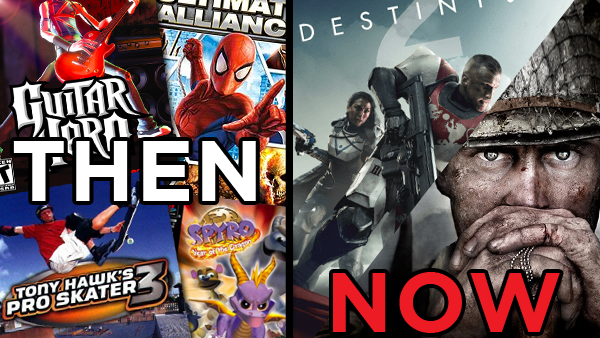
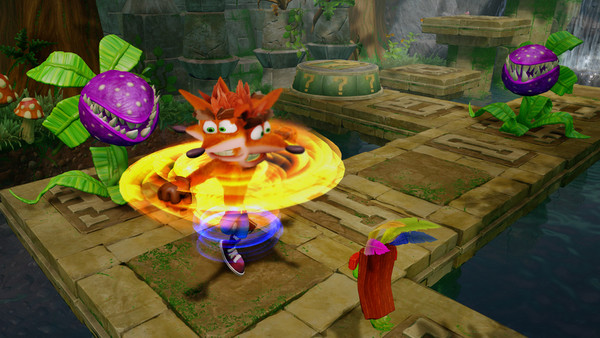
Activision is officially the biggest third-party video game publisher in the world. Scooping up franchises in the late 1990s and early 2000s, the company gained success initially by adapting popular properties from other mediums. It helped that the games themselves were good of course, and from the beginning of the millennium, the likes of Tony Hawk's, an endless amount of Marvel games (including fan favourites like Spider-Man 2 and X-Men: Legends) as well as a little release called Call of Duty filled out Activision's admittedly diverse lineup.
However, somewhere along the way, the rot began to set in.
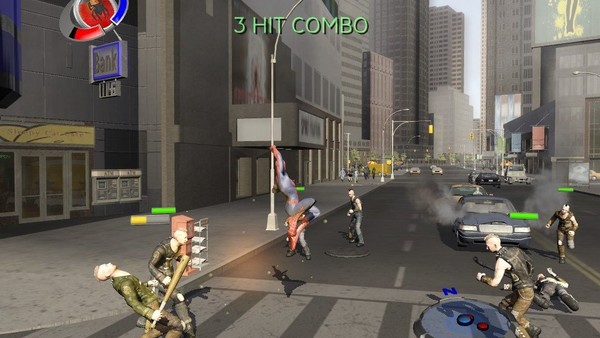
Where the company had previously used cross-media franchises to launch their own great games, the latter half of the 2000s saw them coast along on name recognition alone, unable to evolve with an ever-growing market. The profits increased, but the quality of releases suffered massively, with licensed comic-book and movie tie-ins (Spider-Man 3, Tony Hawk's Ride, Ice Age: Dawn of the Dinosaurs) feeling more phoned in than ever.
Likewise, what new franchises were created, such as the smash-hit phenomenon Guitar Hero, ran out of steam quickly thanks to overexposure and annualisation (seriously, when Activision released seven different sequels and spin-offs in 2010, we should have known it was rinsing the name in preparation to kill it).
However, while these neat ideas would pop up and inevitably be axed, Activision has seemingly decided to cut down massively on its gaming output in the past few years, leaving players wondering why the biggest cross-platform publisher in the world has all but stopped making games.
5. The Numbers Game
From a sheer numbers perspective, the drop in games published by Activision looks drastic. Towards the end of the 2000s and into the 2010s, the company published around 20 games a year. 2009, 2010 and 2011 all saw 18 titles from the publisher, whereas 2012 jumped that up slightly higher to 19. However, from there on out, at the dawn of a new generation no less, the company began cutting the volume of their yearly games down massively.
In 2013 their output fell to 11 releases, 2014 kept relatively consistent with 12, however 2015 dropped the number down to just 6, while 2016 and 2017 saw only two and three games hit shelves respectively. In the space of three years, the company cut their output down by around 75%, from close to twenty to an amount you can count on one hand.
However, while the cull may seem drastic, the games and franchises Activision were getting rid of weren't exactly what you'd class as quality, AAA experiences.
2012, the year Activision released its largest pool of titles to date, was particularly bad. Made up of abysmal tie-in shlock like The Amazing Spider-Man, Battleship and Transformers: Prime, licensed shovelware such as Family Guy: Back to the Multiverse, Ice Age: Continental Drift, and Men in Black: Alien Crisis, and yearly entries in franchises nobody cared about like Tony Hawk's HD, Cabela's Dangerous Hunts and 007 Legends, the majority of the games were lacking both in terms quality as well as commercial success.

Obviously not everything was bad, and bigger releases such as Prototype 2, Call of Duty: Black Ops 2 and Transformers: Fall of Cybertron were all pretty solid, but with the exception of Black Ops, they all underperformed. Consequently, you can see why Activision would want to cut their output; the publisher was putting the bare minimum effort into them anyway, and it was clear that they weren't bringing in enough of a return to justify even the limited productions they were awarded.
Here's the tragic thing though: although the publisher cut out the fluff and streamlined its portfolio to the couple big games that did do well - Destiny and Call of Duty - it also eliminated those small flourishes of originality that used to pop up now and then. Because in between this shovelware and the phoned-in sequels there were genuinely brilliant experiences to be found, such as Raven Software's excellent time-bending FPS Singularity, which released in an equally packed Activision year in 2010.
These mid-tier games - including Prototype as well - proved to be a real sticker for Activision. Not making as much money as Call of Duty to justify a larger production but not being as safe a bet as the smaller-scale licensed titles, they weren't given room to grow if they didn't immediately become a smash hit. It didn't matter if they were well received critically; if they didn't make all the money in the world on the first go, then they wouldn't be given another chance.
4. Decline In New Franchises And IP
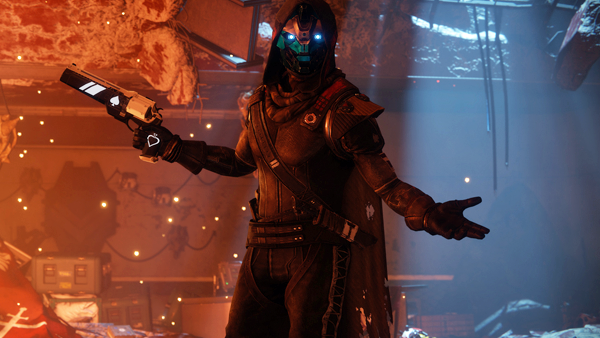
While the decline in the amount of games Activision has released year on year is pretty shocking, things look even more bleak when you realise how few new franchises they've introduced over the past decade. Throughout the entirety of the 2000s, the publisher launched 19 new franchises, including Call of Duty, its Marvel games (Spider-Man and X-Men in particular), Guitar Hero and the rejuvenated Crash Bandicoot. In comparison, the 2010s have seen only four attempts at creating new IP so far: Destiny, Skylanders, Singularity and Blur.
Obviously, while the former two have become huge money makers for Activision, the latter didn't even make it past a single game. For the past eight years the company have been coasting on IP they've owned for decades, introducing a paltry two new, original franchises to replace the ones they've lost.
While the gaming world is shifting all the time and some of these properties could be revived under better circumstances, the publisher is seemingly fine with letting the licences to some of their most popular historical franchises lapse. They've already relinquished control of the superhero properties they owned, allowing Marvel themselves to give their characters to studios who, you know, actually care about them.
Activision are betting big on the few franchises that are working right now, and while that's paying off at the moment, it points to a far less creative - and a far more limited - future for the publisher.
3. The Fate Of Activision's Dev Studios

In fact, those limitations are already present in the way the publisher has reshuffled the development studios they own to focus on the few franchises they have left. The three major ones - Infinity Ward, Sledgehammer and Treyarch - are all spearheading their own Call of Duty sub-series to ensure there's a new title hitting shelves every single year. While this set up wasn't effected by the shift in business priorities, the narrow focus on COD has impacted studios who had otherwise previously been free to create their own games.
Raven Software (Singularity), Beenox (Spider-Man: Shattered Dimensions) and Radical Entertainment (Prototype) now all help out on the Call of Duty franchise in some capacity, whether that's working on the main games themselves, creating ports to other platforms or crafting remasters of older titles. Other studios like High Moon (Transformers: Fall of Cybertron) and Vicarious Visions (Skylanders) have been limited to helping Bungie produce Destiny content, rather than making their own original games.

Though it's a little relieving that Activision haven't shuttered these studios - which have been in charge of some childhood favourites over the years - by restructuring them and limiting their role to primarily be helpers on the company's two biggest franchises, it's hard to see the publisher's team of studios as anything more than individual cogs in a massive machine, rather than vibrant, creative original forces in their own right.
2. What The Money Says

While it might seem a bit mad to rely so heavily on a handful of big games every single year rather than take punts on new original concepts, from a business perspective, Activision's shift has paid dividends.
In 2016, after cutting down their output to a mere two games (Call of Duty: Infinite Warfare and Skylanders Imaginators), their parent company Activision Blizzard reported a huge rise in annual revenue, jumping from $4.6 billion (a number which had remained steady for the five previous years) in 2015 to a massive $6.6 billion. That amount climbed even higher a year later, with the company reporting $7.01b in revenue for 2017.
How?
One word: Microtransactions.
The breakdown of the numbers haven't been revealed for 2017 yet, but for 2016 Activision reported that a record $3.6b of their entire revenue for the year came from in-game purchases - close to what the company made altogether in previous years. By focusing on two popular core titles, doubling-down on microstransactions, DLC and expansion packs, the company was able to take in more money than ever before, as well as presumably saving the money they would have spent on those licensed games and annual franchise instalments.

Of course, these reports were from Activision Blizzard rather than Activision themselves, which includes money made from other titles under their umbrella like Overwatch and World of Warcraft. That's perhaps even more illuminating though, as it's clear that Activision's parent company is more than happy with the limited number of titles the publisher is focusing on.
In their 2016 report, the company outlined that their main franchises are Call of Duty, Destiny, Starcraft, World of Warcraft, Heroes of the Storm, Hearthstone, Skylanders, Pet Rescue, Overwatch, Diablo, Farm Heroes and Candy Crush - only three of which are published and made specifically by Activision. Few of these are fresh franchises, and an alarming amount are mobile titles, which seemingly points towards the publisher fully committing to the "games-as-service" mentality, creating a small selection of releases that players will continue to pump money into for years.
1. What The Future Holds
Despite still being the largest third-party publisher in the world, it's clear that Activision is no longer interested in creating games. Instead, it's in the business of platforms - platforms with enjoyable gameplay and massive fanbases, sure - but platforms that encourage players to continue to invest into them, both in terms of time and money.
The future certainly looks good for Activision as a company, who will no doubt enjoy another bump in annual revenue this year, but for us gamers, it's quite the opposite. One of the most important game publishers in the world is no longer in the business of making games, and all of the creative, memorable titles from its back catalogue have been left to die - with the only hope of ever seeing them again being in the form of overpriced, bare-minimum effort remasters.
Obviously, Activision isn't the only game in town, but if its model continues to be a success, other publishers will take note, and it could lead to a far more homogenised, uninspired industry in the long run.