What Splinter Cell MUST Learn From Metal Gear Solid 5
What can an old dog learn from a snake?
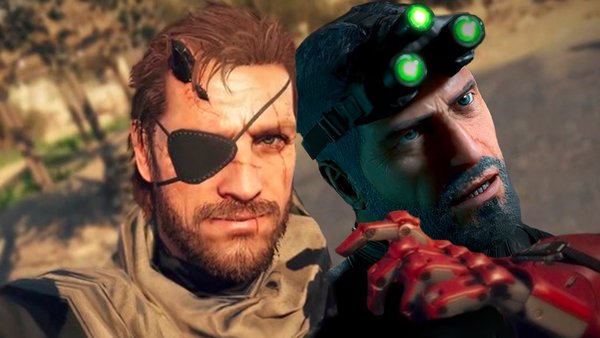
It's been too long since we've had a Splinter Cell game. That goes without saying, really. Ubisoft know this, that's why they're constantly taunting us by pimping out Sam Fisher in games like Rainbox Six: Siege and the upcoming Elite Squad.
The problem, though, is if were offered a new Splinter Cell title, what would we want from it?
Do we want a remake of Chaos Theory, the oft-forgotten Double Agent, a return to the action-heavy focus of Conviction or a direct sequel to the criminally under-selling Blacklist? Give us too much choice, we won't decide. Times have changed, and I don't know about you, but those early ones aren't as graceful to play as you might think they are.
How about, and hear me out here, Ubisoft take a page or twelve from Konami's "How To..." with Metal Gear Solid V: The Phantom Pain. MGS is no stranger to reinvention: Just look at the leap from MGS2 to Snake Eater, to Guns of the Patriots, to Peace Walker, to Phantom Pain... but then stop there, don't ever go near Survive.
From a mechanical point of view, MSGV is phenomenal. Sneaking through encampments and strongholds has never felt so fun, so fluid, with stealth dynamically affecting whatever comes up. Strip the base building and microtransaction/live service elements away, and MGSV is a cracking open world stealth 'em up.
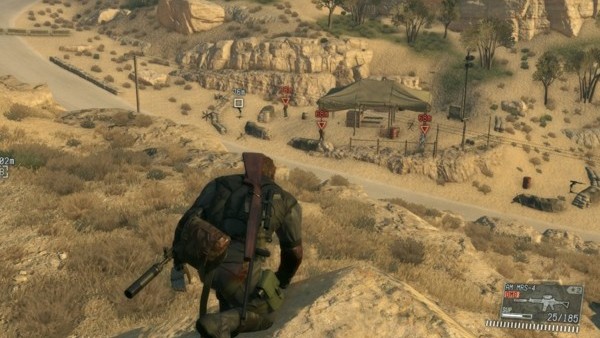
By comparison, Splinter Cell has only ever moved in the direction of "faster paced" and more action, eventually clawing some semblance of its particular brand of stealth back in Blacklist. If it were to go back to its roots and make a methodical, slower stealth game like its first day, it'd just be derided a lazy hash of its originals. Something needs to be done, hypothetically, if there is ever a new Splinter Cell. Maybe it is time to look to its successors for a few ideas.
So, with that in mind, let's throw caution to the wind and explore the concept of what Splinter Cell could learn from Metal Gear Solid V. Ubisoft tread water with the somewhat lacklustre Ghost Recon Wildlands and Breakpoint, including cameos from Fisher, but they failed to capture that spirit. Let's instead focus solely on Fisher and what could be done...
Kept You Speculating, Huh?

So, why do I mean by "learning from MGSV"? It's definitely not the insinuation that Splinter Cell is boring and needs sprucing up, far from it.
It's just that it's been seven years since Blacklist, and whilst that did mix up the formula somewhat, times have moved on in both stealth and action gaming. The Hitman franchise tried the same route: Absolution went for a more arcade, score-based grindhouse aesthetic and largely gets derided for it. So, it went back to what it does best but also incorporates a more modern touch to it, such as easier opportunities, a hint system and Target-O-Vision to stop things from getting stale.
Since then, Hitman's 2016 "reboot" and its sequel have reignited the flame for Agent 47's love affair with garrotes, with a third one on the way next year (also in VR, which will be immense). But it's not just old franchises favouring more upbeat methods.

Sucker Punch's excellent Ghost of Tsushima could also be considered an MGS-lite: open world, multi-approach gameplay that favours either stealthing or action. Admittedly though, it did gear more towards the "stand and fight" nature of the samurai over true Ghosting, but still entertaining sneaking about nonetheless.
My point being that stealth games have to move with times to offer that level of fluidity if people want it, but not overly rely on insisting players devolve into balls-to-the-wall action if things go wrong.
And this is where Metal Gear Solid V comes in.
The Legendary Big Boss
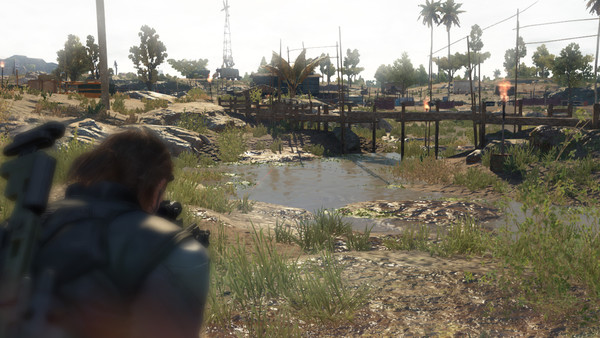
My initial reaction on MGSV going "open world" on its announcement wasn't a good one. Being a creature of habit, and long-time fan of the series, I had grown accustomed to its linearity. Peace Walker took a while getting used to with its hub-based gameplay. That Metal Gear was going open world made me wonder how the sneakabout gameplay it was famous for could be implemented.
Turns out: very well, and I was wrong to doubt it.
Making Metal Gear open world was to be expected, from a series perspective. Levels in MGS games had been expanding from the linearity of the early Metal Gear days, right up to the bigger areas in MGS4. Peace Walker added a mission-based hub, so the only logical step was expanding on the gameplay itself.

Allowing Venom Snake to mark out, plan and infiltrate strongholds and bases however you saw fit was a masterstroke of design on Konami/Kojima's part (someone's got to take credit for it). Whilst you could still go guns blazing, the absolute bliss came from ghosting your way in and out: never getting spotted, not killing anyone, just reaching your objective and exfiltrating or carrying on to the next mission.
The heavy emphasis on keeping your Mother Base ticking over aside, Metal Gear Solid V is a beautiful example of how to implement stealth into an open world game. Other games may have dabbled, such as added the "obligatory stealth level" into games like Grand Theft Auto and Watch Dogs, but MGSV was pure [optional] stealth for those that wanted it.
Splintering? Barely Even Branching Out

By comparison, Splinter Cell has never really deviated from its original template. The first two were fairly linear, corridor-based affairs. Chaos Theory expanded on that by allowing a bit more versatility in your approach, then largely reined it by the events of Double Agent. Conviction, as mentioned early, favoured action whilst Blacklist at least expanded on different playstyles.
But in the face of ever-changing world of more active stealth games, like MGSV, Dishono(u)red and even Hitman, Ubisoft's sneaky spy series is a bit behind the times. Even I, a long term fan of the series, find it a struggle to go back and play the early ones.
Blacklist, though, had the potential to be on to something great for the series. Pooling previous efforts, the choice of passive or lethal stealth, or straight-up gunfights, was a start. It gave us some new freedom, but it still boiled down to corridor-esque gameplay. Sure, some levels had a bit of variety, but it wasn't much of a freedom, just a choice in which order you completed certain objectives.

It's a shame it didn't meet Ubisoft's sales expectations, lofty as they were, that they essentially put the series on ice, only to thaw out Fisher when they needed him for guest appearances. It's all well and good bringing back Michael ironside for these cameos now, Ubisoft, but maybe you shouldn't have taken him out of Blacklist in the first place.
However, don't take this as me ragging on the series. As I said, long term fan. But when all the other series' you've grown up with make adjustments (for better or worse) and still keep growing, it's hard to accept that some are dragging their feet with change.
Splinter Cell doesn't need "reinvention", they tried that with the early Conviction concepts, and nobody wanted that. Hobo-looking Fisher, anyone...?
But when it comes to learning from successful peers, then Metal Gear Solid V is the one to look up to.
Adding More Scope, And Not Just To Rifles
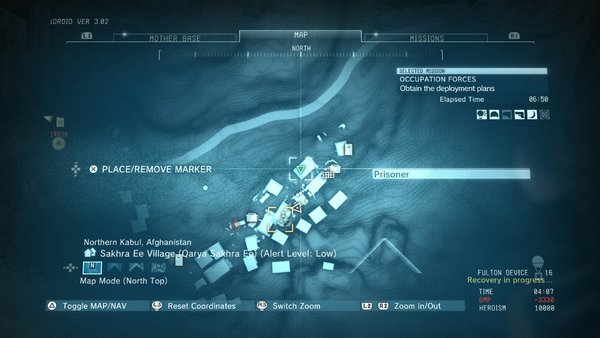
So, what can Splinter Cell learn from series that brought us "Tactical Espionage Action"?
I'm not suggesting Splinter Cell go full open world, no. That's what Ghost Recon tried, twice, and failed to pull off. That, and it'd be a bit against type to have Fisher hijacking cars and helicopters to get to new areas. Kinda the antithesis of being a covert operative, really.
Instead, in keeping with the hub-based nature of Blacklist, give us larger areas to play in. Much like Hitman too, give us bigger levels that we can approach in a variety of ways. Drop the linear, corridor nature of preset sneaking routes and let us determine how we want to scale this government building or militia stronghold.
Just imagine being given your objectives, either via OPSAT or projected onto walls again, and being allowed to tackle them however you see fit. Sniper Ghost Warrior: Contracts allows this; a big level for you to complete then in any order. You could even keep the awareness factor from Chaos Theory in it: if you mess up in one part, by the time you reach the next the guards are already anticipating something.
Splinter Cell did try something open world-ish with early footage of Conviction, but it looked too much of a deviation from the series. Yet, they could be on to something if they went back to it. I don't mean the grizzled, hobo-looking Sam, but the nature of a more dynamic world for him to infiltrate.
Alpha Protocol had a similar concept, allowing you take on missions in a different order. You could do something in one that'd affect the outcome of the next, for instance. Apply that to a new Splinter Cell, much like MGSV does with how it kits bases out with guards depending on how you play.
Add a level of constant, lived in world that changes depending on Fisher's actions, rather than unconnected levels.
Of course, it's not just the world that needs improving on. Fisher himself could stand to learn some new tricks.
You're Pretty Good

Let's be honest, the exploration in a Splinter Cell is a bit... stale.
Until Conviction and Blacklist, Fisher was not the most spritely of secret agents. Oh sure, he could climb with the best of them and do a wicked splits jump between two conveniently walls when needed to. But outside of that, Sam moves like a man trying not to make noise as he gets up to go for a pee at 3am.
Alright, the element of stealth is necessary around guards, but in more pressing areas he wasn't the nimblest of beans.
By comparison, Venom Snake has a more... organic feel to him. Being able to sprint, dive into cover and crawl through various entry points is a joy to play. Sneaking into a command center is a thing of beauty, as is escaping by climbing your way out to your exfiltration point.
Remove the preset, "You can only climb this bit of wall" linearity often found in Splinter Cell games and allow players to be more creative, and I guarantee they'll thank you for it. Look at recent games over the years like Dishonoured and Deus Ex utilising stealth from a first person perspective, or Uncharted and the Tomb Raider reboots for third person climbing.
Incorporate those two elements together and we could have something beautiful. We know it was capable, as Blacklist opened up those doors a tad. But go one further, remove the "press X to climb here" prompts and let us explore what's climbable. Let us try doing split jumps, overheard climbing or hanging upside from a variety of obstacles, not just preset times the game determines.
But that's just the means of exploration covered. What about when it comes to handling yourself in combat?
Only A Fool Trusts His Life To A Weapon

Again, not to keep ragging on the series, but when it comes to the gun - and fist - fight side of things, Splinter Cell has always been a bit lacking. Granted, Fisher is a covert operative, it's a pretty self-explanatory job title.
Over time, it has [thankfully] progressed from the precise, context-sensitive grab from the first two, to the more fluid love tap in Chaos Theory, right up to the karambit-heavy focus in Blacklist. But even then, it's still always felt a bit static. Again, Fisher is not kitted out to one-man army things, we know this.
Yet whilst I'm not suggesting that Fisher starts carrying prototype Honeybee missile launchers into missions with him, he could learn the basics of some decent CQC.
Honestly, Chaos Theory had the best use of knocking a guard out from any angle, before it devolved into mostly "choke or throat slice" by Blacklist. Yes, the karambit is cool, but why is my only other option grabbing a guard and choking him out? Why can't I just smack him upside the head, or quickly chain it into a few guards, Batman-style?
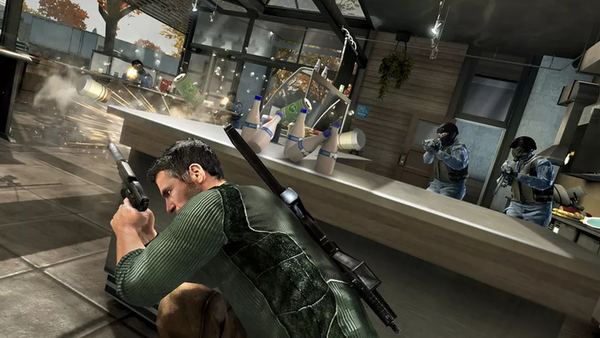
Of course, I'm not implying that Splinter Cell should favour action over stealth. We've had that, it was Conviction. It's possibly my least favourite, after Double Agent. It's just that it needs to be spiced up with the same fluidity of the aforementioned exploration.
It's the same with gunplay. Allow us a bit more freedom to say, shoot walls or metallic objects to distract a guard before bum-rushing him with a knockout punch. Shooting lights in previous titles was fun, but it was always very scripted. Add some degree of versatility and fluidity to the gunplay, as well as the melee, and expand on what Blacklist started.
Teaching Old Dogs

Again, this is all a hypothetical wishlist from someone who wants to see two of his favourite franchises come together. Whilst I can see the faults that both series' have, I would still love to see the return of Fisher and Snake in equal measure.
Yet you only have to look at the other examples mentioned in this piece that have done it better since Sam quietly snuck onto the scene in 2002. Imitators have been and gone, whilst other franchises have had to adapt to modern times and breathed new life into them. To compare, look at Hitman: it's almost gone full circle yet it infinitely better for its new implementations.
It's what Splinter Cell needs: not a complete reinvention that strips it of its identity, but some changes that remind us of the good ol' days as well as being fresh enough to revive it.
In a way, this piece is also a love letter to one of the franchises that got me into stealth games. The big three for me is this, Metal Gear Solid and Hitman. It spawned a love that carried on to the likes of Dishonoured, Deus Ex, all the way up to the best bits of The Last of Us 2's sneaky sections and the Arkham series' predator missions.

Whilst Ubisoft only serves to remind us of what we're missing, the desire for a new game is out there. As I mentioned at the start, fans will never agree on exactly what they want. But I hope this piece serves to remind you of what we once had, and if we were to get anything new, what it could learn from its contemporaries.
C'mon Ubisoft, do the right thing.
Stop pimping Fisher out and give him the spotlight... to hide in the darkness from.