8 Video Games That Are Just Not That Deep
These games aren't really THAT complicated.

The great beauty of video games, like all art, is that they elicit different reactions from every single one of us.
We all interact with games within the context of our own life experiences, ensuring that people can come away with wildly divergent perspectives on why a game does or doesn't work.
And while that can result in some folk finding depth and meaning in games that others find resoundingly shallow, there sure are times where it feels like folk are reaching with what they get out of a game.
Case in point, these games are often held up by their most passionate fans as some of the most layered, complex, and thoughtful titles around, and in extreme cases the more militantly opinionated might even suggest that if you disagree, you just didn't get it.
But here's an alternative opinion - these video games, for all their brilliance otherwise, just aren't really that deep.
Yes, they're doing interesting things and above all else entertaining us, yet when it comes to assessing the extent of their themes and overall intellectual execution, it does feel like the case is often overstated...
8. Death Stranding
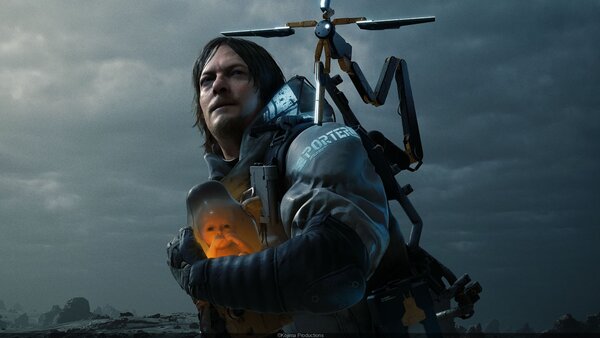
Hideo Kojima has proven himself to be majorly ahead of the curve in the past, considering how Metal Gear Solid 2 basically warned us all about the concerning rise of fake news, algorithms, and AI.
And so there's been a tendency for Kojima's fans to read a little too generously into just about everything he's released ever since, including his first post-Metal Gear Solid IP, Death Stranding.
While the game undeniably benefitted from releasing shortly before the pandemic, where its themes of loneliness and connection proved unexpectedly resonant, the more you think about the story, characters, and themes in either of the Death Stranding games, the wobblier and less-persuasive it all gets.
Some will keep digging for hidden profundities off the back of its creator's best work, but at its core Death Stranding is a fundamentally silly post-apocalyptic AAA delivery simulator that's awash in some of Kojima's clumsiest and most surface-level storytelling.
As ever, just because a game prattles on at great length, that doesn't mean it's saying anything of great substance. Speaking of which...
7. Kingdom Hearts

We've all got at least one friend who insists that the Kingdom Hearts franchise touts a story that's immensely layered, meaningful, and totally coherent, right?
Yet as persistently charming as this hugely successful brand synergy exercise between Square Enix and Disney might be, it's also perhaps the all-timer example of a video game that mistakes complexity for depth.
Though there's no real consensus on precisely when Kingdom Hearts' labyrinthine web of lore became too unwieldy for its own good, to all but the most passionate fans, making head or tail of its general story is an utter headache.
The core themes, however, are incredibly broad and easily digestible - the battle between light and dark, the power of friendship, and what it means to have a heart.
That these ideas are wrapped around masses of knotted storytelling and never-ending exposition dumps doesn't change the fact that, in its very foundations, Kingdom Hearts revolves around some incredibly basic concepts. And there's absolutely nothing wrong with that.
6. Elden Ring

Elden Ring is rightly held up as an all-timer video game, per its marvelous open world and tough-but-fair gameplay, enough that one could argue it's the gemstone of FromSoftware's hallowed body of work.
The notion that the game, for all of its brilliance, touts a frustratingly opaque and piecemeal story is hardly a hot take - countless think-pieces have been written calling Elden Ring's approach to both story and lore excessively vague.
Whether that vagueness is really excessive or not is of course entirely subjective, but for every fan who wants to bathe in the ambiguous mystery of the game's world, there are those who find FromSoft's refusal to commit to much of anything infuriating.
It becomes more of a bugbear when Elden Ring is held up as a marvel of deep-dish storytelling that the player just needs to tease out for themselves, but even after dozens of hours spent with it, you might wonder what the hell any of it is really about.
In the very least, the gameplay and overall atmosphere are so damn impeccable that you might not care too much.
5. Rocket League
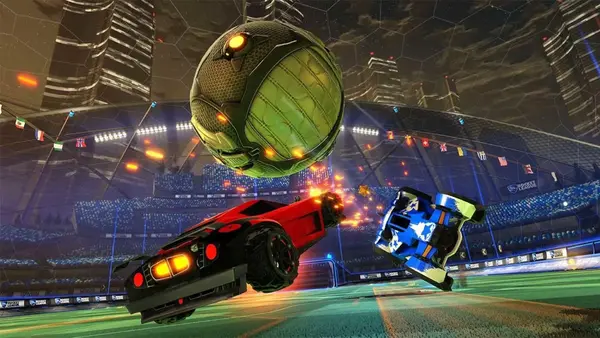
Rocket League is just one of the many great multiplayer games whose fundamental sense of fun is undermined by the many players who get lost down the rabbit-hole of The Meta.
Rocket League is another game where a large chunk of its player-base gets so fixated on complex, galaxy brain gameplay tactics that they not only lose sight of the importance of actual teamwork but forget to have any damn fun.
Take a step back, take a deep breath, and say it with us - it's football with remote control cars.
This isn't to say that Rocket League's physics-based gameplay isn't well-designed, because it absolutely is, but from the way some players act both during matches and in the wider community, you'd think it's a game that can't possibly be effectively played without an exhaustive knowledge of its most minute gameplay nuances.
Elite-level players are going to do what they're going to do, but for the rest of us not playing for actual money, we should remember to have fun with it above all else.
4. Undertale

Undertale is a fantastic video game and one of the most unique, visionary works the medium has served up over the last decade-plus.
It's also a great example of how the loudest members of a game's fandom can end up working against it, because if you took the most Undertale-pilled people out there at face value, the game is basically Tolstory's War and Peace in video game form.
While Undertale's fourth wall-breaking elements are terrifically executed, the game is propelled forward by some extremely simple ideas that are basically universal to the human experience.
Chiefly, that violence has consequences, you have a choice to do or not do things, and life is best when you're not a dick.
Creator Toby Fox obviously goes about exploring these themes in a creative and entertaining way that evidently resonated with millions, but don't let the Undertale die-hards coax you into believing that the game is anything more than it actually is.
3. Spec-Ops: The Line

Spec-Ops: The Line is often held up as a shining example of the storytelling depth that video games can provide and which other artistic mediums simply can't.
After all, it was widely praised for using a seemingly familiar war shooter setup to pass commentary on the notions of player agency and "free will," forcing players along an increasingly perilous, horrifying path which they could avoid by... just not playing the game.
It was certainly an interesting take in 2012, when the market was flooded with blandly generic shooters trying to reheat Call of Duty's nachos. But how deep was it really?
Effectively, the game's big twist is heavily inspired by Fight Club, it's not really saying anything new about the horrors of war, and even its metanarrative aspect seems less impressive nowadays, in a cultural era where fourth wall-breaking storytelling is all the rage.
But even if you defend Spec-Ops as an innovative title for its time, the nuts and bolts of its gameplay are still those of a thunderously forgettable cover shooter, and there's no getting away from that.
2. The Last of Us Part II

If a video game's depth could be measured by its never-ending discourse, then The Last of Us Part II would be right at the top of the pile.
And for all the maddening arguments about the game's story, you might freely think it's a towering, medium-redefining meditation on the human condition.
Yet really, The Last of Us Part II just happens to be a well-told story about the futility of revenge - hardly a revelatory thematic for fiction or even the burgeoning medium of video games.
One could actually argue that it's more a game about empathy than anything, of our capacity - or lack thereof - to place ourselves in another person's shoes and consider their point of view.
The fact that so many players took foaming offense to spending hours playing as Joel's murderer Abby, even once her motivation was revealed, seemingly only hammered that point home.
Though virtually peerless in terms of its ludicrously slick action gameplay, The Last of Us Part II's story is a relatively straight-forward examination of why people do the things they do.
1. Shadow of the Colossus

Shadow of the Colossus was a landmark title in the "Are games art?" debate, back in the mid-2000s when such a subject actually merited serious discussion.
We've all (thankfully) moved on since then, though, and while Shadow of the Colossus is a standout example of artistry in gaming, there's also an argument that a little too much is made of its overpowering minimalism.
Rather than overwhelm players with tiresome expository dialogue, director Fumito Ueda more-or-less lets the environment, the overall atmosphere, and yes those focal boss fights tell the story.
Though Shadow of the Colossus' most passionate fans love to try and extrapolate meaning from basically every blade of grass in the game's world, this is really an incredibly elemental example of the hero's journey, revolving around an individual fighting to save a loved one.
It's a boss rush game with some absolutely incredible atmosphere that also happens to respect the player enough to let them drink in the world on their own terms.
It's a masterful game, but not nearly as profound as some might have you believe. There, we said it.