8 Impossible Games That Pushed Consoles To Their Limits
These games are feats of programming magic.
Whenever we buy a new games console, there's always the excitement at wondering just how far developers will be able to push the hardware long-term, to pull off technical feats so outrageous we actually wonder how they did it at all.
And while we're still a ways away from seeing current-gen consoles reach their full mind-melting potential, the pantheon of gaming history is scattered with games that pushed their hardware so damn hard it seems damn-near impossible that they made it work.
That's absolutely true of these eight video games, each of which pushed their respective systems to the sure limit, enough that each remains a high watermark for the hardware in question all these years later.
As for how they got the job done? More often than not it required ingenious programming tricks, crafty sleights of hand behind the scenes, and a clever engagement with the bespoke characteristics of each console.
However it all happened, these games should've been absolutely impossible to deliver on paper, but with enough under-the-hood finessing they took full advantage of their platforms of choice...
8. Star Wars Rogue Squadron II: Rogue Leader

Let's kick this list off with a feat of video game engineering so ridiculous it's still a massive pain in the ass to emulate an entire 25 years later.
Star Wars Rogue Squadron II: Rogue Leader was a launch title for the Nintendo GameCube and received rave reviews from critics, most of whom deemed it a must-own title for the platform, while also serving as a stunning audio-visual showcase for the system.
Many highlighted the impressive number of ships on-screen at once, combined with dynamic lighting and highly detailed explosions, all while maintaining a largely smooth 60fps.
This was down to the absolute wizards working at developer Factor 5, who had an acute, intimate understanding of the GameCube's system architecture and built the game around it from the ground-up.
And with the game being a GameCube exclusive, Factor 5 were able to tailor it precisely to the system without needing to worry about ports to other platforms, allowing them to further optimise their process.
This is all the more impressive considering the game was created and released within a span of just nine months, and even by the end of the GameCube's life cycle it was still held up as one of its most technically awe-striking offerings.
7. The Elder Scrolls III: Morrowind (Xbox)
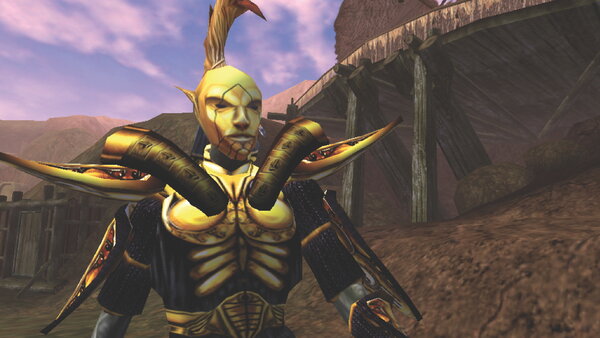
You probably didn't put too much thought into the under-the-hood workings of the Xbox port of The Elder Scrolls III: Morrowind from PC, but for the classic open-world RPG to run as fluidly as it did, Bethesda had to employ one devilishly clever trick.
As revealed by studio head Todd Howard in a 2020 podcast interview, because the original Xbox only had 64MB of RAM, Microsoft clued them into a trick to keep the game running while running low on memory.
Basically, Microsoft showed Bethesda that they could invisibly execute a command whenever the RAM reached a certain threshold which quickly rebooted the Xbox without the player's knowledge.
The reboot would be disguised as a long loading screen and then return players to where they were previously, ensuring they were none the wiser - until now.
Howard called the trick a "hail Mary" to keep the game running on the Xbox hardware, and while hardly ideal it is an impressively crafty way to make an incredibly challenging port work.
6. Pokémon Gold & Silver

More than 25 years after their release, it still puzzles many that Nintendo was able to make Pokémon Gold and Silver work on the creaky Game Boy Colour, especially with the game featuring not one but two full regions - Johto and Kanto.
Originally, Gold and Silver was only intended to feature the new area of Johto, but as production began to wind down the late, great Satoru Iwata - who was the then-president of HAL Laboratory - felt that the game should also include the Kanto area previously featured in Pokémon Red and Green.
But doing so presented a huge technical challenge to developer Game Freak considering the storage limitations of an 8Mb Game Boy Colour cartridge.
Yet Iwata himself pitched in to aid the team in developing new bespoke tools to help compress the game's graphical data, allowing both teeming worlds to inexplicably fit into such tiny storage media.
The result was a seminal game that cemented Pokémon's pop-culture dominance at the turn of the century.
5. Crash Bandicoot

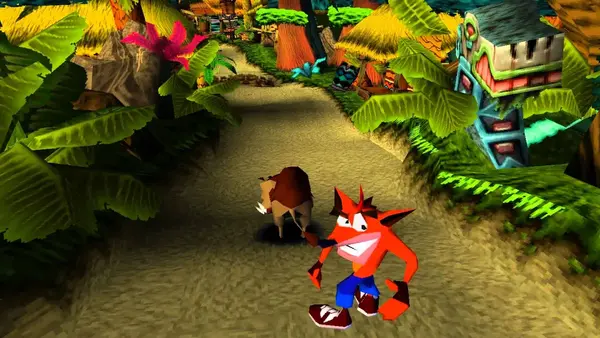
Crash Bandicoot isn't just one of the most iconic mascot platformers of all time - it's also perhaps the most mind-boggling technical marvel in the entire history of studio Naughty Dog, which is really saying something.
Developing detailed 3D environments for the original PlayStation proved enormously challenging, largely due to the limitations of the console's 2MB of system RAM.
But Naughty Dog's genius programmer Andy Gavin came up with a novel solution to defeat this issue - he divided Crash's high-detail levels into 64KB chunks which could be loaded from the game's CD drive into the RAM as needed.
Effectively, Gavin "hacked" the PS1's hardware to allow environmental detail that was, by his estimation, 20-30 times higher than was possible without finding a way to circumvent said RAM limitation.
And on top of this, he also developed a cutting edge compression algorithm to ensure that all the necessary animation data could run on the PlayStation.
Such techniques are now commonplace, but back in 1996 it was all positively revolutionary.
4. Xenoblade Chronicles X: Definitive Edition
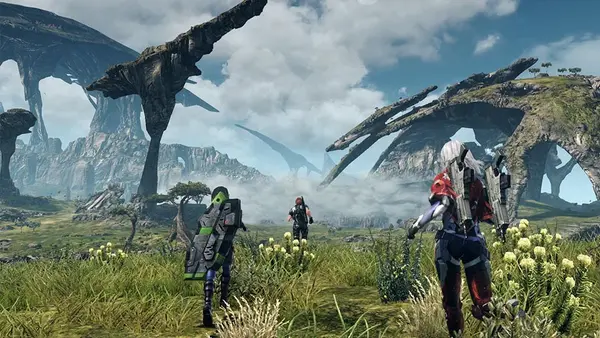
Xenoblade Chronicles X was originally released on the Wii U where the game data totalled a whopping 33GB, including optional downloadable data packs intended to improve performance.
But for the recent Definitive Edition re-release on the Nintendo Switch, developer Monolith Soft faced the gargantuan task of shrinking the game down to fit on a mere 16GB Switch cartridge.
And not ones to be outdone, the wizards at Monolith Soft managed to get the file size down to a miniscule 13.5GB - far below the 16GB threshold.
The developers employed numerous clever tricks to bring the file size down, from heavy compression to removing duplicate data included in the original Wii U release for the sake of its disc drive.
And if that's not good enough, the Switch version enjoys significantly better performance, particularly with regard to its frame rate and loading times, all without sacrificing any of the content from the original release. Absolute sorcery.
3. Shadow of the Colossus
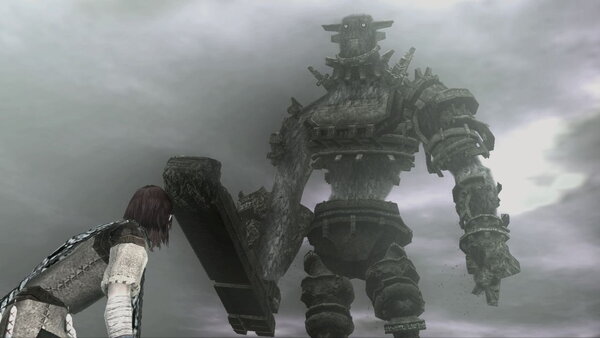
Shadow of the Colossus is widely considered one of the greatest video games of all time, and though it's been lovingly remastered and remade over the years, it's still a major miracle that the original game worked on the PS2 at all.
While there's no denying that Shadow of the Colossus suffers through some performance issues on the console - namely a brutally low frame-rate at times - it's still a phenomenal achievement that a huge open-world with building-sized bosses could run on the PS2's mere 32MB of RAM.
And it sure wasn't a happy accident - Team Ico employed innumerable crafty technical tricks to get the game working.
This included swapping-out the fidelity of environmental models depending on how close the player was to them, constantly streaming data from the game disc into the system RAM, and setting the game to run with an unlocked frame rate - hence the volatile swings in frame rate during intense boss fights.
Team Ico also programmed custom physics and lighting models that were virtually unprecedented at the time, all of this adding up to ensure that one of the PS2 era's most ambitious games could run well enough.
2. Resident Evil 2 (N64)

Porting a hit game from one platform to another can be hugely tricky business, and in the grand pantheon of "impossible" ports, there are few more fascinating or impressive than the Nintendo 64 version of Resident Evil 2.
The big problem with porting the survival horror sequel from the PlayStation to the N64 is that the PS1 release weighed in at a then-hefty 1.2GB across two discs, while the N64's cartridges were limited to a capacity of just 64MB.
Over the course of a year and at a cost of $1 million, Angel Studios employed aggressive and creative compression techniques to ensure that all of the audio and video from the PS1 release could fit, albeit in lower-fidelity form, on an N64 cart.
Though the PS1 version is the definitive iteration of the game, the N64 port is a mind-bogglingly impressive technical achievement to this very day, retaining the essence of the original game at barely 5% of the storage size.
1. Star Fox

And finally we have a game whose achievements were so thoroughly extra some might even call it outright cheating.
Star Fox is one of the most technically impressive video games on the SNES, and on paper its 3D graphics should've been totally impossible on the system's hardware.
But co-developer Argonaut Software pitched Nintendo on the idea of including a 3D graphics accelerator chip in the Star Fox game cartridge itself, which would massively boost the SNES' ability to process 3D visuals.
Nintendo agreed, and so the Super FX chip was born, which became the first-ever 3D graphics accelerator in a home video game. It proved powerful enough that Argonaut even jokingly referred to the SNES itself as a "power supply for the Super FX chip."
The Super FX chip was subsequently used in a number of SNES games, including Doom and Super Mario World 2: Yoshi's Island, allowing them to pull off technical feats that simply shouldn't have been possible.