8 Amazing Video Games That SURVIVED Development Hell
These games crawled from the depths of development hell and astounded us all.

Developing even the simplest of video games is an extraordinary complex and challenging undertaking, potentially requiring hundreds or even thousands of people to pool their skills and knowledge for years in the pursuit of a (hopefully) quality end product.
As such there are literally hundreds of high-profile video games that have ended up trapped in development hell for one reason or another.
Perhaps the production got caught up in business red tape behind-the-scenes, maybe the creative vision just wasn't working, or it's possible the entire project had been mismanaged from the get-go.
It's sadly common for games in development hell to either never release at all or simply put out a terrible end product just to ship the damn thing, but every so often a game manages to claw its way out and blow everyone away.
These incredibly rare, unicorn titles all managed to weather the serious storms of their development and release an outstanding final game that, not merely a credit to its franchise, might even be a generational all-timer.
They are, however, most certainly exceptions in the history of games development...
8. Resident Evil 4
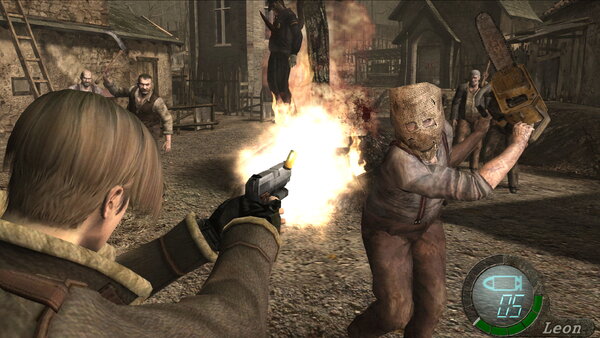
Resident Evil 4 spent an entire six years in development, which back at the turn of century was an absolute age - especially as the first three entries in the survival horror series were put out in just half that time.
But the fourth installment went through a staggering five iterations before finally hitting stores in 2005, with one discarded prototype even going on to become Devil May Cry.
During this period numerous directors were shuffled in and out of the project, until the first game's director Shinji Mikami stepped in to deliver the final released product.
With Capcom threatening to put the series on ice if Resident Evil 4 underperformed, Mikami took many bold swings, shifting the focus from pure horror to an action-horror hybrid, introducing an over-the-shoulder camera, and shifting the mayhem to rural Spain.
It was all a massive gamble, then, but Resident Evil 4 ultimately went on to become a massive critical and commercial success, remaining the series' high-point to this very day and proving massively influential on the survival horror genre ever since.
7. Fez
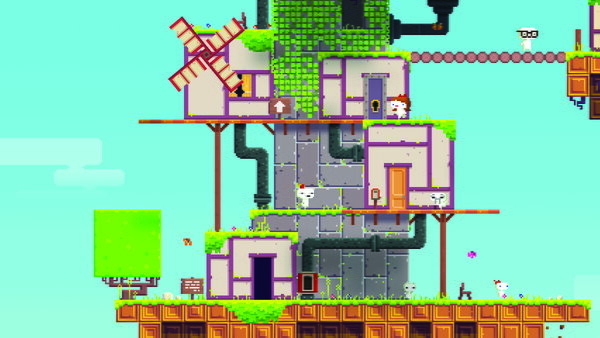
But development hell sure isn't limited to the realm of AAA franchise behemoths - it also regularly happens to indie games created by as few as one or two people.
Case in point, the iconic 2012 platformer Fez was actually announced by designer Phil Fish five years earlier in 2007.
Soon realising he needed a second pair of hands, he recruited Renaud Bédard to handle programming.
The years that followed saw the inexperienced Fish and Bédard experiment with ideas, in turn burning through a Canadian government loan provided for development, before Québécois developer-publisher Trapdoor stepped in and rescued the game from cancellation.
This wasn't the end of the turmoil, though - Fish became embroiled in a legal dispute with a former business partner, causing development to further drag on until it finally released in April 2012.
But Fez wasn't merely a good or even great game - it was a generational puzzle-platformer which remains an extremely important fixture in the indie gaming revolution of the early 2010s.
It's just a damn shame that Fez 2 was cancelled over a Twitter beef of all things.
6. Metroid Dread

A sequel to 2002's much-loved Metroid Fusion was first conceived in the mid-2000s, with the intent to release on Nintendo's new handheld the Nintendo DS.
However, development stalled in the years that followed largely due to the technical limitations of the DS itself, and with producer Yoshio Sakamoto feeling unhappy with progress, Metroid Dread was effectively put on ice.
It wasn't until the release of the Switch that Sakamoto was convinced the technology was there to do Dread justice, and in 2021 the game's revival was officially announced, shocking fans who'd long since given up on it.
The real triumph, of course, is that Metroid Dread received rave reviews for its ingenious level design and outstanding, fluid gameplay, which managed to both pay tribute to its predecessor and update the formula for modern tastes.
As such Dread went on to become the best-selling game in the entire Metroid franchise, and rightly so.
5. South Park: The Fractured But Whole

South Park: The Fractured But Whole proves beyond any doubt that even the most obvious slam-dunk sequel can run afoul of devastating unforeseen issues.
Though a sequel to Obsidian's 2014 hit RPG South Park: The Stick of Truth was quickly given the greenlight, things fell apart after THQ went bankrupt in 2012.
Ubisoft then acquired the rights to the series and switched development from Obsidian to Ubisoft San Francisco.
The new team redesigned the original gameplay format in their bespoke Snowdrop engine, and because South Park creators Matt Stone and Trey Parker were intensely involved in development, production was subject to delays amid their busy schedules.
Production was frantic enough that Trey Parker even left the hospital while still recovering from gallbladder removal surgery to record more lines of dialogue for the game.
Even so, it was delayed almost a year beyond its original December 2016 release date, but the long wait ultimately proved worth it, as The Fractured But Whole served up a riotous superhero parody that significantly improved the gameplay from its predecessor.
4. Team Fortress 2
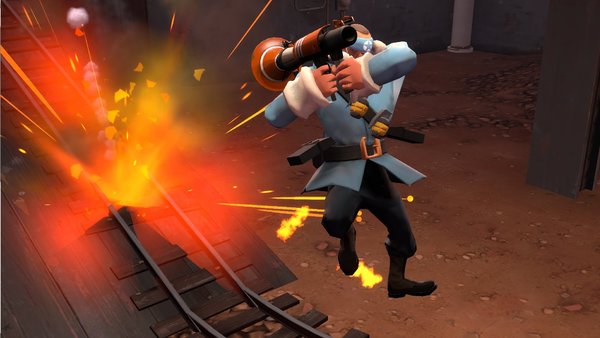
The sheer mention of Team Fortress 2's strained development sends a ripple of psychic pain through the original FPS' entire fanbase.
In 1998, Team Fortress Classic developers John Cook and Robin Walker were hired by Valve to develop Team Fortress 2, which was initially intended to be an expansion to the original Half-Life.
Team Fortress 2 was originally introduced in 1999 as a modern war shooter, but in the years that followed Valve cycled through various visions for the game, none of which they were satisfied with.
As Walker and Cook were moved onto other Valve projects, most fans believed the game to be vaporware, with the media often derisively comparing it to the long-delayed Duke Nukem Forever.
Valve finally re-announced Team Fortress 2 in 2006 to the shock of many, and though its cartoonish visual style ruffled some feathers, ultimately the game released in 2007 to raves, became one of the most popular multiplayer shooters of all time, and laid the groundwork for the hero shooter as we know it today.
3. Conker's Bad Fur Day

Few games have changed more throughout their development history than Conker's Bad Fur Day, which started out as an almost totally different game altogether.
Originally a cute, family-friendly game in the vein of Banjo-Kazooie called Twelve Tales: Conker 64, this version was ultimately scrapped after the developers felt that it was simply another in a long line of generically colourful N64 adventure games.
The team instead took a bold pivot to reinvent Conker as an edgier, more adult-skewing title packed with dark humour, profanity, and parodies of classic Hollywood films.
The game was effectively rebuilt from scratch with new level design and a darker visual style, while pushing the N64 to its absolute technical limit.
This all ensured that by the time Conker's Bad Fur Day finally released in 2001, the project had been in development for five years and the N64 was even nearing the end of its life.
As a result Conker wasn't a commercial success, but it was one hell of a swan song title for the N64 - hilarious, insanely fun to play, and like basically nothing else being made at the time.
2. Doom (2016)
2016's fourth Doom game didn't arrive until 12 years after the release of Doom 3, with id Software spending many years developing different versions of Doom 4 that were eventually scrapped.
The most famous of these is a Call of Duty-inspired first-person-shooter set on Earth, with gameplay mechanics such as regenerating health, cover shooting, and scripted set-pieces.
By 2011, after at least three years of development, id and Bethesda decided that they'd strayed too far from the original vision of Doom, and so tossed this version out.
They then set about delivering a modern day reinvention of Doom that stayed true to its frantic, fast-paced origins.
But even when Doom 2016 was revealed, many tempered their expectations, unaided by the fact that Bethesda held back review copies until release day.
But Doom 2016 went on to receive shocking acclaim from critics and fans alike for its face-melting action and gorgeous visuals, in turn bringing the classic FPS franchise back to serious prominence.
1. Half-Life 2

And finally we have a game whose hellish development is legendary in the annals of gaming lore - Half-Life 2.
It sure didn't help that Valve's Gabe Newell tasked his development team with making a sequel that redefined the first-person shooter, in addition to the inherent pressure of producing a sequel worthy to one of the most beloved games of all time.
In addition to all the new technology that had to be built to realise the game's physics-defying action, Valve also suffered a catastrophic source code leak, leading to an unfinished version of the game being released online.
This crushed morale at the company and forced large portions of the game to be reworked, causing extensive delays until Half-Life 2 was finally released in late 2004 after five years of work.
But Valve's hard graft paid off, as the end product is basically the textbook example of an incredibly ambitious sequel that quite arguably exceeds the achievements of its predecessor.