The Witcher 4: 10 Things It Needs To Surpass The Witcher 3

Can this generation's finest game get any better?
The Witcher 3 is as close to perfection as any RPG to date has managed, thanks to a dark, brooding world inspired by lesser-known myths from European folklore and a plethora of both rich characters and quests that suck you into its medieval world. However, with the series€™ recently-established position as one of the great video-game franchises, it€™s reasonable to expect - nay, demand - that its next outing not only irons out the few flaws of its predecessor, but breaks some new ground for the RPG genre. With the ink barely having dried on Witcher 3 reviews, the more respectful gamer may cry that it€™s €˜too soon€™ to talk about The Witcher 4. But that hasn't stopped a shameless bunch of brattish fans from starting a petition demanding that The Witcher 4 be made - or me from thinking about how it could build on what the series has achieved so far. With developer CD Projekt RED currently focusing on sci-fi RPG Cyberpunk 2077, it'll could be a few years before we return to the Continent. But with the series having truly found its stride in its third outing, it seems inevitable another in this world - though almost certainly not revolving around Geralt of Rivia - will grace us one day. Here are the ten things that the next entry in the Witcher canon will need to do if it - like its forebears - is to become one of the greatest games of its generation.

10. Do Horse Riding And Mounted Combat Properly

The Witcher 3 is no exception to the rule of fantasy game horse-travel being a rollercoaster of emotions, swooping between unadulterated ecstasy and raw gamepad-breaking frustration. There are points in the game where you come close to attaining a kind of video game nirvana, galloping across the stunning war-torn countryside against the backdrop of a setting sun. However, these sublime moments are abruptly halted by rocks, fences, trees, which usually cause Geralt€™s horse Roach to neigh and stand on its hind legs as if it were posing for the DVD case of Black Beauty. Aside from Roach€™s inability to manoeuvre around or over any obstacle more rigid than a blade of grass, combat while riding the hapless beast is also frustrating. While the slow-motion moves go some way to stylising the action (providing you know how to do it), the €˜tank€™ controls make up-close combat a sclerotic nightmare - an ailment suffered by pretty much all video game horses. The Witcher 4 needs to make riding Roach through a forest just as appealing and dramatic as riding through a field; twigs should break off and scratch Geralt€™s face, thin branches should bend as the horse gallops among them, while thicker branches could be avoided by well-timed button presses. If you're being chased by a horse rider, you should be able to battle them with a similar move-set to the ground combat, as well as run them into obstacles and low-hanging branches. Remember that horse chase sequence through the forest in the Fellowship of the Ring? There's no reason why video games can't offer equally captivating horse-mounted drama.

9. Improve The Combat

It took a while for the Witcher series to settle on combat mechanics that were deep, challenging and rewarding, but it ended up in a pretty good place with Wild Hunt. Dodging is responsive in Witcher 3, adrenaline points can make you a momentary killing machine, and for newcomers there€™s a welcome description for each of Geralt€™s magical abilities to make them easier to use in combat. But fighting in the game rests in something of a nether region. It shares some similarities with the sublime stamina and timing-based fighting of Dark Souls, but ultimately feels less precise and skilful. Conversely, it€™s not nearly as spectacular as the more cinematic fighting in something like Shadow of Mordor. In The Witcher 3 you€™re often pitted against several enemies at once, but the targeting system isn€™t well equipped to deal with them, often leaving you confused and taking cheap shots from enemies that you should be avoiding. The Witcher 4 needs a larger arsenal of combat moves. A wider repertoire of combos - based on speed, power, defensiveness, and so on - would allow players to better hone Geralt towards a fighting style that suits them. It would also make one-on-one sword-fighting more intriguing than limited variations of light and heavy attacks. At a high stamina cost, special moves based on simultaneous button presses could trigger area-of-effect moves that damage all enemies within a radius around Geralt, or risky finishers that would or wouldn€™t work depending on the enemy€™s health and your skill level. With a more diverse array of move and improved targeting mechanics, The Witcher 4 could finally bring the series€™ solid but superficial combat up to par with the rest of the game.

8. Make Side-Quests Effect The Game World

The Witcher 3 does a great job of giving its side-quests an air of importance and credibility. There were no basements to be cleared of rats or tacked-on missions where you had to fetch bread for the village spinster before the bakery closed. Thanks to the brilliant writing, you're given a strong sense that oddjobs Geralt carries out for the people of the Continent have a huge impact on their lives. Whether you€™re helping a person reclaim their family home from wraiths or sacrificing someone€™s life to lift a curse, you become emotionally invested in every one of their lives. But this sense of importance is much more a result of great storytelling than its effect on your gameplay. While you get a sense of genuine satisfaction for completing side-quests, they have little effect on Geralt once you€™ve completed them - apart from endowing him with a heavier coin purse. I€™d like to see The Witcher 4 have side-quests branch out into becoming more than just convenient ways to earn an extra buck. For example, if you complete an assassination contract, it could turn out that your victim had friends in high places, leaving Geralt in danger of facing ambushes and revenge attacks from the victim's allies until the feud gets resolved. Failing or succeeding side-quests should have wider-reaching consequences too. Depending on the outcomes, you could get shunned or revered in certain villages, and your standing with the local folk could change depending on your subsequent actions; what better way to get back into the good books of the man whose brother died by your side than by clearing a local monster nest threatening his family? The Witcher 3 did some great things with side-quests, and The Witcher 4 can build on them further by making them a dynamic, shifting entity in the world, your actions impacting people in ways that come back to affect your gameplay experience long after the quest itself ends.

7. Let The Player Own A Home

I know that Geralt of Rivia is not a man who easily settles down to the domestic life, but it'd be great to see some kind of property ownership system implemented in The Witcher 4. Owning a home in an open-world RPG feels like a more significant feature than the option to sleep with half the game's cast of main characters (which is what the Witcher and other RPGs veer towards at the moment). Ultimately, it would be up to the player whether they want to live in a stately manor or a humble shack in the woods, but property ownership in an RPG should be about more than just playing 'house' with your character. It could be a place to keep various trophies that you pick up as you play the game - bloodied swords from duels, monsters' heads mounted on walls, the first outfit that you wore in the game, etc. With the countless number of memorable experiences that the Witcher series offers, it would be fitting to have your own in-game shrine dedicated to them.

6. Feature A More Original Main Storyline

It€™s pretty much a trope of video game fantasy worlds that the main quest has to fit into one of several uninspiring cliches; €˜slay a dragon€™, €˜save the princess€™ or in the case of Witcher 3, €˜defeat some faceless dudes wearing ornate suits of spiked armour€™. In fairness to The Witcher 3, the storyline is much more small-scale and personal than your typical high-fantasy game, and the excellently-written characters prevent it from becoming too much of a slog to get through. However, while there are moral choices along the way, the unambiguously dark nature of the game's main antagonists, the Wild Hunt, means that the storyline still feels like the typically dualistic battle of good against evil that pervades fantasy games. Geralt is a morally ambiguous loner who is loyal to the few people he really cares for, but the main Witcher storylines have always veered towards depicting him as pretty clean-cut good guy. In The Witcher 4, if we're sticking with him, it€™d be interesting to explore Geralt€™s dark side. Seeing as the game would almost certainly take place before the events of The Witcher 3, it could be set in the time when a young Geralt was training to become a Witcher. This would give the opportunity to show a more violent, reckless side to the character that would reveal that he wasn't always the wry, unshakeable ronin that he becomes later.

5. Make Geralt/Your Witcher More Agile

Assassin€™s Creed is the death of gaming. I€™m throwing that statement out there to reassure readers that I don€™t think that The Witcher 4 should have Geralt scaling walls and jumping into hay-bales like the vapid protagonists of the gaming world€™s most shamelessly overdone franchise. But Geralt could use a bit more physical grace outside of combat. The guy moves with the stiffness and difficulty of a geriatric, or simply someone who can€™t be bothered to exert themselves when not dismembering his assailants. There is a stark contrast between Geralt's flowing sword-swinging and his cumbersome ladder-climbing and lazy jumping. Surely he can try just a little bit harder to scale castle ruins to get some good views or uncover out-of-reach treasures? The Witcher 3 is a game that lacks the verticality of something like Skyrim, focusing on taking you underground and underwater, but rarely up into ruined towers or mountain peaks. In The Witcher 4, it€™d be great to see Geralt push himself a bit more when not in combat situations and scale some new heights, adding a dimension to the series that has so far been lacking.

4. Fix The UI

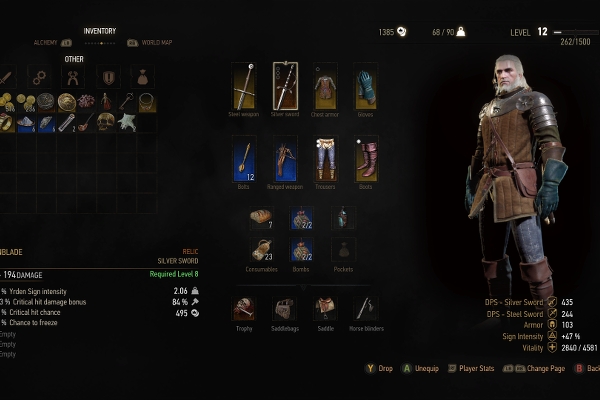
The least idealistic and glamorous demand that I have to make of The Witcher 4 is for it to include an interface that doesn't look like it just scrambled all the items, quests and other information you gather throughout the game into an unintelligible mess. The Witcher 3 UI wouldn't look amiss in a complex 90s RPG, and does little to help you keep tabs on the substantial hoard of items that Geralt accrues. It's a nightmare of tiny text, indistinguishable inventory items, and scenarios where you accidentally sell valuable items to merchants for paltry coin (with the option to buy them back for 10 times the price). There are few quick-select options too, so there are scenarios in combat where you have to pause the game to access a particular item or chow on a piece of bread. It's difficult to navigate, convoluted and the player's immersion suffers as a result. But luckily for PC gamers frustrated with the Witcher 3 UI, there's a good chance that CD Projekt RED will release a modding tool for The Witcher 3, just like it did for The Witcher 2. This would allow players to create their own UIs, and potentially improve on the meagre offering in the vanilla version of the game. The Witcher 2 modding tool was released around a year after the game itself, so I estimate that it'll be a similar time-frame for the Witcher 3 equivalent to turn up.

3. Make Gathering Ingredients More Involving

Geralt is traditionally a master alchemist/potion junkie who relies heavily on dosing himself up with various concoctions to psyche himself up for battle. In light of this, it€™s perplexing that The Witcher 3 leaves you pretty much clueless about where to find potion ingredients. Alchemy in Witcher 3 essentially involves gathering every single herb, vial, and dismembered monster piece you can find, then checking the inventory now and then to see whether by chance anything you€™ve collected can be combined into potions. It feels frustratingly detached, as if you€™re playing the role of Geralt€™s clueless gardener-scavenger who just delivers the ingredients for the great man to concoct. If The Witcher 4 arrives, it needs to make the process of gathering ingredients less random and more engaging. Perhaps Geralt could buy or find books on flowers, herbs and monsters which tell him where in the world those things are likely to be found. You could then select a potion in much the same way you€™d select a quest, and have areas highlighted on your map within which you can search for the right ingredients.

2. Revisit An Earlier Period In Geralt€™s Life

While most of the ideas on this list are ways in which The Witcher 4 could build on the success of its predecessor, this is the only one that quite pretty much needs to happen if there is to be another Witcher game charting Geralt's adventures. That's because CD Projekt RED has already confirmed that with The Witcher 3, Geralt €œhas reached the end of his story€. Presumably, this means he goes into retirement, retreating to a cabin in the woods where he sees out his remaining couple of hundred years by hunting deer, gathering herbs, and experimenting with hallucinogenic potions. But the end of Geralt€™s story doesn€™t mean there€™s no story left to tell. It just means that The Witcher 4 would have to go back in time rather than forwards, exploring an earlier period in Geralt€™s life. The older Geralt we see in The Witcher 3 is one of the most notorious Casanovas in video games, so just imagine the smutty things he got up to in his twenties! More importantly, it€™d be a chance for us to see a more foolish, more reckless side to Geralt, and give us more insight into how he ended up becoming such a dour, gravel-voiced miser later in life.

1. ...Or Get Rid Of Geralt Altogether
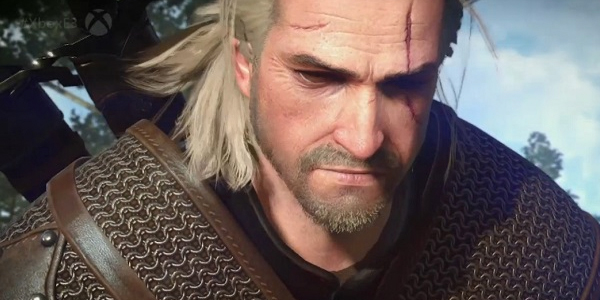
It€™s always a risk creating a sequel that takes places earlier in the world€™s chronology than previous games (i.e. a prequel). Sure, the Metal Gear Solid series pulled it off in style (most of the time, anyway), but let€™s also not forget the trauma caused by the Star Wars prequels. Prequels are a dangerous business, and automatically suspected by fans of being cunning ways to milk a franchise instead of giving it a dignified ending. The Witcher 3 ending was very much conclusive, and the developers have said as much, but the rich world it presented to gamers has left them clamouring for more. Maybe then, in The Witcher 4, we could follow the story of a Witcher existing long before Geralt€™s time? Alternatively, how about a storyline set in a time before humans even arrived on the Continent and it was populated by gnomes? Yep, the dark world of The Witcher was once filled with the little dudes who fish in your garden pond, and focusing on them could be the perfect way to return to the Continent while distancing the game sufficiently from Geralt€™s much-loved storyline. What would like improved for the fourth Witcher game? Let us know in the comments!

Watch Next


Contributor
Contributor

Gamer, Researcher of strange things. I'm a writer-editor hybrid whose writings on video games, technology and movies can be found across the internet. I've even ventured into the realm of current affairs on occasion but, unable to face reality, have retreated into expatiating on things on screens instead.