The Sickening Truth Behind Cosmetic Gaming Microtransactions
Cosmetics totally matter.

There's perhaps no aspect of modern video gaming more contentious than microtransactions - that is to say, the means through which game publishers generate added revenue by charging small fees for additional virtual goods.
This typically comes in the form of "pay-to-win" microtransactions which grant paying players a leg-up on the competition, or as supposedly "harmless" cosmestic micotransactions for aesthetic items.
Though it's little secret that the pay-to-win model is widely loathed by many gamers, cosmetics are somewhat more divisive.
For some, the assumption is that if they don't alter the ones and zeroes of the core gameplay, or give anyone a clear tactical advantage, then they're not really causing any damage at all.
But is this really the case? Paid microtransactions as a whole speak to an industry with an extremely unhealthy relationship between publisher and customer, especially given that many of the latter happen to be children.
If cosmestic MTX are so often seen as a compromise which minimises harm, this isn't really true at all.
Paid cosmetics may not be as immediately, obviously damaging as pay-to-win, but they're still indicative of a wider, insidious sickness rife in an insatiable, greed-driven business...
7. They're Part Of An Industry-Wide Long Con

It wasn't that long ago that players simply scoffed at the prospect of paying real-world money for extra digital skins and other "intangible" cosmetic objects in video games.
But with a 2018 report declaring that 69% of gamers now find cosmetic MTX acceptable, times have certainly changed, and it's all part of an industry-wide effort to effectively railroad players into opening their wallets.
For starters, publishers would love to have us all believe that cosmetics and character customisation aren't in fact a core part of the gaming experience, and so by carving them out only to sell them back to us later, the player isn't actually being deprived of anything.
Except, anyone who's played at least a few video games in their life can appreciate the enormous personal satisfaction and added emotional investment which comes with tailoring a character's style to your own preferences.
Simply put, cosmetics are far more closely linked to gameplay than publishers want to admit, which isn't only a disservice to players, but also the artists who work so hard creating all the assets.
Given that online phenomenons like Overwatch, Fortnite, and so on are centered around players personalising their avatars, to at once deem that disposable while also commodifying it for a premium is crass at best, if not offensively manipulative.
Indeed, even at their most "unnecessary" and "harmless," cosmetic MTX feed into a system designed to change how you think...
6. Cosmetic DLC Is Inherently Predatory

If the central pro-cosmetics argument is that they don't give those buying-in an advantage over those who don't, that's to ignore a far uglier side of the coin - that the MTX system is, in all its forms, designed to re-wire players' brains.
As much as we all laughed at the absurdity of Bethesda introducing grossly overpriced horse armour for The Elder Scrolls IV: Oblivion in 2006, almost 15 years on this sort of pricing model is in no way ridiculous.
More to the point, much like pay-to-win mechanics, paid cosmetic DLC encourages a culture which exploits some of the most vulnerable people in society: those with pathological addictions, and children.
While it wouldn't be fair to call all cosmetic MTX overpriced, much of it is priced to effectively treat players like ATMs hooked up to an IV, from which money can be habitually siphoned.
Take Mortal Kombat 11, which featured more than $6,000 worth of cosmetics, or the countless games which dole out cosmetics by way of loot boxes, in turn disconcertingly blurring the line between video games and digital gambling houses.
While there are many of us who simply choose not to participate in the cosmetics circus, there are many others who are susceptible to publishers' aggressive manipulation tactics, and who are then mercilessly preyed upon by these vampiric, money-hungry companies.
This psychological pressure is surely most disturbingly felt in MTX-riddled games marketed to children...
5. Won't Somebody Think Of The Children? (Seriously)

As easy as it is to view cosmetics as harmless digital objects, it's important to consider them through the lens of children playing games like Fortnite and Overwatch.
Effectively, these skins create a new digital facsimile of the real-world "haves and have-nots," where the rich kids have all the fancy new clothes, and the poorer kids don't - and are typically bullied for it.
With our children's formative years now filtered through the lens of social media, there's a massive, added layer of social pressure, and one which these games knowingly take full advantage of in order to peddle their wares to audiences too young to know better.
While it's tough to imagine many kids being bullied for not throwing money into pay-to-win mechanics, it's far easier to imagine them being teased, and their self-esteem being eroded, all because they don't have the hot new Fortnite outfit.
Isn't growing up difficult enough without a game rubbing it in your face? The fact that games clearly marketed with kids in mind are able to so brazenly lure in young customers without much in the way of oversight - something we'll get back to later - is absolutely vile.
Yet beyond concerns for the mental well-being of the coming generations, there is one basic, undisputed truth about cosmetic MTX...
4. Remember When Cosmetic Content Was "Free"?

Above all else, the main reason that microtransactions will forever piss players off is that cosmetic rewards have been a part of gaming as long as gaming has existed.
Except, for decades, these rewards were unlocked when you bought the game with your hard-earned cash, not when you stumped up extra incremental fees.
Unlockable costumes, skins, weapons, and so on have always been part of gaming's reward system, and cosmetic MTX are simply an infuriatingly successful way to monetise the dopamine rush of playing with the new hotness.
Games are increasingly being carved up and sold back to us at a snide premium. Remember when you could unlock Metal Gear Solid's tuxedo suit simply by completing the game? Well, Metal Gear Solid V decided to charge a buck for the "pleasure."
And that's a comparatively innocuous example next to the myriad games which charge hundreds if not thousands of dollars to access every last cosmetic item, or by making the in-game grind so absurdly time-consuming as to heavily incentivise those purchases.
While it's often said that a video game is a generally cheaper per-hour medium than, say, a night at the movies, and game prices have stayed relatively low relative to global inflation over the decades, a reasonable, periodic price hike would surely be preferable to this constant nickel-and-diming nonsense.
The truth, of course, is that cosmetic MTX are so insanely lucrative that publishers could never raise a game's price high enough for that proposition to make sense, sadly.
3. It's A Majorly Slippery Slope

Cosmetic MTX are a textbook "slippery slope" business practise - one which already invites its fair share of skepticism precisely because it's so blatantly open for abuse, with publishers free to move their established goalposts.
Beyond the fact that it normalises excess spending on addiction-orientated content and sells off items that gamers should largely be getting for free, on a broader level it gets players more comfortable with the idea of opening their wallets for frivolities.
After all, beyond raising DLC prices or introducing loot boxes, what's to stop publishers starting with cosmetic MTX before slowly but surely shifting over to a pay-to-win model?
Fortnite has even been accused of making some subtle pay-to-win moves in recent months with the release of skins which grant players arguably "unfair" advantages over their opponents.
With the mobile games market being a veritable wild west of games which will charge players for every last feature imaginable, the fear that this could ultimately clog up the console and PC games market is totally understandable.
But it's also important not to ignore the other means through which cosmetic MTX have had a significant impact upon both the industry and players...
2. Don't Forget The "Skin Economy"
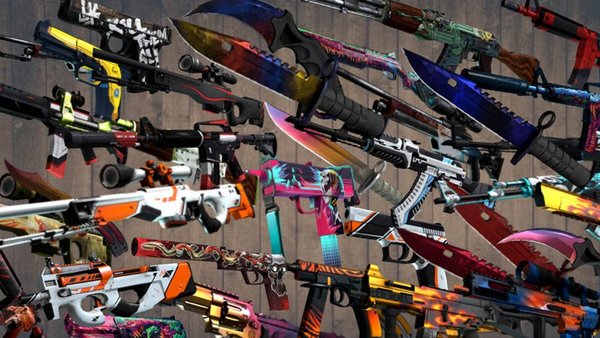
Let's not forget the wider implications of game publishers as a whole encouraging the valuation and sale of digital cosmetics, as is best realised by Counter-Strike: Global Offensive's literal skin economy.
With players able to not only trade their earned skins for other skins but also sell them for real-world money and even gamble them, it further normalises practises designed to prey on those with compulsive personalities.
While you can argue that the value of these skins is determined by the player market itself, it's nevertheless symptomatic of an industry which places an increasing amount of value on intangible, often artifiically scarce items which, for all intents and purposes, should simply be unlockable for all with sufficient effort.
This is of course just one branch away from the typical cosmetic MTX model, but also paints an unsettling picture of the creative ways in which the gaming public's thirst for cosmetics is being fostered and encouraged.
And finally, we come to the major, overarching issue with the current system...
1. Where's The Oversight?
In the case of video games, it's fair to say that the law is still catching up to the technology, for though ratings systems have been in place for years, most worldwide territories have yet to offer up clear regulation of microtransactions.
Though American politician Chris Lee famously took a stand against Star Wars Battlefront II's egregious microtransactions - dubbing it a "Star Wars-themed online casino designed to lure kids into spending money" - the AAA gaming industry still trots out MTX with only the most minimal oversight to protect those most easily-targeted by them.
Given that we have empirical proof of "buyer beware" warnings having little effect on curbing compulsive behaviour in the general gambling sphere, it's clear that the games industry needs to be more aggressively targeted to clamp down on practises which exploit the vulnerable, or encourage a culture which allows it to happen.
If a game can sell millions of copies - even tens of millions - and still "need" to clog itself with money-grubbing gumph, then something is fundamentally wrong with the way in which gaming is structured as a business.
And it's painfully clear that publishers cannot be relied upon to remedy the issue themselves, because why would they when money can be made otherwise?
The only way this will be solved is with an iron fist approach from worldwide authorities, but sadly progress seems to be slow, and the issue likely won't be solved any time soon.