The Outer Worlds: 11 Gameplay Details You Need To Know
We've played it, but does Obsidian's game live up to the hype?
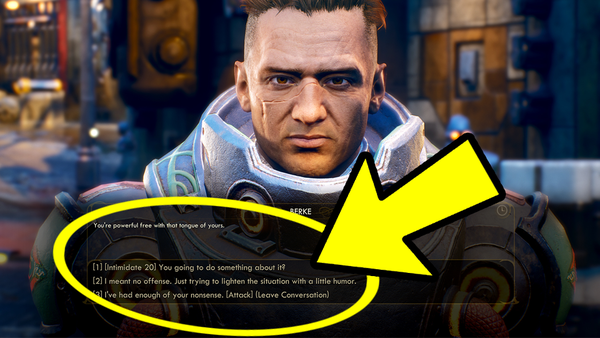
After much anticipation, Obsidian Entertainment's latest first-person RPG, The Outer Worlds, is finally dropping on October 25th. From the very first trailers the original IP has been pitched as being a spiritual successor to Fallout: New Vegas, and it's easy to see why.
While the post-apocalyptic Mojave wasteland has been swapped out for the limitless potential of outer space, everything - including the mechanics, the dialogue, the character customisation, and the story structure - feels like a refined version of what New Vegas built, and not in a bad way.
Obsidian invited WhatCulture down to a hands-on event earlier this month in London, where we enjoyed a two-hour demo of the upcoming RPG. Dropping us into a world with a pre-built character, we were free to do anything we wanted, tackle any quests, and venture off in any direction that took our fancy.
It was a confident move, and it left a very distinct impression, giving us a pretty robust understanding of how the RPG plays ahead of its impending October launch.
11. Gunplay Is Responsive And Meaty

The biggest, most immediate surprise of the entire demo was that the shooting and overall combat in The Outer Worlds is punchy, responsive, and pretty deep. The assumption that it wouldn't be isn't a knock on the developers; Obsidian simply haven't made that many first-person shooters, and the combat of Fallout - even the fourth game - has always felt a little clunky and secondary to the storytelling, world and exploration.
Here though, the devs have clearly made it a point to make the combat as enjoyable as the other gameplay pillars. There's a huge amount of variety to the weapons, whether they're guns or melee-based, with distinct aesthetic styles that make them familiar enough, but suitably alien considering the setting.
Whether it's the semi-auto rifle that can detach every limb from a body with one well-placed critical hit or a mini-gun that turns aliens into mulch, every weapon in the demo had a distinct feel and its own unique set of pros and cons. It helps that you can tinker with these in the workshop as well, adding attachments and even switching out the ammo type.
Throw in inventive enemy types, such as a mech that can take to the skies for a brief period, which imbues battles with a sense of verticality it may have otherwise lacked, and the combat in general was a pleasure to engage with.
10. Variety Is The Spice Of Combat

While the core act of shooting and slicing your way through enemies feels satisfying, it's given depth because of how much tactical freedom you actually have during combat. At least while exploring, you'll often have a short amount of time between spotting an enemy and attacking them, allowing you to choose the perfect approach for taking them out effectively as possible.
Whether that's whipping out a blade and going in stealthily, finding some high ground for a spot of sniping or equipping explosives for a fireworks display of an ambush, there's always scope to approach combat in a way that best suits your playstyle.
Even better, when you do kick off your violent plans, there's always different options for taking out different enemies. Certain types of aliens require you to adapt on the fly, while there might even be a way to tinker with the environment - for instance, hacking a pump to shroud the area in poison gas - to eliminate enemies without directly getting your hands dirty.
It's a far cry from shoot-the-dude-while-he-runs-blindly-at-you approach so many RPG makers take, and it's great that Obsidian's approach to player freedom in other areas made its way over to combat.
9. Dialogue Options Are Vast (And Dependent On Your Build)
Though it was a noble effort, Betheda's decision to give a voice to the player-created protagonist in Fallout 4 resulted in far more limited options in conversations, exemplified in such a memeable way by the constant appearance of a "sarcastic" option that virtually meant nothing and didn't change the conversations in any meaningful way.
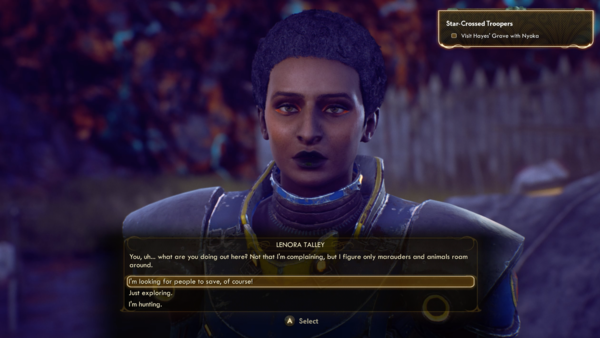
Thankfully, Obsidian have kept it old school, and while your protagonist isn't voice acted, they do have a wide range of responses when interacting with characters. A lot of these aren't simply to prompt a "good" or "bad" narrative path either, on account of there being no overt morality system, which means the role-playing possibilities are way more nuanced and personal.
Even better, on top of the wealth of regular responses are specialist speech checks, which unlock alternate routes through quests or even more dialogue branches. While this has always been a staple of the Fallout franchise (and it works very similar here, requiring your skills to be of a certain level), it's more than just charisma that matters.
The game takes into account a whole load of attributes when it comes to how your character can solve problems, which again really rewards you for adopting a specific role.
8. Character Are Well Written And Feel Alive
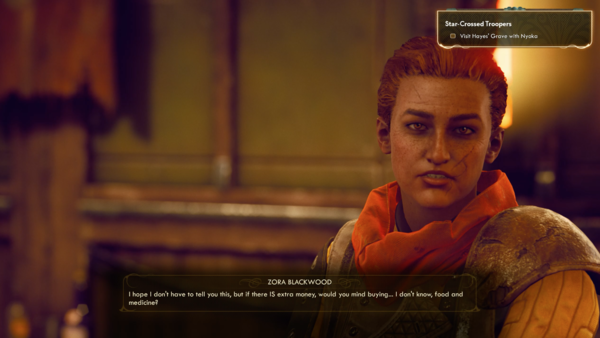
Of course, a wealth of dialogue options would be meaningless if the conversations themselves weren't interesting or fun, but a huge highlight of The Outer Worlds demo was just how charming and effective the writing was. Its success is perhaps best highlighted in the way it handles exposition, as details about the world and specific factions and characters was always delivered in a unique way that felt natural, and not just a dump of lore.
For instance, upon first meeting the Iconoclasts, their ideology was presented by a character as almost performing a sales pitch. They went into detail on the key figures, how you can help, and what they're trying to achieve with glee, even going as far to say that there's a pamphlet you could check out, but sadly they were all out of them.
Even in a two-hour tester, it was clear Obsidian have crafted a rich world full of detailed characters and interesting oddities, which is all delivered through an off-kilter sense of humour that brings the world to life. It's funny, but it's not flippant; these are real people who just happen to be in ridiculous situations.
7. Quests Are Dynamic And Integrated Into Exploration
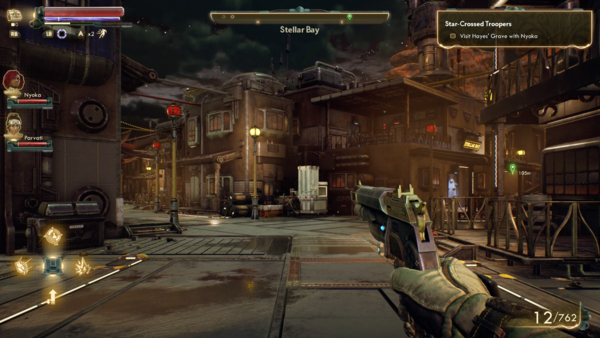
One major element that brings the world to life is just how packed the game is with quests and activities, but not in a way that just has you checking out a board in a town and automatically having a checklist to tick off land in your journal. Instead, quests almost appear as emergent, unscripted events that you've uncovered yourself.
Simply investigating the world uncovers a whole bunch of stories and threads for you to get involved with, even in the most unassuming places. Of course, the busier settlements have a huge amount of points of interest to discover, but even these aren't signposted, and instead are naturally uncovered by listening to conversations and talking to people.
You don't want to explore simply to engage with more combat or find better gear, but to see what stories you can stumble across, both big and small.
6. Missions Can Be Completed In A Bunch Of Ways
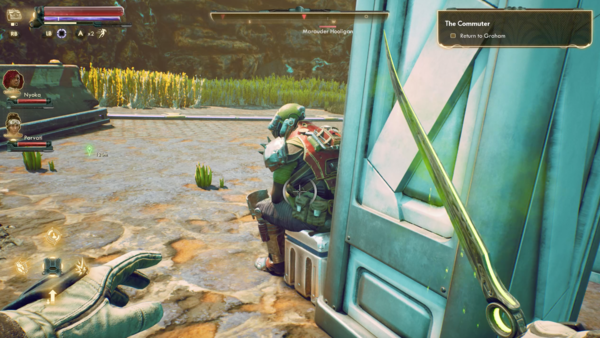
Not only do these missions start in emergent ways, but they also, perhaps unsurprisingly, have plenty of divergent ways to be tackled. In my experience, the initial objectives were rather vague, requiring you to acquire an item or accomplish a task but never really telling you how. This could then be branched off down a bunch of different routes, and thankfully not all of them required combat.
For instance, in one mission for the Iconoclasts I was tasked with finding a merchant who was late delivering some essential items. I found her locked in a room, with marauders surrounding her on the outside. To get to her I could talk the marauders down and bluff about my credentials to get them to leave, sneak into the compound and set off the previously mentioned poison gas to kill them all, or simply gun them all down on the spot.
Even then I wasn't done though, as talking to the merchant opened another sub-objective that had me persuading her into offering more than the parts I came for.
That's just one example, but it highlights the freedom these quests were all built around.
5. Enemy Variety Is Inspired
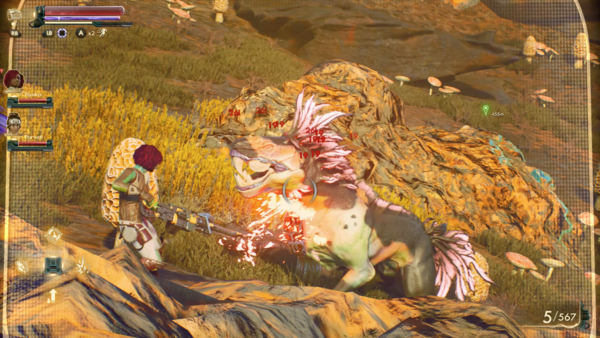
As alluded to earlier, even in the small dose of gameplay we were given, we ran into no shortage of inventive enemies. While you had your regular guys with guns, there was still plenty to differentiate the individual enemy types and stop them becoming cannon fodder. You had to deal with snipers, melee warriors, machine gunners, mechs and more in a enemy encampment, which forced you to think ahead and switch up your tactics on the fly.
It's the different alien species that were the biggest highlight though. Though they shared some basic traits you might have seen before (why do space games love having nasty critters spit toxic goop at you?), their designs were inspired, and kind of beautiful in a way. Despite them being out to kill you, it sometimes left you feeling a little guilty about doing so - after all, this is their world, and you're just a visitor.
It was a thrill to be walking around, mindlessly exploring and hearing a howl in the distance that just begged you to check it out, only to discover a monster you hadn't seen before. How far this variety extends to the finished game is yet to be seen, but this small taste offered something new to fight every time you thought you'd seen it all.
4. You Can Customise Everything
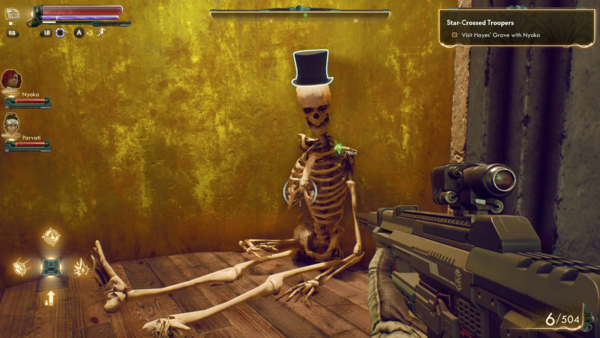
As is to be expected from a player-driven RPG like this, there are so many customisation options included in The Outer Worlds. This of course includes the look of your created character, alongside their armour and weapons (I found a spiffing top-hat that I became enamoured with), but it thankfully also extends to the minutiae of individual stats.
Though Obsidian have always attempted to maintain a certain level of tabletop inspiration when it comes to tweaking your character's stats and abilities, other RPGs (including Fallout) have attempted to streamline this and make it less numbers based. The Outer Worlds embraces the older approach however, and with every level you can tinker with different abilities and sub-abilities (alongside perks), which really lets you create a specific build tailored to your playstyle.
It's not exactly anything new, but it's nice to have that control back over your character, and combined with weapon crafting, armour choices and additional abilities, should allow players to come up with radically different builds that offer radically different experiences in the finished game.
3. Companions Are A Huge Asset

Even though Obsidian are best known for single-player games, they don't really craft solo experiences. Across all their biggest titles, whether it was New Vegas, Knights of the Old Republic 2 or South Park: The Stick of Truth, the developers have always given players a myriad of different personalities to fight alongside.
This is also the case in The Outer Worlds, as our build was loaded up with two companion characters in tow. Talking to one unlocked a unique quest that fleshed out her backstory, and had you visiting the graves of her former comrades, with plenty of dialogue that established her backstory and personality.
Their proficiency in combat was immediately apparent as well, and the special ability each had - which could be fired by pressing either left or right on the D-pad - was essential for taking on tougher enemies and giving you a bit of a breather.
Even better, they didn't just feel like vessels for extra storage or damage, but actually part of the world itself. In one unrelated quest, I bumped into an NPC who actually knew someone in my party, kicking off a dynamic interaction that wouldn't have happened had I been there solo.
How many there'll be or how far these dynamic moments will extend into the game is unknown, but the companions already feel like a natural evolution of those in Fallout 4 and New Vegas.
2. You Have So Much Freedom
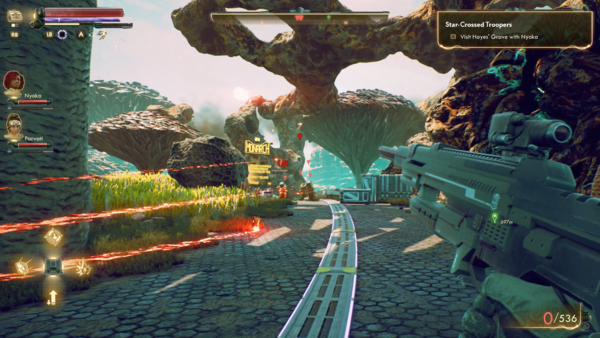
While a lot of sandbox games sell themselves on their ability to let players go absolutely anywhere and do whatever they want, few actually accommodate that freedom with authored gameplay and quests to enjoy. The Outer Worlds, however, seems entirely designed around letting players have wildly different experiences.
In our two-hour stint, me and other person who played the demo had completely contrasting stories to tell, seeing entirely different settlements, engaging in different quests and even approaching combat in completely different ways. You can take off in any direction and find something interesting that will take up hours of your time, and that inherent sense of adventure and wonder is what fuels the very best open-world RPGs.
It got to the point where I was looking at the screens of other people at the event, seeing where they were and trying to figure out how they got x weapon, or ended up talking to y character. Though all the content is the same, how you tackle it and when will be completely different from player to player.
1. It's Old School (In The Best Possible Way)

For better or worse, the biggest takeaway from The Outer Worlds is that it's exactly what you think it is. Instead of trying to evolve tried-and-tested systems, Obsidian have done their best to polish them and make them as robust as possible, while moving away from the modern mentality of streamlining RPG game design as much as possible.
Consequently, it feels very old school in its presentation and execution, and almost everything will appear instantly familiar. The U.I., the way dialogue is handled, the interplay between stealth and all-out combat, levelling up, character customisation, it all works how you'd expect it to in a game from the team that crafted Fallout: New Vegas.
Funnily enough though, in 2019 that old-school approach feels like a breath of fresh air. Similar to DOOM, Obsidian have taken a formula that's fallen out of vogue, spruced it up and given fans what they wanted, and it's hard to mark them down for that.