Resistance - Why It FAILED
PlayStation's forgotten FPS trilogy came up short. Let's find out why...

When it comes to exclusive titles you can't find anywhere else, Sony fans have been spoiled rotten over the eighth console generation. On occasion though, there's an IP that doesn't pan out as well. Most would point to The Order 1886 and DriveClub in the early days of the PlayStation 4, but these letdowns are a far cry compared to where the Japanese conglomerate used to sit.
Many a PlayStation fan will remember the early days of Sony's third console, the painfully slow start, inflated price-tag and lack of exclusive games. Amidst this drought of compelling reasons to purchase the console, it was up to Insomniac Games to step up to the plate and create a game that would get gamers to run out and buy the system on launch. Resistance: Fall of Man and the series that followed fell somewhere down the middle in PlayStation's pantheon of exclusive titles. It didn't climb to super-stardom like Uncharted, nor did it bomb utterly like Factor 5's Lair.
Resistance: Fall of Man was put into development after the completion of 2005's Ratchet Gladiator and following a series of demos and trailers, it was set to release alongside the PlayStation 3 on November 17th 2006 (Or March 23rd 2007 in the UK). From here, the story of how Resistance fell short begins. Beware as there are massive spoilers for the full series up ahead.
Launching the PlayStation 3
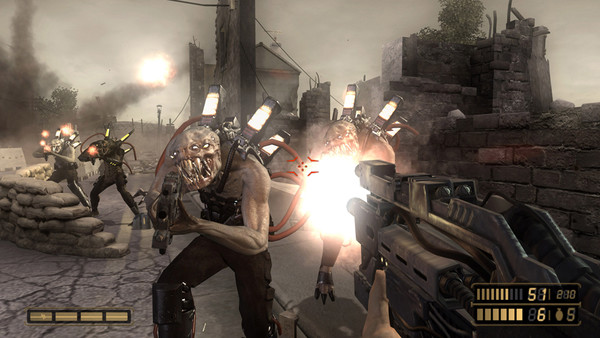
Insomniac hadn't tackled the genre since their debut title Disruptor, which came out in the early days of the PlayStation a decade prior. In the sixth and seventh generation, however, Halo was dominating sales charts globally and after Killzone was met with a mixed reception in 2004, the PlayStation brand needed to compete.
Resistance: Fall of Man takes place in an alternative 1950s setting in which World War Two never happened; instead, the hideous Chimera emerged in Russia and quickly overran all of Europe with their insidious infection. When England falls, the Americans commit to military action and in the first wave is Seargent Nathan Hale, a man with a hidden resistance to the Chimeran virus. The game follows Hale across ten locations across the UK as he and other fighters attempt to liberate the island from the monsters.
Players were treated to a title that didn't stray too far from the fast-paced shooters of the times; you'll be taking on the enemy, traversing through the levels and occasionally hopping into a tank or jeep for some vehicular action. The big selling point for the franchise was its weapons; Insomniac had already proven themselves with Ratchet and Clank and they did it again for this more mature series.
The bullseye fired a tag that caused bullets that homed in on enemies, the auger was able to fire through walls and hailstorm fired bullets that bounced off the walls. With an arsenal like this, Resistance: Fall of Man was able to set itself apart with much of the fun coming from being able to play around with these destructive toys. As the game's campaign went on, the options in combat would only expand further.
A Successful If Unremarkable Opening

While Resistance: Fall of Man did claim the title of "best game to own on day one", it still had its issues. The story, for all its intriguing background lore, was fairly sub-par. We didn't learn much about the characters and the protagonist throughout the campaign, which lessened the potential provided by the alternate history setting and surrounding lore.
In addition, whenever it was compared to its biggest competitors, Fall of Man didn't offer much beyond the FPS juggernauts with its opening shot. At the very least, it did offer bloody forty-player deathmatches on day one, something the PS3 desperately needed. Be that as it may, it certainly wasn't the killer app that would get one over the surging success of the Xbox 360.
Insomniac would be split between two projects in the years to come; one moment they would be working on the Ratchet and Clank Future trilogy and the next they would be focusing on continuing Resistance as a franchise. It would take two years for the sequel to come together.
Expanding For The Sequel
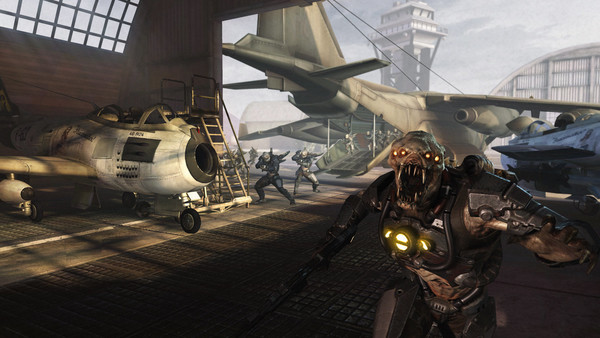
With the fate of Nathan Hale left hanging at Fall of Man's conclusion, many expected a sequel and Insomniac had big plans. With the game taking place in the United States, the game's scale and stakes were considerably ramped up. With a new setting and the bindings of the launch cycle cast off, Insomniac wanted to go bigger and better in every way. This was displayed most prominently in the game's E3 2008 demo in which the protagonist took on the gargantuan leviathan in a ruined Chicago.
Released later that same year, R2 follows the returning Nathan Hale as he returns to the US to defend it from a gargantuan Chimera invasion. Across a wider array of locales from San Francisco all the way to Louisiana, the resistant soldier teams up with others like him, the Sentinels. The onslaught quickly overwhelms the nation and while the protagonist and his compatriots fight hard, the Chimera are relentless in their assault.
When you get down to it, the game is a response to many contemporary shooters of the time, mixed with its own alternative history identity. It does have a couple of notable high points. Most notably the enormous boss creatures Hale takes on at the end of each chapter.
More impactful however was the title's comprehensive multiplayer mode. In addition to sixty player online battles that had never been accomplished on consoles before, it also created a unique eight-player cooperative campaign that was unlike anything in the FPS genre at the time. Because of these features and high marketing, R2 was the best-selling game in the series, but there were hidden issues lurking under the surface.
A Somewhat Misguided Critical Response
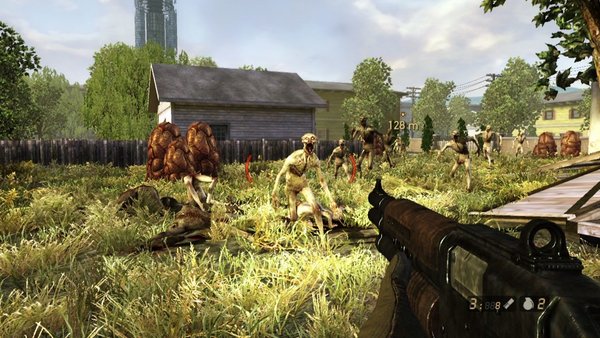
Resistance 2 was met with glowing reviews upon release; many a critic proclaimed it was bigger and better than the first game in every way, just like Insomniac had promised. In retrospect, however, this high praise was a product of the time. In 2008, we were one year in the mainstream FPS craze that had been kicked off by Call of Duty 4: Modern Warfare the previous year. Every FPS studio was forced to take note and started to rebuild their own gameplay systems around the current juggernaut.
Unfortunately in the case of Resistance 2, this caused a massive step backwards in both gameplay and design. The zany weapons and their alternate fire options were accounted for, but because you could only carry two at a time and their situational placement, there was no room for player expression. This is what made both Fall of Man and Ratchet and Clank memorable to varying degrees. By veering too far into linear levels and taking too much inspiration from the competition, the game ultimately capitulated.
On top of that, Resistance 2 had some very frustrating idiosyncrasies in its gameplay. The level design was narrow and deficient, disallowing the player from switching up their approach. Ditching the health bar for a regenerative system was also a bad idea as Hale was subjected to many a cheap death throughout the campaign missions. There was only so much the scale could do to salvage things when everything else felt so half-hearted.
That's not to say that Resistance 2 is outright awful; it still runs well with no game-breaking glitches to be found. While its story is mostly a disconnect, the underlying theme of impending doom that hangs over the campaign does make somewhat of an impact. There's no doubt that the game took the franchise in the wrong direction and ended up frustrating many a fan. Luckily, Insomniac would take careful notes on feedback and look to incorporate them into the next entry.
Settling Into Merely Acceptable Territory

For the final entry in the trilogy, Insomniac took on the criticisms of the second title and shifted the series back towards the weapons. By the time Resistance 3 arrived, the series had been supplanted by Killzone as the console's premiere shooter franchise. On top of that, the third entry was facing some massive competition in the closing quarter of 2011.
Uncharted 3, Gears of War 3, Battlefield 3, and Call of Duty Modern Warfare 3 were just a handful of the many massive AAA releases that booked their slot for the end of the year. While Resistance 3 did release first in September, it was mostly left by the wayside as its higher-tier contemporaries snapped up most of the sales. Interest in the Resistance franchise had largely diminished among the masses when the third and final entry arrived.
It's a shame too as Resistance 3 turned out to be the best of the series; thanks to its crunchy combat and a return to what made the franchise work. Unfortunately, this came at the cost of story and stakes as Resistance 3 also ends the series on a rather tepid note.
You could tell that Insomniac Games wanted to end the series here so they could move on with new projects. R3 could have been so much more, had the developer continued their ambitions where its predecessor left off. Instead, it settled for being more predictable.
Concluding The Trilogy Meekly
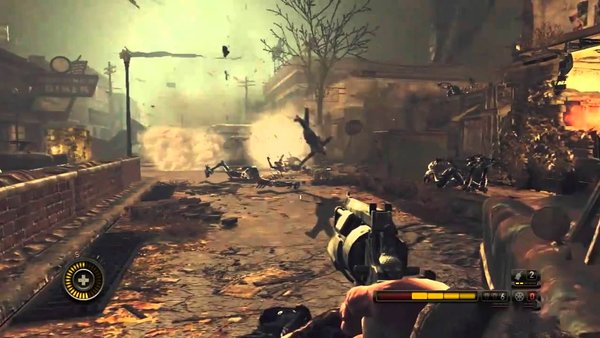
Lets; R3 picks up four years after the death of Nathan Hale and the opening cutscene immediately tells the player how the Chimera arrived on Earth. It's a disappointing start that throws out the mystery of the monsters and plants us in the shoes of protagonist Joseph Capelli afterwards. The story attempts to be more contained and sombre one, a tale of a reluctant hero setting out in one last bid to save the world.
What made the story fall flat was that its efforts to create a more emotional tone came up short as yet again, we didn't get much time to get to know the characters. However, the gameplay itself was far superior; Insomniac had clearly learned all the right lessons between 2008 and 2011 and it shows through the set pieces and weapon designs. Joe takes on a massive widowmaker in an open environment, defends a moving train from attacking bandits and smashes his way through a brutal prison with little more than a sledgehammer. These moments were far more memorable than any of the other titles.
The weapons themselves reverted back to the franchise's roots and this time they could be upgraded to further add to the carnage on-screen. The Rossmore Shotgun would be granted incendiary rounds at level 2 for example. Being able to carry every weapon, alongside opening up the levels again, made for a more enjoyable experience all around. Though they in service to a story that failed to raise its stakes or build things up to the ultimate climax. The final level in New York boils down to taking down one of the Chimera's towers and this appears to signal their abrupt defeat around the world.
Resistance 3 is ultimately a paradox of a title. On the one hand, it offered the best single-player campaign of the series, refusing to fall into the traps its predecessor did. But on the other, its ambitious multiplayer ambitions were fundamentally cut and reduced, causing them to blend in with every other online shooter of the time. Heading into sub-standard maps with sixteen players failed to follow through on Resistance 2's unique features, which spoke volumes of how Insomniac no longer wished to pursue further entries.
Fading Into Obscurity

In short, Resistance had its place in the pantheon of Sony exclusives in the early days of the PS3, but continued gaps in its single-player and multiplayer design meant it could never become the platform's premier shooter, nor could it successfully take on the likes of Halo and Call of Duty. The franchise never peaked into the same acclaim as those titles because of its inconsistent offering across single and multiplayer modes.
Resistance: Fall of Man offered an entertaining if mundane first outing, Resistance 2 upped its multiplayer component while stepping backwards in the campaign and finally Resistance 3 had the best campaign of the franchise alongside a multiplayer component that faded into the background. Even it's handheld entries, Resistance Retribution for the PSP and Burning Skies for the Vita, couldn't make a dent in the portable market.
In time, Insomniac chose to move on, focusing squarely on Ratchet and Clank alongside other projects like FUSE under EA and Sunset Overdrive for the Xbox One. Across both the PlayStation 4 and 5, Sony's focus has now shifted from the shooter genre to cinematic, story-heavy games.
Even Killzone came to a stop, leaving Guerilla Games to pursue their own projects. As such, Resistance, and the FPS genre along with it, is unlikely to make any kind of resurgence on PlayStation hardware for some time.