Pokémon - All Main Games Ranked From Worst To Best

The best titles from one of the most iconic game series ever.
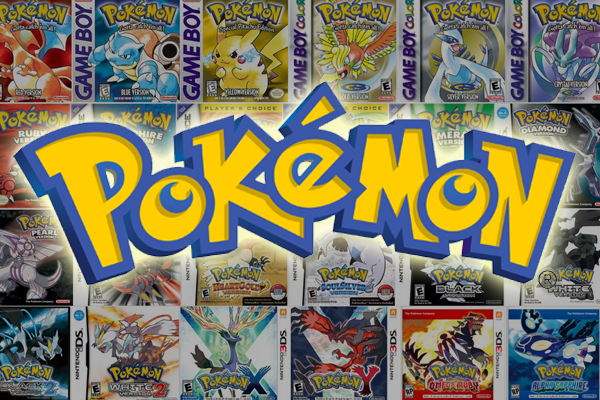
Pokémon is one of the most iconic video game series of all time. First introduced to the world outside Japan in 1996, the popular role-playing games became an international sensation, and millions of gamers worldwide have since fallen in love with the games. For almost twenty years, Game Freak and The Pokémon Company have been developing these exciting games and its many spin-offs, primarily for Nintendo€™s gaming products. From the original Game Boy to the 3DS, there have been Pokémon games for every single major Nintendo gaming device. The Pokémon games have all been among the greatest games ever created, but not all of them have been stellar. Each generation of games has included a lot of positives as well as a handful of negatives, from technical issues, to graphics, to multiplayer options to in-game balancing issues. So even though each new addition to the ever-growing series has been meet with positive overview overall (because Nintendo really put a lot of work into making immersive games), some games fall short when compared to their earlier or later counterparts. This article will rank all of the €˜main€™ Pokémon games (i.e. the RPGs that require you go capture Pokémon, collect gym badges, etc.) from worst to best. Some games will be ranked together as generations, while some will be individual entries. Games will be ranked based on an overall combination of positives and negatives, how many changes they brought to gameplay mechanics, and how much replayability they had as stand-alone games.

14. Black 2 & White 2

The Good: We begin this list with a fairly recent game that had a lot to prove, especially since its immediate predecessor offered a significant number of changes and unique features. B2/W2 did include a few interesting changes, such as improved and more engaging multiplayer and WiFi options (such as the World Tournament), an entire new part of the region, and the ability to change the in-game difficulty setting for those who desired more of a challenge. It also continued on a recurring feature where games from previous generations were more easily accessible than in the prior fames of the same generation. Finally, the game had a greater emphasis on team-building strategies and more of the finer details of battling, which made it an ideal game for the more competitive and €˜hardcore€™ fanbase. The Bad: There€™s nothing really €˜wrong€™ with Black 2/White 2; it€™s just that they€™re relatively bland when compared to the rest of the series. Despite being released two years after the original Black & White, B2/W2 felt more like theoretical replacements as opposed to expansions or re-treads. It also didn€™t help that the game€™s main antagonist story was nowhere near as engaging and interesting as the one from Black & White. In general, B2/W2, though good games in their own right, tend to get lost in the shuffle due to poor release timing and a lack of major changes from their predecessors.

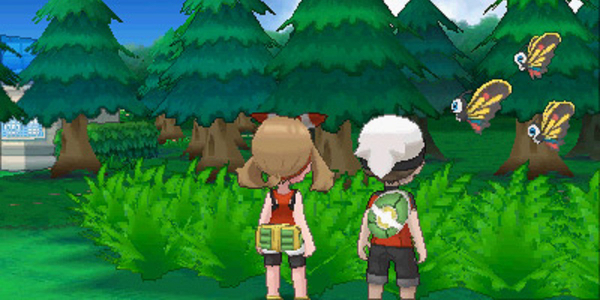
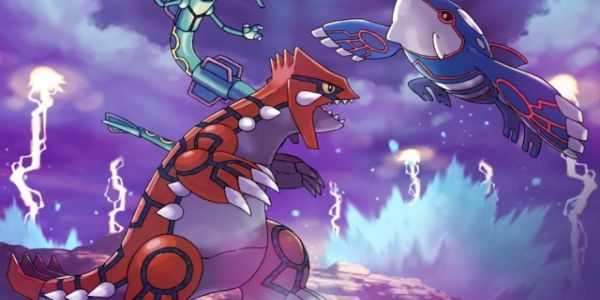
13. Omega Ruby & Alpha Sapphire

The Good: These two great games combine the storytelling and maps of the original Ruby & Sapphire with the fantastic graphical and gameplay changes that have taken place over the last decade. Not only does the game boast virtually of the new mechanics and extra features introduced over the years (including the brand new €˜sneak€™ feature), but it€™s also one of the most €˜complete€™ games, in that it offers a vastly-improved post-game and many options to capture otherwise unobtainable Pokémon from other games. It also has countless of hidden features scattered throughout the in-game world, making exploration really worthwhile. The Bad: Have you ever felt so overwhelmed by the features offered in a single game that it feels like €˜too much all at once?€™ That€™s a feeling that can come about from these games. Alpha Ruby & Omega Sapphire combine everything from all previous generations and combine them into a ridiculously-deep game with more features than one knows what to do with. It€™s almost as if the developers are actively encouraging you to devote all of your waking time to this game to accomplish everything before the next games are released. The games also have a cumbersome and busy interface on the second 3DS screen, requiring you to cycle through a complex system to unlock the simplest of features. Furthermore, like Emerald before it, much of the story is virtually identical to the originals, without any major overhauls. It also follows in Emerald€™s footsteps further by lowering the in-game difficulty until well into the post-game, making the initial playthrough far less challenging than it should be.

12. Crystal

The Good: Introduced in 2001, Crystal continued the tradition of its earlier counterparts by adding some important new features. The most important of which was the ability to play as a girl, which must€™ve brought Game Freak a ton of money after catering to a previously-untouched demographic. Crystal also introduced some central features that would be seen in every game that followed it: move tutors that could teach Pokémon unique moves, animated sprites that were no longer static pictures, a visual indication of when a player entered a new area, the Battle Tower (arguably one of the most exciting yet daunting challenges in the game), and special music for Legendary Pokémon. It was also the first game to have the box art Legendary feature as part of the plot, instead of just an additional €˜treasure€™ to be caught later. The Bad: Most of the problems with Crystal stem from its lack of additions rather than what it did have. When compared to what Yellow was to Red & Blue, Crystal didn€™t have any radical changes to it. No tie-in with the anime, no changes to Gym leaders, no leveling fixes, no truly eye-catching feature apart from what was already mentioned. If you had either Gold or Silver, then you didn't miss out on too much. If Crystal had changed the in-game story or the actual gameplay instead of adding more stuff, then the game might be remembered more fondly in comparison with its fellow second-gen games.

11. X & Y

The Good: X & Y was Nintendo€™s proof that they still knew how to make a new game that would bring both new players to the franchise while also catering to older fans of the series. A big part of that was because X & Y introduced many incredibly radical new concepts. The most prominent of which is the temporary Mega Evolution, which has become one of the most interesting and exciting new battle mechanisms in the entire game€™s series. These games also made full use of 3D visuals, offered greatly-amplified online features, and included a plethora of new mechanics (a new Fairy-type, Super Training, improved happiness tools, gaining EXP from catching Pokémon, etc.). Also, this marked the first time you could change your character€™s attire, skin color, hair, and other features, making it a fantastic customizing experience. The Bad: X & Y€™s main selling points were emphasized for very good reason: they wanted the player to fall in love with the new graphics and mechanics enough that you€™d overlook the boring storyline and severe lack of a challenge (seriously, you could catch your game€™s Legendary extremely little effort) at any part of the game. It also had a very limited post-game, which was a major disappointment after the efforts put in with Platinum, HeartGold/SoulSilver, Black/White, and Black 2/White 2. The game also offered very few interesting new Pokémon, focusing more on the re-typing and Mega Evolutions of older ones.

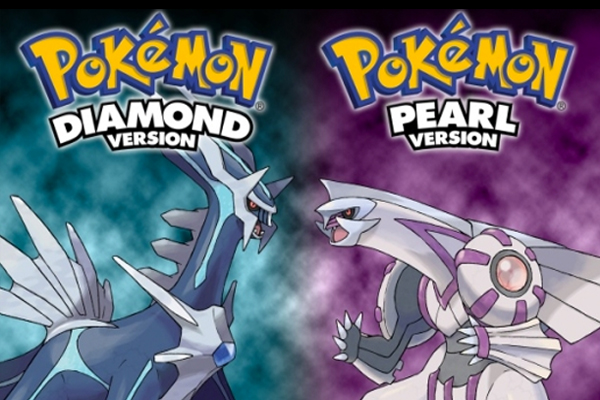
10. Diamond & Pearl

The Good: There was just something awesome in the gameplay of Diamond & Pearl that really made the games extremely fun and replayable. For starters, it added 107 new Pokémon, many of which have become highly memorable years later. Second, the moves mechanic was re-worked in a huge way, shifting it from the previous elements-based approach to a new physical/special/status focus that made much more sense. These games also marked the return of cross-generational interaction with third-generation games through Pal Park; puzzles were added to gyms, making them much more fun; and they made solid use of the Nintendo DS€™s WiFi functions by creating the Global Trade Center, enabling greater interconnectivity among players. The Bad: More than in any other game up until this generation, Diamond & Pearl created a game with so many unobtainable items and Pokémon. This was especially true for many legendaries, which led to the widespread dissemination of cheat codes and devices. Worse, the overall pacing of the game was a bit on the longer side. The region€™s layout, distance between cities, and key plot developments were very sparse at first and very end-heavy. While this might make the game more immersive, for those players who want to reach the post-game, they had to be far more patient than with previous games. All in all, a balanced set of games that had their share of pronounced strengths and weaknesses.

9. Ruby & Sapphire

The Good: Ruby & Sapphire are among some of the most polarizing games in the entire franchise€™s history. On one hand, it was this pair of games that introduced an unbelievable amount of new features that have come to define the Pokémon franchise as far more complex than initially believed. Mechanics like Natures, EVs and IVs, and Abilities, were introduced, completely changing how raising and battling worked. New added moves and type combinations made for a much more balanced gameplay experience. Non-battling concepts like Contests and Secret Bases added for a more immersive gameplay experience. Double Battles, an unbelievable concept at the time, was introduced and further added to the intrigue of choosing among the many new Pokémon carefully. Oh, and for the first time, you could run by holding the B button, instead of being forever dependent on bicycles. The Bad: Gone were night & day elements (they were replaced with an overemphasis on weather phenomena), and the backwards compatibility with previous games, making the games virtually standalone and impossible to complete until later games were added. These games also had VERY little to do once the main storyline ended. It felt like one of those games where the initial playthrough was the best part, something that has thankfully been changed significantly with more recent titles. There was also an overemphasis on Water-types and water in general, and an overabundance of HMs needed to explore (eight in total). Finally, how did people solve the Braille codes hidden in the game without going online, buying guides, or cheating?

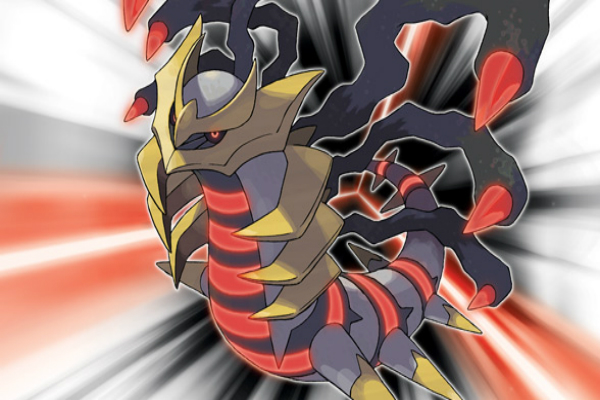
8. Platinum

The Good: Once again, the third game of a generation manages to make great improvements on its predecessors. Platinum offers a large list of aesthetic changes (including animations, background details, and general artwork), an improved story (the main plot progresses far more quickly and with more segments of advancement), an interesting new area to visit in the Distortion World, and most importantly, an immense post-game that was left threadbare in Diamond & Pearl. Players could now capture more roaming Legendaries, visit an updated Battle Frontier (easily one of the most desired features in any Pokémon game), and enjoy a vastly improved set of multiplayer capabilities. There were also many new and extremely difficult opponents the player could challenge, leading to a very immersive game that could be played long after the main story was completed. It was also the first game to experiment with different camera angles, which is something that would be seen far more in subsequent generations. The Bad: Although Platinum did feature many noticeable changes to the series, the game€™s pacing still remained somewhat slow, and the initial playthrough was still quite tedious, taking an extremely long time to reach the climax of the main story. That aside, it€™s still one of the most well-made games in the series, and was a shining example of small details making a big difference in a game.

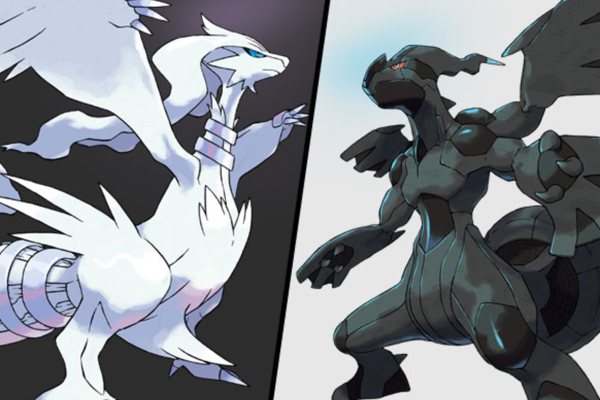
7. Black & White

The Good: Black & White had so many new features and such an enormous setting that one could play through the entire game several times and still find new details and features. Aside from the largest addition of Pokémon ever, Black & White managed to improve graphics and details in a major way. From changing perspectives and adding 3D to some areas, to making Gym Leader battle music more dramatic as battles progressed, to adding seasons that influenced exploration capabilities, the game gave players a reason to come back month after month (as seasons changed). In terms of battling, Game Freak outdid themselves again, by adding Triple & Rotation Battles and by switching the Elite Four Concept so that they could be battled in any order. Finally, Game Freak made these games so fun to play by also adding extensive WiFi features, tons of post-game unlockables and Easter eggs, and a genuinely interesting antagonist storyline that had a far more interesting message than any game before it. The Bad: The game had a few minor flaws with the somewhat complicated interface for C-Gear and other multiplayer features. There were also notable omissions from previous games, such as the ability to re-battle Gym Leaders. Finally, the total number of Pokémon after this game reached an astonishing 649, which really began to make the series convoluted.

6. Yellow

The Good: Yellow holds a special place in many players€™ hearts because of its closeness to the anime. It was released at a time when Pokémon was really becoming a pop culture phenomenon in North America and elsewhere, and was an excellent tie-in to the anime. Nostalgia aside, the game had some slight improvements that were much-needed from Red & Blue. The graphics were improved, removing the monochromatic color palette from previous games. The happiness feature was experimented with vis-à-vis having Pikachu follow you around, and that itself was a major plus for many players. Finally, the tie-in with the anime really led to new Gym Leader Pokémon and additional characters, as well as being the first game where you could acquire all starters in one game. The Bad: The only reason this game isn€™t high is because it€™s outclassed by other games due to sheer lack of features. This was a first-generation game, so it still suffered from the same limitations as Red & Blue: lack of a post-game, limited movepools, and imbalanced typing mechanics. That said, for the sake of sheer novelty, Yellow remains one of the best games in the entire series.

5. Emerald

The Good: There are many good reasons why Emerald is so widely regarded by players. It featured a significant re-work of the plot elements from Ruby & Sapphire (for the first time, the player wasn€™t this nigh-indestructible force with the power to completely destroy a sophisticated evil team by himself). The graphics are sharper and crisper, especially for the in-game text. There are far more areas to explore, and the game introduces the Battle Frontier, arguably the most immersive and well-thought-out post-game concept to date.The game does more to fix the €˜exclusiveness€™ of Ruby & Sapphire by giving more in-game gifts and opportunities to capture Pokémon that were otherwise restricted to other games. Finally, Emerald offers an easier playthrough experience when compared to Ruby & Sapphire, making it an ideal game for both old fans of the franchise and first-time players. It was one of the most €˜complete€™ titles in the series to date, and has a replayability that few other games can match. The Bad: Not much, really. The only real knock against Emerald is that the main points of difference in the story also don€™t take place until far into the game, giving off a feeling of repetition during the earlier parts of the game. But other than that, it€™s a wonderful game that really sets it apart from its predecessors.

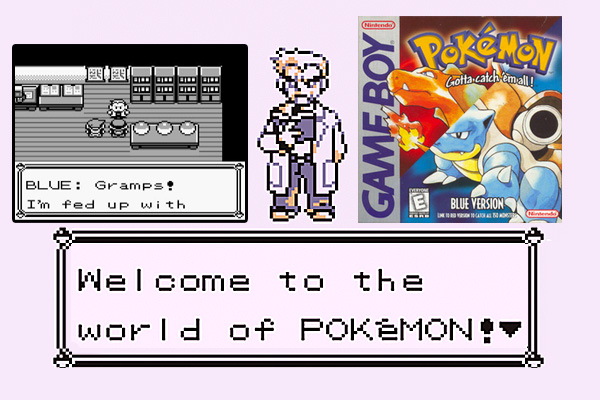
4. Red & Blue

The Good: The original games. The games that turned Pokémon into a global phenomenon and brought countless wonderful memories to millions of children around the world. It€™s really hard to compare Red & Blue to other games, considering that every game afterwards was an improvement on its predecessor, and as the first games, these two were the standard. As one of the first hand-held RPGs available, Red & Blue offered an immersive world for gamers to play in, coupled with outstanding 8-bit music that conjured up many feelings of fond nostalgia (remember Lavender Town, anyone?). Although battles, Pokémon types and moves were limited by today€™s standards, they were no less exciting for player back then. Finally, there were so many alleged Easter eggs, hidden codes, and conspiracy theories about ostensibly-mature content added into the game that these games alone have fueled discussion boards for well over a decade. The Bad: Since these were very primitive games by today€™s standards, it€™s difficult to judge the games without understanding the technology available to the company at the time. They tried to make everything balanced and reasonable, but coding for the games only got so far. That€™s why moves were so limited in those games, and why the Psychic type was so unbelievably imbalanced. It wouldn€™t be until later that type mechanics would be much easier to deal with. Furthermore, three types, Ghost, Bug and Dragon, had extreme limitations, most of which wouldn€™t be fixed until the third generation of games.

3. Gold & Silver

The Good: Nintendo created one of the most masterful generations ever out of these two games. These games featured so many radical additions to the series that they blew the originals out of the water. From aesthetic changes (significantly-improved graphics and color scheme, daily and weekly events, fantastic 16-bit music), to new battling mechanics (hold items, turn-based moves, entry hazards, weather moves, Dark & Steel types added), to radical new concepts altogether (genders, breeding, Happiness-based evolution, shiny Pokémon, swarming rare Pokémon, roaming Legendaries), the outstanding gameplay felt like no other. As if that wasn€™t enough, Gold & Silver allows you to go back to Kanto and collect eight more badges, offering a degree of replayability unlike any other game in the series with the exception of its DS remakes a decade later. It also set the standard for re-battling former trainers, and was the first game to introduce backwards compatibility through the Time Capsule. In other words, this was a truly €˜complete€™ game that complemented the existing games perfectly. The Bad: As close to perfect as Gold & Silver are, they do have some small problems. The most notable of which was that great games had a notorious reputation for weak internal batteries that would die much faster than the previous generation, primarily due to the new internal clock feature.

2. Fire Red & Leaf Green

The Good: What do you get when you combine the nostalgia and epic memories of the first generation of Pokémon games and combine them with third-gen mechanics? Why, you get Fire Red & Leaf Green, of course. Updating the first generation of games to the contemporary standard was an excellent decision. Not only were many of the original games€™ multiple bugs fixed (overpowered Psychic-type, limited moves, etc.), but adding new elements from Ruby & Sapphire made these games among the best ever created. They were the ideal combination: faithful to the original games by keeping the original 150 Pokémon and including all the new ones after the main game was completed; and modern by adding all the same new elements introduced in the second and third generations. It also included new areas of an old region, and each game came with a Game Boy Advance Wireless Adapter, enabling easier communication with other players. Then, of course, was the massive graphics and audio overhaul, which brought the somewhat-primitive Red & Blue (by more recent standards) into the 21st century of gaming. The Bad: There wasn€™t really anything wrong with these games at all. In fact, they were so popular that they became the templates for many unofficial, fan-made games, as the game engine, graphics, gameplay, and storyline were all that well-made. The only reason this set of games doesn€™t top this list is because one set of games outdid them in terms of outstanding remake€

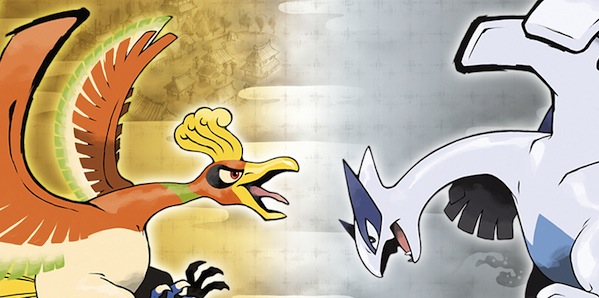
1. HeartGold & SoulSilver

The Good: In true Nintendo fashion, they managed to make HeartGold & SoulSilver perfect games. Not only did they keep every single element of the original Gold & Silver (which, as we have seen, was a lot), but they added even more to these games to make them as enjoyable as the other powerhouses of the series. The graphics and gameplay mechanics were updated perfectly, and they had excellent tie-ins with Diamond, Pearl & Platinum. But it was the additions to this already loaded game series that really made them outstanding additions to the series. You had an enormous post-game through the ever popular Battle Frontier, a unique element in Pokéathlon, exciting new areas to visit (including an actual in-game Safari Zone), improved in-game storylines, the possibility of re-battling Gym Leaders multiple times, and you could have your Pokémon follow you, just like in Yellow. All of this added onto the same outstanding features that made the originals so wildly popular and fun. Oh, and for those whose original Gold & Silver no longer work and miss the nostalgia, Nintendo created an in-game device that allowed you to switch between modern music and the old-school 16-bit sound. The Bad: None. These games didn€™t have any flaws. They had everything you could think of in a game, balanced old concepts with modern gameplay, and were hands down the greatest games of the entire Pokémon franchise. Let us know your favourite Pokemon of all time in the comments, and sign up for an account if you'd like to write for the Gaming section!

In this post: 
pokemon
 
Posted On: 
Contributor

Alexander Podgorski is a writer for WhatCulture that has been a fan of professional wrestling since he was 8 years old. He loves all kinds of wrestling, from WWE and sports entertainment, to puroresu in Japan. He holds a Bachelor of Arts degree from Queen's University in Political Studies and French, and a Master's Degree in Public Administration. He speaks English, French, Polish, a bit of German, and knows some odd words and phrases in half a dozen other languages.