Metal Gear Solid V: Ground Zeroes - 10 Things We Now Know About The Phantom Pain

Ground Zeroes is worth it's weight in speculative teasing for next year's Phantom Pain regardless of anything, and here's every juicy nugget of information we've gained from its runtime.
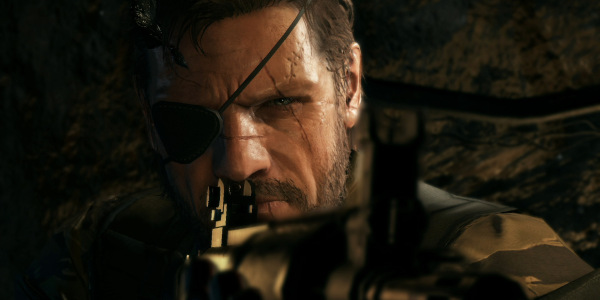
Whether Metal Gear Solid: Ground Zeroes is nothing but a glorified demo or a satisfying product worth its asking price is irrelevant. Regardless, what we do have is another masterpiece in the Metal Gear Solid franchise that leads tantalisingly into The Phantom Pain. Seriously, the most frustrating aspect of playing Ground Zeroes isn't its short length, but that its unfulfilling nature and abrupt cut-off are only making the year-long wait harder. Simply put, the prospect of playing The Phantom Pain is more enticing than ever. Ground Zeroes doesn't just fill gamers with optimism however, it answers a lot of nagging questions and concerns that gamers may have had going into the next generation of Metal Gear Solid. How is Kiefer Sutherland as Big Boss? What is the deal with this new villain and his charred face? Has the franchise shifted into Call of Duty gameplay? Some answers are more positive than others, but as a whole franchise creator Hideo Kojima seems to have another gripping vision on his hands. All of these questions are answered and more, whether it's across the 90 minute story mission or hidden in a secret audio log - this time around present as era-appropriate cassette tapes. In addition to that, in those 90 minutes it was made abundantly clear that The Phantom Pain will be Kojima's most taboo and surprisingly dark narrative yet. Without further ado, here is what Ground Zeroes tells us about The Phantom Pain.

10. Refined Gameplay

Going into Ground Zeroes it was publicly known - and actually feared - that the series had adopted more conventional shooter tropes like regenerating health and slow-motion effects in favour of the traditional life bar and more restrictive elements that forced stealth over going in guns blazing. It almost feels as if the series is abandoning its roots to become more accessible, which is naturally a double-edged sword. Obviously more people buying and playing the game is a good thing, but the fanbase can't be kicked to the curb either. Having played Ground Zeroes it's safe to say that the changes feel like a logical progression for the franchise, and something that will definitely help provide a balance for longtime fans and newcomers. It's also a welcome addition that if players dislike the slow-motion reflex - which allows you to tranquilise or kill an enemy while they're entering the alert phase - it can be completely disabled for a pure stealth experience. The open world is also a fascinating addition and comes across as a monumental leap forward in the stealth action genre as a whole. As far as Ground Zeroes goes, the sandbox is elegantly laid out in a way that promotes stealth at all times, but doesn't really overbear gamers with a sense that exploration isn't welcome. There are also some truly revolutionary ideas updated from the original Metal Gear Solid such as the ability to hop into an enemy truck from behind and let them drive you straight into a heavily guarded area of a base. It's that sense of strategic freedom that the franchise is known for, and thankfully it hasn't been forgotten amidst the removal of trademark moves like rolling and knocking on walls. The Phantom Pain is being touted as 200 times larger than Camp Omega; it's so dense that Kojima is worried that gamers may not even be able to finish the game. Nevertheless, having an environment that much larger is only going to make these revolutionary stealth mechanics that much more engaging. What Kojima really should mull over is if The Phantom Pain is telling an overly dark story that might not balance out with all of his other idiosyncratic elements. Seriously, these next few pages cover some disturbing plot points.

9. Skull Face Is Twisted

http://youtu.be/e6GttoXfHcI There's only one shot at a first impression, and when the revered villains already consist of a wide assortment of characters - from telepathic mind control freaks to revolver-toting gunslingers - whenever this franchise introduces a new villain it's an understatement to say that they need to make a good impression. Fortunately for The Phantom Pain, Skull Face accomplishes earning the title of "Most Twisted Villain In Franchise History". This guy is sick in the head and comes across as Kojima's attempt at a character reminiscent of The Joker. And if you're wondering why, it's undoubtedly because Ground Zeroes sneakily hides a lot of its plot exposition throughout hidden cassette tapes that are nearly impossible to find without a guide. The most memorable tape involves our deformed madman physically abusing female character Paz and potentially raping her alongside his army, but that's not even the most demented part. He also forces young teenager Chico - who already has a crush on her - to participate in the event too. The franchise has certainly seen some dastardly villains in its time, but no one as blatantly psychotic as Skull Face appears to be.

8. Skull Face's Origins

http://youtu.be/4SPYtp-J07c Another devilishly hidden cassette tape reveals the origin story of Kojima's latest antagonistic creation, and it is downright terrifying to listen to thanks to some compelling and intimidating line delivery from respected voice actor James Horan. While torturing a prisoner, Skull Face recounts a childhood story where a military bombed a factory of a small village - that his parents worked at - in assumption that dangerous weapons were being made there. Everything was set ablaze with Skull Face being the only soul to escape from the shambling wreckage. It's safe to assume that what survived isn't even human anymore, but a monster hellbent on ill-guided revenge. Skull Face also lets loose one last detail; the assumption of weapons being built was true, which certainly explains a lot and will assuredly tie-in to The Phantom Pain.

7. The Story Will Be Incredibly Dark

In roughly 90 minutes Ground Zeroes manages to tackle the horrors of war (and more specifically the torture of prisoners) in a pitch black tone that is fairly chilling. In some scenarios that unnerving feeling is amplified because a lot of it isn't shown, it's all up to your imagination, provided you're willing to let such dark images seep into your mind before turning the tape recorder off. The game does show some horrors outright as well, like a surgically implanted bomb being removed from Paz's stomach without putting her under anaesthetics. Of course it's all for nothing, because it's also revealed that another bomb was planted inside her womb, as she sacrifices herself by falling out of Snake€™s helicopter. No one was more upfront about these themes than Kojima himself, who actually fears that The Phantom Pain may require heavy editing to pass American MPAA classifications. In Japan, Ground Zeroes is already being subjected to edits. And considering that the red band trailer for The Phantom Pain depicts waterboarding, child soldiers and more heinous acts of torture, it's going to be really interesting to see what does and doesn't make the final version.

6. There Are Bound To Be Easter Eggs

After discussing rape and bombs being shoved up people's private parts, let's shift gears to something a little more whimsical and lighthearted; like the ego of Kojima and his likeness to pepper the experience with franchise references and Easter Eggs. If Ground Zeroes is a good indication to go off of, The Phantom Pain will most likely have a playful side amidst its incredibly dark undertones. For starters, Ground Zeroes has an entire side mission dedicated to extracting a VIP under fire, that actually turns out to be Kojima himself. There's also the Deja Vu mission, which is exclusive to the PlayStation versions of the game, and includes a plethora of references from everything to Psycho Mantis to Raven to the CD case of Metal Gear Solid to Johnny€™s bowel troubles. The fact that The Phantom Pain is already shaping up to be one of the grimmest games in recent memory is also good enough reason to break up the shock and horror with quick rays of happiness and tongue-in-cheek jokes.

5. Less Focus On Cut-Scenes

If the ratio of cut-scene to gameplay in Ground Zeroes is a good indicator to go off of - and it probably is considering that Ground Zeroes is essentially the first chapter of The Phantom Pain sold in a separate packaging - then The Phantom Pain may not contain some of those lengthy stretches of cinematics that Kojima loves to indulge in, regardless of it dividing the people playing his game or not. For reference, the ending to Metal Gear Solid 4 with its credits included runs at 76 minutes. Immediately after starting Ground Zeroes it's evidently clear that here too, conventional tropes are seeping their way into the franchise. The most disappointing omission is codec calls between your field operatives; instead it's just Miller talking to Snake in the background while you continue with gameplay like every other action title. It really does feel like the franchise is having its identity stripped from it - in both gameplay and story - which is disheartening. By far the most disappointing aspect is just how much exposition is littered throughout cassette tapes, AKA the franchise's audio log items. This would feel acceptable if the audio logs contained information of lesser importance, but a heavy chunk of the story in Ground Zeroes can only be accessed through these cassette tapes. Ground Zeroes is just one 90 minute mission of a much larger game too, so who knows how much relevant story content can be skipped right over in The Phantom Pain. It's understandable that the cinematics of the franchise can come across as overbearingly long to some people, but it's simply a crucial portion of the franchise's identity. Unfortunately, it feels like Kojima is swapping the franchise's roots for what's popular in gaming today, which is again disheartening.

4. Kiefer Sutherland Could Work

After uncovering just how dark the story in The Phantom Pain is shaping up to be, the logic behind replacing the legendary voice of Snake in David Hayter with Kiefer Sutherland begins to make some sense. In a story this dark and horrific, it's probably not a good idea to have Hayter's gravelly and more over exaggerated voice that feels like something from a cartoon. The voice probably just wouldn't do the thematic elements justice. With that said, Kiefer Sutherland isn't exactly blowing people away either. Admittedly, he is giving Snake and the game the realistic, humanistic touch it most definitely needs to make the story work, but it also sounds like Kiefer is disinterested at times. For 24 fans, it's nigh-impossible to remove his voice from a decade of Jack Bauer-exposure, as that's really how Kiefer sounds when voicing as Snake - especially when shouting. Regardless, the whole replacement of David Hayter feels like another ruse from Kojima anyway, so when Solid Snake enters this timeline and is voiced by him, you can say you heard it here first at What Culture.

3. Thematically-Relevant Soundtrack

http://youtu.be/8x1TuXR5uvo Just when you think that Skull Face can't get any more screwed in the head, a trend is noticed where he seems to enjoy torturing his victims while listening to a classic song by Joan Baez and Ennio Morricone; Here's To You. It's a given that Kojima loves to draw inspiration from movies he holds in high regard, and this truthfully feels like a brilliant parallel to the torture sequence in Quentin Tarantino's Reservoir Dogs. The song is about two anarchists - Nicola and Bart - who were wrongfully found guilty of crimes they didn't commit, yet executed anyway. In recent interviews Kojima has discussed that the lyrics of the song can be directly connected to the themes of The Phantom Pain, and it's easy to see why. The Phantom Pain is seemingly about a whole lot of people wrongfully getting killed or tortured, with agony paving the way for triumph. It's also worth noting that a modified version of the song plays over the credits of Metal Gear Solid 4, directly applying Snake to the lyrics. Frankly, the song is simply awesome and a surefire sign that Kojima is going to conjure up another epic soundtrack.

2. Unprecedented Graphical Capabilities
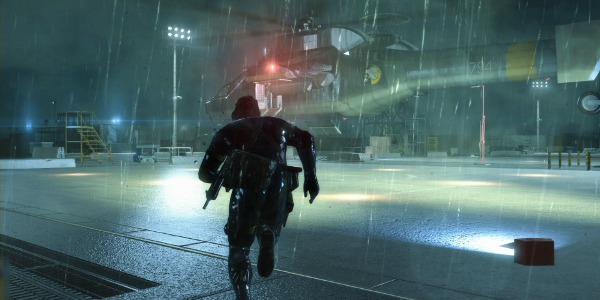
This isn't a matter up for debate, Ground Zeroes - especially on the PlayStation 4 - contains the greatest graphics ever seen in a video game, and that's taking every major next-generation game into consideration. Not only does it run at 60 frames per second without ever dropping or stuttering, even if there is absolute chaos onscreen, it just looks absolutely gorgeous. There is an insane amount of detail within character models, motion capture, facial expressions and environments. Snake genuinely looks drenched as the rain pours on him, the lighting effects are near photorealistic, there is a tremendously large draw distance, and quite simply there isn't a single moment where the game doesn't look stunning. The Fox Engine needs to be the go-to engine for games this generation, much like how Unreal 3 was heavily used throughout the last generation. The prospect of playing anything with these graphics is mouthwatering, but one thing is for certain; The Phantom Pain is going to be an orgasm for the eyes.

1. The Phantom Pain Will Be Another Win For Kojima

Kojima is making some bold decisions with The Phantom Pain - even ones people don't particularly agree with - but he has simply never made a bad game, which is extraordinary considering he has been making games for over a quarter century now. What has to be understood to enjoy the latest instalment in this iconic franchise is that it is unlike anything in the series. Kojima is fearlessly attacking some incredibly taboo subject material that most studios simply don't have the gall to do or say anything worthwhile about. That alone is enough of a reason to be intrigued by The Phantom Pain. Open world is also a tantalising improvement to the game design, and barring some nostalgic disappointments coming from some changes, it's certainly a blast to play. And we haven't even gotten to play a boss fight yet, which will surely deliver based on franchise history alone - Skull Face himself will assuredly get an epic showdown with a comeuppance that begs to be played out. It's going to be a long and agonising wait until 2015, particularly because it's clear that The Phantom Pain is shaping up nicely.

Contributor
Contributor

I write for WhatCulture (duh) and MammothCinema. Born with Muscular Dystrophy Type 2; lover of film, games, wrestling, and TV.