Mass Effect 4: 10 Big Things That Could Ruin It

Bioware have one hell of a mountain to climb.

It€™s hard to believe that it has already been three years since the Mass Effect trilogy came to a close, and since then the video game industry has gone through some significant changes. The increasing popularity of mobile games has resulted in a huge shift in the market, and publishers are relying more on big budget IPs to generate revenue than ever before. In fact, the trilogy itself is a testament to the significance of the changes surrounding the gaming landscape. Playing through all three highlights the dramatic shift the series went through in order to adapt to these changes, which of course resulted in the controversial design choices of the last game. The next entry in the series is a chance to start anew and improve upon the issues that have plagued the series since the beginning, which is more than enough to get fans excited. But after all the commotion caused by Mass Effect 3, you can€™t blame fans for being cautious. Gamers have been burnt numerous times recently by publishers promising more than they can deliver, an issue heightened by the questionable at best business practices that these publishers insist on implementing in their games. Make no mistake; there is good reason to be excited for the next Mass Effect, which sounds amazing in concept. However, there are legitimate concerns that should cause one to approach it with trepidation. These are just some of the issues that could negatively affect the next instalment of the Mass Effect series.


10. Reliance On Fetch Quests

One of the great things about role-playing games is the sheer amount of content they often provide. These games offer hours upon hours of quests to find as you explore vast open worlds, and anyone who has played even just a handful of RPGs knows that many of they often task you with finding something and bringing it back. Yes, fetch quests are the bread and butter of RPGs, so much so that many times developers fall back on them maybe more than they should, in an effort to pad out their world with as much content as possible. While appreciated to a certain degree, fatigue does start to set in when the nature of your quests repeat themselves ad nauseam. Bioware€™s last major RPGs - Mass Effect 3 and Dragon Age: Inquisition - while both good games, relied far too heavily on such things. Mass Effect 3 is especially at fault for this practice, as its fetch quests were also incredibly simple and unsatisfying. It€™s not always a major issue, as Inquisition was still highly engaging, but that game would be even better had the nature of its quests been more diverse. Basically, the less the next Mass Effect relies on standard quest-types, the better it will be. It€™s as simple as that.

9. Bugs/Glitches

Everything we€™ve heard about the next Mass Effect is making it obvious that this is an ambitious game. With greater emphasis on exploration, it€™s shaping up to be a massive release with a scope that, hopefully, will be unlike any sci-fi game before it. As with any game of such magnitude, it is inevitable that there will be some major and potential game breaking glitches that will plague the experience. Every open world video game has them, including every Mass Effect (which had some doozies), so expect the next instalment in the franchise to have them as well. This issue will only be exacerbated if the game is rushed to release, as we saw with Mass Effect 3. However, given how much time has passed since the last game, this doesn€™t look to be the case. Bioware are taking their time, and the final product should reflect this. Regardless of how much time is actually spent overall, you can still expect to encounter some major bugs in the system, but compared to other potential issues this is a minor one not worth worrying too much about.

8. The Mako

Everyone who has played the first Mass Effect knows how sluggish and awkward driving the Mako was. Sure, some people like the slow, monotonous grind, but the majority of fans find the Mako a laborious experience. Bioware heard this criticism and elected to drop the Mako altogether, which was admittedly a bit drastic. The idea of the Mako is great; it was the execution that needed adjusting. Well, the Mako is finally coming back in part four, and it will be playing a bigger role. This heavier emphasis on vehicular exploration means that it is even more important than ever to get the Mako right this time. If it feels clunky or boring to drive, the entire game would be crippled. No one wants to spend a large portion of the game doing something that isn€™t fun. Again, Bioware has said that a lot of development time has been spent on getting the Mako to feel right. It€™s good to know that the proper amount of effort is being given to the Mako because if Mass Effect 4 is going to place so much emphasis on exploration, it needs the Mako to be a fun and exhilarating vehicle to drive.

7. Boring & Generic Planets

One of the things that has been said about the upcoming new Mass Effect is that it will contain hundreds of solar systems, all with planets to explore. That€™s a bold promise to make for any developer, so much so that it almost seems too good to be true. A Mass Effect game where every planet is a unique adventure sounds like the greatest video game ever. The reality is that there is a very good chance that most of these planets will be generic planets with nothing of note going on. The original game did this, and while it added significantly to the feeling of galactic exploration, it also filled it with long stretches of tedium. So, considering the scope of the project, the promises and the historical precedence, it's more than possible many of the planets will be copy n' pasted wastelands; the result of preferring quantity over quality. While certainly not a deal breaker (it wasn€™t for the original Mass Effect), it would create a slight air of disappointment considering all the hype and promises. One could say it might be best to temper your expectations, but this is Mass Effect. It€™s hard not to get excited.

6. No Casey Hudson

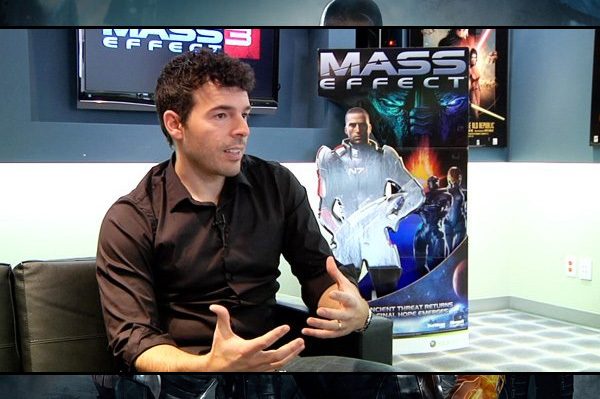
Whatever you may think about Casey Hudson after the ME3 ending debacle, the fact is that he played a huge part in bringing the Mass Effect universe to life. As project director on all three games, he gave sci-fi fans an enriching and engrossing fictional universe full of colourful and well-written characters. Obviously Hudson alone isn€™t solely responsible for Mass Effect as we know it, but he is responsible for managing all the talented artists and programmers; bringing them all together to create a magnificent series of games. And so with this in mind it's a bit disheartening that he will no longer be involved with the franchise. This isn€™t to say that Mass Effect 4 is 'doomed to failure' simply because Hudson isn€™t involved. It could very well end up being the best game in the series. However, there is the chance that without him the next game could go completely off the rails and forget the fundamentals of what gives the series its identity. Honestly, it€™s much too early to tell, especially since the game hasn€™t been seen in action, but it is a genuine concern. Any time control of an established franchise is given to new people, fans should be reasonably and cautiously optimistic. Hopefully Bioware Montreal is up to the task of creating the best Mass Effect game yet.

5. Lack Of Continuity - Ignoring Mass Effect 3's Endings

One of the few things we know for sure about the next Mass Effect is that it will not be a prequel, as many people thought it might be. Obviously this means it will take place after the trilogy, which, depending on your final choice, ended with three different galaxy-wide ramifications. This begs the question: just how much are the endings of Mass Effect 3 going to affect the plot of the next game? One of them - the synthesis ending - altered the very nature of life itself. How is that going to play out? It€™s hard to believe that Bioware will account for all three endings and change the plot accordingly. Just thinking about the complexity of such a design makes your head implode. So does that mean that Bioware are going to make one ending the official €œcanon€ choice? Or are they going to simply ignore them? Either one of these decisions would only anger fans, especially since many feel the endings render all your choices irrelevant, as is. Any further disassociation will only amplify this feeling. It would be a huge mistake to ignore the endings, despite their controversial nature. It would make the trilogy feel self-contained and inconsequential, which is the very opposite of how the trilogy feels. And yet, because of the design complexity that would come with accounting for all three endings, it feels like it is very possible that this will be the case. Unless Bioware has some trick up their sleeve, be prepared for the possibility of a disappointing lack of continuity to the trilogy.

4. Forced DLC For Integral Missions

Long ago, downloadable content was a way to extend the length of a game after release, but recently publishers have started using it as a means to shamelessly reap more money from their customers. Perhaps one of the most egregious examples of this came with Mass Effect 3, which had the gall to remove an important character from the core game and sell him separately as DLC. Both Mass Effect 2 and 3 had entire characters and missions sold as such, and while some of them (such as Overlord) were worthy of a separate purchase, others (like Arrival and Leviathan) were much too important to the overall plot of the trilogy to be released as optional content. It felt like bits and pieces of the story were being sold to fans despite already paying full price, which made them feel ripped off and cheated. It felt shady, and tarnished otherwise great releases. Three years later and this practice is still going strong, which doesn€™t generate much confidence that the next Mass Effect won€™t suffer from this same issue. If the next instalment continues making players pay extra for more characters and plot-specific missions, it will only confirm fan suspicion that the anti-consumer policies of publishers like EA are negatively contributing to this great series. Hopefully this won€™t be the case.

3. Microtransactions

Another arguably worse practice to recently infect the video game industry is microtrasactions, another shady method by which publishers can squeeze more money out of consumers. It was only just starting to be popularly applied when Mass Effect 3 came out, and now it is in full swing, with most AAA games implementing it in some form or another. It€™s pretty much inevitable at this point that the next Mass Effect will have microtransactions of some kind. Dragon Age: Inquisition used it on the loot system for its multiplayer, so expect something similar. Thankfully DA's multiplayer could still be played reasonably well without indulging in this system, so fingers crossed hopefully the next Mass Effect€™s will be just as benign. It€™s sad that this is as much as you can hope for in regards to microtransactions, but that just goes to show you how malicious of a practice it is. It is a devious and lazy means of progression that nobody on the consumer end likes, and if it finds itself in the next Mass Effect, nothing of value will be gained.

2. Shallow Dialogue System

One of the worst things about Mass Effect 3 was the severe shallowness of the dialogue system. Branching paths were nearly non-existent, and the number of responses was limited. The amount of times Shepard spoke for himself/herself without input from the player was ridiculous. It is imperative that the next Mass Effect not only return to the omnipresent dialogue system of old, but also improve upon it in meaningful ways. If Mass Effect 4 doesn€™t do this and continues down the shallow path of ME3, then a powerful aspect of the game will be missing and it will suffer for it. ME4 needs to both increase player input and add new innovations to the system for it to be a true next generation Mass Effect game. Thankfully, from what€™s been said, Bioware is looking to improve in this regard, here's hoping they aren€™t just blowing smoke.

1. The Hype

If there is one thing that has the greatest chance of ruining the next Mass Effect, it's the hype itself. The Mass Effect series has one of the largest and most vocal fanbases, and for good reason. Despite the negativity surrounding Mass Effect 3, the hype is still going strong for this franchise. One could even argue that the expectations for the next game are even higher because of the bad taste left after the last game. Faith in Bioware isn€™t what it used to be. This is a chance for them to seriously consider fan feedback, deliver a product that is worthy of the brand, and correct the mistakes made last time. So yes, there is actually a lot riding on the success of the next instalment of the Mass Effect series, and it is entirely possible for it to not live up to expectations. Maybe its graphical capabilities will leave something to be desired. Or maybe the game won't be as open as expected. Or maybe even the story won't be as good as you hoped. It happens all too often in the video game industry, and Bioware and Mass Effect are by no means an exception to this possibility. Will it be a good game? Probably. Will it be as good as you imagine it could be? That€™s something only time will tell.

Contributor
Contributor

Film and video game obsessed philosophy major raised by Godzilla, Goku, and Doomguy.