Is The Video Game Industry On A Collision Course With Failure?
Bigger doesn't always mean better, but it can mean bankruptcy.

As the games industry thunders on, we're seeing something of a plateau when it comes to graphical potential. Yes, a cursory search of Google will bring about "reasons to buy a 4K TV" or "why the PS4 Pro/Xbox One X is worth it", but for the vast majority of punters, the leap in quality just isn't there. Where once 2D became 3D and later HD, with 4K, you have to wonder if we're fast approaching a glass ceiling on one of gaming's most formerly bankable aspects.
Visuals have sold consoles since day one; they easily turn heads, and remain one of the most immediate ways for a customer to feel satisfied with their purchase. Hook up the new system, turn on a new TV - done.
That said, to achieve what the average consumer now thinks is a "4K image", it's far more than rounding off pixels and ensuring clarity, taking hours, days, years-worth of detail comprising everything from character model clothing, to background subtleties like foliage or the intricate billows of a cloud.
This detail doesn't come cheap either, and yet it's at the heart of every major triple-A game - not to mention the burgeoning indie market occasionally ticking the boxes of visual splendour.

Ultimately - and you can look to the array of Digital Foundry side-by-side comparison videos as proof - we've arrived at a level of graphical quality between 1080p and 4K that you often need a magnifying glass to extract. The likes of Spider-Man, God of War and Forza Horizon 4 still look stunning on "base hardware", and it makes you wonder: Why, if there is an unspoken level of satisfaction with where we're at, does the industry keep pushing for more?
Does "bigger equal better", and why are we chasing it?
--
Continued...

The answer is a mix of technological expectation, and routine. The industry has steeped itself in twinning "better games" with "better tech", and the biggest gaming publishers aren't some of the most lucrative companies on the planet because they take risks. The end product is forever bigger, bulkier and somewhat bloat-ier, but often within a VERY specific wheelhouse.
For example, Assassin's Creed Odyssey might have added a ton of melee finishers and stealth kills, but its overall supernatural focus is beat-for-beat what Monolith already achieved in Shadow of Mordor. There's no real risk when you're aping one of the most well-received games of the decade. Call of Duty is much the same every year too, and I'll give you a cookie if you can name one unique gameplay mechanic from Horizon Zero Dawn or Spider-Man.

Fundamentally, when the budget is so big - the vast majority being spent on refining visuals, play-testing and frame rates - gameplay NEEDS to make a sizeable return, and minimising anything that could be considered a risk is paramount. Though they didn't have a dog in the visuals race, this "dependable wheelhouse" mentality is exactly what killed Telltale Games.
Read into what happened and you'll find tales of a CEO refusing to do anything other than pump out identikit skin-swaps of 2012's The Walking Dead. Every game after that landmark success felt exactly the same, because the rigid "If it ain't broke, don't fix it!" mentality was applied to every subsequent release.
The problem in Telltale's case feels almost entirely like mismanagement; of not letting a creative team take the necessary risks that would've breathed new life into their games, and them as a studio. The employees have even said as much.
And there's a larger problem with all this "focus on visuals, stick to what works", tunnel vision-thinking:
"Crunch".
--
Continued...
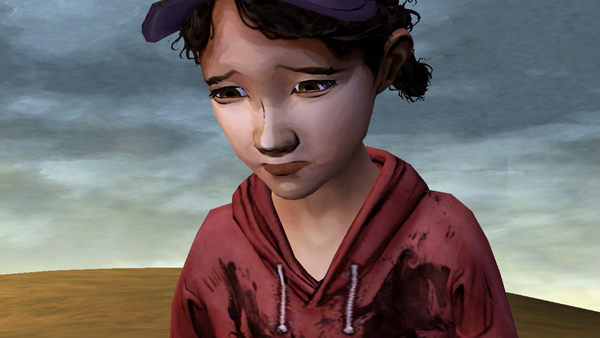
The term given to when a game developer's candle is being burned at both ends, "crunch" refers to deadlines being tightened, as workers are squeezed to the peak point of inhuman proficiency. Telltale were forced to fire 250 employees to make ends meet after years of working people to the bone in September 2018, but many of them were reduced to figures on a spreadsheet years beforehand.
In both Ubisoft and Telltale's case, game developers are often working flat out, for years, to keep up with the more number-crunched, "objective" side of the business. "Here are the specifications of the latest hardware, we know this formula sells, so go spend time designing gorgeous interiors and dynamic lighting techniques for the graphics crowd. And make sure you recreate this shooter/RPG/loot system. It'll work".
As mentioned, this line of thinking leads to stagnation, and a negative impact on the very thing the industry needs to survive: Creativity.
Playing Forza Horizon 4 reminded me how past generations saw a far wider set of active genres. Back then, the average "triple-A" game development was around 1-2 years, not the 3-5 we have now, allowing for looser budgets, quicker turnarounds, more creative risks and happier developer-publisher combos.
It was commonplace for your average gamer to have played everything from Virtua Tennis to Timesplitters; from Metal Gear to Burnout. You can check our breakdown of "Why Activision Don't Make Games Anymore" below for their side of things, because since then the publisher has zeroed in on which games and mechanics are the most profitable, to a notably soulless degree.
Now, this isn't to say that the business side of artistry is inherently a bad thing. Of course it isn't. Any creative medium needs a monetisable element to sustain, and that harmonious relationship is how gaming became the expressive, escapist juggernaut it is today.
The problems come through the limitations of graphical technology, and the tired reliability on established tropes. The need for mechanical innovation simply can't come, if the biggest developers in the medium aren't given the drive to birth unique gameplay ideas.
Something's got to give.
--
Continued...

As a takeaway message, think about Red Dead Redemption 2. Rockstar are aiming to make one of the biggest and most expansive games of all time, where a big selling point is the removal of structure and defined goals.
Developed across a staggering EIGHT YEARS and for the first time comprising all of Rockstar's studios under the banner of a "Rockstar Production", RDR2 will specialise in a new quest system promoting endless interaction. Missions and content are generated based on a variety of dynamic factors like character morality, clothing, geographical location and even cleanliness.
All of this, and we've got next to nothing on the gameplay side. Their "Gameplay Trailer" highlighted a range of ancillary activities and mini-games that likely won't be the main draw for the majority, but the game's scope and scale are unprecedented. Is this a corporately mandated, technologically-focused expansion of graphics and immersion, or something that's going to altogether enrich the interactive, mechanical side of things?
Being Rockstar are one of the most lucrative AND influential companies in the business (and the open-world genre is part of why we ended up here anyway), depending on the split between those elements in the final product, the answer will likely shape the future of gaming itself.