Ghost Of Tsushima Ending EXPLAINED
What exactly happens at the end of Sucker Punch's newest title?

Ghost of Tsushima has been out for about a week now, and it's likely that players have already begun to digest the game's ending. Sucker Punch's rousing samurai epic boasts an amazing story, and the finale is sure to raise plenty of questions, not least of which will relate to whether or not the studio plan on making a follow up within a few years' time.
MAJOR SPOILERS AHEAD FOR GHOST OF TSUSHIMA. LOOK AWAY NOW IF YOU HAVEN'T FINISHED THE GAME!
At its core, Ghost of Tsushima is a tragedy, but it would also be patently inaccurate to describe Jin Sakai's transformation from noble samurai to the Ghost of legend as purely just a downfall, or decline.
Yes, in the grand scheme of things he does abandon his code of honour, his uncle and his clan, but in doing so he embraces new allies, exposes the naivety of the samurai, and the ignorance of the shogun.
Jin's journey is fascinating to experience but occasionally painful to sit through. Not in the sense that it fails at different points, but rather because it's so emotionally investing. He does some horrific things and witnesses plenty more, and when the time comes for the player to partake in that final showdown, after having likely already agonised over their approach to combat long before, chances are they'll be just as crushed by it all as Jin is.
4. Inevitability: Why Jin Was Always Going To Fight Lord Shimura
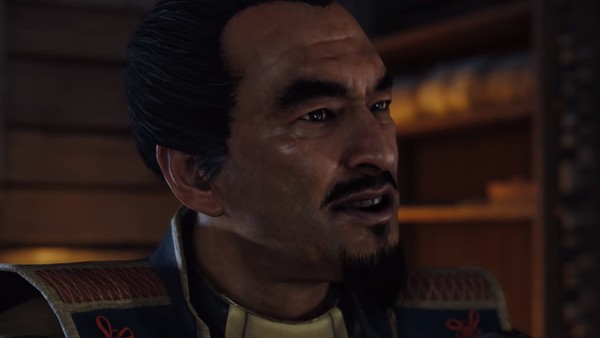
Ghost of Tsushima may take some liberties with history in its retelling of the Mongol Invasions of Japan, but it's no less compelling because of it.
While it's likely that the samurai were overwhelmed by the innovative and indeed brutal tactics of the Mongol armies, they weren't as beholden to the principles of Bushido as Ghost of Tsushima would lead players to believe. That being said, it does provide a great source of conflict in the game, and allows Sucker Punch to take tentative steps in exploring the feudal system, and how the samurai were deeply flawed than legend let's on.
Japan in the 13th century was ruled under the Kamakura shogunate, and the shogun himself was essentially a military dictator. Tsushima broaches both this aspect of Japanese history and the underlying tensions that arose from the class system in place, with Yuna decrying how out of touch the samurai are at various points in the story, and various other interactions also illustrating animosity from the peasantry towards their lords.
This is important, as Jin's transformation to becoming the Ghost sees him essentially rebel against the feudal system and become the Ghost of the people. Lords, like his uncle Shimura, are happy to let their men die needlessly rather than to fight dishonourably, but Jin understands that sacrifices need to be made to protect Tsushima's people, even coming to depend upon clan Yarikawa - once enemies to clans Sakai and Shimura - in what would later turn out to be a turning point in Khotun Khan's campaign.

We see from the very beginning that Jin doesn't naturally embrace the way of the samurai. He sees his father die in front of him at a young age, and the guilt of not being able to save him weighs on him thereafter. When he kills a bandit who tried to assassinate his uncle on a hunting trip, his first instinct is to lash out, rather than to follow his teachings.
While Jin eventually does grow up to become a noble samurai, one changed by the failed defence at Komada beach, it's made clear this was a life he didn't choose, and that it's a legacy he feels he cannot live up to, even shunning his father's armour until the game's second act.
The main point to emphasise here, though, is that the samurai are flawed - as much an instrument of oppression as they are noble warriors out to defend Japan. Their first allegiance is to the shogun, but by not only embracing dishonourable tactics - those that are synonymous with thieves and bandits, figures who belong to a different class - but also willingly embracing the myth of the Ghost and rallying Tsushima's people, Jin becomes a threat to his fellow lords.
As Shimura explains in their climactic ride to the Sakai gravesite following Khotun Khan's defeat, Tsushima's people now follow the Ghost. He defied the Jito, and in doing so, the shogunate too. Jin's sheer existence challenges the very feudal system itself - one Shimura cannot abandon.
3. The Impossible Decision: Does Shimura Live Or Die?
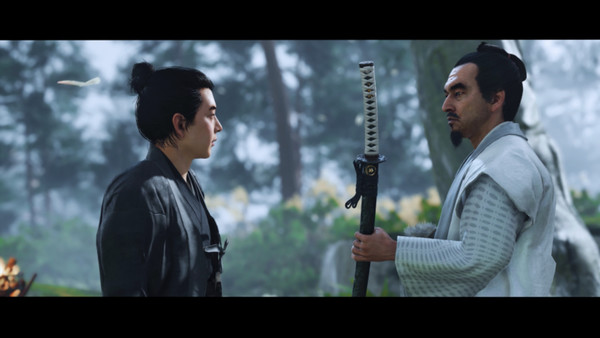
Those last couple of hours as Tsushima comes to an end are some of the game's best. The final battle with Khotun is expertly handled, and just like the assault on Castle Shimura at the end of Act 2, it's equally brilliant seeing all your allies enter the fray. That sense of triumph of also seeing your uncle come to your aid after the previous conflict, however, is immediately off-set by the crushing reminder that his relationship with Jin is at an end. It can never go back to the old normal.
Upon defeating Khotun, Jin receives a letter from his uncle requesting his presence. Jin obliges, not really knowing what's to come. They ride, as Shimura explains how Jin's decision to disobey him and rally his own forces to rout the mongols from Tsushima has come at a heavy cost. Shimura may no longer adopt Jin as his own son, the shogun has disbanded clan Sakai, and Jin has also been declared an outlaw.
Shimura has been promised another chance to start a family by the shogun, so long as he kills Jin and restores the authority of the shogunate on Tsushima.
This is about as tragic as a story can get. Shimura, for all his faults, raised Jin, and the two share a close bond. The forthcoming duel is something neither wishes to do, but something both are bound by. That sense of inevitability dominates Tsushima's narrative, and was the only place the story was going to end once Jin embraced the legend of the Ghost.

One thing that isn't inevitable, however, is Shimura's fate. This wouldn't be a Sucker Punch game without at least one anguished decision for the player to make, and the one they include here is quite the doozy.
After besting Jin's uncle in combat, he requests that he be given an honourable death. It then falls to the player as to what Jin does next. He can walk away, sparing his uncle an untimely death but dooming him to live the rest of his days without a family, or he can grant him his wish and kill him, in doing so performing one last honourable act as an actual samurai.
It's a truly difficult choice, and compounding matters further is the fact it's impossible to tell which ending is the "correct" ending. Lord Shimura is effectively Schrodinger's Uncle at this point, but there are some clues Sucker Punch provides to let you know which path may be the more accurate...
2. No Matter Your Decision, Jin's Transformation Is Complete

Both paths lead to the same place. Jin is an outlaw, and he's lost his family. Of the two options presented, personally, I think the ending where Jin kills Shimura is much more impactful. Is it the right decision? Well, there's evidence to support both choices as being the "right" one. An argument could even be made that Jin letting Shimura go is a better way of conveying his adoption of the Ghost legend, as he's divesting from tradition and finding a different path.
Ultimately it boils down to what you think is the lesser of two evils. Do you abide by tradition and give Jin's adoptive father a peaceful end, or do you break with it completely with the caveat he'll be forced to hunt you for the rest of his days?
It's tricky, but while there are differences in each game's epilogue - namely the outfits Jin adopts and the type of weather the island defaults to - it's still the same result.
One would suspect that the night time, inclement weather that accompanies the "Shimura dies" ending is Sucker Punch's way of hinting that it wasn't necessarily the right path to take, but ultimately Jin still arrives at the same destination: an outlaw without his uncle, but with a different family and the people of Tsushima by his side.
1. How The Epilogue Teases Ghost Of Tsushima 2
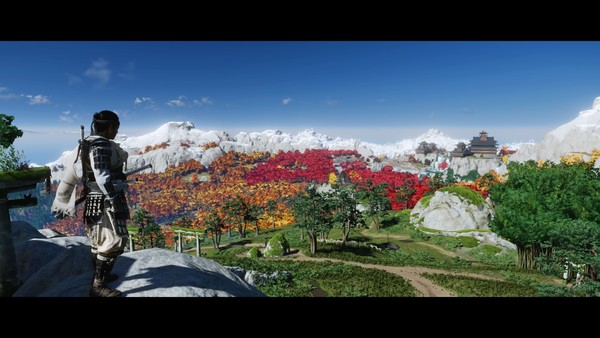
Sucker Punch's plans for the PlayStation 5 are unclear (and rightly so - they deserve a wee break after all of this), but one would gather from Ghost of Tsushima's ending that they're not done with Jin's story yet.
Tsushima's finale shows Jin hiding out in a lair of his own in one of either two locales, where he's receiving instruction from Master Ishikawa. Yuna says goodbye but it's not clear for how long, and Jin himself has been officially branded a traitor by the shogun.
Sucker Punch have laid the ground for a follow-up, but it's still not clear what said follow-up would depict. If Jin is now directly opposed to the shogun, does that mean we can expect him to go to the mainland and fight against it? You wouldn't expect Sucker Punch to keep everyone in Tsushima if they were to pursue a sequel.
Either way, any potential Ghost of Tsushima sequel is still a good deal away from happening. For now, Jin must continue to watch over his island, and reflect on the choices he's made.