Game Of Thrones: 10 Ways To Make The Perfect Game

Someone REALLY needs to drop us into a Westeros RPG immediately.

Game Of Thrones is a unique IP full to the brim with potential for a savvy game studio to tuck into and produce a magnificent beast of a game from. So far though, the attempts have been lacklustre cash-ins with barely any resemblance to the quality of tale or product seen in the books of TV show, including a rather generic offering was made on the PS3, Xbox 360 and PC from Cyanide with shoddy mechanics and half-baked nods to the existing mythology, while an even less satisfying browser-based interpretation is available to burn your life away through Game Of Thrones Ascent. Of course, Telltale have recently announced their own Game Of Thrones title, but given the nature of their games, that is likely to be a character heavy and story-driven affair which, while likely to succeed, ticks another kind of box entirely, and doesn't close the door on the possibility of a more expansive game. The aggravating thing is, there is obviously so much more to be had from this incredibly rich universe, one that stands near unrivalled with the exception of Tolkien's Lord Of The Rings, yet for some reason no one can quite get it right. Or at least, no one seems to have tried it in the right way. With that in mind, someone needs to offer a fool-proof guide to taking advantage of the source material and releasing a game that will match both the quality and the enduring appeal of HBO"s sprawling epic TV show, and that responsibility is what we tackle here with our suggestions for giving us not only the Game Of Thrones game we need, but also the one we deserve. Bear in mind that while there are many possible takes on a Game Of Thrones game, the most pertinent and appropriate feels like an RPG, which is precisely the genre we're focusing on here...

10. No MMORPG, No Multiplayer

One of the most discouraging aspects of the modern gaming industry is the almost compulsive need to include an online component of a game, regardless of whether or not it is actually necessary, wanted or practical; studios just seem hellbent on incorporating a competitive element to almost any game, particularly when it enters its second or third iteration. Sometimes, against all the odds, it works: Mass Effect 3 and Assassin's Creed both managed to turn furrowed brows into cracking smiles by managing to nail multiplayer components to games that never really needed them, but gave fans an increased longevity in the process. With Game Of Thrones though, that simply isn't necessary, nor will it work. There is scope for a multiplayer segment to work here, but it would be dangerously easy to get it wrong. Mingle the assassination and stealth elements of Assassin's Creed with the combat mechanics of a game similar to Skyrim or Dragon Age, and Game Of Thrones may just have a chance at competitive multiplayer, but there are simply bound to be awkward moments of floundering your sword about wildly mid-combat as someone else sneaks up behind you and surreptitiously lops your head off. If it can be made to work, to really work, all the better, but it seems highly unlikely.

9. Hunting, Gathering, Smithing

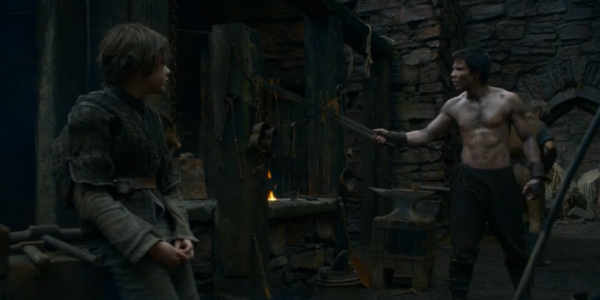
One of the best features of modern classics like Skyrim, Red Dead Redemption and Far Cry 3 was the often overlooked hunting mini-games, which allowed you to upgrade your own equipment to vastly superior quality stock than you could easily find in a local store and often made you a fair amount of coin on the side, as well as being an excellent way of navigating the world and exploring places you would rarely stumble upon were you not hunting specific beasts. With creatures like direwolves, aurochs, mountain cats, grumpkins and snarks along with the more typical deer, bears, crocodiles, fish, snakes and hounds, Westeros is a land ripe for hunters and scavengers. There is a lot of satisfaction to be had in the thrill of the hunt - sitting and waiting patiently for your mark to make the wrong move at just the right time then letting fly as an arrow nails home, procuring your dinner for the evening and perhaps that much-needed material to craft that Ranger's Quiver you've been after.

8. Romance (Because Sex In Videogames Doesn't Work)

It would be either naive of us or out of character for GOT to have a game of it not feature sex, yet if its presence is anything like the TV show's, it is likely to be excessive to the point of boring. Whether it be charming your way into an awkward cut scene as Commander Shepherd or quick-time event twisting analogue sticks to bring the object of your desire to climax as Kratos, there seems to be almost no "right" way of tackling this in a game. Either you feel that you're intruding on people that, while you care about, do not necessarily wish to see bump polygons, or worse, your button-mashing something that's meant to be intimate into a soulless mini-game. It belittles your characters, the game, and you. But that doesn't mean we can't have meaningful interactions: video games are certainly getting better at handling relationships and increasing their level of believability thanks to the likes of Mass Effect, Dragon Age and Catherine, but they are still a long way off in nailing sex. The solution then? By all means take us on the journey, but keep the destination behind closed doors... that said, the occasional visit to one of Littlefinger's brothels wouldn't go amiss.

7. Expand The Mythology

As much as some people may be buying a Game Of Thrones game for the same characters we encounter in the TV show, ultimately this should be avoided. To have a game with any level of freedom, the events of a GOT game need to take place in a different time and context to those of the series, which could well be in an alternate time that has been alluded to in novels. A popular suggestion would no doubt include Robert's Rebellion, though this too would put players too directly close to events of the series, as many of the characters existing in that time are the same as those in the current series. A better idea then, would be to set the game in a different time altogether. Perhaps 300 years prior to the events of the series when Aegon the Conqueror first came to Westeros and united the Seven Kingdoms. Perhaps a game featuring Ser Duncan the Tall and his squire Egg, the central characters of George R.R. Martin's prequel short stories that take place roughly one hundred years before the series. Or perhaps in an entirely new time period altogether, along with a different location focus. The majority of events in GOT take place in Westeros, but an entire world exists that remains relatively untouched - the smoking ruin of Valyria, the shadow lands of Asshai, the black forests of Ulthos and Sothorys are all shrouded in mystery. This is such a rich mythology that helping to cast some light on the other parts of Martin's world would only make it more interesting.

6. Magic (With Limits)

Magic works in Game Of Thrones precisely because it has limits: Melisandre may have visions of the future and may be able to spawn shadow-assassins, but there is always a cost, and in short - she doesn't have infinite mana. As she tells Stannis, in order to take life you must give it - just like in the three leeches scene; Thoros can bring Beric Dondarion back to life, but each time, he's "a little bit less." This is a system of balance that is only outdone by Dany's dragons. Incorporating it into a game is possible, providing it's handled appropriately. Having a gaming system where magic is casually thrown in for healing between every few sword swings will compromise the validity of the world in which we are playing, but saving it for story-related events or the occasional last-hope-all-out-offence similar to a limit break or summon from Final Fantasy would just about keep it within the GOT realm. More importantly, it's essential that only select classes and characters have magical abilities, and not just any old hedge knight.

5. Classes

While it's something of a fantasy trope to have a specialisation for characters, it's a genre staple for a reason: it works. In GOT in particular it could be put to fantastic use, especially if it is combined with a multiple character POV system in the same vein as GTA V. Do you elect to play as a Night's Watch Ranger, with stealth and arrows as your weapon of choice? Or a master swordsman hailing from Braavos? Perhaps an assassin trained at the House of Black and White? Or a lancer from the Mountains of Dorne? How about a skinchanger like Bran or Orell, warping into the skin of wolves or eagles? Or even a Red Priest of R'hollor? There are almost endless possibilities here, and if managed correctly would demonstrate vastly different play-styles. Synthesizing elements of a Final Fantasy style class system with a Skyrim-like upgrade and skill structure would make for a truly awesome gameplay experience. There's no denying this would be a huge undertaking, particularly if you had multiple characters and class systems, but the rewards would be oh so worth it.

4. Don't Be Afraid Of Multiple POV Characters
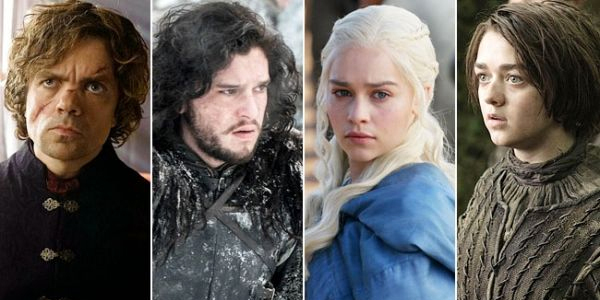
Much like the novels and the TV show, Game Of Thrones is a huge sprawling universe stuffed full of memorable characters, impressive locations and dangerous turns. However, limiting a gaming experience to just a single character would be tantamount to criminal offence in a world this large. Can you imagine navigating the labyrinth of court politics in King's Landing, surviving the vast wastes beyond the Wall with the Night's Watch and traversing your way across Slaver's Bay all with a single character? No. There is never going to be one character who can encounter and experience all the locales Westeros has to offer without severely compromising on content. Rather than dampen the experience and bend the limits of Westeros' reality, why not have multiple characters each with different plot lines? As the game progresses these narratives could converge for a final showdown, much as we expect them to in the novels and TV show. Simply sticking to just the political role playing of King's Landing or the hack and slash of battle on the field would pigeon hole the game into a narrow unsatisfying experience. By broadening the scope of the story and it's characters, so too does the possibility for different styles of play and locations to uncover grow. If there has ever been a case for proving multiple characters in a single story don't work, GTA V and Final Fantasy before it squashed it. In a world as vast as this, there are almost endless possibilities.

3. No Morality, Just Choices

One of the best aspects of GOT is how, while morality exists, it is often simply cast aside. In the last ten years or so, the popularity of "good versus evil" play styles has come to dominate open-world and sandbox type games. This has often led to some outstanding gameplay and fantastic concepts - look no further than the Fable series, inFamous, Mass Effect, Fallout, Knights of the Old Republic and so on. However, in a world with as many shades of grey as GOT, there is no room for moral absolutes. Caricature extremities such as witnessed at the end of Bioshock have no place here, because this is a far more complex, more intricate world that requires a subtle hand. Think more along the lines of The Witcher 2, Dragon Age: Origins and Skyrim. In each of these games, the player is faced with hard choices that shapes the outcome of the game, but they are often presented in a more adult way. It's not simply a case of save of an orphanage or burn it down, but a more nuanced approach to decision-making. It's less about what you support and more about who. This model of gaming decision making keeps players feeling that they shape their story in a realistic way without compromising on overly simplistic moral absolutes, instead delivering complex, meaningful decisions that have powerful repercussions.

2. Consequences

Linking on from the morality component, there should be very real and very severe consequences to the choices that you make throughout the game, with no "obvious" correct choice. In fact, if anything, this would be an excellent opportunity to reverse the moral compass many games have. Typically it is seen as a positive action if you allow a villain who has committed a reprehensible action to live and permit them a chance at redemption. What would happen then, if after allowing said character to live, they only ended up doing something far worse or just as evil? Think Saruman in the Lord Of The Rings - the books, that is. After being left to skulk alone in Orthanc at the end of The Two Towers, Saruman does not simply retire from evildoing, but instead travels to the Shire and turns it into an industrialised, tyrannical dystopia somewhat resembling modern-day North Korea. While allowing him to live may have been merciful, the long-term repercussions have resulted in an undeniably worse situation. This kind of beyond-the-surface narrative fits perfectly into the world of GOT. Case and point: Jaime Lannister. Condemned throughout the Seven Kingdoms as the "Kingslayer", Jaime's actions, we learn later, actually saved the lives of hundreds of thousands of people. Yet his reward for this act is to be ill-regarded by almost the entire population as a man without honour. A raw deal indeed, but one that speaks volumes about the type of world Westeros is. This kind of far-reaching cause and effect has near limitless potential to work in a Game Of Thrones game.

1. Show Us Westeros (& Beyond)

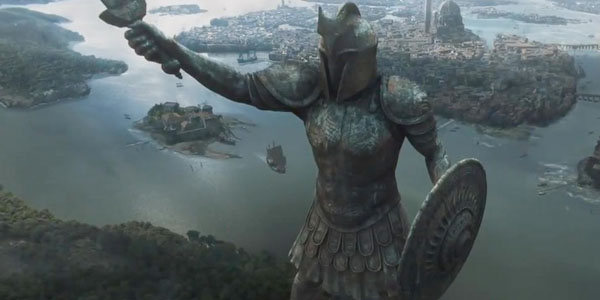
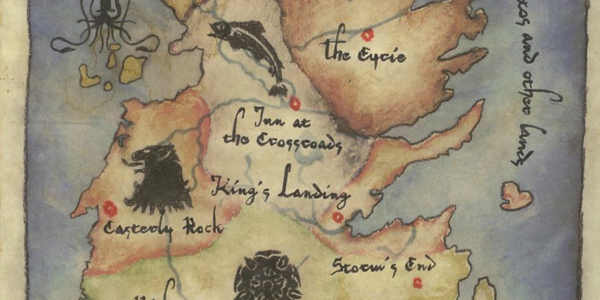
As much as it would be great to see new locations, there's absolutely no question that every one who picks up a Game Of Thrones game would be disappointed if we didn't get to explore some of our favourite locales. The immense size of Westeros leaves it ripe for exploration and discovery - or better still, unlike the TV show, there is less limitation on what you can create. Budget is inevitably a massive constraint on production, and some of the locations in GOT's TV incarnation have yet to live up to the gargantuan expectations the book helps to create. Of course, some are done masterfully well and you would be hard pressed to make a case to say the TV show could do better within the confines of reality and a generous but not exhaustive budget, but that said, you rarely get a feel for the size of the Red Keep when not looking at it from the outside. The same goes for Winterfell, Castle Black, Dragonstone and countless others. Only The Twins, host of the treacherous Freys, has felt appropriately to scale so far. There can be no better way to counteract this, then, to have the world of GOT brought to life through hours of unrestricted gameplay. Granted, this is an absolutely enormous undertaking, one that would make Skyrim feel the size of Kakariko Village. Imagine being able to witness every stone, every nook and cranny of the Eyrie, of finally seeing Casterly Rock for the first time, exploring the extravagance of Qarth, the dusky dunes of Dorne or the sprawling fields of everwinter beyond the Wall. It's an experience so rich and easy to imagine you can almost feel the depth of the snow and see the sheen of the Dornish Sea. What else would you like to see in A Game Of Thrones video game? Let us know in the comments below.

Contributor

When not writing Chris spends more time thinking about playing videogames than actually playing them and can usually be found reorganizing his Blu Ray and book collections. He owns four different editions of A Song of Ice and Fire and no, it isn't overkill. He's left the neon haze of Tokyo and Seoul for the more sedate streets of Bournemouth.