Far Cry Primal Hands-On Review - 9 Things You Need To Know

We've played it and it's very good news. Mostly.
More than anything else, Ubisoft's Far Cry has always been a frustrating series to follow. Since the second game, the developer's open-world titles have been full of great ideas, yet their execution was never quite there. When they finally nailed the formula in the third (and completely ran away with it in expansion, Blood Dragon), Ubisoft sadly decided to play it safe with the fourth entry, thereby stalling on some considerable momentum. However, February's Far Cry Primal is set to shake off the stagnation of that repetitive (if technically accomplished) previous release, by quite literally going back to the franchise's roots. Thrown into the world of an ancient civilisation, this spin-off sees you taking down Woolly Mammoths with sticks and stones rather than shooting the same balaclava-clad goons for 30 hours. The wackier side of these hunter-gatherer games have always been the most enjoyable sections anyway, so with the promise that this latest spin-off will cut away all the humdrum overly-serious nonsense that dragged down the previous titles, you better believe that even the most disillusioned of fans are quietly optimistic about Primal. Fortunately for me, I've had a chance to spend a short amount of time with Ubisoft's latest flagship release to see whether it really lives up to this promise. And even with just a little taste of what the new game has to offer, it's clear that this new Far Cry experience is a completely different beast than its predecessors.

9. Wildlife Is More Important Than Ever
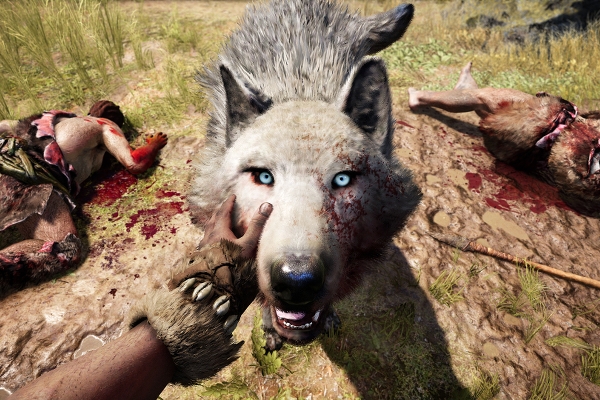
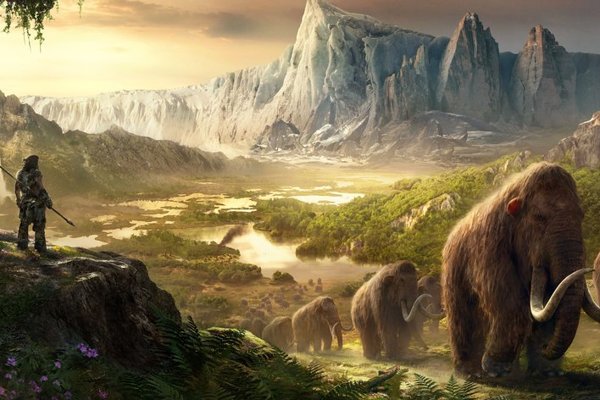
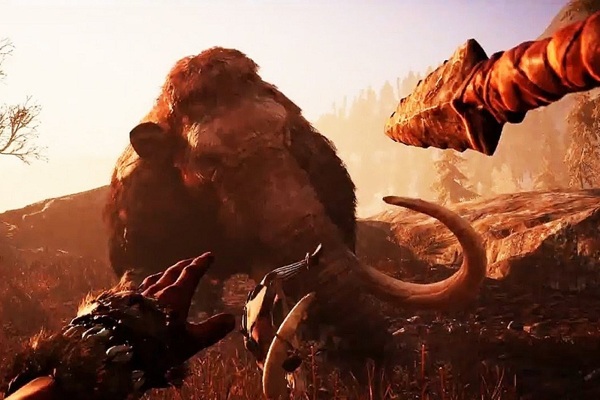
The wilderness has always been an integral part of the Far Cry series. Hell, most of the fun you can squeeze out of these games often comes down to hunting wild animals or manipulating them into going on huge flesh-hungry murder-sprees. Thankfully, Primal puts the focus directly on this element and jumps the functionality of Far Cry's signature animal ecosystem up a new level. With this being prehistoric times, you aren't just going to be running into your regular old wolves and bears as you explore the harsh wilderness that Primal has to offer. Instead, Woolly Mammoths are your forte, either for hunting or riding, while sabre-tooth tigers want nothing more than to rip your throat out at a moment's notice. However, not only are there plenty of new creatures to discover, but there are systems in place that make each and every animal you come across in the game useful in dynamically different ways. Although I didn't get to experience the full potential of the new title's Beast Master feature, it's clear that you can do more than hunt or manipulate the wildlife in Primal. Instead, you'll be organising packs of them and occasionally taking direct control over their actions as they become vital weapons in your arsenal.

8. Building Your Village Is Essential
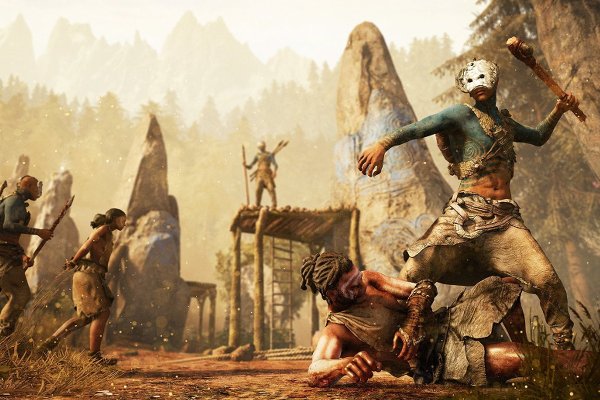
From what I've gathered so far, tribal warfare is an integral part of the Far Cry Primal experience. Building your camp from the ground up seems to be a prime directive in the early game, with a bigger base meaning more resources and more allies for your continued fight for survival. Not only is maintaining your own base essential in the early game, but rival tribes take over duties from the regular outposts of the main series that pose a constant threat until they're eliminated. In this sense, infiltrating and destroying opposing camps isn't just another random to-do task on a never ending checklist, but an actual vital mission if you want your own tribe to flourish without the constant pressure of always-lurking enemies. By just giving you that home base from the very beginning, it means that even the most trivial of tasks feel like a significant step in making your life that little bit easier.

7. It€™s STUNNING

After Far Cry 3 and 4 I wasn't sure that I'd ever be impressed by a video game jungle ever again. There's only so many different ways you can show the same mountainous greenery over and over again before it gets stale, no matter how impressive the graphical fidelity. After only ten minutes with Primal though, I was eating those words. Not only is the title technically impressive (the series always has been), the prehistoric setting breathes new life into each and every in-game environment. Sure, there's still a lot of familiar Far Cry assets being used, but the change of time period facilitates some completely gorgeous and imaginative locations. In my playtime, I blew through camps by a riverside, sleuthed through the marshes at the bottom of a mountain and tried my best to scale the highest point I could see. You can do all that in previous games in the franchise, true, but the prehistoric paint job and the attention to the period's detail means you can't do it in quite the same boots-on-the-ground way as Primal. The world just seems that bit more rich and memorable when you're not flying over the top of it all the time.

6. Stealth Is Still King

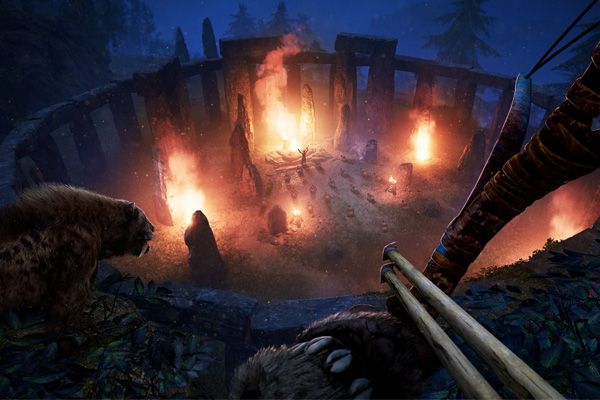
Far Cry has always been played best as a stealth game. While the shooting mechanics have never been particularly terrible, they haven't been great either, meaning straight-up gunfights never packed the punch the franchise's set-pieces demanded. Thankfully, this spin-off does away with that element almost completely, leaving you with an assortment of prehistoric weapons and tactics as your disposal. Obviously, it's probably best to scope out your targets first, scouting a route and planning ahead to take care of your enemies as sneakily as possible. If you've ever played a game in this series before, then all of this is probably second nature. However, what comes next is completely new to Primal... See, you could take the vanilla route, picking off goons with unsuspecting arrows or sneaking up on them and planting a knife in their skull, but would it not be better to send in a pack of wolves in, while you rain down flaming arrows from a couple hundred feet away, sending everything in sight up in flames? Of course it would, and in Far Cry Primal, you can do just that.

5. Weapons Aren't As Limiting As You€™d Think

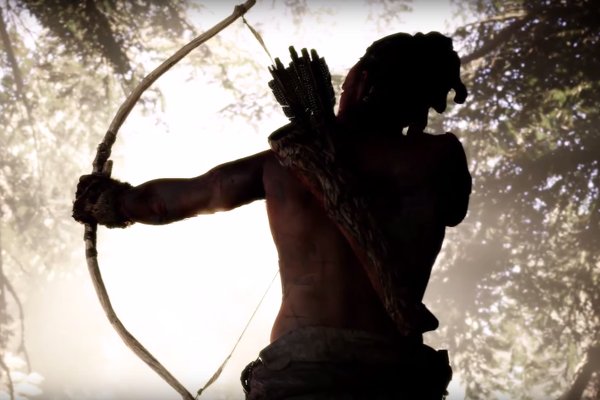
Though of course there's still the option to go in fists (and spears) first, and Primal gives you more than enough tools of destruction to eliminate your enemies with. While your bow will be your first port of call for most of the encounters in the early game, the multitude of different arrows you can craft means that any conflict you find yourself in can be as dynamic as you want it to be. Even better, these arrow-heads require you to use skinned animals and other resources that you can craft, adding a nice mechanical synergy to the one-with-nature feeling that this spin-off so desperately tries to nail. And if that's not enough, we encountered plenty of clubs, spears, bombs and knives in our playtime, with the promise of different specialisations within these weapon classes unlocking later on in the experience. Just because there aren't any guns doesn't mean you don't have any choice.

4. The Environment Is As Dynamic As Far Cry 2
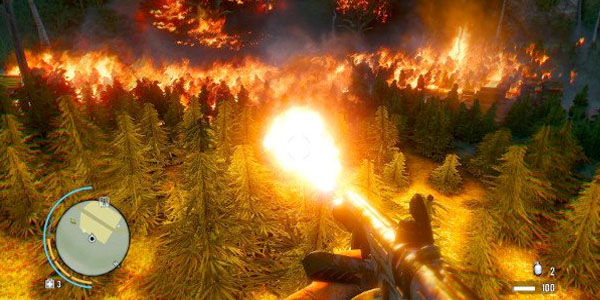
Once over, the Far Cry series was the pinnacle of dynamic environments. Hell, I specifically remember one preview video for Far Cry 2 boasting about the fact that branches of trees would grow back in real time if you happened to shoot them off. That's how dedicated the team was to creating a world that reacted to your destruction. Although those elements were still there in the next two releases, they took a back seat to the more sophisticated gun-play and traversal goodies you could get your hands on. However, with Primal, that sense of environmental scale is back with the ability to transform the game's surroundings into your deadliest weapon. Once again, fire is a huge ally, the ability to set anything up in a blaze offering a huge amount of potential for in-game attacks. You don't have rocket launchers or machine guns to help you out, so these more unassuming and intelligent assaults are going to be essential in making the most out of your experience.

3. Visual Quirks Make Established Features More Interesting
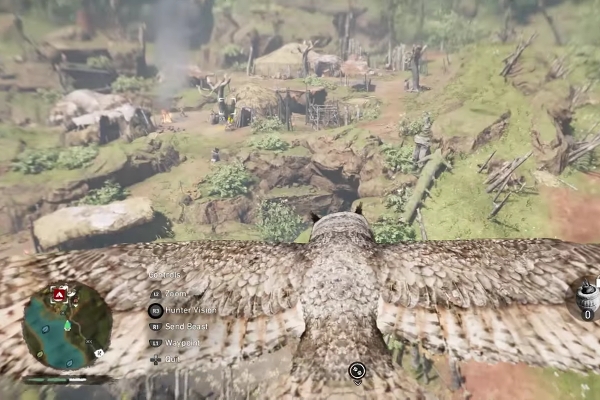
There's a structure to Far Cry games that rarely ever changes from one release to the next. For instance, before any major enemy encounter you're undoubtedly going to find yourself a vantage point, get out your trusty goggles and start tagging enemies so they don't get the drop on you later, keeping an eye out for any possible entry points or alarms that could prove useful in your upcoming assault. While much of that remains integral to the gameplay of this spin-off, the means by which you accomplish these tasks has been changed. For instance, while planing an attack in Primal, you're now prompted to use the Beast Master perk to take control of an owl that can scout out upcoming areas and survey currently unreachable objects. Tagging enemies isn't always the most exciting aspect of a game like Far Cry, but infiltrating enemy lines as an owl and looking for potential weak spots is a great way to make the experience less of a chore. And that was only one of the many slight tweaks I glimpsed in my time with the game. Although the core mechanics of the series are as alive as ever, the small ways in which they're now executed means even the most rudimentary of features feel exciting and fresh.

2. It€™s More Than Just An Expansion

Many fans - rightfully so - have been worried that Far Cry Primal wouldn't be a significant entry in the series, but more of a stop-gap to tide players over until Ubisoft finishes crafting a 'true sequel' to the fourth game. And can you really blame them? Appearing out of nowhere, such a short time after the previous game hit store shelves no less, no one really had any idea how meaty of an experience Primal was going to be. But considering the size of the map and the sheer amount of content that was gated off in my small taster session, the conclusion is that Ubisoft's new game is going to be pretty substantial. While Blood Dragon was great, it was undeniably short and even more undeniably repetitive. Fortunately, Primal is full of varied content and missions that don't just stick to the same template, instead offering the same amount of robust features and surprises that you'd expect from any numbered entry into the series. While it might not hit the 30 hour mark the developers are claiming (seriously, when has a dev not overestimated the length of their own game?) it's clear that Primal isn't just an excuse to milk this franchise for all it's worth.

1. ...But There€™s A Reason It€™s Not Far Cry 5

With that said, Far Cry Primal is definitely not Far Cry 5. You might have noticed already in the previous entries, but this new spin-off doesn't offer many new features that aren't just twists on established mechanics, opting instead to iterate and reinvent elements of the series players are already accustomed to. The weighty feel to your character is still there, and the way you climb, jump and generally move around your environment feels decidedly similar to the military jocks of previous releases. Likewise, mission layouts, map size and skill trees all remain strikingly similar to other games in the franchise. These aren't bad things though - after all Ubisoft keeps using these features for a reason - it's just that after two, perhaps three titles that all use the same familiar elements, I can't be the only one disappointed to see that Primal isn't ripping up the rulebook. For better or for worse, even the prehistoric setting doesn't stop Far Cry Primal from feeling and playing more or less like any other game in the franchise. Let us know in the comments if the new setting is a major turn-off, or a reason to get very excited indeed!

Contributor

Josh has over 11 years of experience as a published writer, having worked nine of those years as a full-time content producer at WhatCulture. In that period he has created hundreds of articles, videos and podcast episodes for multiple WhatCulture channels, specialising in gaming, horror and film & TV. He now primarily works as a senior content producer and presenter on WhatCulture Gaming where he co-hosts the WhatCulture Gaming Podcast, a top 3 UK most listened to gaming podcast that he co-created in 2018. Over the years he has reviewed several high-profile gaming releases, covered industry events with on-site reporting, opined on breaking news, and even kicked off his interviewing career by chatting to childhood hero, Tommy Wiseau.