Batman: Arkham Knight - 10 Big Story Moments Fans Will Debate For Years

Joker's blood can do WHAT exactly?!

Arkham Knight may only be a little over a month into its release, but its story is already proving to be one of the most divisive in all of Batman's media output yet. Its narrative themes - whilst exemplary in premise - are often executed poorly, and much discontent has arisen as a result of Rocksteady's vision moving against what many would consider to be the norms of the Bat-mythos. This isn't to say that the story is dire by any means, but it certainly wobbles in areas where previous titles had exceeded. On the other hand Rocksteady's writers actually reinvented and rectified a number of storylines from the comics medium, utilising tropes from different segments of Batman's many iterations to carve out their own unique vision for the World's Greatest Detective. This leaves critical consensus at somewhat of a crossroads, but this shouldn't have been too surprising for long time followers of the Caped Crusader. Whilst a feature of both Asylum and City, veteran Batman scribe Paul Dini (who first made waves in the industry on a little old show called Batman: The Animated Series) was all but absent from the writing process of Arkham Knight, and it certainly shows. Many of the loose threads established in City are relegated to small side-missions, or worse still, not explored at all. Indeed, the studio's decision to move 'in house' with the narrative process was never going to be something everyone could get on board with, and the debate it has inspired will last for many years to come.


10. The Near Death Experience - Was It A Cop Out?

For many who have played Arkham Knight one of the story's biggest highlights took place very early on in the game, where Batman has to mitigate the effects of a toxic cocktail getting ready to unleash Hell over the rest of Gotham at ACE Chemicals. It's a very poignant scene, but one that could've been so much more. As Nick Arundel's theme plays over the player's actions we are led to believe that Bruce Wayne is well on his way to an untimely demise. The emotion conveyed between Wayne and his faithful butler hits a high that the game doesn't really manage to match until its finale, but as Bruce makes his escape from the facility one can't help but think of what Knight could have been with Bruce now incapacitated. Sure, it would've been a move to anger a large section of the fanbase, but it would've brought something entirely new to the table. Rocksteady could have relished the opportunity to re-tell a Battle For The Cowl-esque tale, and would've made for a twist like no other. For a character that has such a rich set of allies, it would've been the perfect way to highlight each reason why they're essential to Batman's mission. It's a shame we have to wait for DLC to make that point clear.

9. Arkham Knight's Identity

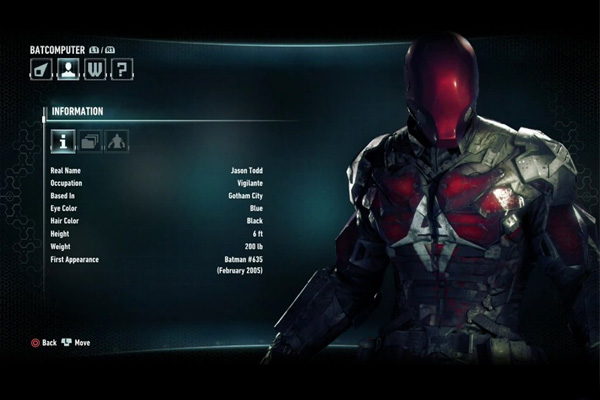
The revelation of the Arkham Knight's true identity has left fans with a mixture of minds; on one hand the re-telling of Jason Todd's descent into anti-hero actually exceeds the quality of any literature that has come before, with a unique 'Return Of The Joker' like twist working largely to the story's benefit. On the other Jason came largely out of nowhere, making many feel as though a character with little development in the Arkham canon was used as a 'safe choice' to be the Knight's identity. Continuity fanatics aside, much debate has come of the Knight's reveal. Though it was a choice that quite literally everyone saw coming, the aforementioned ROTJ-inspired origin proved to be one of the narrative's strongest elements. Multiple uses of flashback felt very atmospheric, but Todd's original words along with these sequences only further hinted at the Knight's true identity - there wasn't really a mystery to begin with. Allowing players to unravel the mystery themselves would've been far more intriguing than the fairly obvious suggestions we were given in Knight's opening moments.

8. Oracle's 'Death' - Was It Even Necessary?
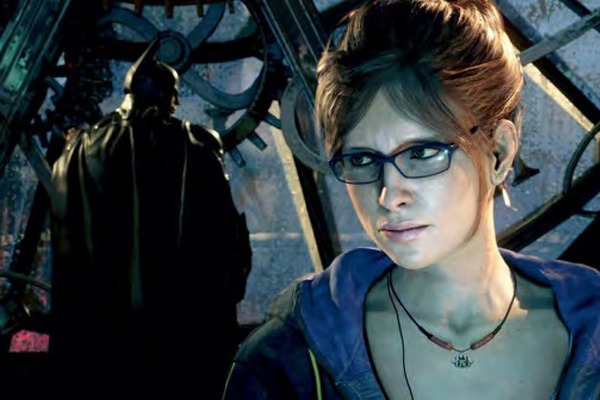
Third act aside, Barbara Gordon wasn't really given much to do in Knight's story - other than play the victim of course. For a character as strong as Oracle her abduction, 'death' and subsequent rescue felt very inappropriate - her suicide especially. This was a scene that exuded tragedy, but the act itself combined with Bruce's muted reaction completely killed any purpose it may have had. This is a character who is 'killed' solely for the purpose of illustrating Scarecrow's danger to the player - to mask it as anything else would be a desperate attempt to defend the story. Barbara's death is used as a motivational device to encourage the player to take down Scarecrow, and being one of only three female protagonists in the game only harms the story further. It wouldn't have been inexcusable had Barbara done more prior to her kidnap, but her damselling in Knight's opening act left a very bitter taste for the remainder of the campaign for many fans of the first Batgirl.

7. Joker's Presence Had No Subtlety

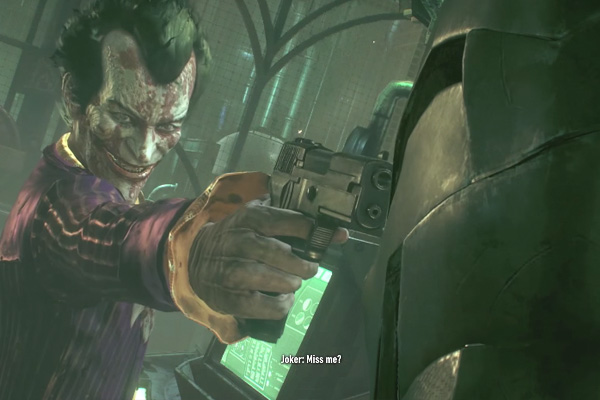
Okay, as far as premises go this one was a masterstroke, but couldn't it have been executed in a better way? Mark Hamill's Joker is perfect as always, but there is a point where it just becomes too much. Immediately after his first appearance the maniacal Clown Prince perches on Bruce's shoulder for the remainder of the game - offering his own unique brand of commentary on the story's events. The problem isn't that these scenes are handled poorly, it's that their high frequency negatively impacts the experience. There is no sense of momentum with Batman's slow decline into madness, and that's a big issue with a game that's pretty much wall to wall action straight from the get go. Slowly amping up Joker's presence throughout the main events would've avoided the more emotional elements being ruined, and oversaturation wouldn't have been something to worry about either. There will always be those who were desperate for more Joker even after his demise, but this was definitely too on the nose for those wishing for other villains to get a spotlight in the Arkham Trilogy's finale.

6. Superfluous Romance Harmed The Story
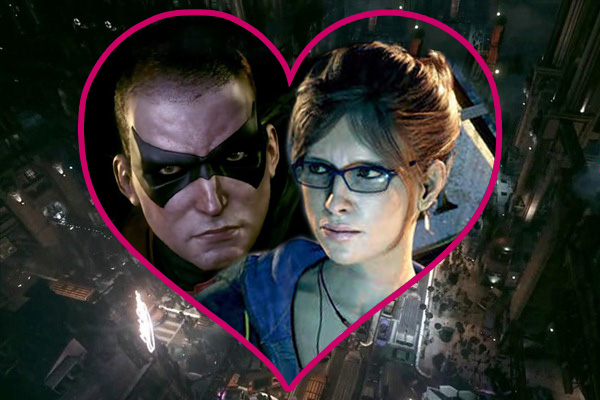
This was perhaps the oddest of modifications to Batman's lore in recent memory, but the strangest thing about it is that it served no purpose whatsoever. Many fans didn't seem to have a problem with this element as it didn't go out of its way to encroach on the overall story, but for hardcore Bat-fans the times that it did proved to be irritable beyond words. Tim Drake and Barbara Gordon have had no romantic connection - be that in the comics or in the Arkham saga prior to Knight. It's highly likely that the only reason these two were together for the duration of the story was to force melodrama between Bruce and Tim, as Batman shields Barbara's kidnap and 'demise' from the third Robin. It's silly because it changes nothing whilst at the same time deviating from the established comics canon. If Rocksteady were going to pair Barbara up with anyone, the least they could have done would be to make Dick a love interest.

5. Oracle's Kidnap Was To Force Melodrama
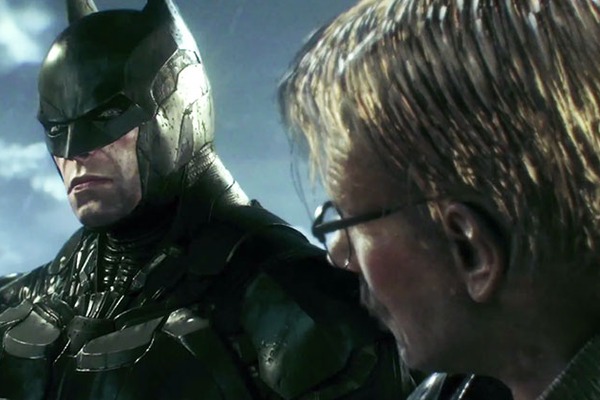
Once again Barbara was used as a means to force melodrama, but this time it was between the commissioner and Batman. Not only did Rocksteady not offer any explanation as to how the Clocktower's defences were breached (we're led to believe the Knight had this knowledge already), but Oracle's absence results in a rift opening up between Jim and Bruce. It can be argued that Oracle's elimination made logistical sense for the Knight's forces as she's Batman's key supporting element, but she was clearly targeted by Rocksteady to stoke drama between two very amiable allies - something that was much better done in an episode of The New Batman Adventures entitled 'Over the Edge'. Though Knight's second act may be more controversial due to its insistence on recurring tank sections, the first is just as divisive in the narrative sense. No wonder people were anticipating the Batgirl DLC so much.

4. Bruce Can't Be With Selina? Since When?
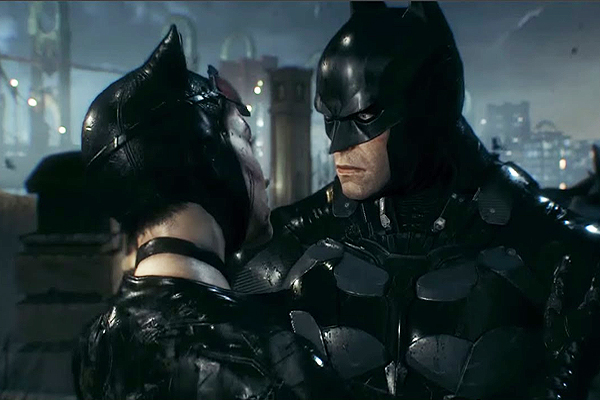
This ties into Knight's weak finale, but for many Bat-fans this has been the biggest transgression against the mythos that Rocksteady have committed. The problem with Bruce's insistence on Selina staying away from him is that it ruins the development the character has seen with City, and further kills any sense of happiness the character could have achieved in his final hours as Gotham's protector. Despite lacking any chemistry or development in Arkham City, we are led to believe that Wayne was really smitten with Talia all along, with the 'one night in Metropolis' line from Asylum's first sequel supposedly being enough to cement a romantic connection between the pair. The ability to 'mourn' Bruce's former flame in Knight was sadly lacking in any emotional weight as a result, but clearly indicates where Rocksteady believe his desires were and will always be. Throughout we can clearly see the chemistry between the Bat and the Cat - it's quite unmistakable and their flirtatious dialogue is extremely well handled for a title that gave so many naff lines to begin with. This makes that final scene upon Riddler's completion even more unbearable, as Bruce decides that being happy can't be on his agenda even when it's made apparent he's nearing his endgame.

3. So... Joker's Blood Can Do What Exactly?
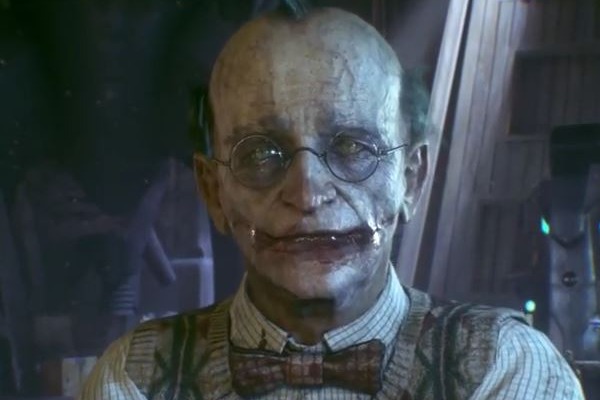
In spite of the fact that this was one of the plot's strongest elements, explanation of how Joker's blood could transform people in such a way was unsatisfactory for a number of reasons. We are led to believe that Joker's blood has the ability to rewrite genetic makeup, turning victim's a ghastly shade of white, dying their hair, and even embodying the rogue's character traits. It's an odd, if not fun addition to the game, but suspension of disbelief can only go so far, and as far as devices go this one was incredibly contrived. As one of Knight's offences this one is notably small in scale, but it didn't stop fans from kicking up a fuss on forums regardless.

2. Did The 'Big Alliance' Really Live Up To The Hype?
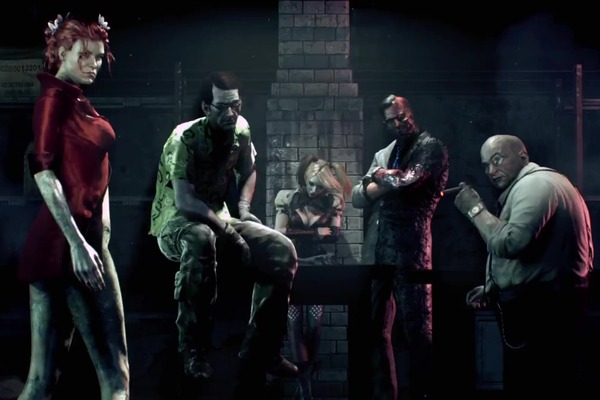
From the very getgo of Knight's announcement it was clear that Rocksteady wished to emphasise the point that the villains would now be working together to take down the Bat, unlike Arkham City where they were competing with each other to exert control over the area. There's no denying that the finale had a formidable cast of characters, but whether that alliance lived up to expectations is an entirely different matter altogether. For better or for worse Rocksteady saw fit to include two of the alliance's biggest hitters - Penguin and Two Face - as minor side missions situated way away from the main story's content. Penguin's motif to make a quick profit is very fitting and his side missions with Nightwing are actually a lot of fun, but one can't help but feel as though the developers didn't really know what to do with Two Face - making him rob banks in Knight because well...he likes to rob banks, right? Obviously Harvey was meant to be financing Cobblepot's operation, but what exactly were the two doing to actively kill Batman? Nothing really. In fact, the only member of the alliance apart from Scarecrow and the Arkham Knight to actually take a role in attempting to kill Batman in the main story was Harley Quinn - a far cry away from being the alliance players were promised when Knight made its first trailer début. As it stands the nefarious 'team isn't wholly detrimental to Knight's narrative, but it's hard to argue against the fact that gamers were misled in its marketing.

1. The Knightfall Protocol Misses The Point Completely
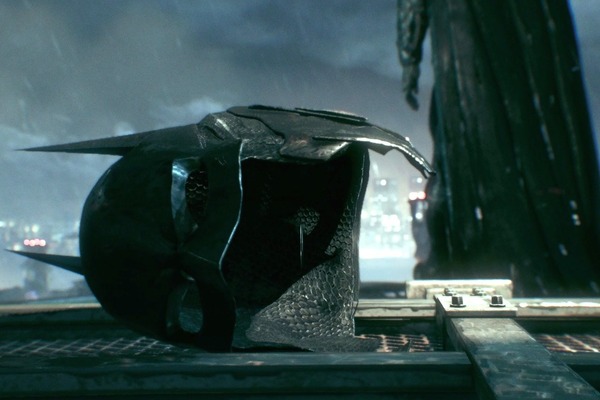
Of all the divisive elements of Knight's plot, the Knightfall protocol seems to be the most contentious - the reason being it completely misunderstands the nature of Bruce Wayne and the character of Batman as a whole. A common misconception (and a clichéd one at that) is that Bruce Wayne is merely the mask that hides Batman - the true face of Gotham's protector, but this is wildly incorrect. Yes, it's true that the billionaire playboy persona is merely a façade to keep the tabloids and the wider press occupied, but Bruce Wayne is so much more. He engages in philanthropy, makes friends, develops connections, falls in love, and even cares for his family that helps him in his nightly escapades. To eliminate him would be a huge failure for a character that has overcome the lure to commit to being a ruthless vigilante 24/7 - he would've failed. But no, Arkham Knight's ending seems to wish to portray this failure as a triumph, as Bruce succumbs to the Bat in creating a 'new legend' altogether. He throws away Selina, severs any and all ties he had with his family (bar Alfred) and all in the name of continuing his descent into the Batman persona. Many have speculated that it's an entirely new Batman featured at the end of Knight, but Bruce's final words to Selina imply quite the opposite. It's a very sombre ending for a hero that deserves so much more, and the tone it wishes to portray is completely and utterly oximoronical. For a story that had attempted to illustrate how important Bruce's allies actually are, the 100% Knightfall Protocol goes to great lengths to negate any and all meaning it may have had. What points from Knight's story do you find yourself debating? Or do you find most chatter is mostly positive? Sound off below and don't forget to 'like' the Facebook Page for more!

Content Producer/Presenter

WhatCulture's very own resident movie guy, Ewan has been working in the content creation biz for over 10 years now, having started as a freelance contributor to WhatCulture Gaming all the way back in 2015. After graduating with a First-Class Honours in History from Northumbria University in 2017 (where he won a prize for a totally killer dissertation on the Watergate years), Ewan took on the role of Comics Editor at WhatCulture and quickly developed WhatCulture Comics into one of the biggest superhero-focused channels on YouTube. He followed this with a brief hiatus at Screen Rant in 2021, where he worked across the Gaming and Film sections as a writer and editor, before returning to WhatCulture as a Senior Content Producer / Presenter in 2023. He started his own podcast, We Love Dad Movies, in 2022, and has contributed several written pieces to the Eisner-nominated comics website Shelfdust as well. In his current role, Ewan incorporates his love of cinema, comic books, and history into written pieces and video essays for WhatCulture's Film & TV channel, as well as WhatCulture Gaming and WhatCulture Horror, with a particular focus on nineties-era Dad Movies, old school Westerns, and Golden Age Hollywood Noir. John Carpenter is his fave, and he thinks Batman Beyond should never have been cancelled. If that's your vibe, you'll probably like his stuff.